ART WIKI37,791 on view
MapCollectionArtistsMuseumsExhibitionsJournal
Sign in

ART WIKI

Where to see art and when to visit.

Collections: Art Institute of Chicago, Cooper Hewitt, Smithsonian Design Museum, Getty Villa, Harvard Art Museums, Hirshhorn Museum and Sculpture Garden, J. Paul Getty Museum, Minneapolis Institute of Art, Musée du Louvre, National Gallery of Art, National Museum of Asian Art, National Portrait Gallery (Smithsonian), Pushkin State Museum of Fine Arts, Rijksmuseum, Smithsonian American Art Museum, SMK — National Gallery of Denmark, State Hermitage Museum, State Russian Museum, The Cleveland Museum of Art, The Metropolitan Museum of Art, The Museum of Modern Art, Tretyakov Gallery, Victoria and Albert Museum, Whitney Museum of American Art, Yale Center for British Art, Yale University Art Gallery, State Catalogue of the Museum Fund of Russia (274 museums), Europeana (19 museums), Wikidata (44 museums), Paris Musées (12 museums), Joconde, the French Ministry of Culture's museum database (495 museums), and the Catalogo generale dei Beni Culturali of Italy's Ministry of Culture (74 museums). Images belong to their rights holders.

Sections

  • Map
  • Search
  • Collection
  • Masterpieces
  • Stolen and lost
  • Embed artwork status
  • On view now
  • Artists

More

  • Museums & galleries
  • Exhibitions
  • Journal
  • Where the data comes from
  • Privacy & cookies
  • About
  • Terms of use
HomeMapBrowse

Browse

Marble

Marble sculpture is carved from a crystalline stone that can take fine detail and a soft, light-catching surface. Tools remove material until a block becomes a body, a fold of cloth or, in Bernini’s hands, a mattress that seems to yield under someone’s weight. The illusion depends on both the stone’s properties and the sequence of marks left or erased.

11,017 works from 390 museums2,198 on view nowClear all

/
Technique
  • All
  • Bronze19,138
  • Plaster15,671
  • Wood12,391
  • Terracotta and ceramics11,922
  • Marble11,017
  • Stone8,366
  • Metal4,064
  • Ivory2,053
Bacchanal: A Faun Teased by Children, Gian Lorenzo Bernini, ca. 1616–17Gian Lorenzo BerniniA Faun Teased by Childrenca. 1616–17Gallery 534The Metropolitan Museum of Art
Funerary Portrait of Jacques Damala, Sarah Bernhardt, ca. 1889Sarah BernhardtFunerary Portrait of Jacques Damalaca. 1889Gallery 556The Metropolitan Museum of Art
David con la testa di Golia, Donatello, sec. XVDonatelloDavid con la testa di Goliasec. XVBargello National Museum
San Giorgio uccide il drago, Donatello, sec. XVDonatelloSan Giorgio uccide il dragosec. XVBargello National Museum
Marzocco con lo stemma della città di Firenze, Donatello, 1420DonatelloMarzocco con lo stemma della città di Firenze1420Bargello National Museum
San Giorgio, Donatello, sec. XVDonatelloSan Giorgiosec. XVBargello National Museum
Minnehaha, Edmonia Lewis, 1868Edmonia LewisMinnehaha1868Gallery 731The Metropolitan Museum of Art
Katherine Seney Simpson (Mrs. John W. Simpson), Auguste Rodin, 1902-1903Auguste RodinKatherine Seney Simpson (Mrs. John W. Simpson)1902-1903Gallery 2 · West Building, Ground FloorNational Gallery of Art
Lectern for the Reading of the Gospels with the Eagle of Saint John the Evangelist, Giovanni Pisano, ca. 1301, with later additionsGiovanni PisanoLectern for the Reading of the Gospels with the Eagle of Saint John the Evangelistca. 1301, with later additionsGallery 305The Metropolitan Museum of Art
No More Play, Alberto Giacometti, 1931-1932Alberto GiacomettiNo More Play1931-1932Gallery 415B · East Building, Upper LevelNational Gallery of Art
Sabine Houdon (1787–1836), Jean Antoine Houdon, 1788Jean-Antoine HoudonSabine Houdon (1787–1836)1788Gallery 552The Metropolitan Museum of Art
Agnes E. Meyer, Constantin Brâncuși, 1929Constantin BrancusiAgnes E. Meyer1929Gallery 415C · East Building, Upper LevelNational Gallery of Art
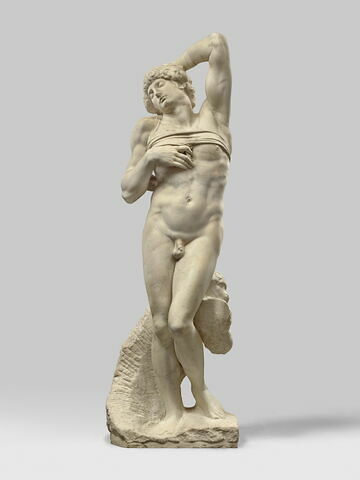
Esclave mourant, Buonarroti, Michelangelo dit Michel-Ange, 1513 - 1515MichelangeloDying Slave1513 - 1515Salle 403, Aile Denon, Niveau 0Musée du Louvre
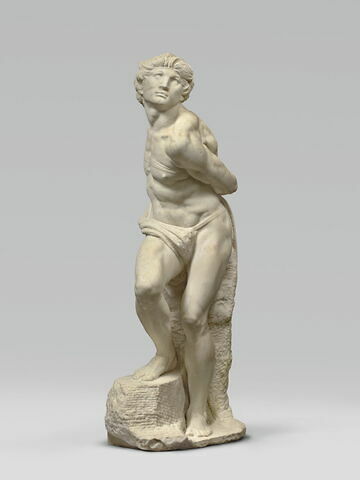
Esclave rebelle, Buonarroti, Michelangelo dit Michel-Ange, 1513 - 1515MichelangeloRebellious Slave1513 - 1515Salle 403, Aile Denon, Niveau 0Musée du Louvre
Eve, Auguste Rodin, model c. 1881, carved 1890/1891Auguste RodinEvemodel c. 1881, carved 1890/1891Gallery 3 · West Building, Ground FloorNational Gallery of Art
Monsignor Francesco Barberini, Gian Lorenzo Bernini, c. 1623Gian Lorenzo BerniniMonsignor Francesco Barberinic. 1623Gallery 29 · West Building, Main FloorNational Gallery of Art
Le cardinal de Richelieu (1585-1642), Italie, 1640 - 1641Gian Lorenzo BerniniLe cardinal de Richelieu (1585-1642)1640 - 1641Salle 403, Aile Denon, Niveau 0Musée du Louvre
L'Enfant Jésus jouant avec un clou, Bernini, Paolo, 1665Gian Lorenzo BerniniL'Enfant Jésus jouant avec un clou1665Salle 403, Aile Denon, Niveau 0Musée du Louvre
The Evil Spirits, Auguste Rodin, c. 1899Auguste RodinThe Evil Spiritsc. 1899Gallery 3 · West Building, Ground FloorNational Gallery of Art
Hiawatha, Edmonia Lewis, 1868Edmonia LewisHiawatha1868Gallery 731The Metropolitan Museum of Art
Figure of a Woman "The Sphinx", Auguste Rodin, model early 1880s, carved 1909Auguste RodinFigure of a Woman "The Sphinx"model early 1880s, carved 1909Gallery 3 · West Building, Ground FloorNational Gallery of Art
Memorial Relief (Hand of a Child), Auguste Rodin, 1908Auguste RodinMemorial Relief (Hand of a Child)1908National Gallery of Art
The Hand of God, Auguste Rodin, original model before 1895, carved ca. 1907Auguste RodinThe Hand of Godoriginal model before 1895, carved ca. 1907Gallery 800The Metropolitan Museum of Art
Eternal Spring, Auguste Rodin, modeled ca. 1881, carved 1907Auguste RodinEternal Springmodeled ca. 1881, carved 1907Gallery 800The Metropolitan Museum of Art
Perseus with the Head of Medusa, Antonio Canova, 1804–6Antonio CanovaPerseus with the Head of Medusa1804–6Gallery 548The Metropolitan Museum of Art
Fragments of a marble statue of the Diadoumenos (youth tying a fillet around his head), Polykleitos, ca. 69–96 CEPolykleitosFragments of a marble statue of the Diadoumenos (youth tying a fillet around his head)ca. 69–96 CEGallery 153The Metropolitan Museum of Art
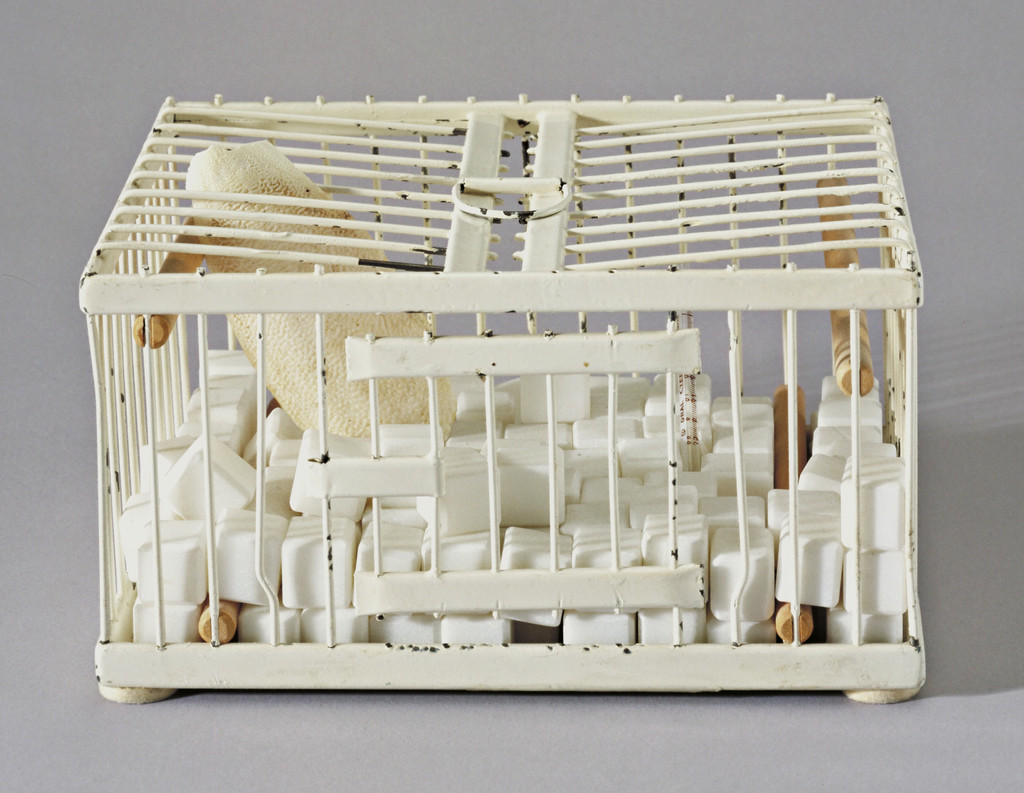
Why Not Sneeze Rose Sélavy?, Marcel Duchamp, 1964 (replica of 1921 original)Marcel DuchampWhy Not Sneeze Rose Sélavy?1964 (replica of 1921 original)MoMA, Floor 4, 408The Museum of Modern Art
Tondo Pitti, Michelangelo Buonarroti, 1504MichelangeloPitti Tondo1504Bargello National Museum
Bacco e satiro, Michelangelo Buonarroti, 1496–1497MichelangeloBacco e satiro1496–1497Bargello National Museum
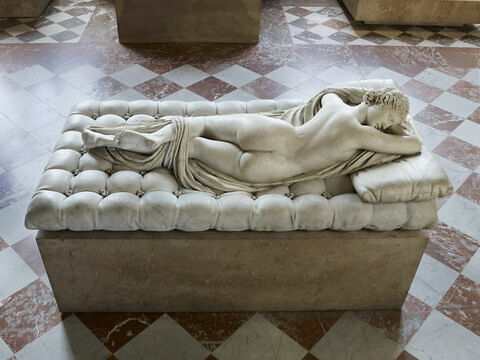
Hermaphrodite endormi, romain impérial

Date de création/fabrication : 1e moitié IIe s. ap. J.-C. (100 - 150)Sleeping Hermaphrodite100–150Salle 348, Aile Sully, Niveau 0Musée du Louvre
San Marco Evangelista, Donatello, post 1411 – ca. 1413DonatelloSan Marco Evangelistapost 1411 – ca. 1413Museum of Orsanmichele
L'Amour et Psyché à demi couchée, Canova, Antonio, 1787 - 1793Antonio CanovaPsyche Revived by Cupid's Kiss1787 - 1793Salle 403, Aile Denon, Niveau 0Musée du Louvre
Seated Cupid, Étienne-Maurice Falconet, 1757Etienne-Maurice FalconetSeated Cupid1757Rijksmuseum
Standing Nana with Serpent, Niki de Saint-Phalle, 1992Niki de Saint PhalleStanding Nana with Serpent1992Yale University Art Gallery
Ugolino and His Sons, Jean-Baptiste Carpeaux, 1865–67Jean-Baptiste CarpeauxUgolino and His Sons1865–67Gallery 548The Metropolitan Museum of Art
Dancer with Finger on Chin, Antonio Canova, model 1809/1814, carved 1819/1823Antonio CanovaDancer with Finger on Chinmodel 1809/1814, carved 1819/1823Gallery 45 · West Building, Ground FloorNational Gallery of Art
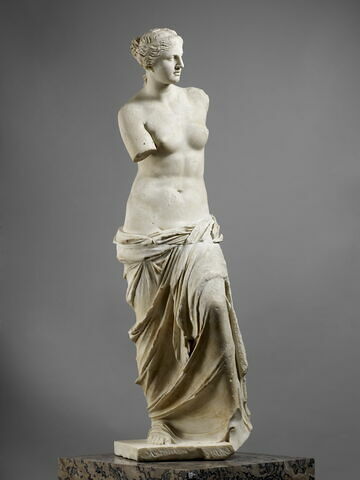
Vénus de Milo, hellénistique

Date de création/fabrication : 3e quart IIe s. av. J.-C. (-150 - -125)Vénus de Milo150–125 BCESalle 345, Aile Sully, Niveau 0Musée du Louvre
Emile Gauguin (1874–1955), the artist's son, Paul Gauguin, ca. 1877–78Paul GauguinEmile Gauguin (1874–1955), the artist's sonca. 1877–78Gallery 825The Metropolitan Museum of Art
David-Apollo, Michelangelo Buonarroti, sec. XVIMichelangeloApollosec. XVIBargello National Museum
Morning, Auguste Rodin, 1906Auguste RodinMorning1906Gallery 3 · West Building, Ground FloorNational Gallery of Art
J.B. van Berckelaer, Auguste Rodin, 1874-1875Auguste RodinJ.B. van Berckelaer1874-1875Gallery 3 · West Building, Ground FloorNational Gallery of Art
Woman and Child (originally Première Impression d'Amour), Auguste Rodin, model c. 1885, carved c. 1900-1901Auguste RodinWoman and Child (originally Première Impression d'Amour)model c. 1885, carved c. 1900-1901Gallery 3 · West Building, Ground FloorNational Gallery of Art
Bust of Pope Paul V, Gian Lorenzo Bernini, 1621Gian Lorenzo BerniniBust of Pope Paul V1621Museum East Pavilion, Gallery E201J. Paul Getty Museum
Ritratto di Costanza Bonarelli, Gian Lorenzo Bernini, sec. XVIIGian Lorenzo BerniniRitratto di Costanza Bonarellisec. XVIIBargello National Museum
Clemente X Altieri, Gian Lorenzo Bernini, sec. XVIIGian Lorenzo BerniniClemente X Altierisec. XVIIGalleria Nazionale d'Arte Antica
Urbano VIII Barberini, Gian Lorenzo Bernini, sec. XVIIGian Lorenzo BerniniUrbano VIII Barberinisec. XVIIGalleria Nazionale d'Arte Antica
Bacchanal: A Faun Teased by Children, Gian Lorenzo Bernini, ca. 1616–17Gian Lorenzo BerniniBacchanal: A Faun Teased by Childrenca. 1616–17The Metropolitan Museum of Art
Capital, Isamu Noguchi, 1939Isamu NoguchiCapital1939The Museum of Modern Art

Marble sculpture

A mattress can steal attention from a naked body. Beneath the Sleeping Hermaphrodite, stone appears padded, dented and ready to spring back when the sleeper rises. The two parts are separated by about fifteen centuries. The body is Roman, dated 100–150 CE; Bernini supplied the mattress and pillow in 1620. What initially reads as one continuous scene is a meeting between an ancient figure and a much later sculptor’s idea of comfort.

That addition changes the sleeper. A hard platform would make the body seem displayed; the yielding mattress makes its weight imaginable. Marble remains equally hard throughout, but the eye assigns different physical properties to skin, fabric and stuffing. Bernini’s contribution also complicates the word restoration. He gave the ancient figure a new setting with a persuasive life of its own, rather than simply filling an inconspicuous gap.
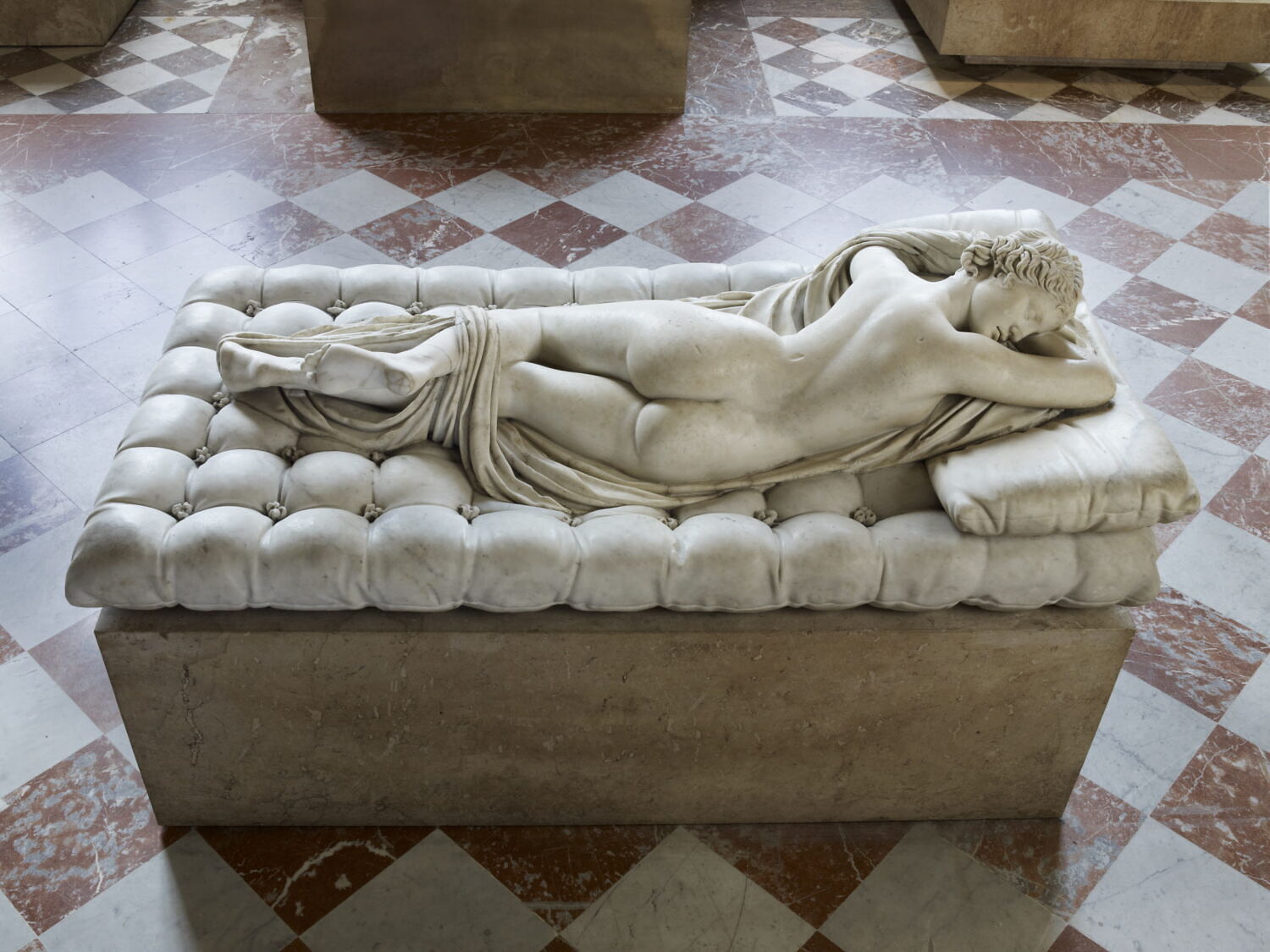
Sleeping Hermaphrodite, 100–150 CE; mattress and pillow by Bernini, 1620. On our autumn 2026 check: Louvre, Sully wing, level 0, room 348.

How marble becomes a body

Geologically, marble forms when heat and pressure recrystallise carbonate rock, commonly limestone. It is not always white: different minerals can produce colours and veins. Fine-grained varieties allow close detail, while slight translucency gives a surface something of the appearance of skin. This is useful to a carver making a cheek or shoulder. Light does more than describe the outline; it helps the stone avoid looking like an opaque painted shell.

Roughing out removes the largest unwanted masses. Points and punches leave coarse marks; toothed chisels reduce the ridges; flat chisels and rasps bring the surface closer to its intended finish. Abrasives can smooth and polish it further. A sculptor may stop at different stages in different places. The contrast between a rough rock and a polished thigh can make the thigh appear softer without changing the material.

An unfinished ancient sphinx discussed by the National Archaeological Museum in Athens makes the sequence unusually legible. Its rock still bears rough punch work, while the face approaches completion; other parts retain marks from points, toothed chisels and a rasp. The museum suggests that flaws discovered during carving may explain why it was abandoned. A block has its own defects, which skill cannot always negotiate away. An incomplete sculpture can preserve the evidence a finished surface removes.
1

Canova’s assistants and the last layer

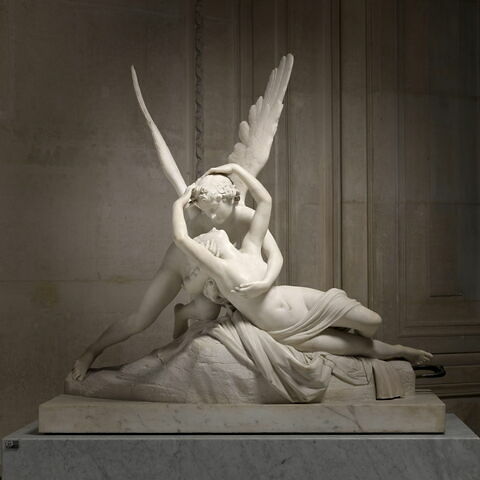
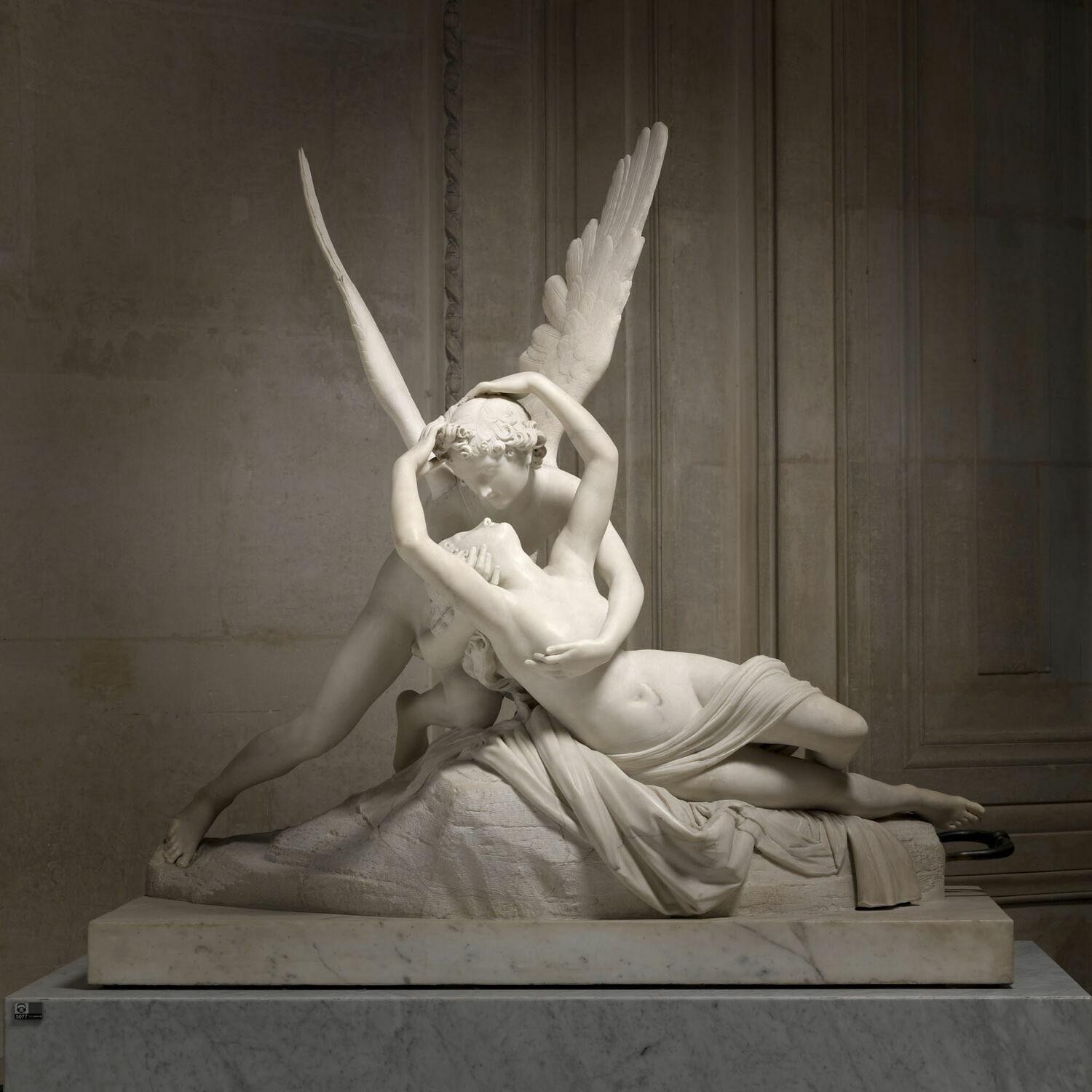
Canova’s Psyche Revived by Cupid’s Kiss brings two faces close without letting them meet. Cupid supports Psyche as she lifts her arms around his head. The marble group was commissioned in 1787 and completed in 1793. The small remaining interval between the faces matters as much as their finish: the embrace is held at a point where the next movement is still possible. Stone makes that interval last.

Antonio Canova, Psyche Revived by Cupid’s Kiss, 1787–1793. On our autumn 2026 check: Louvre, Denon wing, level 0, room 403.

Such elaborate sculpture did not begin with an unmeasured attack on a block. Canova developed models and used a pointing system to transfer dimensions into marble. A surviving plaster for his second version of Cupid and Psyche bears metal pins that served as reference points. Measurements connected the model to the block, allowing a complicated arrangement of limbs to be reproduced. The pins record practical decisions behind a scene that seems to unfold effortlessly.

Canova also relied on assistants. They roughed out and advanced the carving, leaving a small amount of stone for his final intervention, the ultima mano. This division of labour gave the last surface unusual importance. The designer did not need to remove every chip personally to determine the result. His decisions at the end could alter the passage between planes, the softness of a cheek and the way light moved across an already recognisable figure.

The Louvre’s account of the group points to distinct treatments: chisel marks remain on the rock, the fabrics have different textures, and fine rasp marks can be seen on Cupid’s face. His wings were carved separately and fitted into his back. Their junction is disguised with downy detail. The embrace thus includes both deliberate roughness and concealed assembly. Smooth white marble does not mean a single uninterrupted act of carving.

A likeness made at a distance

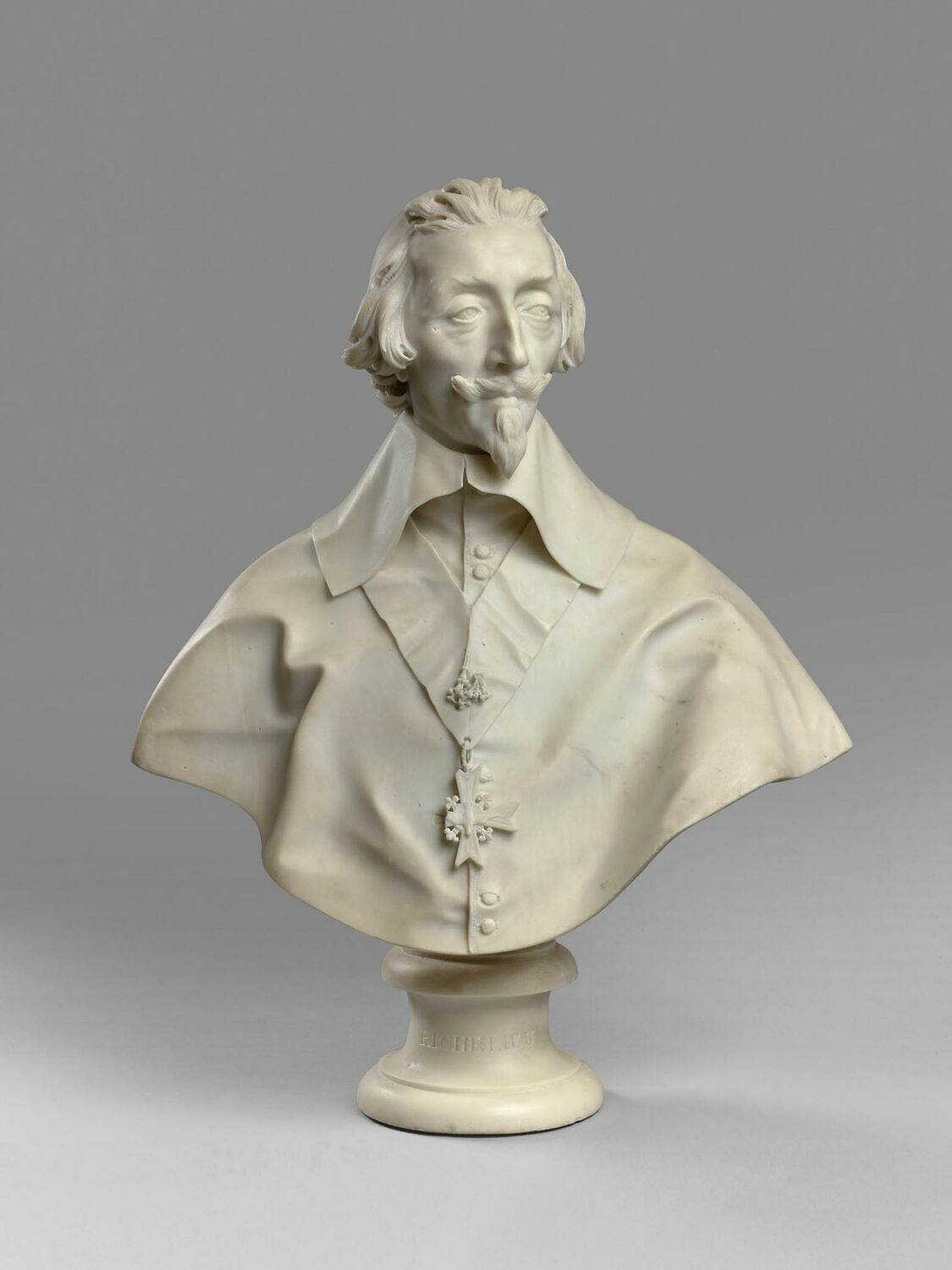
Bernini’s Cardinal Richelieu had a less happy reception than its commissioner hoped. Completed in Rome in 1641, the bust reached Paris and was criticised for a weak resemblance. The National Gallery’s account attributes the problem to painted profiles supplied to the sculptor. However commanding the marble looked, people who knew the cardinal could still find the face wrong. The ability to make stone seem alive and the ability to represent one particular person were separate tests.

Gian Lorenzo Bernini, Cardinal Richelieu, 1640–1641. On our autumn 2026 check: Louvre, Denon wing, level 0, room 403.

The beard, collar and ornamental buttons give the portrait several different kinds of edge. A face needs transitions that clothing can interrupt more sharply. This is worth following around the bust: where does a contour become crisp, and where does it nearly disappear into the adjacent surface? The answer lies in tiny changes of carving and illumination. No red pigment is needed for the robe to read differently from the face.

Yet whiteness was never a universal rule for marble. Ancient sculptures could carry paint, gilding and inlays; some were extensively coloured, others more selectively. Much of that finish disappeared before their rediscovery shaped later European taste. Bernini’s mattress and Canova’s skin therefore belong to particular uses of the stone. Their pale surfaces are artistic decisions within a longer history, not a reliable reconstruction of how every ancient marble once appeared.