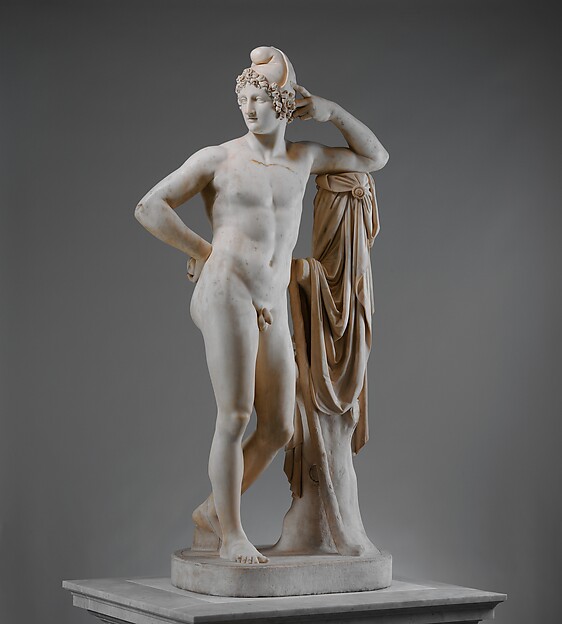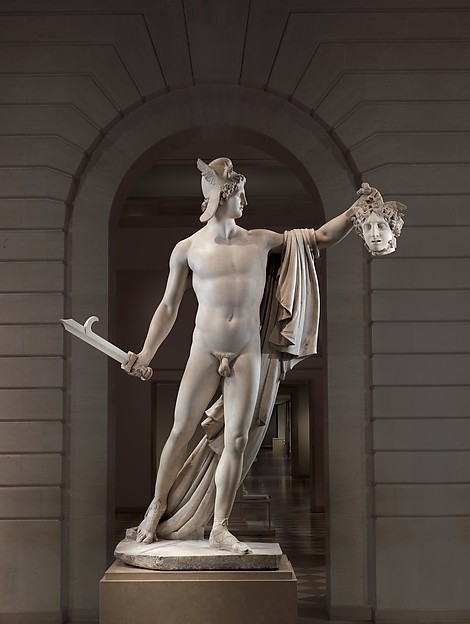
 Antonio CanovaItalian, 1757–1822
Perseus with the Head of Medusa
May one see it?
Yes, receiving visitors

The Metropolitan Museum of Art
Room548New York, United States
On public display.
- Checked
- 4 hours ago
- In this state since
- Sep 26, 2026
- Source
- The museum's own collection data
Particulars
- Accession number
- 67.110.1
What it shows
Sources
- The Metropolitan Museum of Art: the museum's own open data · fetched 4 days ago
- Image: The Metropolitan Museum of Art — Open Access (CC0)
Meanwhile, in the life of Antonio Canova
The whole life1791–1818
Honorary member of many academies in Europe and America
Canova was elected an honorary member of many academies: Florence (1791), Stockholm (1796), Verona (1803), Venice (1804), Siena (1805), Lucca (1806), St Petersburg (1804), Geneva (1804), Denmark (1805), Graz (1812), Marseille (1813), Monaco (1814), New York (1817), Antwerp and Vilnius (1818), and also Philadelphia.
1802
Summoned to Paris to sculpt Napoleon’s bust
Napoleon wanted a portrait by Canova, and in 1802 (by other accounts, already on 6 October 1801) the sculptor was summoned to France; he became one of the official artists of the Empire. Yet, deeply grieved by the removal of works of art to France, he returned to Italy in protest, despite Napoleon’s insistent demands that he stay in Paris for good.
1802
Inspector-General of Fine Arts of the Papal State
In 1802 Canova was appointed Inspector-General of Fine Arts for Rome and the Papal State, with oversight of the Vatican and Capitoline museums and the Academy of St Luke — a post once held by Raphael. In that capacity he also pioneered the restoration of the Appian Way by restoring the tomb of Servilius Quartus.