Vénus de Milo
Can I see it?
Yes, on view now
Where is “Vénus de Milo” now? Musée du Louvre, Salle 345, Aile Sully, Niveau 0, Paris. Yes, on view now. Checked November 9, 2026.

Closed· opens at 9:00 AM
On public display.
- Checked
- In this state since
- Source
- The museum
About the sculpture
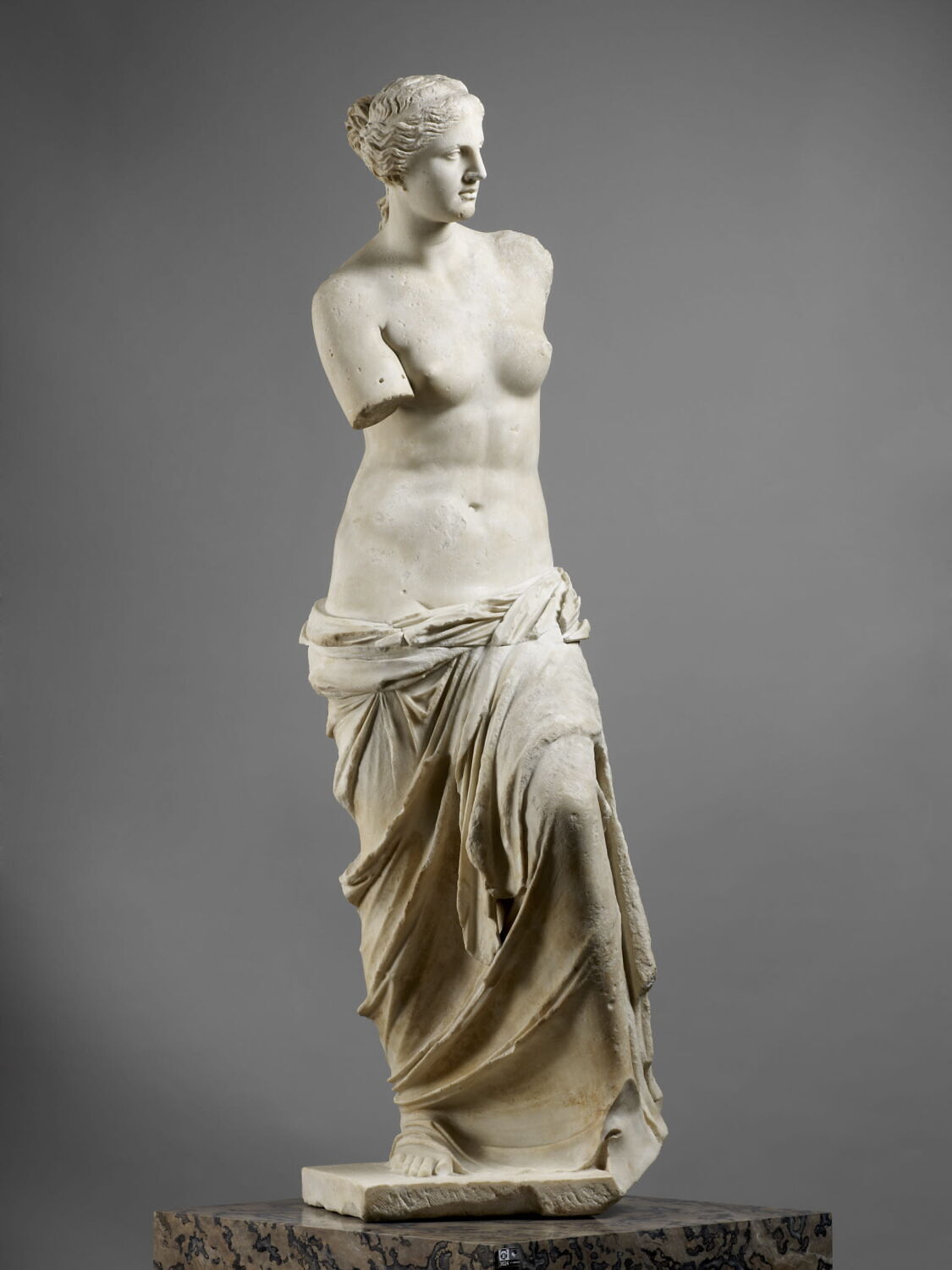
The Venus de Milo, a Greek sculpture of uncertain authorship dated 150–125 BC, is at the Louvre in Paris. More than two metres tall, the marble figure is usually identified as Aphrodite, with drapery gathered around her lower body. It was found on Milos in 1820, already missing its arms. The statue is currently displayed in room 345, Sully wing, level 0.
The Venus de Milo or Aphrodite of Melos is an ancient Greek marble sculpture that was created during the Hellenistic period. Its exact dating is uncertain, but the modern consensus places it in the 2nd century BC, perhaps between 160 and 110 BC. It was discovered in 1820 on the island of Milos, Greece, and has been displayed at the Louvre in Paris since 1821. Since the statue's discovery, it has become one of the most famous works of ancient Greek sculpture in the world.
Read on
The Venus de Milo is believed to depict Aphrodite, the Greek goddess of love, whose Roman counterpart was Venus. Made of Parian marble, the statue is larger than life size, standing over 2 metres (6 ft 7 in) high. The statue is missing both arms. The original position of these missing arms is uncertain. The sculpture was originally identified as depicting Aphrodite holding the apple of discord as a marble hand holding an apple was found alongside it; recent scientific analysis supports the identification of this hand as part of the sculpture. On the basis of a now-lost inscription found near the sculpture, it has been attributed to Alexandros from Antioch on the Maeander, though the name on the inscription is uncertain and its connection to the Venus is disputed.
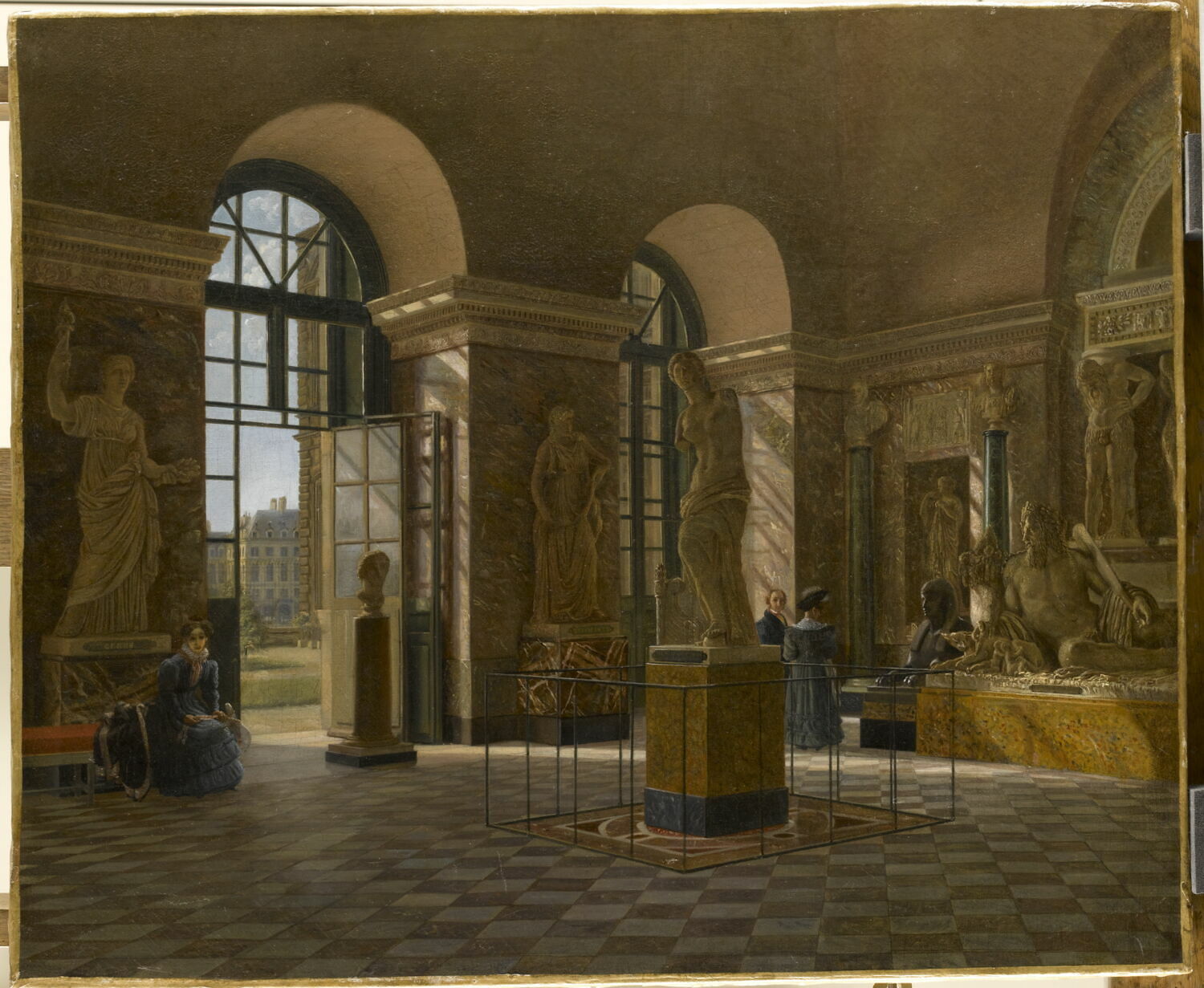
The Venus de Milo rapidly became a cornerstone of the Louvre's antiquities collection in the aftermath of the Napoleonic Wars, and its fame spread through distribution in photographs and three-dimensional copies. The statue inspired over 70 poems, influenced 19th-century art and the Surrealist movement in the early 20th century, and has been featured in various modern artistic projects, including film and advertising. Classical scholars initially considered the sculpture to date to early fourth century BC, considered the high point of classical art, and widely praised its technical excellence. However, following its reinterpretation in the late nineteenth century as a work of the Hellenistic period, some scholars have been more critical of the Venus.
Details
- Accession number
- LL 299
In the catalog
Sources
- Musée du Louvre
- Image: Musée du Louvre — © 2011 Musée du Louvre, Dist. GrandPalaisRmn / Thierry Ollivier