 MichelangeloItalian, 1475–1564
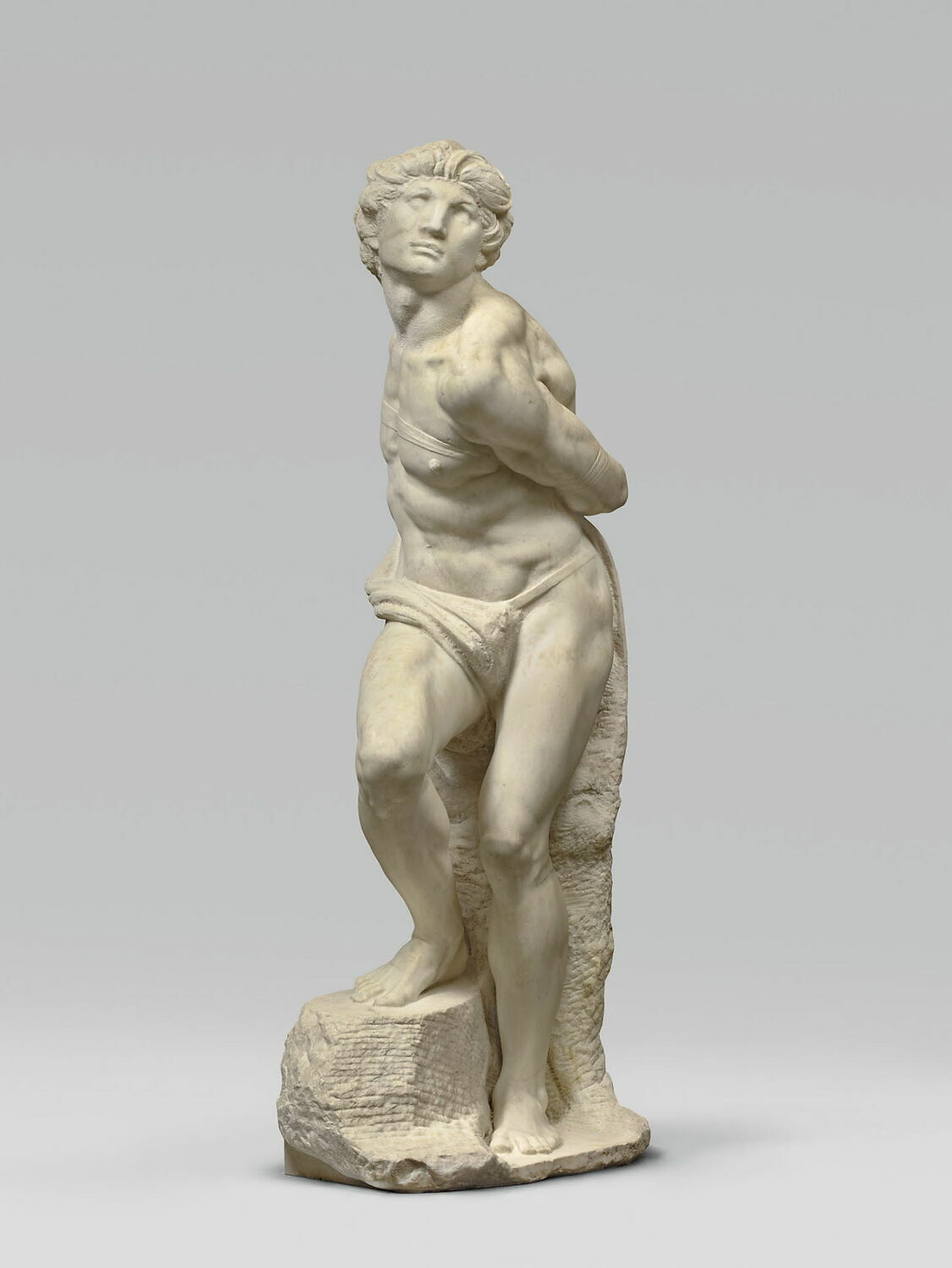
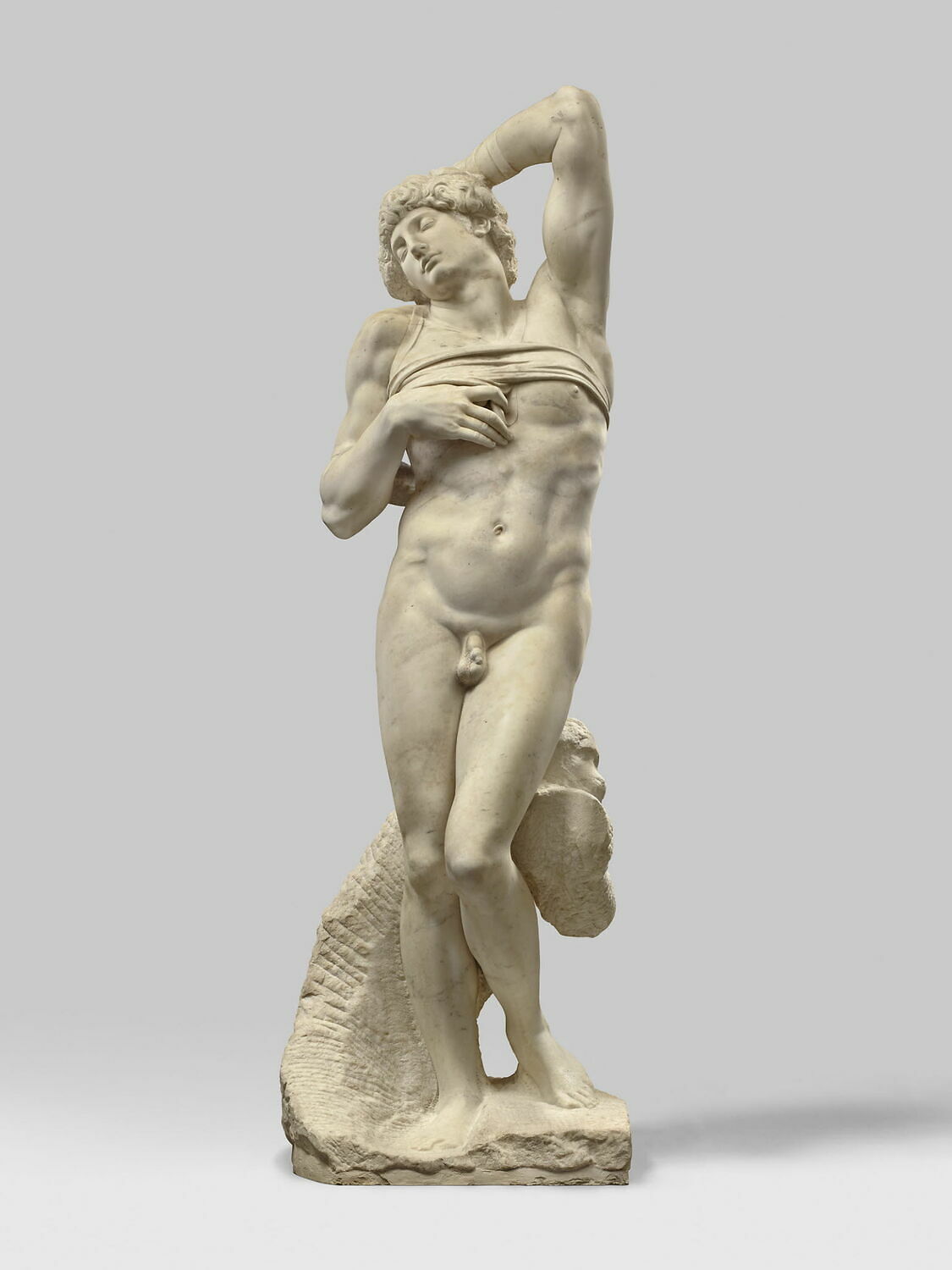
Dying Slave
Esclave mourant
May one see it?
Yes, receiving visitors

Musée du Louvre
Room403, Aile Denon, Niveau 0Paris, France
On public display.
- Checked
- 7 days ago
- In this state since
- Sep 26, 2026
- Source
- The museum's own collection data
About the sculpture
The Dying Slave (L'Esclave mourant, Lo Schiavo morente) is a marble sculpture by the Italian Renaissance artist Michelangelo, created between 1513 and 1516. It was intended to accompany another figure, the Rebellious Slave, as part of the design for the Tomb of Pope Julius II. The sculpture stands 215 centimeters (7 ft 1 in) tall and is housed in the Louvre Museum in Paris.
Particulars
- Accession number
- MR 1590
Sources
- Musée du Louvre: the museum's own open data · fetched 7 days ago
- Image: Musée du Louvre — © 2022 Musée du Louvre, Dist. GrandPalaisRmn / Hervé Lewandowski
Meanwhile, in the life of Michelangelo
The whole life1508–1516 · Workplace
Rome
1513
Death of Julius II: “the tragedy of the tomb”
Michelangelo's chief patron, Pope Julius II, died, and the Florentine Giovanni de' Medici became Pope Leo X. Michelangelo signed a new contract for Julius's tomb, but this “tragedy of the tomb”, as Condivi called it, dragged on for forty years.
1516
Commissioned to build the façade of San Lorenzo
When Pope Leo X fell out with Julius II's relatives over the Duchy of Urbino, he had Michelangelo stop work on the tomb and commissioned him to rebuild the façade of the Basilica of San Lorenzo in Florence and adorn it with sculpture.
1516–1519
Journeys for marble to Carrara and Pietrasanta
For the façade of San Lorenzo Michelangelo made many journeys for marble to Carrara and Pietrasanta.
1516–1534 · Workplace
Florence