Vincent van GoghCorridor in the Asylum
Browse
Oil
Oil paint combines coloured pigment with a drying oil, commonly linseed. It stays workable long enough for colours to blend and for decisions to change. The same medium can produce Leonardo’s almost imperceptible transitions and Rembrandt’s raised ridges of paint. Its possibilities lie partly in how much you apply, partly in what you allow the layers underneath to show.
2,442 works from 59 museums23 on view nowClear all
Vincent van GoghCorridor in the Asylum Vasily KandinskyLightly Touching [also known as "Lightly Touched"] (Leicht berührt)
 Vasily KandinskyBlue (Blau)
 Joan MiróPersonnages
 Mark RothkoUntitled
 Mark RothkoStill Life with Glass, Pitcher, and Orange
 Mark RothkoUntitled
 Mark RothkoUntitled
 Mark RothkoColor Test in Crimson, Black, and Umber
 Henri de Toulouse-LautrecHenri-Gabriel Ibels (1867–1936)
 Eugène DelacroixJacob Wrestling with the Angel
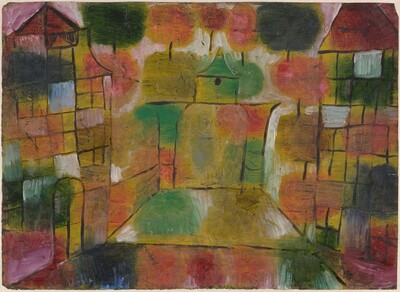 Paul KleeBaum und Architektur--Rhythmen (Tree and Architecture--Rhythms)
 Pablo PicassoWoman Sitting in a Garden [verso]
 Pablo PicassoHead of a Man (Tête d'homme)
 Henri de Toulouse-LautrecFashionable People at Les Ambassadeurs (Aux Ambassadeurs: Gens Chic)
 Henri de Toulouse-LautrecSeated Woman from Behind - Study for "Au Moulin Rouge"
 Henri de Toulouse-LautrecLa Goulue and Her Sister
 Henri de Toulouse-LautrecJane Avril
 Henri de Toulouse-LautrecLa Goulue at the Moulin Rouge
 Henri de Toulouse-LautrecMadame Thadée Natanson (Misia Godebska, 1872–1950) at the Theater
 Henri de Toulouse-LautrecConquête de passage
 Mark RothkoUntitled
 Paul KleeAlter Dampfer (Old Steamboat)
 Gerhard Richter2.3.86
 Vasily KandinskyChurch at Murnau (Kirche in Murnau)
 Peter Paul RubensAntieke camee met portretkop, in profiel naar links
 Peter Paul RubensAntieke camee met portretkop, in profiel naar rechts
 Peter Paul RubensAankomst van Odysseus en metgezellen bij Circe
 Peter Paul RubensDrie gecombineerde episoden uit de geschiedenis van Odysseus
 Max ErnstAlice in 1941
 Max ErnstSun and Forest (Soleil et forêt)
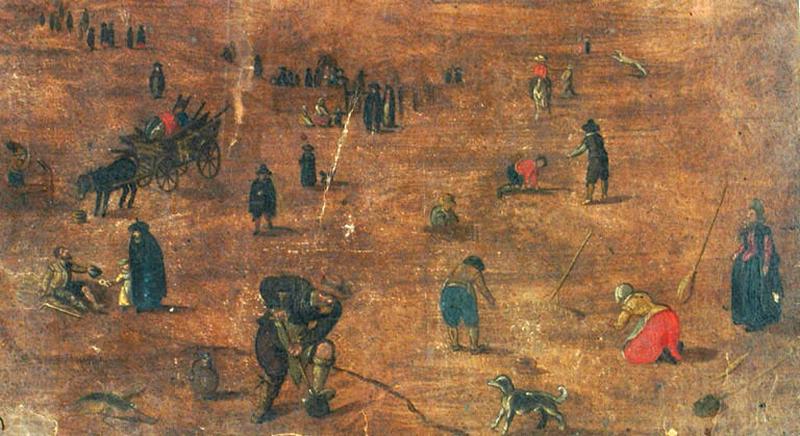 Pieter Bruegel the ElderScène avec petites figures
 William Blake"Now comes the night of Enitharmons joy!..." (Plate 7)
 William Blake"Shot from the heights of Enitharmon..." (Plate 17)
 William BlakePlague (Plate 13)
 Edgar DegasSelf-Portrait
 William Blake"Unwilling I look up to heaven! unwilling count the stars!..." (Plate 4)
 William Blake"The red limb'd Angel siez'd in horror and torment..." (Plate 15)
 William Blake"In thoughts perturb'd they rose..." (Plate 11)
 William BlakePreludium, "The nameless shadowy female rose from out the breast of Orc..." (Plate 3)
 William BlakeEurope a Prophecy; Title Page (Plate 2)
 William BlakeFamine (Plate 8)
 William Blake"Albions Angel rose upon the Stone of Night..." (Plate 12)
 Edgar DegasYoung Woman in Black
 Edgar DegasWoman on a Sofa
 Edgar DegasThe Rehearsal of the Ballet Onstage
 William Blake"Enitharmon slept. ..." (Plate 10)
 William BlakeThe Ancient of Days; Frontispiece (Plate 1)
Oil painting
Rembrandt gave one militiaman a feathered helmet, then painted the feathers out. He shifted another man’s leg. These abandoned decisions beneath The Night Watch came into view through scientific imaging. They remind us that a finished oil painting is often the last visible version of an argument conducted on the canvas. The confident arrangement of bodies may conceal several earlier arrangements, each covered while the painter worked towards the one that stayed.
How is oil paint made and used?
Pigment supplies the colour; oil binds its particles into paint. Linseed, walnut and poppy oils have all been used. Solvent can make the mixture more fluid. Before painting, a support may receive a ground whose colour affects the layers above it. A brown preparation and a white one offer different starting points, even when neither remains plainly exposed. Oil painting therefore begins below the image, with decisions about the surface that will carry it.
Once the brush touches that surface, several routes are possible. Wet colours can blend into each other. A painter can wait and add a translucent glaze over an earlier layer, or load the brush and leave a raised stroke. Oil dries relatively slowly, giving more time for adjustment than egg tempera. That does not mean every oil painting was made slowly. It means the medium permits both rapid handling and prolonged revision, often within the same work.
Jan van Eyck did not invent oil painting. It was already used in northern Europe during the thirteenth and fourteenth centuries. Van Eyck and Robert Campin explored its properties further, helping establish possibilities that painters elsewhere adopted. The distinction matters because materials rarely arrive fully formed in one person’s hands. What changes art is often an unusually inventive use of something already available.
How Leonardo made an edge disappear
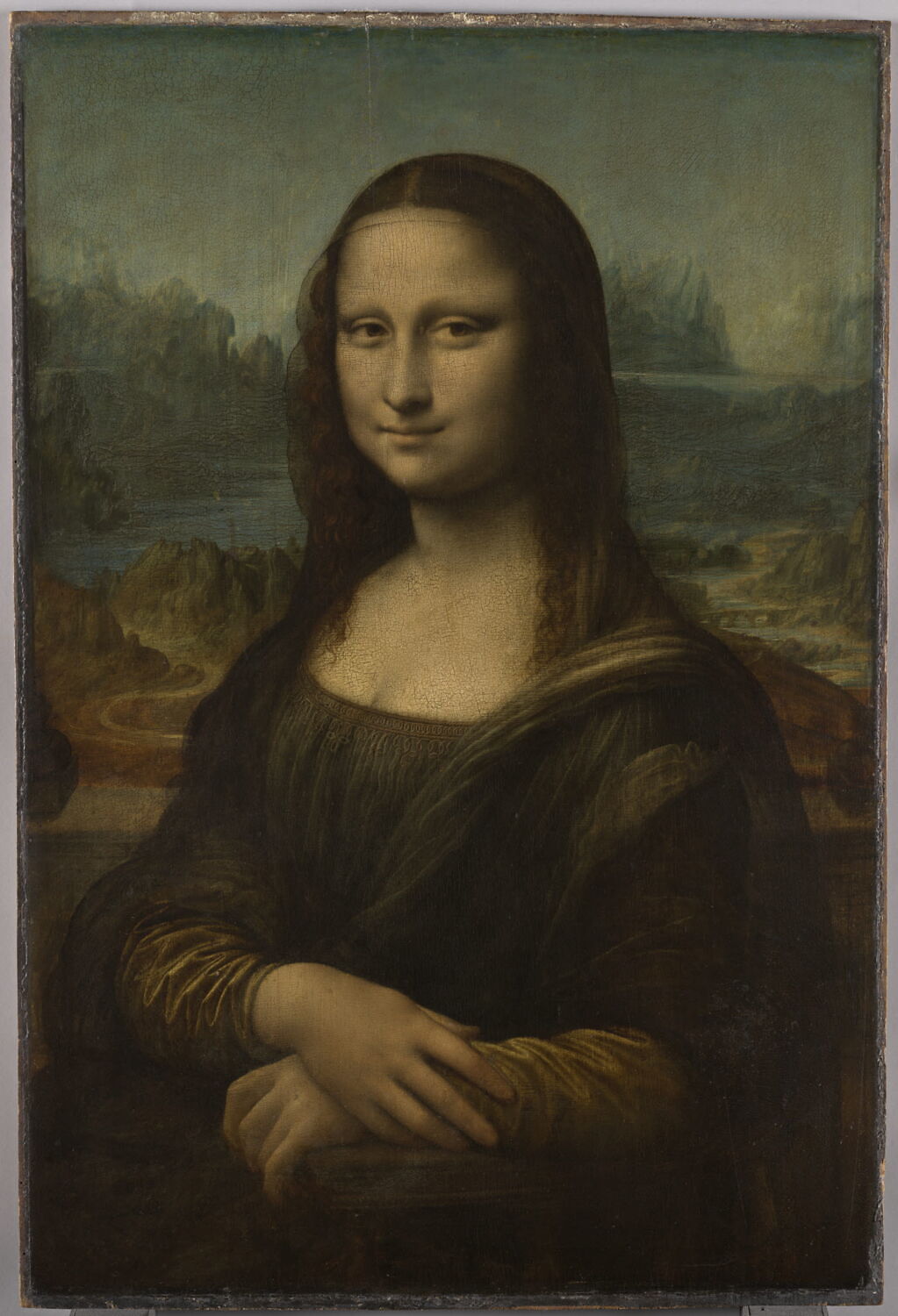
In the Mona Lisa, the face emerges through tiny transitions between light and shadow. Thin glazes soften its contours, producing the effect called sfumato. Think of the edge of a cheek: instead of a drawn boundary between face and background, there is a gradual change that the eye interprets as a rounded surface. The visible image depends on a succession of barely visible applications.