 Leonardo da VinciItalian, 1452–1519
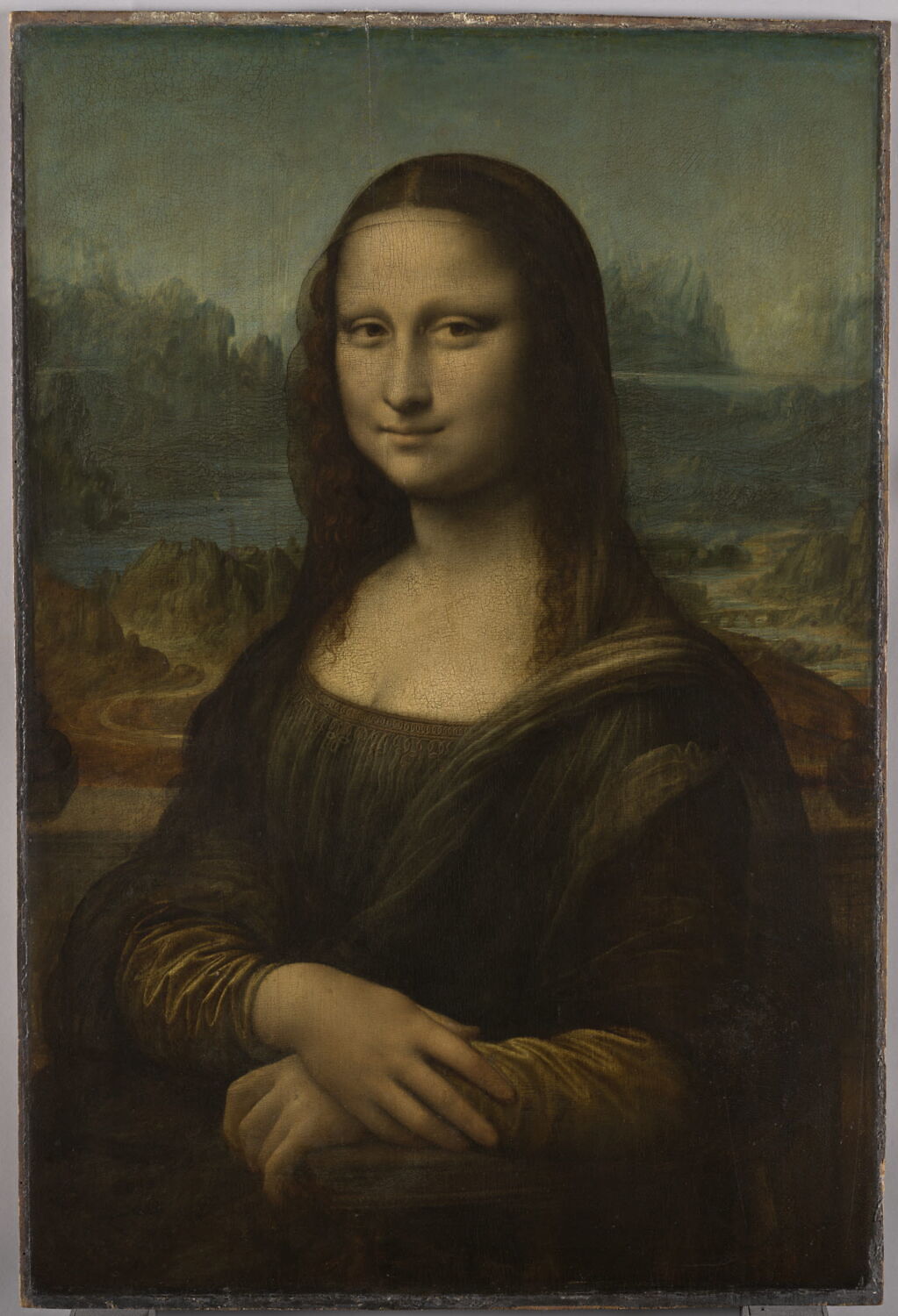
Mona Lisa
Portrait de Lisa Gherardini, épouse de Francesco del Giocondo, dit La Joconde ou Monna Lisa
May one see it?
Yes, receiving visitors

Musée du Louvre
Room711, Aile Denon, Niveau 1Paris, France
On public display.
- Checked
- 7 days ago
- In this state since
- Sep 26, 2026
- Source
- The museum's own collection data
About the painting
The Mona Lisa is a half-length portrait painting by the Italian artist Leonardo da Vinci. Considered an archetypal masterpiece of the Italian Renaissance, it has been described as "the best known, the most visited, the most written about, the most sung about, [and] the most parodied work of art in the world". The painting's novel qualities include the subject's enigmatic expression, the monumentality of the composition, the subtle modelling of forms, and the atmospheric illusionism.
Read on
The painting has been traditionally considered to depict the Italian noblewoman Lisa del Giocondo. It is painted in oil on a white poplar panel. Leonardo never gave the painting to the Giocondo family. It was believed to have been painted between 1503 and 1506; however, Leonardo may have continued working on it as late as 1517. King Francis I of France acquired the Mona Lisa after Leonardo's death in 1519, and it later became the property of the French Republic. It has normally been on display at the Louvre in Paris since 1797.
The painting's global fame and popularity partly stem from its 1911 theft by Vincenzo Peruggia, who attributed his actions to Italian patriotism—a belief it should belong to Italy. The theft and subsequent recovery in 1914 generated unprecedented publicity for an art theft, and led to the publication of many cultural depictions such as the 1915 opera Mona Lisa, two early 1930s films (The Theft of the Mona Lisa and Arsène Lupin), and the song "Mona Lisa" recorded by Nat King Cole—one of the most successful songs of the 1950s.
The Mona Lisa is one of the most valuable paintings in the world. It holds the Guinness World Record for the highest known painting insurance valuation in history at US$100 million in 1962, equivalent to $1 billion as of 2023.
Particulars
- Accession number
- INV 779
Sources
- Musée du Louvre: the museum's own open data · fetched 7 days ago
- Image: Musée du Louvre — © 2018 GrandPalaisRmn (musée du Louvre) / Michel Urtado
Meanwhile, in the life of Leonardo da Vinci
The whole life1502
In the service of Cesare Borgia
In Cesena Leonardo entered the service of Cesare Borgia, son of Pope Alexander VI, travelling throughout Italy with him. To win his patronage he drew a town plan of Imola, after which Borgia made him his chief military engineer and architect.
9 July 1504
Death of his father, Ser Piero da Vinci
Leonardo noted: “9 July 1504, Wednesday, at 7 o'clock. Ser Piero da Vinci died at 7 o'clock, aged 80.”
September 1513
Moves to Rome under Pope Leo X
After Giovanni de' Medici, Lorenzo's son, became Pope Leo X, Leonardo went to Rome, where he was received by the pope's brother Giuliano. Until 1516 he lived mostly in the Belvedere of the Apostolic Palace, where Michelangelo and Raphael were both active, on an allowance of 33 ducats a month.
1516
Moves to France at the invitation of Francis I
Leonardo accepted the French king's invitation and settled at the Château du Clos Lucé near the royal Château d'Amboise. As First Painter, Engineer and Architect to the King he received an annual pension of a thousand écus.
c. 1517
His right hand goes numb
Two years before his death Leonardo's right hand went numb, and he could barely move about without help. He spent his third year in Amboise in bed.
2 May 1519
Died

![Wreath of Laurel, Palm, and Juniper with a Scroll inscribed Virtutem Forma Decorat [reverse], Leonardo da Vinci, c. 1474/1478](https://api.nga.gov/iiif/ff62e8d0-45c4-498f-ad36-6358de827e04/full/!2400,2400/0/default.jpg)
![Ginevra de' Benci [obverse], Leonardo da Vinci, c. 1474/1478](https://api.nga.gov/iiif/8f29e3c9-a289-4d53-abf0-31a66e9e98fa/full/!2400,2400/0/default.jpg)