Роберто Себастьян МаттаЧили, 1911–2002
Drive in the Knife
О картине
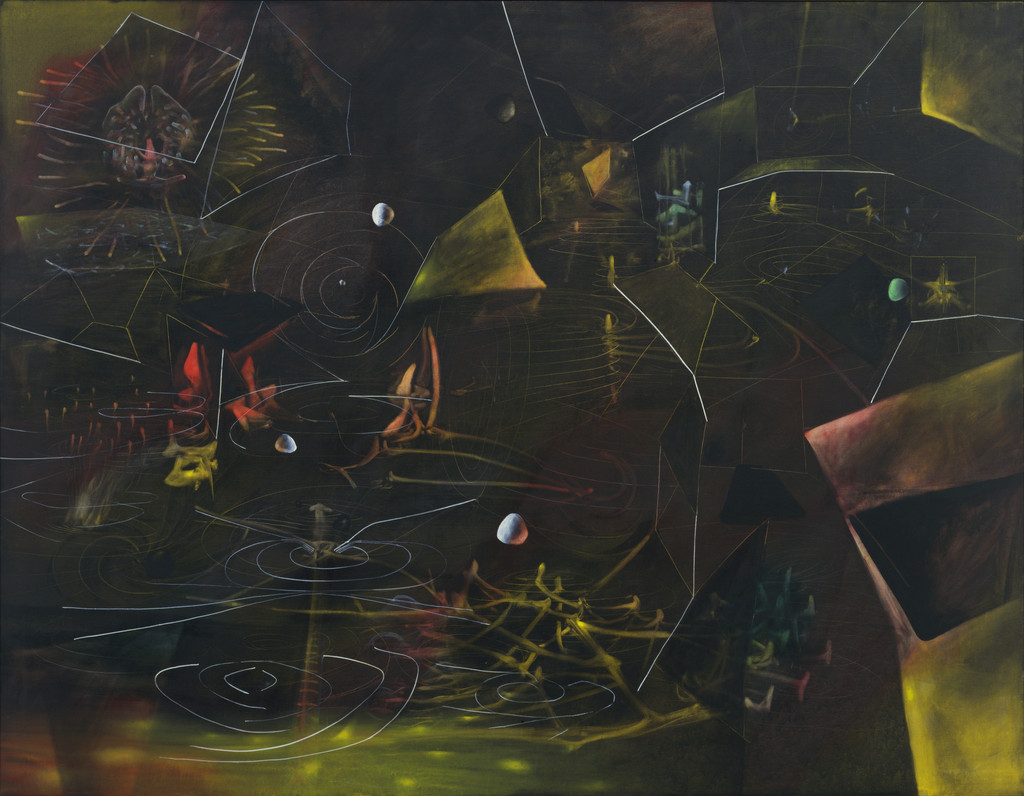
Своеобразное написание Маттой слова plenter (вместо planter), одного из слов в названии этой работы, характерно для него; возможно, он имел в виду словесную игру с выражением plenter le drapeau («водрузить флаг») как подрывной, антипатриотичный жест. В остальном название, по-видимому, не имеет прямого отношения к изображению, кроме того, что подчёркивает его жестовую драматичность и, возможно, выделяет две твёрдые, похожие на топоры формы, выделяющиеся на фоне закрученных масс краски и линий.
Читать дальше
Эта картина может быть связана с серией работ, начатой в 1942 году, в которой Матта исследовал перспективные и пространственные идеи великой картины Марселя Дюшана на стекле «Невеста, раздетая своими холостяками, даже», известной также как «Большое стекло» (1915–23, Художественный музей Филадельфии; Philadelphia Museum of Art, Handbook of the Collections, 1995, p. 316, ill.). Эти два художника были особенно близки в годы Второй мировой войны, которые они провели, наряду с другими сюрреалистами, в Нью-Йорке. «Большое стекло», должно быть, лежит в основе концепции «Великих прозрачных» (Les Grands Transparents) — названия иллюстрации Матты к статье Бретона «Пролегомены к третьему манифесту сюрреализма или нет» (VVV 1 [June 1942], pp. 18–26).
В этой статье Бретон говорил о неловкости человека перед лицом космической необъятности, не опосредованной присутствием Бога, — не в отчаянии, а как о благотворном признании пределов человеческой рациональности и самомнения. В разделе с подзаголовком «Великие прозрачные» Бретон вызвал вселенную, близкую к вселенной Матты: «Возможно, человек не является центром, фокусом вселенной. Можно даже зайти так далеко, чтобы поверить, что над ним, на животном уровне, существуют существа, чьё поведение так же чуждо ему, как его собственное, должно быть, чуждо поденке или киту» (ibid., p. 25).
Роми Голан показала, что развивавшиеся у Матты в этот период идеи психологического и метафорического пространства опираются на работы Дюшана (Romy Golan, «Matta Duchamp et le mythe: Un Nouveau Paradigme pour la dernière phase du surréalisme», in Paris, Musée national d’arte moderne, Matta, 1985, exh. cat., pp. 37–51). Странная, наполовину человеческая, наполовину механическая структура на картине Дюшана 1912 года «Невеста» (Philadelphia Museum of Art; Pontus Hulten, ed., Marcel Duchamp: Work and Life, Cambridge, Mass., 1993, p. 98, ill.), например, могла подтолкнуть Матту к сочетаниям твёрдых и прозрачных форм в картинах этого периода. Высказывалось также предположение, что размашистые, похожие на паутину линии, заметные в «Вонзить нож», перекликаются с линиями трещин в «Большом стекле» (Golan, in Paris 1985, p. 42). Это кажется правдоподобным объяснением странной роли этих линий в картинах Матты, где они порой словно имитируют перспективные отметки, а порой беспорядочно блуждают в пространстве. Эта идея прозрачности дополнительно подчёркнута в «Вонзить нож» участками голого холста.
Сведения
- Инвентарный номер
- 2018.298