ART WIKI37,906 on view
MapCollectionArtistsMuseumsExhibitionsJournal
Sign in

ART WIKI

Where to see art and when to visit.

Collections: Art Institute of Chicago, Cooper Hewitt, Smithsonian Design Museum, Getty Villa, Harvard Art Museums, Hirshhorn Museum and Sculpture Garden, J. Paul Getty Museum, Minneapolis Institute of Art, Musée du Louvre, National Gallery of Art, National Museum of Asian Art, National Portrait Gallery (Smithsonian), Pushkin State Museum of Fine Arts, Rijksmuseum, Smithsonian American Art Museum, SMK — National Gallery of Denmark, State Hermitage Museum, State Russian Museum, The Cleveland Museum of Art, The Metropolitan Museum of Art, The Museum of Modern Art, Tretyakov Gallery, Victoria and Albert Museum, Whitney Museum of American Art, Yale Center for British Art, Yale University Art Gallery, State Catalogue of the Museum Fund of Russia (274 museums), Europeana (19 museums), Wikidata (44 museums), Paris Musées (12 museums), Joconde, the French Ministry of Culture's museum database (495 museums), and the Catalogo generale dei Beni Culturali of Italy's Ministry of Culture (74 museums). Images belong to their rights holders.

Sections

  • Map
  • Search
  • Collection
  • Masterpieces
  • Stolen and lost
  • Embed artwork status
  • On view now
  • Artists

More

  • Museums & galleries
  • Exhibitions
  • Journal
  • Where the data comes from
  • Privacy & cookies
  • About
  • Terms of use
HomeMapBrowse

Browse

Etching

134,099 works from 168 museums146 on view nowClear all

/
Technique
  • All
  • Etching134,099
  • Lithograph89,670
  • Engraving65,311
  • Woodcut56,703
  • Screenprint9,592
  • Drypoint9,308
  • Aquatint7,452
  • Photomechanical print6,933
  • Mezzotint6,751
  • Linocut2,658
Plate 46 from "The Disasters of War" (Los Desastres de la Guerra): 'This is bad' (Esto es malo), Goya, 1810 (published 1863)Francisco de GoyaPlate 46 from "The Disasters of War" (Los Desastres de la Guerra): 'This is bad' (Esto es malo)1810 (published 1863)The Metropolitan Museum of Art
Plate 50 from "The Disasters of War" (Los Desastres de la Guerra): 'Unhappy mother!' (Madre Infeliz!), Goya, 1811–12 (published 1863)Francisco de GoyaPlate 50 from "The Disasters of War" (Los Desastres de la Guerra): 'Unhappy mother!' (Madre Infeliz!)1811–12 (published 1863)The Metropolitan Museum of Art
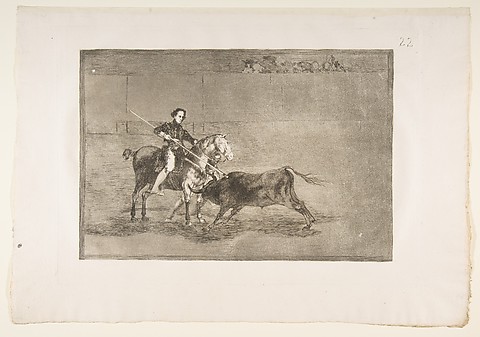
Plate 22 from "La Tauromaquia": Manly courage of the celebrated Pajuelera in [the ring] at Zaragoza, Goya, 1816Francisco de GoyaPlate 22 from "La Tauromaquia": Manly courage of the celebrated Pajuelera in [the ring] at Zaragoza1816The Metropolitan Museum of Art
Plate 52 from "The Disasters of War" (Los Desastres de la Guerra): 'They do not arrive in time' (No llegan á tiempo), Goya, 1811–12 (published 1863)Francisco de GoyaPlate 52 from "The Disasters of War" (Los Desastres de la Guerra): 'They do not arrive in time' (No llegan á tiempo)1811–12 (published 1863)The Metropolitan Museum of Art
Plate 12 from "La Tauromaquia": The crowd hamstrings the bull with lances, sickles, banderillas and other arms, Goya, 1816Francisco de GoyaPlate 12 from "La Tauromaquia": The crowd hamstrings the bull with lances, sickles, banderillas and other arms1816The Metropolitan Museum of Art
Plate 34 from "The Disasters of War" (Los Desastres de La Guerra): 'On account of a knife' (Por una navaja), Goya, 1810 (published 1863)Francisco de GoyaPlate 34 from "The Disasters of War" (Los Desastres de La Guerra): 'On account of a knife' (Por una navaja)1810 (published 1863)The Metropolitan Museum of Art
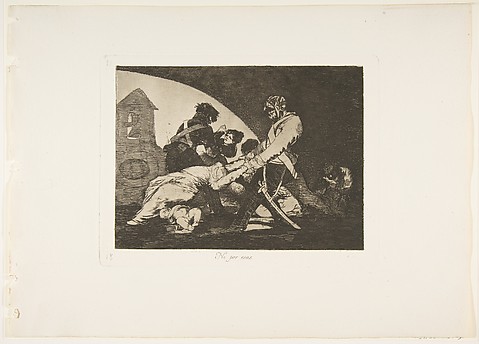
Plate 11 from "The Disasters of War" (Los Desastres de la Guerra): Not even in that way (Ni por esas), Goya, ca. 1810 (published 1863)Francisco de GoyaPlate 11 from "The Disasters of War" (Los Desastres de la Guerra): Not even in that way (Ni por esas)ca. 1810 (published 1863)The Metropolitan Museum of Art
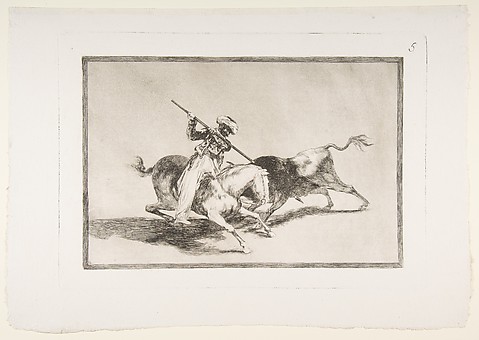
Plate 5 from "La Tauromaquia": The spirited Moor Gazul is the first to spear bulls according to the rules, Goya, 1816Francisco de GoyaPlate 5 from "La Tauromaquia": The spirited Moor Gazul is the first to spear bulls according to the rules1816The Metropolitan Museum of Art
Plate 22 from "The Disasters of War" (Los Desastres de la Guerra): 'Even worse' (Tanto y mas), Goya, 1810 (published 1863)Francisco de GoyaPlate 22 from "The Disasters of War" (Los Desastres de la Guerra): 'Even worse' (Tanto y mas)1810 (published 1863)The Metropolitan Museum of Art
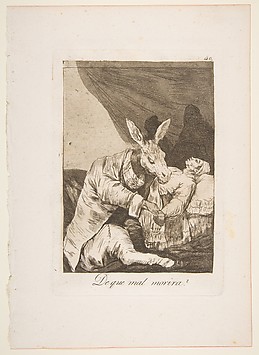
Plate 40 from "Los Caprichos": Of what ill will he die? (De que mal morira?), Goya, 1799Francisco de GoyaPlate 40 from "Los Caprichos": Of what ill will he die? (De que mal morira?)1799The Metropolitan Museum of Art
'Well-Known Folly' from the 'Disparates' (Follies / Irrationalities, Plate A), Goya, ca. 1815–19 (published before 1877)Francisco de Goya'Well-Known Folly' from the 'Disparates' (Follies / Irrationalities, Plate A)ca. 1815–19 (published before 1877)The Metropolitan Museum of Art
A Moor Caught by the Bull in the ring, plate 8 from "La Tauromaquia", Goya, 1816Francisco de GoyaA Moor Caught by the Bull in the ring, plate 8 from "La Tauromaquia"1816The Metropolitan Museum of Art
Plate 20 from "The Disasters of War" (Los Desastres de la Guerra): 'Get them well, and on to the next' (Curarlos y á otra), Goya, 1810Francisco de GoyaPlate 20 from "The Disasters of War" (Los Desastres de la Guerra): 'Get them well, and on to the next' (Curarlos y á otra)1810The Metropolitan Museum of Art
'Animal Folly' from the 'Disparates' (Follies / Irrationalities), Goya, ca. 1815–19 (published before 1877)Francisco de Goya'Animal Folly' from the 'Disparates' (Follies / Irrationalities)ca. 1815–19 (published before 1877)The Metropolitan Museum of Art
Plate 72 from "The Disasters of War" (Los Desastres de la Guerra): 'The Consequences' (Las resultas), Goya, 1814–15 (published 1863)Francisco de GoyaPlate 72 from "The Disasters of War" (Los Desastres de la Guerra): 'The Consequences' (Las resultas)1814–15 (published 1863)The Metropolitan Museum of Art
The horse abductor, from "The Disparates" (Follies / Irrationalities), Goya, ca. 1815–19 (published 1864)Francisco de GoyaThe horse abductor, from "The Disparates" (Follies / Irrationalities)ca. 1815–19 (published 1864)The Metropolitan Museum of Art
Plate 74 from "Los Caprichos": Don't scream, stupid (No grites, tonta), Goya, 1799Francisco de GoyaPlate 74 from "Los Caprichos": Don't scream, stupid (No grites, tonta)1799The Metropolitan Museum of Art
Clear Folly, from "The Disparates" (Follies / Irrationalities), Goya, ca. 1815–19 (published 1864)Francisco de GoyaClear Folly, from "The Disparates" (Follies / Irrationalities)ca. 1815–19 (published 1864)The Metropolitan Museum of Art
Plate 24 from "The Disasters of War" (Los Desastres de la Guerra): 'They can still be of use' (Aun podrán servir), Goya, 1810 (published 1863)Francisco de GoyaPlate 24 from "The Disasters of War" (Los Desastres de la Guerra): 'They can still be of use' (Aun podrán servir)1810 (published 1863)The Metropolitan Museum of Art
Plate 25: If he broke the pot (Si quebró el cantaro), from "Los Caprichos", Goya, ca. 1797–98Francisco de GoyaPlate 25: If he broke the pot (Si quebró el cantaro), from "Los Caprichos"ca. 1797–98The Metropolitan Museum of Art
Blind Guitarist, Goya, ca. 1778Francisco de GoyaBlind Guitaristca. 1778The Metropolitan Museum of Art
Plate 18 from "Los Caprichos": And his house is on fire (Ysele quema la Casa), Goya, 1799Francisco de GoyaPlate 18 from "Los Caprichos": And his house is on fire (Ysele quema la Casa)1799The Metropolitan Museum of Art
Aesop, after Velázquez, Goya, 1778Francisco de GoyaAesop, after Velázquez1778The Metropolitan Museum of Art
Plate 21 from "The Disasters of War" (Los Desastres de la Guerra): 'It will be the same' (Será lo mismo), Goya, ca. 1810Francisco de GoyaPlate 21 from "The Disasters of War" (Los Desastres de la Guerra): 'It will be the same' (Será lo mismo)ca. 1810The Metropolitan Museum of Art
'Flying Folly' from the 'Disparates' (Follies / Irrationalities), Goya, ca. 1815–19 (published 1864)Francisco de Goya'Flying Folly' from the 'Disparates' (Follies / Irrationalities)ca. 1815–19 (published 1864)The Metropolitan Museum of Art
Plate 61 from "The Disasters of War" (Los Desastres de la Guerra): 'Perhaps they are of another breed' (Si son de otro linage), Goya, 1811–12 (published 1863)Francisco de GoyaPlate 61 from "The Disasters of War" (Los Desastres de la Guerra): 'Perhaps they are of another breed' (Si son de otro linage)1811–12 (published 1863)The Metropolitan Museum of Art
Plate 30 from "Los Caprichos": Why hide them? (Porque esconderlos?), Goya, 1799Francisco de GoyaPlate 30 from "Los Caprichos": Why hide them? (Porque esconderlos?)1799The Metropolitan Museum of Art
'Poor Folly' from the 'Disparates' (Follies / Irrationalities), Goya, ca. 1815–19 (published 1864)Francisco de Goya'Poor Folly' from the 'Disparates' (Follies / Irrationalities)ca. 1815–19 (published 1864)The Metropolitan Museum of Art
Plate 17 from "The Disasters of War" (Los Desastres de la Guerra): 'They do not agree' (No se convienen), Goya, ca. 1810 (published 1863)Francisco de GoyaPlate 17 from "The Disasters of War" (Los Desastres de la Guerra): 'They do not agree' (No se convienen)ca. 1810 (published 1863)The Metropolitan Museum of Art
Plate 43 from "Los Caprichos": The sleep of reason produces monsters (El sueño de la razon produce monstruos), Goya, 1799Francisco de GoyaPlate 43 from "Los Caprichos": The sleep of reason produces monsters (El sueño de la razon produce monstruos)1799The Metropolitan Museum of Art
Plate 75 from "The Disasters of War" (Los Desastres de la Guerra): 'Charlatan's show' (Farándula de charlatanes), Goya, 1814–15 (published 1863)Francisco de GoyaPlate 75 from "The Disasters of War" (Los Desastres de la Guerra): 'Charlatan's show' (Farándula de charlatanes)1814–15 (published 1863)The Metropolitan Museum of Art
Little Bulls' Folly, from "The Disparates" (Disparates, Plate D), Goya, ca. 1815–19 (published 1877)Francisco de GoyaLittle Bulls' Folly, from "The Disparates" (Disparates, Plate D)ca. 1815–19 (published 1877)The Metropolitan Museum of Art
'Carnival Folly' from the 'Disparates' (Follies / Irrationalities), Goya, ca. 1815–19 (published 1864)Francisco de Goya'Carnival Folly' from the 'Disparates' (Follies / Irrationalities)ca. 1815–19 (published 1864)The Metropolitan Museum of Art
Plate 20 from "Los Caprichos": There they go plucked (i.e. fleeced) (Ya van desplumados), Goya, 1799Francisco de GoyaPlate 20 from "Los Caprichos": There they go plucked (i.e. fleeced) (Ya van desplumados)1799The Metropolitan Museum of Art
Plate 38 from "Los Caprichos": Bravo! (Brabisimo!), Goya, 1799Francisco de GoyaPlate 38 from "Los Caprichos": Bravo! (Brabisimo!)1799The Metropolitan Museum of Art
Plate 16 from "The Disasters of War" (Los Desastres de La Guerra): They make use of them (Se aprovechan), Goya, ca. 1810 (published 1863)Francisco de GoyaPlate 16 from "The Disasters of War" (Los Desastres de La Guerra): They make use of them (Se aprovechan)ca. 1810 (published 1863)The Metropolitan Museum of Art
Plate 53  from "The Disasters of War" (Los Desastres de la Guerra): 'There was nothing to be done and he died' (Espiró sin remedio), Goya, 1811–12 (published 1863)Francisco de GoyaPlate 53 from "The Disasters of War" (Los Desastres de la Guerra): 'There was nothing to be done and he died' (Espiró sin remedio)1811–12 (published 1863)The Metropolitan Museum of Art
Plate 56 from "The Disasters of War" (Los Desastres de la Guerra): 'To the cemetery' (Al cementerio), Goya, 1811–12 (published 1863)Francisco de GoyaPlate 56 from "The Disasters of War" (Los Desastres de la Guerra): 'To the cemetery' (Al cementerio)1811–12 (published 1863)The Metropolitan Museum of Art
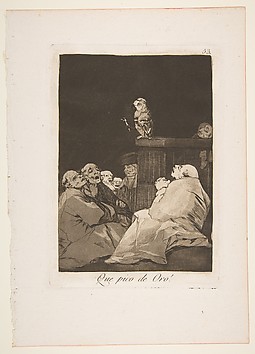
Plate 53 from "Los Caprichos": What a golden beak! (Que pico de Oro!), Goya, 1799Francisco de GoyaPlate 53 from "Los Caprichos": What a golden beak! (Que pico de Oro!)1799The Metropolitan Museum of Art
Plate 1 from "La Tauromaquia": The way in which the ancient Spaniards hunted bulls on horseback in the open country, Goya, 1816Francisco de GoyaPlate 1 from "La Tauromaquia": The way in which the ancient Spaniards hunted bulls on horseback in the open country1816The Metropolitan Museum of Art
Plate 24 from "The Disasters of War" (Los Desastres de la Guerra): They can still be of use (Aun podrán servir), Goya, 1810 (published 1863)Francisco de GoyaPlate 24 from "The Disasters of War" (Los Desastres de la Guerra): They can still be of use (Aun podrán servir)1810 (published 1863)The Metropolitan Museum of Art
Plate 12 from "Los Caprichos": Out hunting for teeth (A caza de dientes), Goya, 1799Francisco de GoyaPlate 12 from "Los Caprichos": Out hunting for teeth (A caza de dientes)1799The Metropolitan Museum of Art
Plate 21 from "La Tauromaquia": Dreadful events in the front rows of the ring at Madrid and death of the mayor of Torrejon, Goya, 1816Francisco de GoyaPlate 21 from "La Tauromaquia": Dreadful events in the front rows of the ring at Madrid and death of the mayor of Torrejon1816The Metropolitan Museum of Art
Plate 19 from "The Disasters of War" (Los Desastres de la Guerra): 'There isn't time now' (Ya no hay tiempo), Goya, 1810 (published 1863)Francisco de GoyaPlate 19 from "The Disasters of War" (Los Desastres de la Guerra): 'There isn't time now' (Ya no hay tiempo)1810 (published 1863)The Metropolitan Museum of Art
Plate 24 from  "Los Caprichos": Nothing could be done about It (Nohubo remedio), Goya, 1799Francisco de GoyaPlate 24 from "Los Caprichos": Nothing could be done about It (Nohubo remedio)1799The Metropolitan Museum of Art
Plate 42 from "The Disasters of War" (Los Desastres de la Guerra): 'Everything is topsy-turvey' (Todo va revuelto), Goya, 1810 (published 1863)Francisco de GoyaPlate 42 from "The Disasters of War" (Los Desastres de la Guerra): 'Everything is topsy-turvey' (Todo va revuelto)1810 (published 1863)The Metropolitan Museum of Art
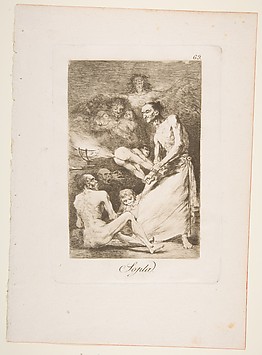
Plate 69 from "Los Caprichos": Blow (Sopla), Goya, 1799Francisco de GoyaPlate 69 from "Los Caprichos": Blow (Sopla)1799The Metropolitan Museum of Art
'Flying Folly' from the 'Disparates' (Follies / Irrationalities), Goya, ca. 1815–19 (private printing ca.1854)Francisco de Goya'Flying Folly' from the 'Disparates' (Follies / Irrationalities)ca. 1815–19 (private printing ca.1854)The Metropolitan Museum of Art
37