 Francisco de GoyaSeated Giant
Browse
Aquatint
Aquatint is a way of etching tones into a metal printing plate. Tiny grains of resin protect scattered points while acid attacks the spaces between them; these spaces hold ink and print as a field of tone. From a distance the result can resemble a brush wash. Up close, its grain reveals how a cloud or shadow was made printable.
7,452 works from 61 museums15 on view nowClear all
Francisco de GoyaSeated Giant Pablo PicassoThe Frog (Les Grenouilles)
 Pablo PicassoThe Surprised Bathers (Les baigneuses surprises)
 Pablo PicassoLe Taureau (The Bull)
 Pablo PicassoWhite Eagle (L'Aigle) (plate, facing page 92) from Eaux-fortes originale pour des textes de Buffon (Histoire naturelle)
 Pablo PicassoFaun Unveiling a Sleeping Girl (Jupiter and Antiope, after Rembrandt) (Faune dévoilant une dormeuse [Jupiter et Antiope, d'après Rembrandt]) from the Vollard Suite (Suite Vollard)
 Pablo Picasso"Tell of Wanderings" (chapter title, page 109) from Corps perdu
 Pablo PicassoSummoning the Bull with a Lance, plate 25 from the illustrated book La Tauromaquia
 Pablo PicassoHead of a Woman No. 5, Portrait of Dora Maar (Tête de femme No. 5, portrait de Dora Maar)
 Pablo Picasso"Births" (chapter title, page 61) from Corps perdu
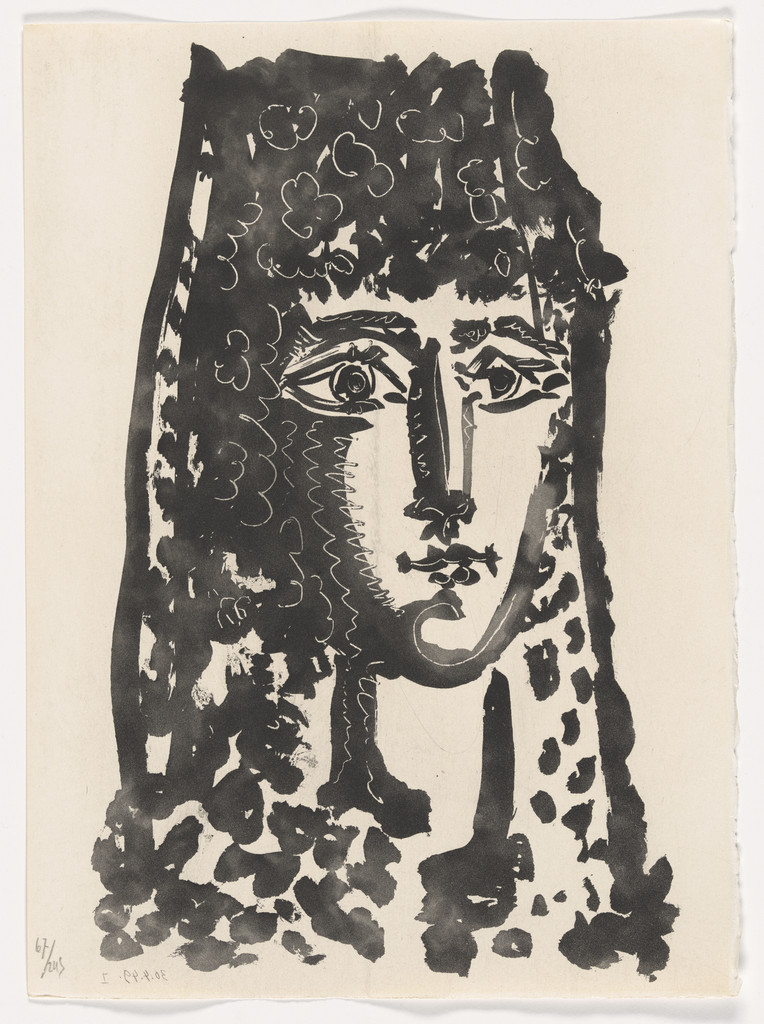 Pablo PicassoWoman with a Mantilla: Carmen (Femme à la mantille: Carmen) (unbound plate) from Le Carmen des Carmen
 Pablo PicassoPainter and Model with Long Hair (Peintre et modèle aux cheveux longs) (page 15) from Sable mouvant
 Leonardo da VinciPortrait of Leonardo da Vinci, from "Characaturas by Leonardo da Vinci, from Drawings by Wincelslaus Hollar, out of the Portland Museum"
 Pablo PicassoBlind Minotaur Led by Marie-Thérèse with a Dove in a Starry Night (Minotaure aveugle guidé par Marie-Thérèse au pigeon dans une nuit étoilée)
 Pablo PicassoBlind Minotaur Led by Marie-Thérèse with a Dove in a Starry Night (Minotaure aveugle guidé par Marie-Thérèse au pigeon dans une nuit étoilée)
 Pablo PicassoDream and Lie of Franco
 Pablo PicassoL'Autruche (The Ostrich)
 Pablo PicassoPortrait of Vollard I (Portrait de Vollard. I) from the Vollard Suite (Suite Vollard)
 Pablo PicassoA une dame qui se fit saigner la cheville from Vingt poëmes
 Pablo PicassoLe Poète à un excellent peintre étranger qui faisait son portrait from Vingt poëmes
 Pablo PicassoBull Leaving the Bull Pen, plate 5 from the illustrated book La Tauromaquia
 Pablo PicassoPortrait of Françoise of the Long Neck I (Portrait de Françoise au long cou I)
 Pablo PicassoPortrait of Vollard II (Portrait de Vollard. II) from the Vollard Suite (Suite Vollard)
 Pablo PicassoBulls in the Field, plate 1 from the illustrated book La Tauromaquia
 Pablo PicassoRape under the Window (Le viol sous la fenetre)
 Pablo PicassoL'Ane (The Donkey)
 Pablo PicassoBlind Minotaur Led by Marie-Thérèse with a Dove in a Starry Night (Minotaure aveugle guidé par Marie-Thérèse au pigeon dans une nuit étoilée)
 Pablo PicassoStill Life (Nature morte)
 Pablo PicassoLe Chat (The Cat)
 Pablo PicassoA une jeune fille qui cueillait des fleurs from Vingt poëmes
 Pablo PicassoHead of a Woman No. 6, Portrait of Dora Maar (Tête de femme No. 6, portrait de Dora Maar)
 Pablo PicassoSeated Bullfighter Summoning the Bull with Banderillas, plate 15 from the illustrated book La Tauromaquia
 Pablo PicassoSculptor and Sculpture (Sculpteur et sculpture) (page 27) from Sable mouvant
 Pablo PicassoMatador Pledging the Death of the Bull, plate 16 from the illustrated book La Tauromaquia
 Pablo PicassoThe Hen (La Poule)
 Pablo PicassoQuatre sujets pour: La barre d'appui
 Pablo PicassoDeath of the Bull from La tauromaquia
 Pablo PicassoVariation on Delacroix's "Women of Algiers": IX
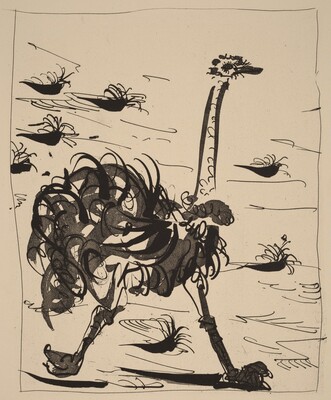 Pablo PicassoL'Autruche (The Ostrich)
 Pablo PicassoDream and Lie of Franco
 Pablo PicassoLe Dindon (The Turkey)
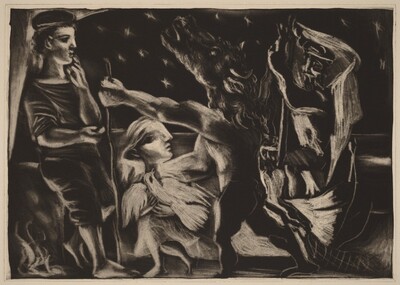 Pablo PicassoBlind Minotaur Led by Marie-Thérèse with a Dove in a Starry Night (Minotaure aveugle guidé par Marie-Thérèse au pigeon dans une nuit étoilée)
 Pablo PicassoA la ville de Cordoue from Vingt poëmes
 Pablo PicassoThe Ram (Le Bélier) from Eaux-fortes originale pour des textes de Buffon (Histoire naturelle)
 Pablo PicassoLe Poète reproche au soleil de l'avoir obligé à quitter sa dame from Vingt poëmes
 Pablo PicassoThe Crayfish (La Langouste) (plate XXV, facing page 142) from Eaux-fortes originale pour des textes de Buffon (Histoire naturelle)
 Pablo Picasso"Elegy-Equation" (chapter title, page 37) from Corps perdu
 Pablo PicassoAu comte de Villamediana, grand amateur de pierres précieuses, de chevaux et de tableaux from Vingt poëmes
Aquatint
Picasso’s blind Minotaur needs a girl to lead him through the night. The creature’s strength is useless without her sight. To make Blind Minotaur Led by Marie-Thérèse with a Dove in a Starry Night, Picasso prepared a dark aquatint field, then scraped and polished light out of it. The girl is commonly read as Marie-Thérèse Walter, his lover, and the Minotaur as his troubled double. The technique makes their emergence from darkness part of the story.

How is an aquatint made?
Ordinary line etching opens narrow paths through a protective coating. Aquatint instead leaves a multitude of tiny protected points. One traditional method dusts a metal plate with powdered rosin, which is heated just enough to adhere. Acid bites between the grains. After the coating is removed, the etched texture receives ink, excess ink is wiped away, and the plate is printed. A patch of grey is therefore an accumulation of small ink-bearing spaces.
Different tones require different treatment. Areas can be protected with varnish while the remaining surface receives further biting; grain size and the depth of the bite also affect the result. This is why a seemingly effortless wash can represent a carefully staged sequence. The printer does not pour grey water over the sheet. The grey has been organised in metal before the paper reaches the press.
The Minotaur print approaches that sequence from the dark end. Scraping and burnishing reduce an already established tone, in a manner resembling mezzotint. The distinction lies partly in the preparation: aquatint’s grain is bitten by acid, while a conventional mezzotint ground is made with a toothed tool. Similar-looking darkness can have different causes. Picasso’s use of drypoint and engraving alongside aquatint makes a single technique an incomplete description of the sheet.