Rembrandt van RijnThe Three Crosses
Browse
Drypoint
Drypoint is a print made from lines scratched directly into a plate with a sharp needle. The needle pushes up a thin ridge of metal, called a burr, which catches ink beside the groove. That extra ink gives the line its soft, sometimes almost hairy edge. The effect is delicate: repeated printing gradually flattens the very ridge that makes it possible.
9,308 works from 42 museums11 on view nowClear all
Rembrandt van RijnThe Three Crosses Pablo PicassoStill Life with Fruit Bowl (Nature morte au compotier)
 Pablo PicassoThe Watering Place (Horses Bathing) [L'abreuvoir (chevaux au bain)]
 Pablo PicassoThe Acrobats (Les saltimbanques)
 Pablo PicassoSalomé
 Pablo PicassoThe Spring (La source)
 Pablo PicassoThe Mother's Toilette (La toilette de la mère)
 Pablo PicassoYoung Girl in Profile, Crowned with Flowers (Jeune Fille de Profil Couronnée de Fleurs)
 Pablo PicassoSalomé
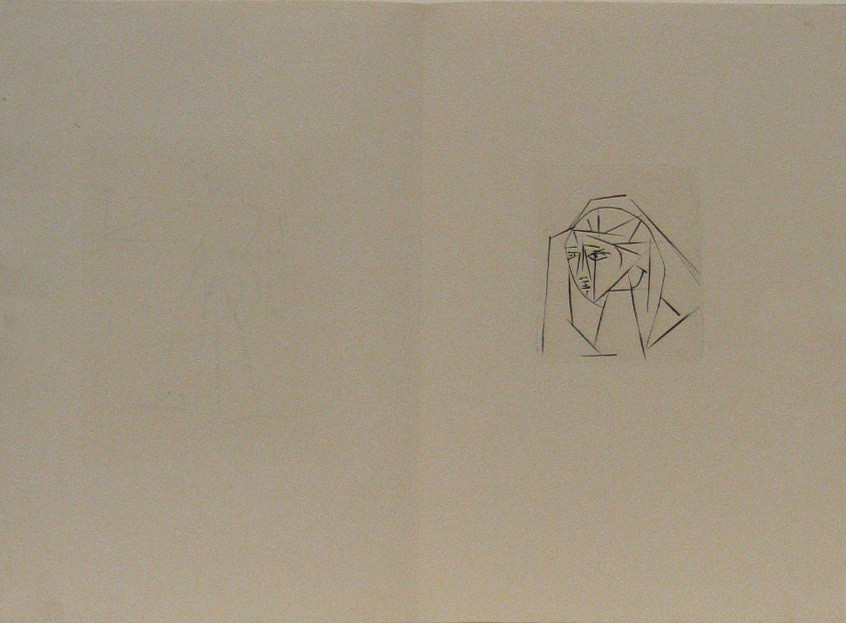 Pablo PicassoHead of a Young Girl (plate, page 31) from the illustrated book À Haute Flamme
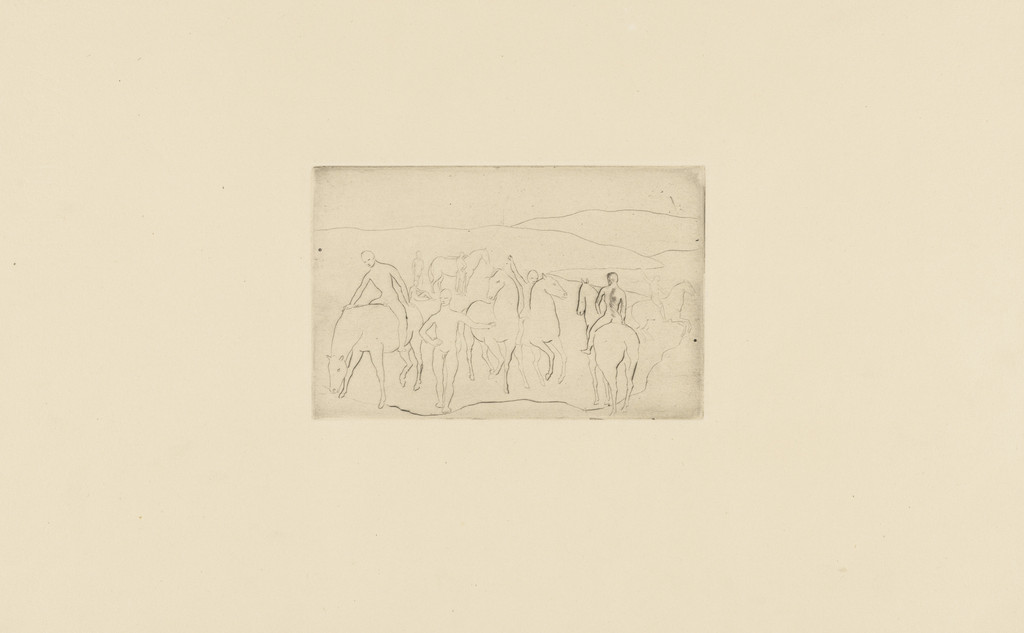 Pablo PicassoThe Watering Place (Horses Bathing) (L'Abreuvoir [Chevaux au bain]) from the Saltimbanques series
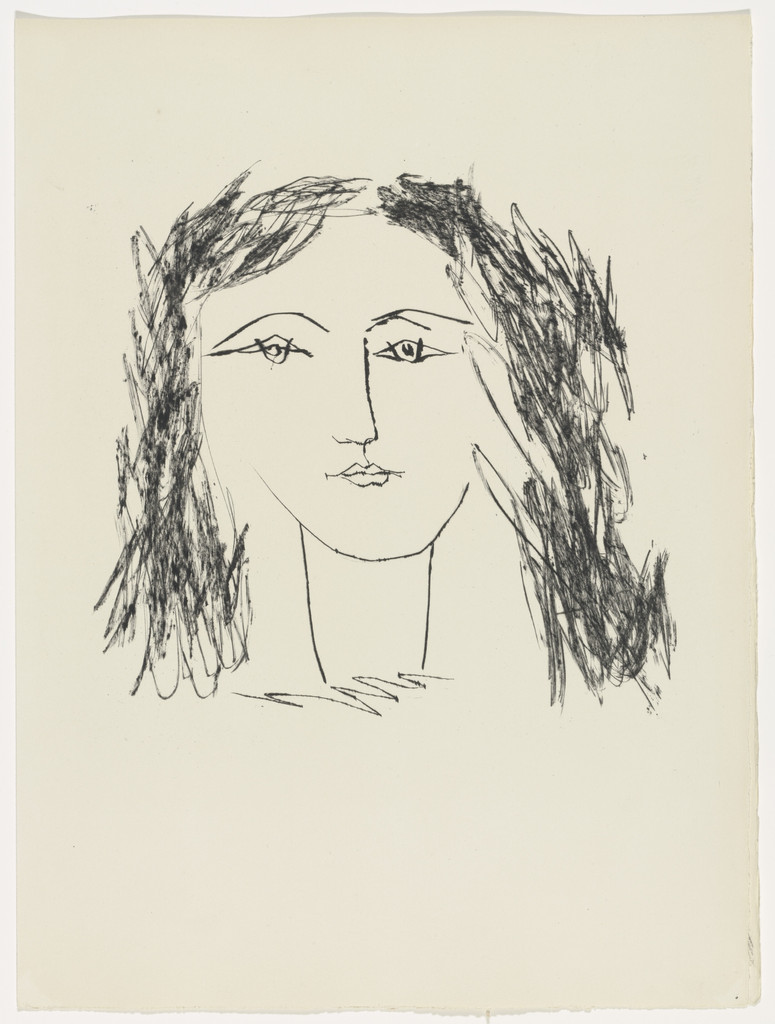 Pablo PicassoA une dame qui se fit saigner la cheville from Vingt poëmes
 Pablo PicassoThree Actors with a Bust of Marie-Thérèse (Trois comédiens avec buste de Marie-Thérèse)
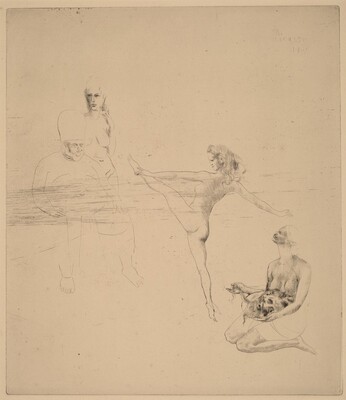 Pablo PicassoSalomé
 Pablo PicassoHead of a Man (Buste d'homme)
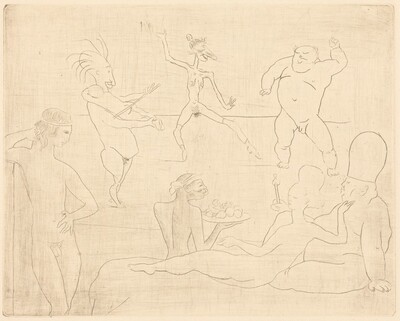 Pablo PicassoThe Barbaric Dance (Before Salomé and Hérod) [La danse barbare (devant Salomé et Hérode)]
 Pablo PicassoSculptor, Model, and Sculpture (Sculpteur, modèle et sculpture: femme assise)
 Pablo PicassoThe Watering Place (Horses Bathing) [L'abreuvoir (chevaux au bain)]
 Pablo PicassoMan Uncovering a Woman (Homme dévoilant une femme)
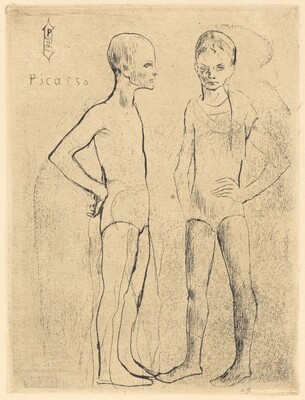 Pablo PicassoThe Two Acrobats (Les deux saltimbanques)
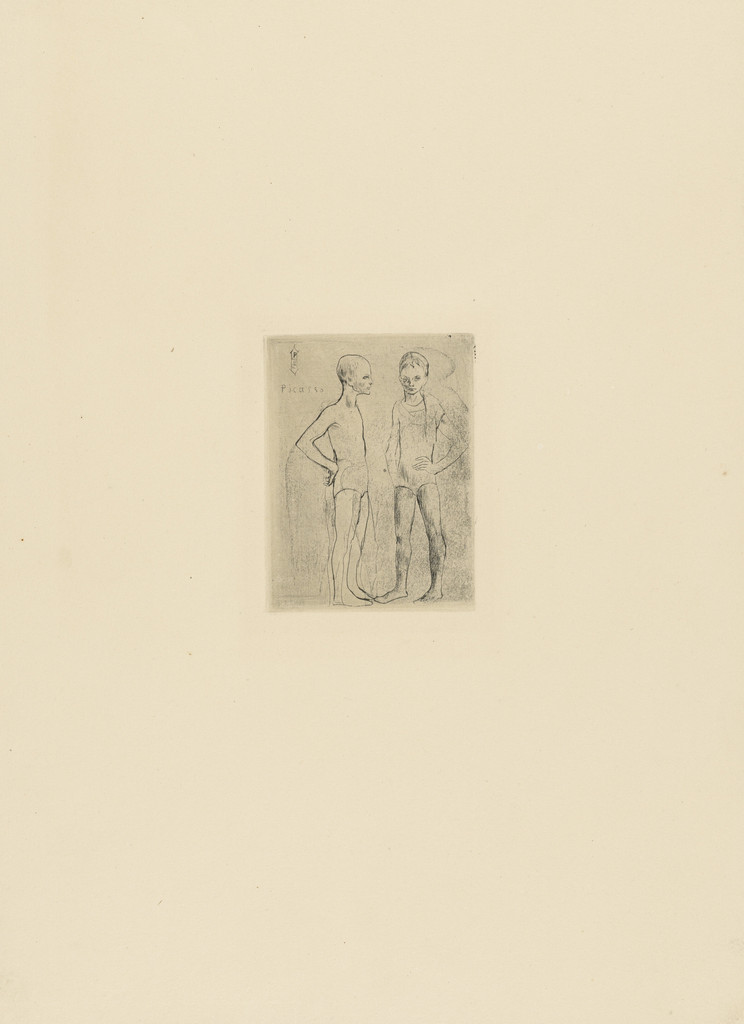 Pablo PicassoThe Two Acrobats (Les Deux saltimbanques) from the Saltimbanques series
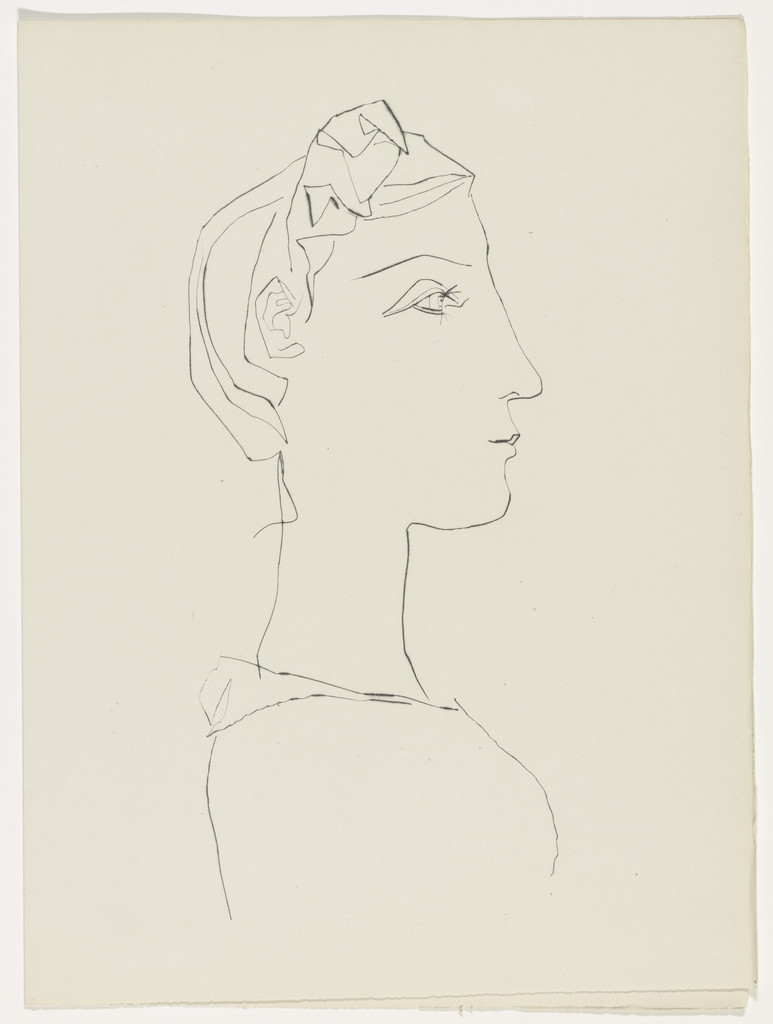 Pablo PicassoLe Poète, sur l'année climatérique de sa vie from Vingt poëmes
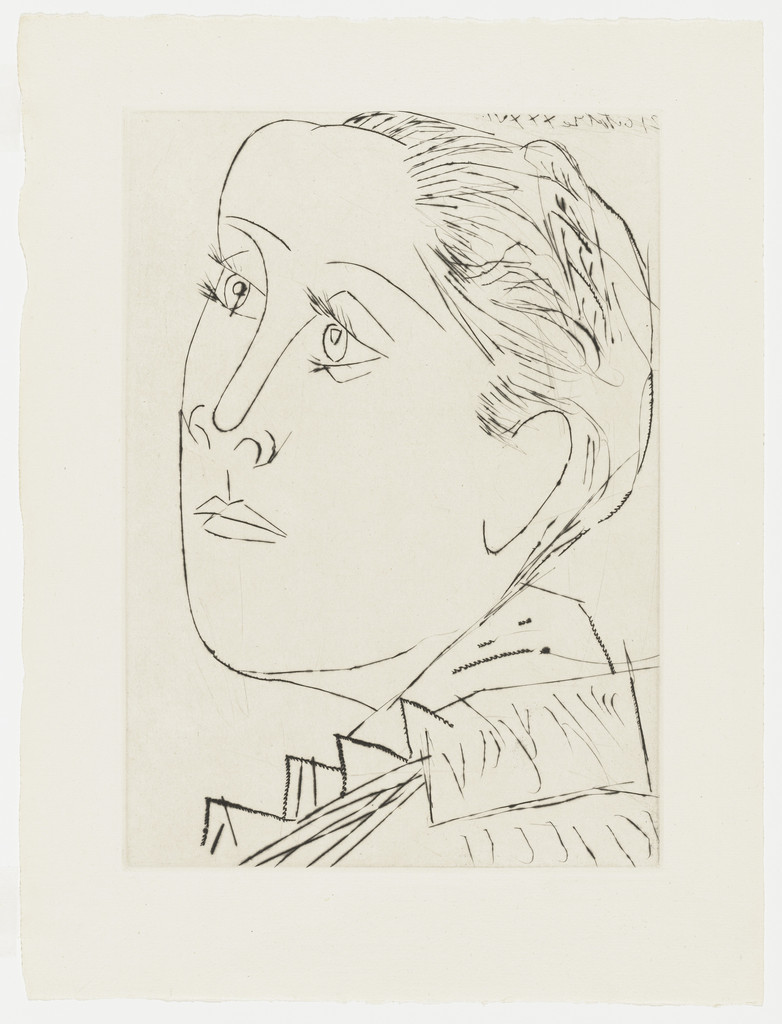 Pablo PicassoPortrait of Dora Maar with Chignon I (Portrait de Dora Maar au chignon I)
 Pablo PicassoThe Watering Place (Horses Bathing) [L'abreuvoir (chevaux au bain)]
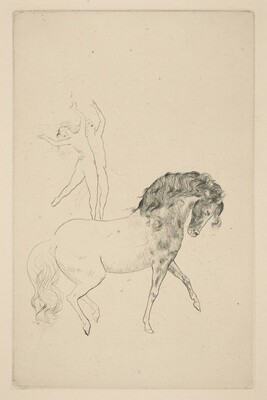 Pablo PicassoAt the Circus (Au cirque)
 Pablo PicassoThe Acrobats (Les saltimbanques)
 Pablo PicassoThe Embrace III (L'Étreinte III)
 Pablo PicassoThree Bathers I (Les trois baigneuses I)
 Pablo PicassoStill Life with a Bottle of Marc (Nature morte à la bouteille de Marc)
 Pablo PicassoHead of a Woman, in Profile (Tête de femme, de profil)
 Pablo PicassoThe Acrobats (Les saltimbanques)
 Pablo PicassoFlautist and Three Nudes (Flûtiste et trois femmes nues)
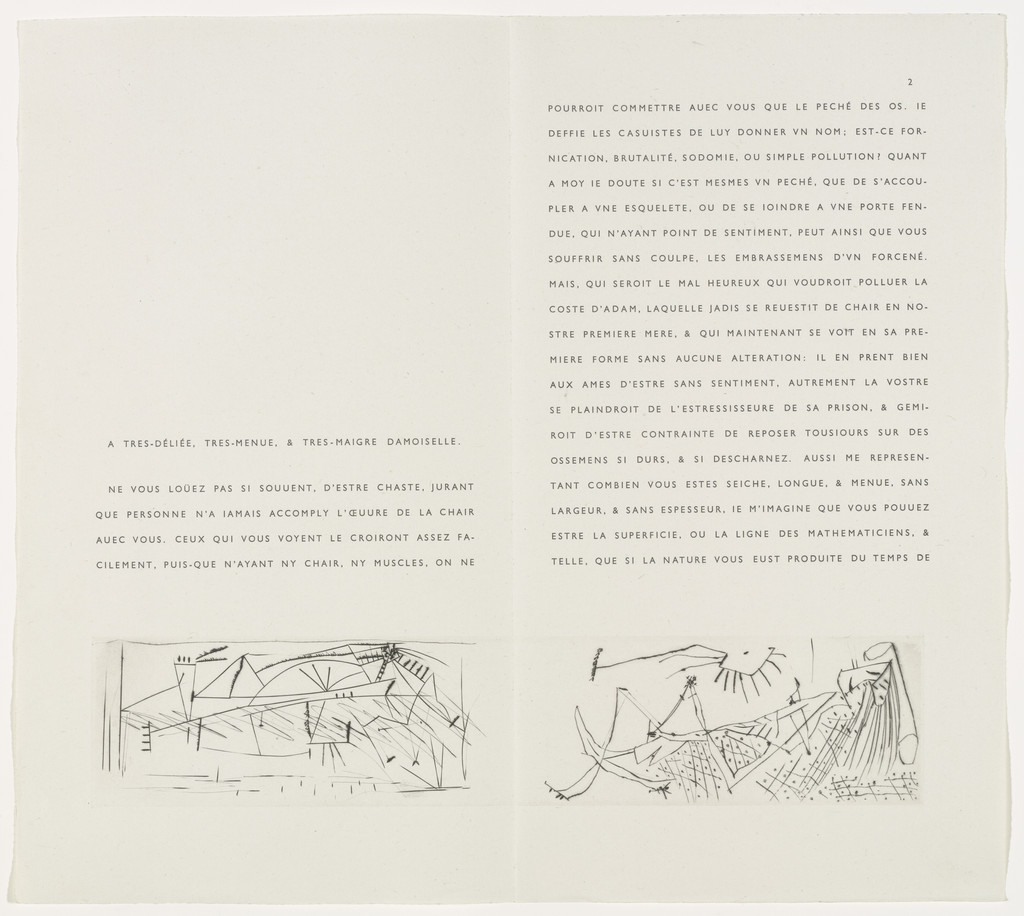 Pablo PicassoDouble page in-text plate (folios 1 verso and 2) from the illustrated book La Maigre
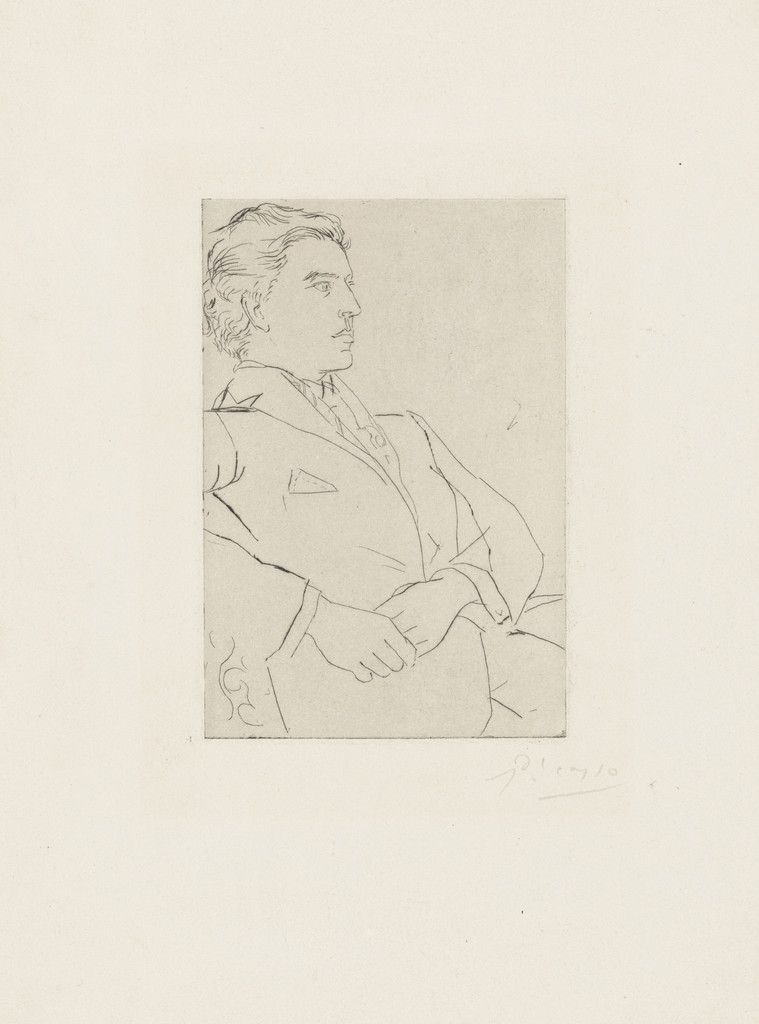 Pablo PicassoPortrait of André Breton, Three-Quarters View (Portrait d'André Breton de trois quarts)
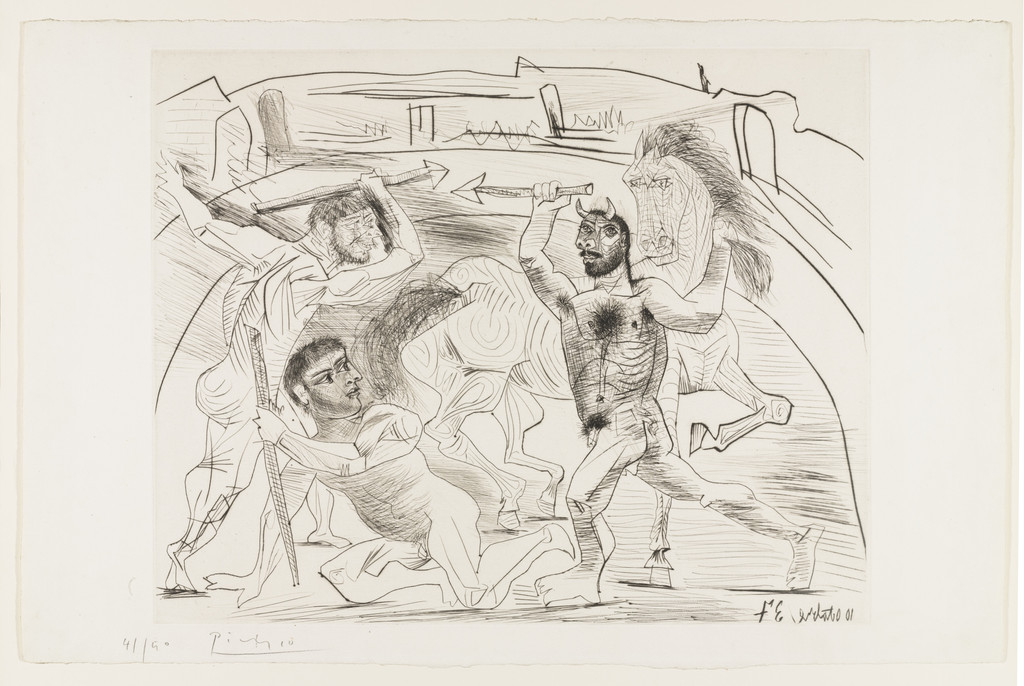 Pablo PicassoThe Fight in the Arena (Le Combat dans l'arène)
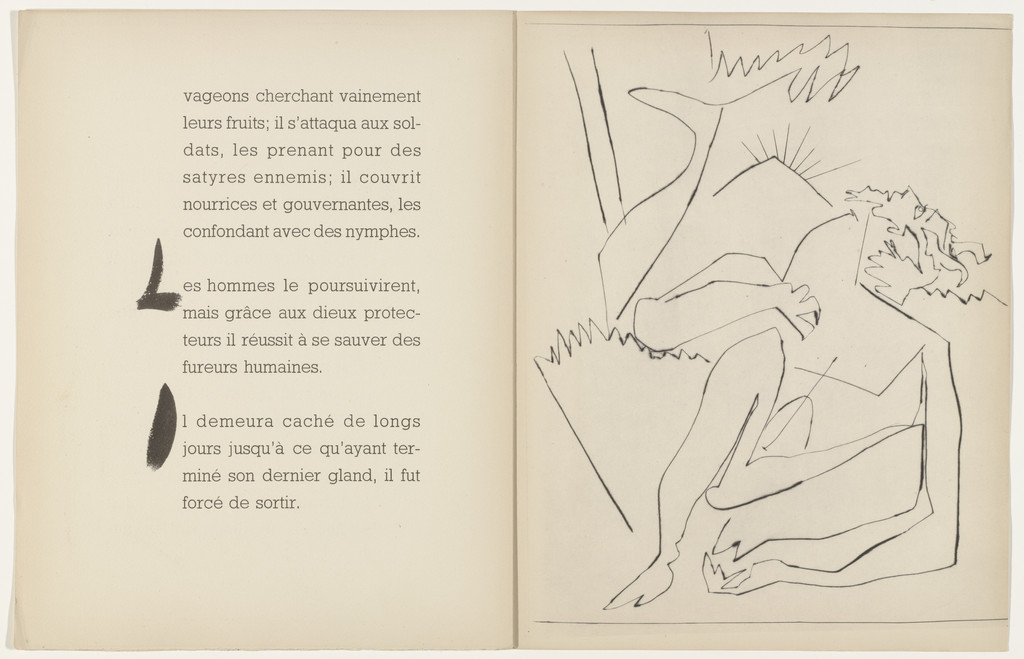 Pablo PicassoDeath of a Faun from Deux Contes
 Pablo PicassoThe Bath (Le bain)
 Pablo PicassoStill Life with Fruit Bowl (Nature morte au compotier)
 Pablo PicassoAcrobat in Repose (Le saltimbanque au repos)
 Pablo PicassoFamily of Acrobats with Macaque (La famille de saltimbanques au macaque)
 Pablo PicassoTwo Women Gazing at a Nude Model (Deux femmes regardent un modèle nu)
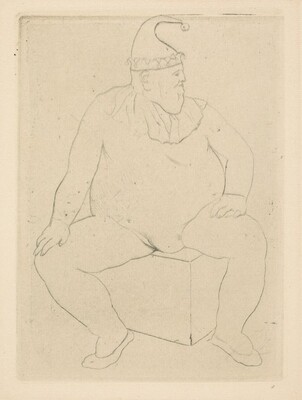 Pablo PicassoAcrobat in Repose (Le saltimbanque au repos)
 Pablo PicassoTwo Nudes at Rest (Femmes se reposant)
 Pablo PicassoTwo Nudes Resting (Femmes se Reposant)
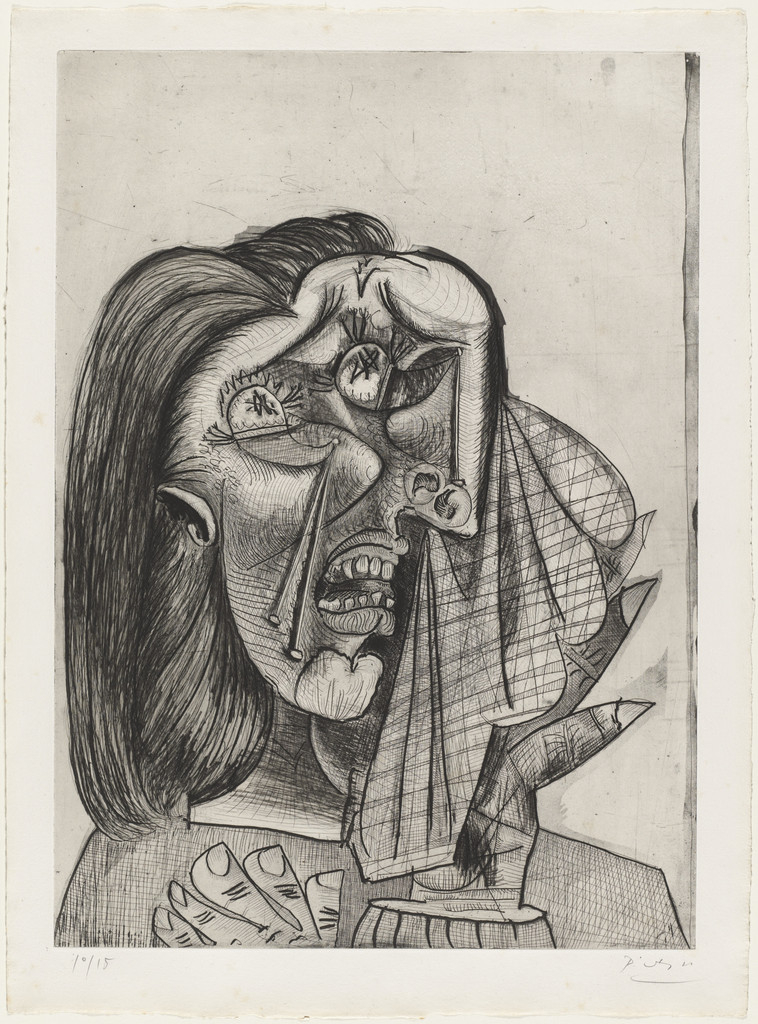 Pablo PicassoThe Weeping Woman, I (La Femme qui pleure. I ), state VII
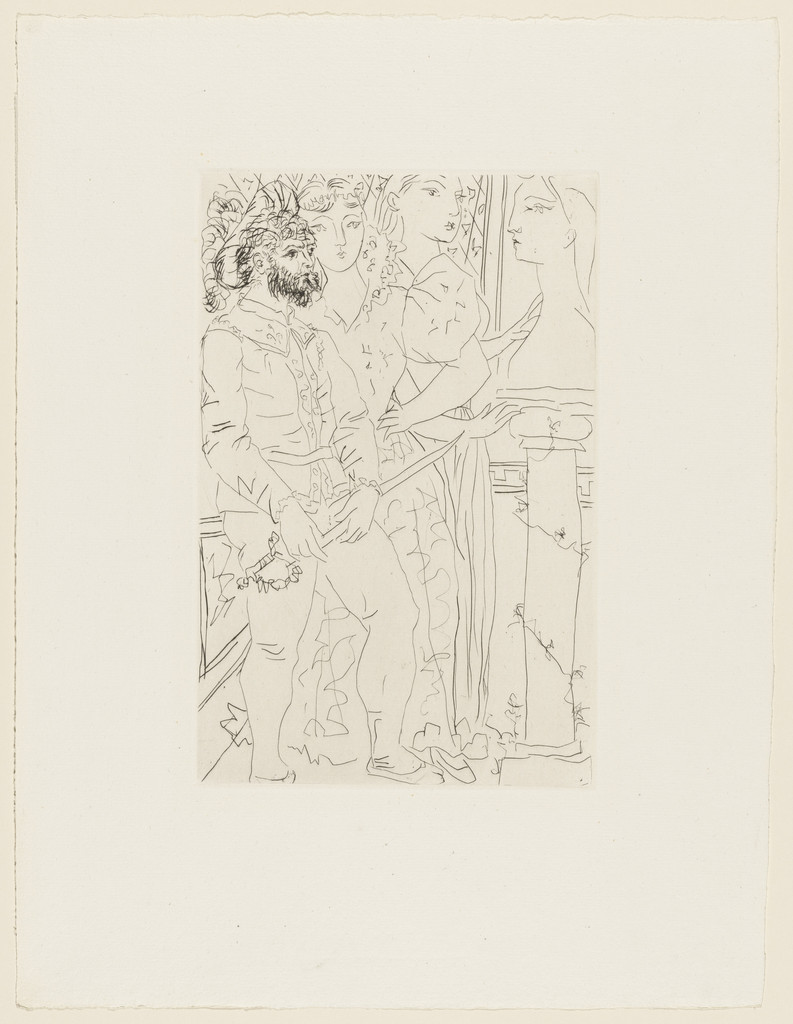 Pablo PicassoThree Actors with the Bust of Marie Thérèse (Trois comédienes avec buste de Marie Thérèse) from the Vollard Suite (Suite Vollard)
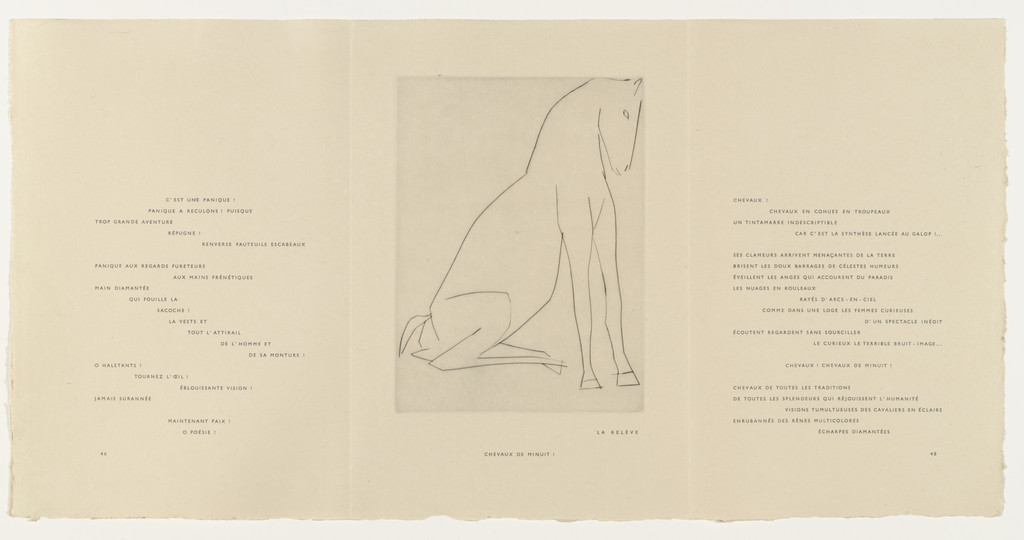 Pablo PicassoIn-text plate (folio 39) from Chevaux de minuit
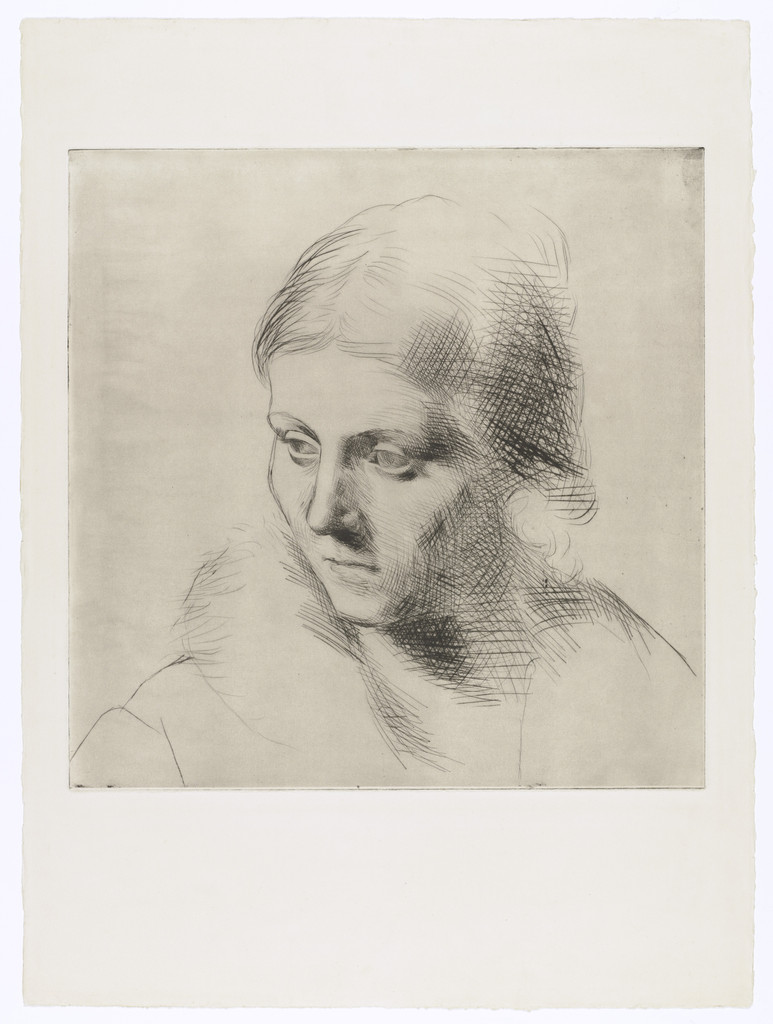 Pablo PicassoPortrait of Olga in a Fur Collar (Portrait d'Olga au col de fourrure)
Drypoint
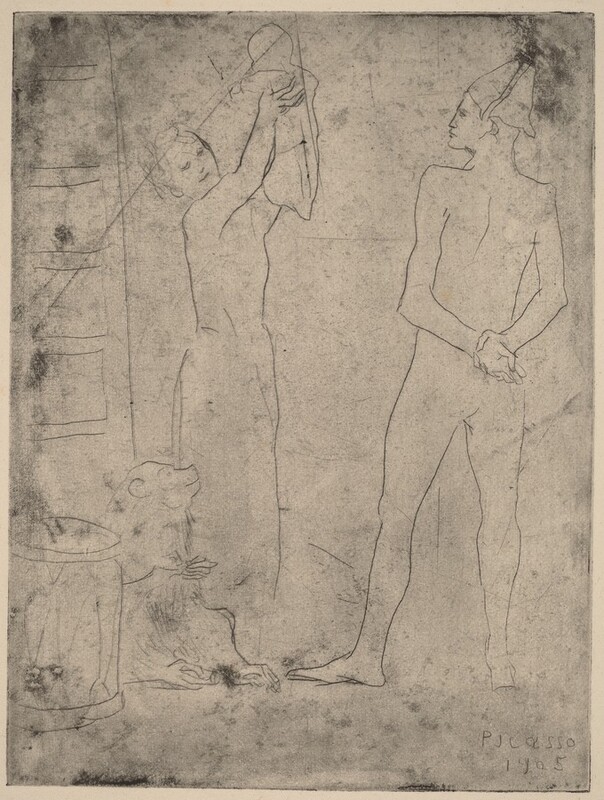
Picasso drew a family of acrobats on a damaged zinc plate. When the publisher Ambroise Vollard later ordered the plate to be steel-faced, its defects became worse, and he judged the results unsaleable. The attempt to extend the life of a printing surface had harmed it. That episode belongs to the history of Family of Acrobats with Macaque, a tender scene whose survival is entangled with the stubborn behaviour of metal.
What does the drypoint needle leave behind?
To understand the problem, imagine dragging a point through a soft metal surface. The point displaces material as well as making a groove. The displaced ridge is the burr. In drypoint it is deliberately retained, because ink gathers around it and produces a broader, softer mark than the incision alone. The apparently blurred edge is often the feature the maker wants most, not evidence that the print has gone wrong.
Etching lets a corrosive solution bite exposed lines; drypoint makes them by direct pressure. An engraver’s burin cuts metal away more cleanly, while the drypoint needle pushes it aside. These differences matter to the hand. A line scratched in a plate can record a searching or hesitant movement, and its dark edge can swell beyond the path of the point. The tool has made both a furrow and a small obstacle for the ink.
Printing brings its own force. Dampened paper and an inked plate pass through a press, transferring the ink held in the worked surface. The pressure can also impress the plate’s boundary into the sheet. Fragile burr does not endure this treatment indefinitely: later impressions lose some of the softness and density visible in early ones. A technique with such a short-lived feature posed obvious problems for anyone planning a large edition.
Dürer tries a softer landscape
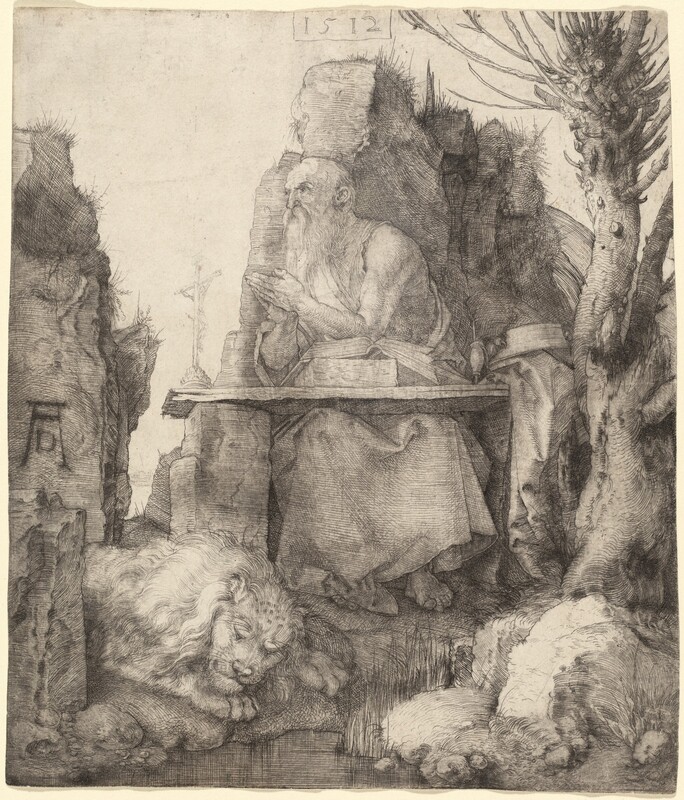
Dürer made only three drypoints. One is St. Jerome Seated near a Pollard Willow, dated 1512. Jerome has paused his study for prayer, surrounded by an active natural setting. The trimmed willow is especially apt: cutting back a tree encourages new growth, and the Cleveland Museum’s account reads it as a sign of spiritual renewal. The scene gives the softened line work to do beyond merely describing the saint’s outline.