ART WIKI37,791 on view
MapCollectionArtistsMuseumsExhibitionsJournal
Sign in

ART WIKI

Where to see art and when to visit.

Collections: Art Institute of Chicago, Cooper Hewitt, Smithsonian Design Museum, Getty Villa, Harvard Art Museums, Hirshhorn Museum and Sculpture Garden, J. Paul Getty Museum, Minneapolis Institute of Art, Musée du Louvre, National Gallery of Art, National Museum of Asian Art, National Portrait Gallery (Smithsonian), Pushkin State Museum of Fine Arts, Rijksmuseum, Smithsonian American Art Museum, SMK — National Gallery of Denmark, State Hermitage Museum, State Russian Museum, The Cleveland Museum of Art, The Metropolitan Museum of Art, The Museum of Modern Art, Tretyakov Gallery, Victoria and Albert Museum, Whitney Museum of American Art, Yale Center for British Art, Yale University Art Gallery, State Catalogue of the Museum Fund of Russia (274 museums), Europeana (19 museums), Wikidata (44 museums), Paris Musées (12 museums), Joconde, the French Ministry of Culture's museum database (495 museums), and the Catalogo generale dei Beni Culturali of Italy's Ministry of Culture (74 museums). Images belong to their rights holders.

Sections

  • Map
  • Search
  • Collection
  • Masterpieces
  • Stolen and lost
  • Embed artwork status
  • On view now
  • Artists

More

  • Museums & galleries
  • Exhibitions
  • Journal
  • Where the data comes from
  • Privacy & cookies
  • About
  • Terms of use
HomeMapBrowse

Browse

German painting

German painting grew through exchanges between cities, courts and travelling artists, rather than a single national style. Dürer brought Italian ambitions into a self-portrait; Cranach dressed an ancient goddess in Saxon fashion; Friedrich turned river ice into a polar catastrophe. Their pictures reward attention to apparently minor things: a pair of gloves, a honeycomb, the edge of a broken ship.

11,010 works from 230 museums760 on view nowClear all

/
Technique
  • All
  • Oil2,912
  • Watercolour80
  • Acrylic67
  • Tempera30
  • Gouache29
  • Ink19
  • Pastel17
  • Mixed media7
  • Fresco4
  • Encaustic2
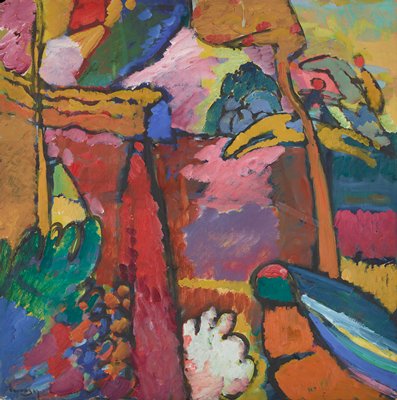
Study for Improvisation V, Vassily Kandinsky, 1910Vasily KandinskyStudy for Improvisation V1910G377Minneapolis Institute of Art
The Judgment of Paris, Lucas Cranach the Elder, ca. 1528Lucas CranachThe Judgment of Parisca. 1528The Metropolitan Museum of Art
Soft Pressure, Vasily Kandinsky, 1931Vasily KandinskySoft Pressure1931The Museum of Modern Art
Импровизация 20 (две лошади), Vasily Kandinsky, 1911Vasily KandinskyИмпровизация 20 (две лошади)1911Pushkin State Museum of Fine Arts
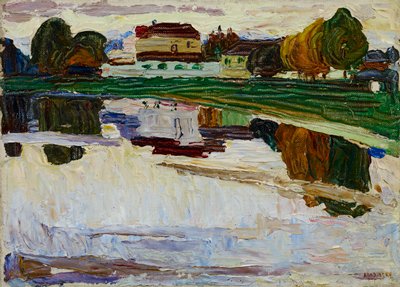
View of Murnau, Vasily Kandinsky, 1908Vasily KandinskyView of Murnau1908State Hermitage Museum
The Lake, Vasily Kandinsky, 1910Vasily KandinskyThe Lake1910Tretyakov Gallery
Синее на многоцветном, Vasily Kandinsky, 1925Vasily KandinskyСинее на многоцветном1925Pushkin State Museum of Fine Arts
Осень, Vasily Kandinsky, between 1901 and 1903Vasily KandinskyОсеньbetween 1901 and 1903State Russian Museum
Импровизация 11, Vasily Kandinsky, 1910Vasily KandinskyИмпровизация 111910Korpus Benua, Zal 75State Russian Museum
Святой Георгий (II), Vasily Kandinsky, 1911Vasily KandinskyСвятой Георгий (II)1911State Russian Museum
The Ludwigskirche in Munich, Wassily Kandinsky, 1908Vasily KandinskyThe Ludwigskirche in Munich1908Museo Thyssen-Bornemisza
Murnau, Top of the Johannisstrasse, Wassily Kandinsky, 1908Vasily KandinskyMurnau, Top of the Johannisstrasse1908Museo Thyssen-Bornemisza
Around the Line, Wassily Kandinsky, 1943Vasily KandinskyAround the Line1943Museo Thyssen-Bornemisza
Virgin and Child with Saint Anne, Albrecht Dürer, probably 1519Albrecht DürerVirgin and Child with Saint Anneprobably 1519Gallery 607The Metropolitan Museum of Art
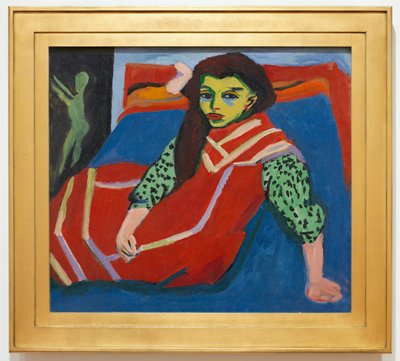
Seated Girl (Fränzi Fehrmann), Ernst Ludwig Kirchner, 1910 (altered 1920)Ernst Ludwig KirchnerSeated Girl (Fränzi Fehrmann)1910 (altered 1920)G371Minneapolis Institute of Art
Improvisation 31 (Sea Battle), Wassily Kandinsky, 1913Vasily KandinskyImprovisation 31 (Sea Battle)1913Gallery 415A · East Building, Upper LevelNational Gallery of Art
Panel for Edwin R. Campbell No. 2, Vasily Kandinsky, 1914Vasily KandinskyPanel for Edwin R. Campbell No. 21914MoMA, Floor 5, 507The Museum of Modern Art
Landscape, Vasily Kandinsky, 1913Vasily KandinskyLandscape1913State Hermitage Museum
Panel for Edwin R. Campbell No. 4, Vasily Kandinsky, 1914Vasily KandinskyPanel for Edwin R. Campbell No. 41914MoMA, Floor 5, 507The Museum of Modern Art
Nymphenburg, Vassily Kandinsky, 1904Vasily KandinskyNymphenburg1904G359Minneapolis Institute of Art
Черное пятно (I), Vasily Kandinsky, 1912Vasily KandinskyЧерное пятно (I)1912State Russian Museum
Летний пейзаж, Vasily Kandinsky, 1909Vasily KandinskyЛетний пейзаж1909State Russian Museum
Амазонка в горах, Vasily Kandinsky, 1918Vasily KandinskyАмазонка в горах1918State Russian Museum
Untitled, Wassily Kandinsky, 1922Vasily KandinskyUntitled1922Museo Thyssen-Bornemisza
Free, Wassily Kandinsky, 1927Vasily KandinskyFree1927Museo Nacional Centro de Arte Reina Sofía
Two Men Contemplating the Moon, Caspar David Friedrich, ca. 1825–30Caspar David FriedrichTwo Men Contemplating the Moonca. 1825–30Gallery 807The Metropolitan Museum of Art
Improvisation 27 (Garden of Love II), Vasily Kandinsky, 1912Vasily KandinskyImprovisation 27 (Garden of Love II)1912Gallery 965The Metropolitan Museum of Art
Wanderer above the Sea of Fog, Caspar David Friedrich, c. 1818Caspar David FriedrichWanderer above the Sea of Fogc. 1818Hamburger Kunsthalle
Sketch for Composition V, Vasily Kandinsky, 1911Vasily KandinskySketch for Composition V1911State Hermitage Museum
Composition VI, Vasily Kandinsky, 1913Vasily KandinskyComposition VI1913State Hermitage Museum
Panel for Edwin R. Campbell No. 1, Vasily Kandinsky, 1914Vasily KandinskyPanel for Edwin R. Campbell No. 11914MoMA, Floor 5, 507The Museum of Modern Art
Структура из углов, Vasily Kandinsky, 1930Vasily KandinskyСтруктура из углов1930Pushkin State Museum of Fine Arts
Stille Harmonie, Wassily Kandinsky, 1924Vasily KandinskyStille Harmonie1924Kunstpalast
Два овала, Vasily Kandinsky, 1919Vasily KandinskyДва овала1919Korpus Benua, Zal 75State Russian Museum
Cossacks, Wassily Kandinsky, 1910sVasily KandinskyCossacks1910sTate
In the Bright Oval, Wassily Kandinsky, 1925Vasily KandinskyIn the Bright Oval1925Museo Thyssen-Bornemisza
Houses in Murnau on Obermarkt, Wassily Kandinsky, 1908Vasily KandinskyHouses in Murnau on Obermarkt1908Museo Thyssen-Bornemisza
Hermann von Wedigh III (died 1560), Hans Holbein the Younger, 1532Hans HolbeinHermann von Wedigh III (died 1560)1532Gallery 612The Metropolitan Museum of Art
Erasmus of Rotterdam, Hans Holbein the Younger, ca. 1532Hans HolbeinErasmus of Rotterdamca. 1532Gallery 953The Metropolitan Museum of Art
Picture with an Archer, Vasily Kandinsky, 1909Vasily KandinskyPicture with an Archer1909MoMA, Floor 5, 507The Museum of Modern Art
Panel for Edwin R. Campbell No. 3, Vasily Kandinsky, 1914Vasily KandinskyPanel for Edwin R. Campbell No. 31914MoMA, Floor 5, 507The Museum of Modern Art
White - Soft and Hard, Vasily Kandinsky, March 1932Vasily KandinskyWhite - Soft and HardMarch 1932The Museum of Modern Art
Winter Landscape, Vasily Kandinsky, 1909Vasily KandinskyWinter Landscape1909State Hermitage Museum
Красная церковь, Vasily Kandinsky, between 1901 and 1903Vasily KandinskyКрасная церковьbetween 1901 and 1903State Russian Museum
Синий гребень, Vasily Kandinsky, 1917Vasily KandinskyСиний гребень1917Korpus Benua, Zal 75State Russian Museum
Painting with Three Spots, Wassily Kandinsky, 1914Vasily KandinskyPainting with Three Spots1914Museo Thyssen-Bornemisza
Delicate Tension, Wassily Kandinsky, 1923Vasily KandinskyDelicate Tension1923Museo Thyssen-Bornemisza
Centre Circles, Wassily Kandinsky, 1932Vasily KandinskyCentre Circles1932Museo Nacional Centro de Arte Reina Sofía

German painting

Albrecht Dürer covers the hands that earn his living. In his 1498 self-portrait, grey gloves replace the paint-stained fingers a viewer might expect from a working painter. The clothes are carefully chosen, the curls carefully arranged, the gaze direct. At twenty-six, he presents himself as someone whose appearance deserves the same attention as a patron’s. This is a good place to begin German painting: with an individual making a claim for himself, rather than a list of supposedly national characteristics.

Why are Dürer’s gloves important?

The Self-Portrait in Madrid’s Prado follows Dürer’s first journey to Italy. There he encountered ideas about painting as an intellectual pursuit, and the elegant gloves belong to his assertion of social standing. Yet the argument depends on manual skill: he must paint convincing fabric, hair and skin to persuade us that his profession exceeds ordinary labour. The contradiction gives the portrait its energy. Those protected hands have made the very surface that asks us to admire their owner.

Albrecht Dürer’s 1498 self-portrait. Gloves protect an image of social standing.

Beyond the window lies an Alpine landscape, while the foreground ledge brings his body close. The portrait combines a confined interior with a small opening towards travel. Its strong upright and horizontal divisions recall Italian portrait design, but the detailed face refuses to become merely an example of a borrowed formula. German painting developed through these exchanges. A journey could alter the way a painter arranged his own body, just as a book from elsewhere could supply a new subject.

A bee sting at the Saxon court

Lucas Cranach’s Cupid Complaining to Venus, in London’s National Gallery, begins with a theft. Cupid has taken honey and the bees retaliate. In the ancient poem behind the subject, he complains that such small creatures can inflict such pain; Venus reminds him of the wounds his own arrows cause. The joke travels from Greek poetry into a German courtly setting. Venus’s hat and jewellery belong to the fashions familiar to Cranach’s Saxon patrons, despite the absence of the rest of her clothes.

1
Lucas Cranach the Elder, Cupid Complaining to Venus. A stolen honeycomb brings a painful lesson.

The picture warns against pleasure while making pleasure available to the eye. Venus looks towards us, Cupid attends to his injuries, and the Latin inscription supplies a moral that the body below it complicates. Cranach’s workshop returned to the subject in several versions, changing the arrangement rather than mechanically repeating one image. That history makes the apparent simplicity deceptive. A nude, a child and a tree could carry literary learning, court fashion, erotic appeal and a warning, all within one narrow rectangle.

How did the Elbe become an Arctic disaster?

A hard winter in Dresden supplied Caspar David Friedrich with an unexpected subject. In 1820–21 the Elbe froze, and he studied its broken ice in oil sketches. A few years later, those local observations helped him construct The Sea of Ice, now in the Hamburger Kunsthalle collection. He had not travelled to the polar regions. The distant catastrophe grew from close attention to something near home: the edges, overlapping planes and changing colours of frozen river water.

Caspar David Friedrich, The Sea of Ice. Studies of river ice helped build an imagined polar landscape.

The ship is difficult to find at first. Ice occupies the position a human protagonist might normally command, heaped into an enormous broken structure. Once the wreck appears, it changes the scale of everything around it. These are no longer small fragments that a person might step over. Friedrich makes a familiar substance exceed the body’s measure. There is no figure conveniently placed to model our response, and no clear route into the scene that promises a safe return.

Polar exploration formed part of the picture’s contemporary background, but identifying the wreck with a particular expedition would make the evidence too tidy. The museum’s account treats it as a broader confrontation between human ambition and nature. The painting also resists a comforting idea about landscapes: that careful observation will always make the world manageable. Friedrich has observed the ice very closely. Accuracy in the small parts makes the invented whole more disturbing, not easier to inhabit. The wreck remains almost swallowed by the material surrounding it.