 Caspar David FriedrichGerman, 1774–1840
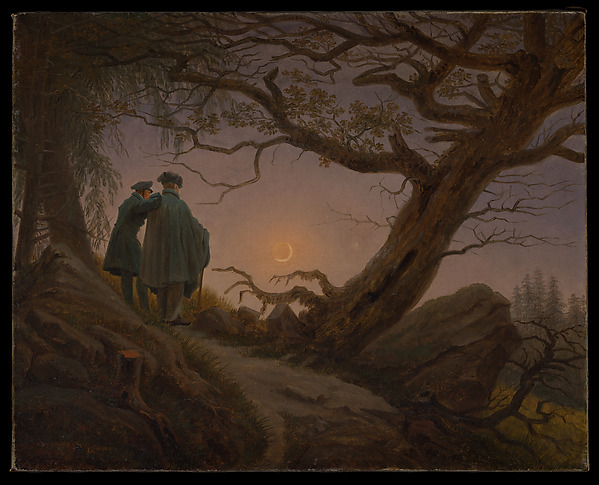
Two Men Contemplating the Moon
May one see it?
Yes, receiving visitors

The Metropolitan Museum of Art
Room807New York, United States
On public display.
- Checked
- 4 hours ago
- In this state since
- Sep 26, 2026
- Source
- The museum's own collection data
Particulars
- Accession number
- 2000.51
What it shows
Sources
- The Metropolitan Museum of Art: the museum's own open data · fetched 4 days ago
- Image: The Metropolitan Museum of Art — Open Access (CC0)
Meanwhile, in the life of Caspar David Friedrich
The whole life23 December 1824
Son born: Adolf Friedrich
1824–1826
Depression and darker motifs
A new bout of depression — earlier ones came in 1799, 1803–1805, around 1813 and in 1816 — brings vultures, owls, graveyards and ruins into his work. From 1826 these motifs become a permanent feature of his output, and his colours grow darker and more muted.
1825–1840
The fading of his fame
Over the last fifteen years of his life Friedrich’s reputation steadily declines: as the ideals of early Romanticism go out of fashion he comes to be seen as an eccentric and melancholy figure out of touch with the times, and his patrons gradually fall away. Towards the end he lives in relative poverty and spends long periods, often beginning before sunrise, walking alone through woods and fields.