 William BlakeRegno Unito, 1757–1827
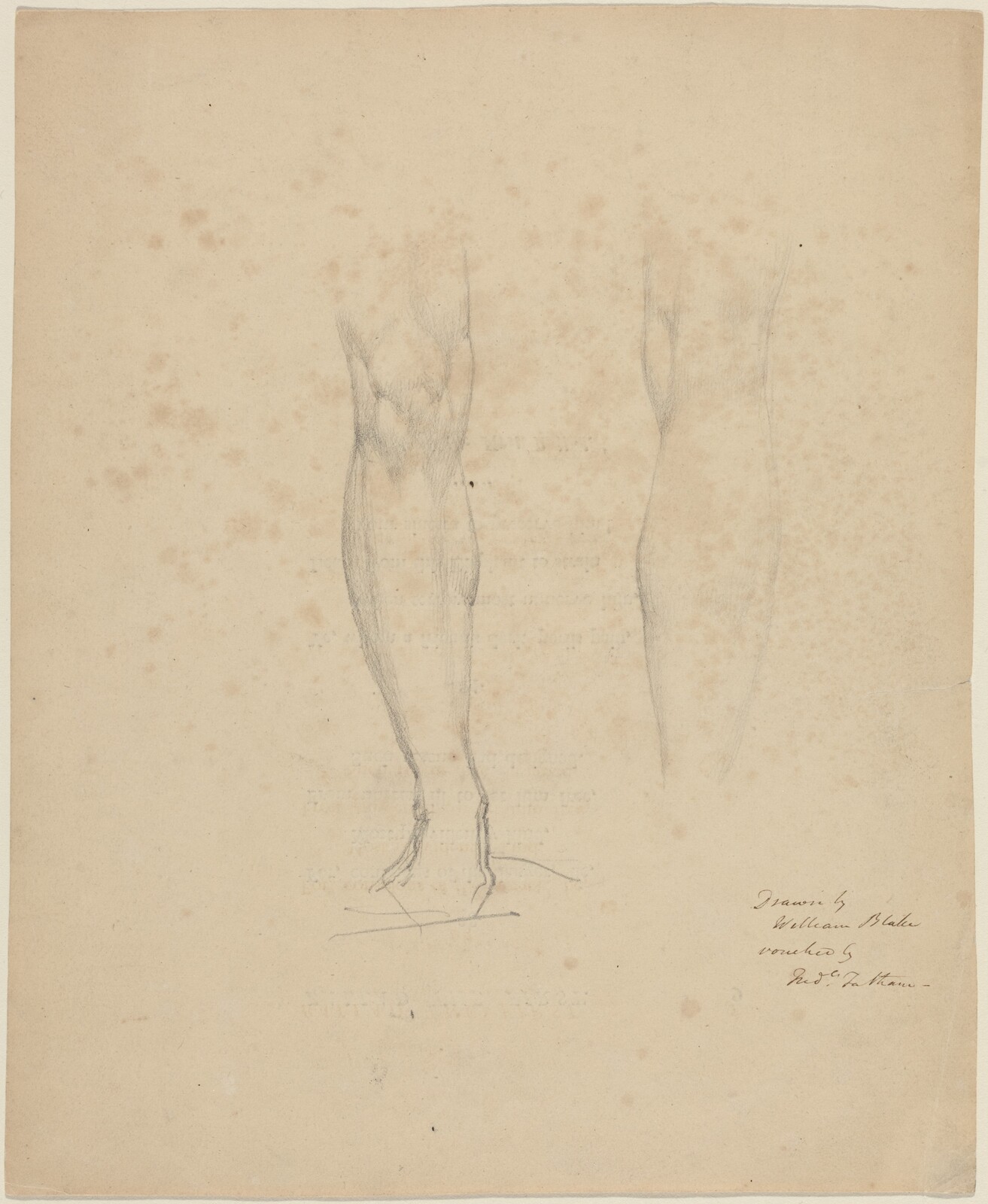
Two Legs
Si può vedere?
Non esposta al momento
Dove si trova «Two Legs» oggi? Collezione: National Gallery of Art, Washington D.C. Non esposta al momento. Verificato 16 novembre 2026.

Washington D.C., Stati Uniti
Appartiene alla collezione, ma al momento non è esposta.
- Verificato
- Ultimo cambio di stato
- Fonte
- Il museo
Sull’opera
Due gambe, disegno a grafite di William Blake probabilmente eseguito nel 1805-1810, appartiene alla collezione della National Gallery of Art di Washington. Le gambe sono studiate dalle cosce ai piedi da angolazioni diverse, con muscoli e ossa appena indicati. Frederick Tatham aggiunse un'iscrizione a inchiostro marrone che garantisce la paternità di Blake. Il foglio misura 27,7 per 22,7 centimetri.
Scheda
- Numero di inventario
- 1943.3.9008
Che cosa raffigura
In catalogo
Fonti
- National Gallery of Art
- Immagine: National Gallery of Art — Museum open access
Nella vita di William Blake
Tutta la vitasettembre 1800 – settembre 1803 · Luogo di lavoro
Felpham
1803
A fight with the soldier Schofield and a trial at Chichester
In August 1803 Blake was involved in a physical altercation with a soldier, John Schofield, and was charged not only with assault but with uttering seditious and treasonable expressions against the King; Schofield claimed that Blake had exclaimed “Damn the king. The soldiers are all slaves.” Blake was cleared at the Chichester assizes.
settembre 1803 – ottobre 1803 · Residenza
Broadwick Street
ottobre 1803 – 1820 · Residenza
South Molton Street
1804
Returns to London and begins “Jerusalem”
In 1804 Blake returned to London and began to write and illustrate “Jerusalem: The Emanation of the Giant Albion” (1804–20), his most ambitious work.
1809
An exhibition in his brother's shop: nothing sold
Blake set up an independent exhibition in his brother's haberdashery shop at 27 Broad Street in Soho to market his version of “The Canterbury Pilgrims” along with other works. It was very poorly attended, sold none of the temperas or watercolours, and its only review, in The Examiner, was hostile.