ART WIKI32.963 in sala
MappaCollezioneArtistiMuseiMostreRivista
Accedi

ART WIKI

Dove è appeso il capolavoro, e quando si può entrare.

Collezioni: Art Institute of Chicago, Cleveland Museum of Art, Ermitage, Galleria Tret'jakov, Getty Museum, Harvard Art Museums, Hirshhorn Museum and Sculpture Garden, Metropolitan Museum of Art, Minneapolis Institute of Art, Museo del Louvre, Museo Puškin delle belle arti, Museo russo, Museum of Modern Art, National Gallery of Art, National Museum of Asian Art, National Portrait Gallery, Rijksmuseum, Smithsonian American Art Museum, Statens Museum for Kunst, Victoria and Albert Museum, Villa Getty, Whitney Museum of American Art, Catalogo statale del fondo museale russo (274 musei), Europeana (19 musei), Wikidata (6 musei), Paris Musées (12 musei) e Joconde, la banca dati dei musei del Ministero della Cultura francese (495 musei). Le immagini appartengono ai titolari dei diritti.

Sezioni

  • Mappa
  • Ricerca
  • Collezione
  • Capolavori
  • Esposte ora
  • Artisti

Altro

  • Musei e gallerie
  • Mostre
  • Rivista
  • Da dove vengono i dati
  • Privacy e cookie
HomeMappaCatalogo
  1. Artisti/
  2. William Blake
William Blake — ritratto

Regno Unito, Inghilterra · 1757–1827

William Blake

William Blake è stato un poeta, pittore e incisore britannico.

  • 646in catalogo
  • 7esposte ora
  • 10collezioni
  • 5paesi
OpereVitaMappa

William Blake (Londra, 28 novembre 1757 – Londra, 12 agosto 1827) è stato un poeta, pittore e incisore britannico.

L'opera di Blake, largamente sottovalutata mentre egli era in vita, venne poi considerata estremamente significativa e fonte di ispirazione sia nell'ambito della poesia che in quello delle arti visive. Secondo Northrop Frye, che si dedicò allo studio dell'intero corpus poetico di Blake, i suoi versi simili a profezie costituiscono "Quello che, in rapporto ai reali meriti, è il corpus poetico in lingua inglese meno letto". Altri hanno invece lodato l'arte pittorica di Blake e un critico del XX secolo lo ha proclamato "Di gran lunga il più grande artista che la Gran Bretagna abbia mai prodotto." Considerato un tempo pazzo per le sue idee stravaganti, divenne poi molto apprezzato per la sua espressività, la sua creatività e per la visione filosofica che sta alla base del suo lavoro. Come ha suggerito egli stesso:

Anche se la sua pittura e la sua poesia sono state solitamente valutate separatamente, Blake spesso se ne servì di concerto per creare opere che sfidassero e sostituissero le convenzioni in uso. Si definiva capace di discutere e confrontarsi con i profeti dell'Antico Testamento e profuse un grande sforzo per creare le illustrazioni per il Libro di Giobbe, ma l'amore dell'artista per la Bibbia si affiancava ad un'aperta ostilità verso la Chiesa d'Inghilterra, e le sue convinzioni religiose erano influenzate dall'attrazione per il Misticismo e dalla fascinazione verso il movimento romantico, che a quel tempo era in pieno sviluppo. Alla resa dei conti, la difficoltà che si incontra nel tentativo di inserire William Blake in un qualsiasi periodo o movimento della storia dell'arte è forse la caratteristica che meglio riesce a definirlo.

Blake ha svolto un ruolo cruciale per lo sviluppo del moderno concetto di immaginazione nella cultura occidentale. La sua convinzione che l'umanità possa superare i limiti a lei posti dai cinque sensi è forse il suo più grande lascito:

Mentre un tempo questa prospettiva era considerata aberrante, al giorno d'oggi è stata incorporata nella moderna definizione del termine.

In particolare della citazione "the doors of perception" si è spesso sentita l'eco nella letteratura e nella musica del XX secolo: per fare due esempi, Aldous Huxley, con il suo saggio The Doors of Perception ed in seguito a questo, Jim Morrison con la sua band The Doors, rendono un evidente omaggio al pensiero di Blake.

Continua su Wikipedia

William Blake

1757–1827

Nascita
28 novembre 1757, London
Morte
12 agosto 1827, Londonall’età di 69 anni
Sepoltura
Bunhill Fields
Family
  • Catherine Blake (18 agosto 1782)
Teachers
  • Henry Pars (1767)
  • James Basire (4 agosto 1772 – 1778)
  • George Michael Moser (agosto 1779)
  • James Barry (1782)
Pupils
  • Thomas Trotter
Formazione
  • Henry Pars Drawing School (1767)
  • Royal Academy of Arts (agosto 1779)
Residenze
  • Broadwick Street (1757–1782; 1784–1785; settembre 1803 – ottobre 1803)
  • Battersea (luglio 1782 – agosto 1782)
  • Green Street (agosto 1782 – 1784)
  • Poland Street (1785–1791)
  • Hercules Buildings (1791)
  • South Molton Street (ottobre 1803 – 1820)
  • Fountain Court (1820)
Luoghi di lavoro
  • Felpham (settembre 1800 – settembre 1803)
  • London
Membro di
  • The New Church
Movement
  • fairy painting
  • Romanticism
Influences
  • Mary Wollstonecraft
  • Dante Alighieri
  • Emmanuel Swedenborg
  • Ben Jonson
  • Jakob Böhme
  • John Milton
Chief works
  • “The Ancient of Days” (1794)
  • “Milton”
  • “Jerusalem The Emanation of the Giant Albion”

Cronaca

  1. 1750
  2. 1760
  3. 1770
  4. 1780
  5. 1790
  6. 1800
  7. 1810
  8. 1820

1750– 1759

  1. 1757

    Nascita · 28 novembre 1757

    London

    Residenza · 1757–1782

    Broadwick Street

    • A Warring Angel [recto], William Blake, c. 1780
      A Warring Angel [recto]c. 1780
    • Sketch of a Swordsman Standing Over His Defeated Opponent [verso], William Blake, c. 1780/1785
      Sketch of a Swordsman Standing Over His Defeated Opponent [verso]c. 1780/1785
    • Group of Men Seated in a Circle [recto], William Blake, c. 1780/1785
      Group of Men Seated in a Circle [recto]c. 1780/1785
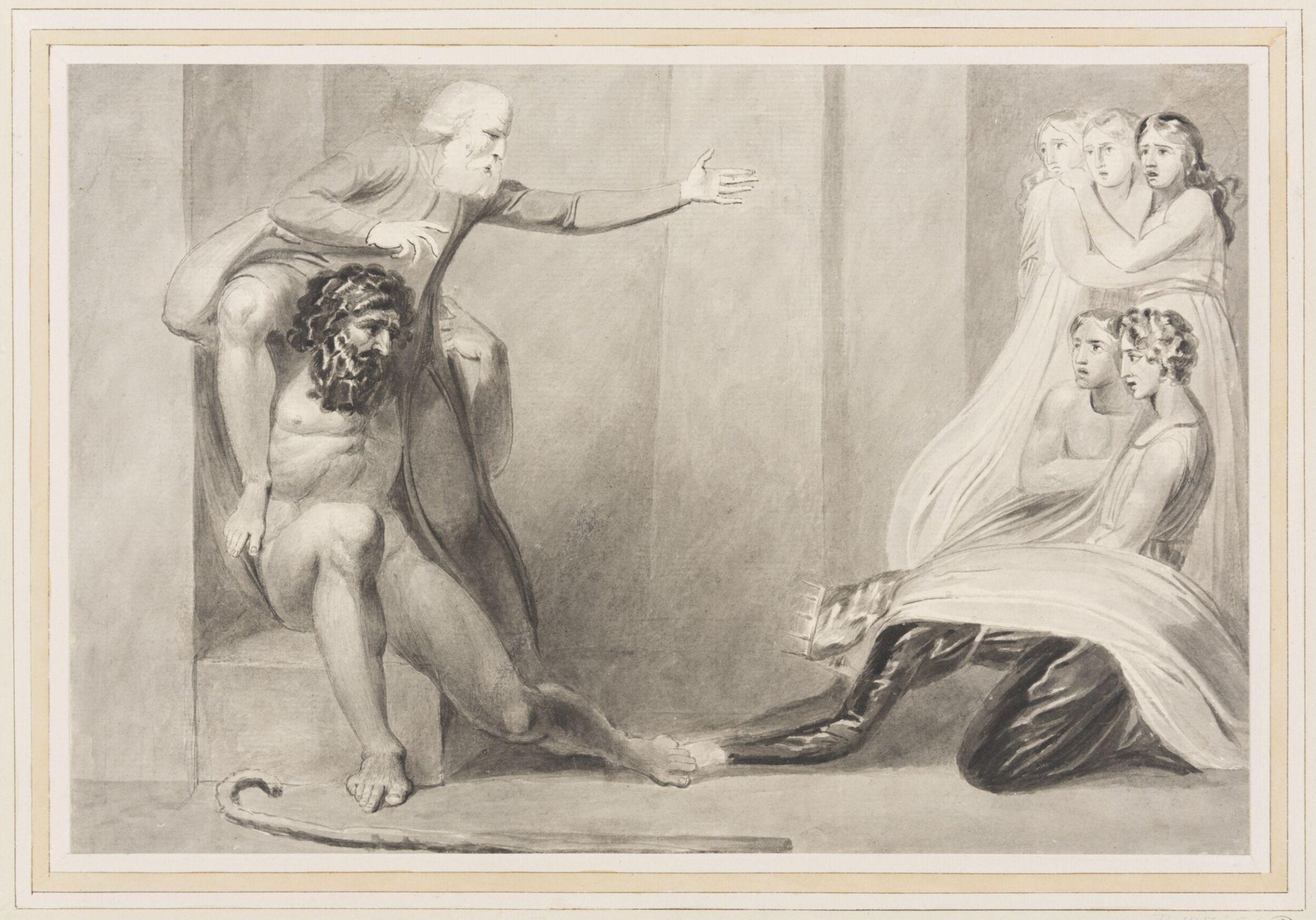
    • Moses Staying the Plague (?) [recto], William Blake, c. 1780/1785
      Moses Staying the Plague (?) [recto]c. 1780/1785

    Evento · in childhood

    Childhood visions: God at the window, angels in the haystacks

    According to Blake himself, his childhood included mystical experiences: God's face pressed against his window, angels among the haystacks, and a visit from the prophet Ezekiel. The Bible was an early and profound influence on him and remained a source of inspiration throughout his life.

    Evento · in childhood

    Copies classical drawings bought by his father

    His father bought him drawings of Greek antiquities, and Blake began to engrave copies of them. In these drawings he found his first exposure to classical forms, through the work of Raphael, Michelangelo, Maarten van Heemskerck and Albrecht Dürer.

    Evento · 11 December 1757 · London

    Baptised at St James's Church, Piccadilly

    Although the Blakes were Moravians and English Dissenters, William was baptised on 11 December 1757 at St James's Church, Piccadilly.

1760– 1769

  1. 1767

    Formazione

    Henry Pars Drawing School

    Teacher

    Henry Pars

    Evento · c. 1767

    Reading of his own choosing and his first poems

    After leaving school at ten, Blake read avidly on subjects of his own choosing and began to explore poetry; his early work displays knowledge of Ben Jonson, Edmund Spenser and the Psalms.

1770– 1779

  1. 1772

    Carriera · 4 August 1772 · London

    Apprenticed to the engraver James Basire

    On 4 August 1772 Blake was apprenticed for seven years to the engraver James Basire of Great Queen Street, and at the end of the term, aged 21, he became a professional engraver. Basire's line-engraving was held to be old-fashioned, and Blake later added his name to a list of artistic adversaries, then crossed it out.

    Teacher · 4 agosto 1772 – 1778

    James Basire

  2. 1774

    Evento · c. 1774 · London

    Sketching in Westminster Abbey

    After two years Basire sent Blake to copy images from the Gothic churches of London, perhaps to settle a quarrel with his fellow apprentice James Parker. In the Abbey, boys from Westminster School teased him; he knocked one off a scaffold, and after Blake complained to the Dean the schoolboys' privilege of entry was withdrawn.

    Evento · c. 1774 · London

    Visions in Westminster Abbey

    Blake claimed to have experienced visions in the Abbey: he saw Christ with his Apostles and a great procession of monks and priests, and heard their chant. His close study of the Gothic, which he saw as the “living form”, left clear traces in his style.

1780– 1789

  1. 1780

    Mostra · 1780–1808 · London

    Exhibits six times at the Royal Academy

    Despite his antagonism towards Reynolds, Blake submitted works to the Royal Academy on six occasions between 1780 and 1808.

    L’epoca · June 1780 · London

    The Gordon Riots: Blake in the mob at Newgate

    According to his first biographer, Alexander Gilchrist, in June 1780 Blake, walking towards Basire's shop, was swept up by a rampaging mob that stormed Newgate Prison, and he was reportedly in the front rank. The riots, a response to a parliamentary bill revoking sanctions against Roman Catholicism, became known as the Gordon Riots.

  2. 1781

    Famiglia

    Meets Catherine Boucher

    In 1781, recovering from a relationship that had ended in a refusal of his marriage proposal, Blake told the story of his heartbreak to Catherine Boucher and her parents and asked whether she pitied him. When she said yes, he declared: “Then I love you.”

  3. 1782

    Teacher

1790– 1799

  1. 1791

    Residenza

    Hercules Buildings

    • Fertilization of Egypt, William Blake after Henry Fuseli, 1791
      Fertilization of Egypt1791
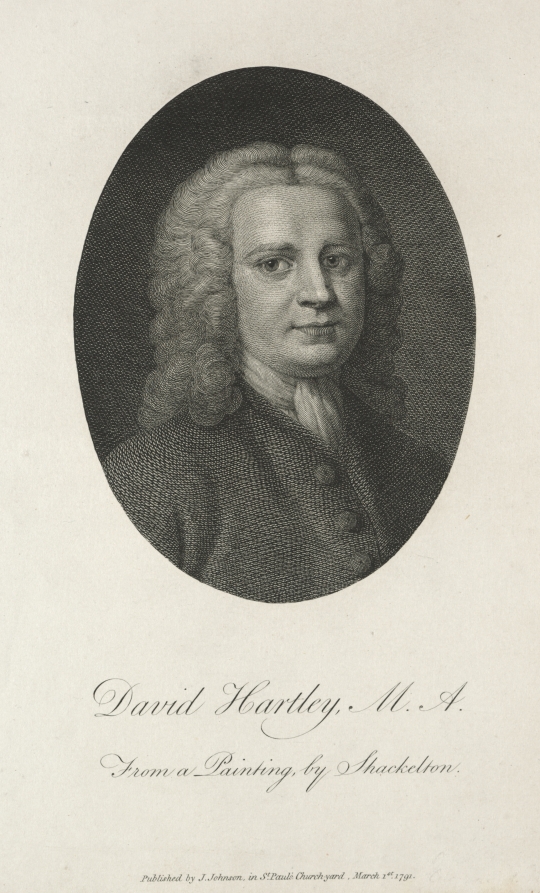
    • David Hartley, William Blake, 1791
      David Hartley1791

    Pubblicazione

    Illustrates Mary Wollstonecraft's “Original Stories from Real Life”

    Blake illustrated Mary Wollstonecraft's “Original Stories from Real Life” (2nd edition, 1791). They seem to have shared some views on sexual equality and the institution of marriage, but no evidence is known that they ever met.

  2. 1793

    Opera

    “Visions of the Daughters of Albion”

    In “Visions of the Daughters of Albion” (1793) Blake condemned the cruel absurdity of enforced chastity and marriage without love and defended the right of women to complete self-fulfilment.

1800– 1809

  1. 1800

    Evento

    Moves to Felpham for his patron Hayley

    In 1800 Blake moved to a cottage at Felpham, in Sussex, to take up a job illustrating the works of William Hayley, a minor poet.

    Evento · 1800–1803 · Felpham

    Disenchantment with his patron Hayley

    Over time Blake came to resent his patron, believing that Hayley was uninterested in true artistry and preoccupied with “the meer drudgery of business”. This disenchantment has been speculated to have influenced “Milton”, where Blake wrote that “Corporeal Friends are Spiritual Enemies”.

    Luogo di lavoro · settembre 1800 – settembre 1803

    Felpham

    • The Ghost of Samuel Appearing to Saul, William Blake, c. 1800
      The Ghost of Samuel Appearing to Saulc. 1800
    • Christ Crucified Between the Two Thieves ("Lord Remember Me"), William Blake, c. 1800-1803
      Christ Crucified Between the Two Thieves ("Lord Remember Me")

1810– 1819

  1. 1818

    Incontro

    Meets John Linnell

    In 1818 George Cumberland's son introduced Blake to a young artist named John Linnell; through him Blake later met Samuel Palmer and received the commission for the Dante illustrations.

    Incontro · after 1818

    The Shoreham Ancients: meeting Samuel Palmer

    Through Linnell Blake met Samuel Palmer, who belonged to a group of artists who called themselves the Shoreham Ancients; the group shared Blake's rejection of modern trends and his belief in a spiritual and artistic New Age.

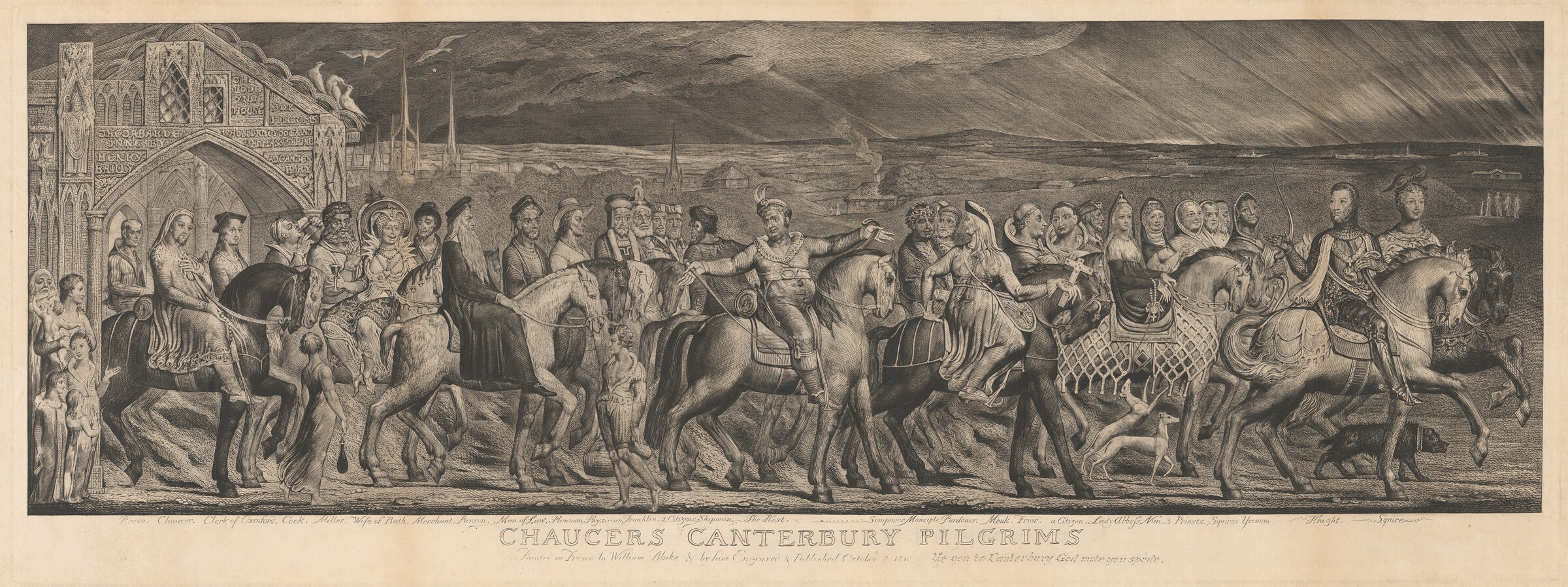
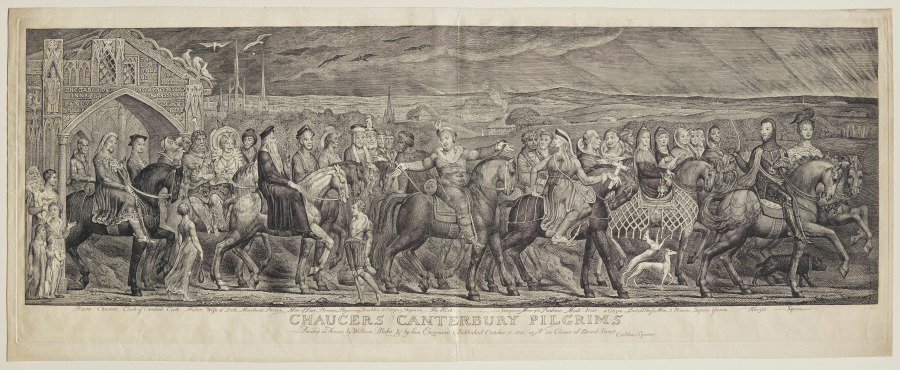
  • The Canterbury Pilgrims, William Blake, 1810
    The Canterbury Pilgrims1810
  • The Canterbury Pilgrims, William Blake, 1810
    The Canterbury Pilgrims1810
  • The Canterbury Pilgrims, William Blake, 1810

1820– 1829

  1. 1820

    Residenza

    Fountain Court

    • Terugkeer van de herdersjongen, William Blake, 1820 - 1821
      Terugkeer van de herdersjongen1820 - 1821
    • De herder verjaagt de wolf, William Blake, 1820 - 1821
      De herder verjaagt de wolf1820 - 1821
    • Jongen met twee ossen en een ploeg, William Blake, 1820 - 1821
      Jongen met twee ossen en een ploeg1820 - 1821
    • De reis van Colinet, William Blake, 1820 - 1821
      De reis van Colinet1820 - 1821
  2. 1822

    Opera · aged 65 (1822 – 1823)

    Illustrations to the “Book of Job”

    Aged 65, Blake began work on illustrations for the Book of Job; he completed the engravings just before his death.

  • 1779

    Incontro · 1779–1780 · London

    Friends at the Academy: Flaxman, Stothard, Cumberland

    During his first year at the Royal Academy Blake became a friend of John Flaxman, Thomas Stothard and George Cumberland. They shared radical views, with Stothard and Cumberland joining the Society for Constitutional Information.

    Evento · 1779–1785 · London

    Rebelling against Reynolds at the Academy

    At the Royal Academy Blake rebelled against what he regarded as the unfinished style of fashionable painters such as Rubens, championed by the first president, Joshua Reynolds, and over time came to detest Reynolds' pursuit of “general truth” and “general beauty”. Against Reynolds' fashionable oil painting he preferred the classical precision of Michelangelo and Raphael.

    Formazione · agosto 1779

    Royal Academy of Arts

    • The Belvedere Torso [verso], William Blake, probably c. 1779/1780
      The Belvedere Torso [verso]probably c. 1779/1780

    Teacher · agosto 1779

    George Michael Moser

    • Procession of Monks, met by Three Women, William Blake, c. 1775-1780
      Procession of Monks, met by Three Womenc. 1775-1780
    James Barry

    Famiglia · first years of marriage

    Strain in the marriage: Catherine and his brother Robert

    Gilchrist refers to “stormy times” in the early years of the marriage, and there was tension between Catherine and Blake's brother Robert. During one especially intense argument Catherine forced Blake to choose between herself and Robert; he chose Robert and had her kneel and apologise to him.

    Residenza · luglio 1782 – agosto 1782

    Battersea

    • The Morning Amusements of her Royal Highness, William Blake after Thomas Stothard, 1782
      The Morning Amusements of her Royal Highness1782

    Residenza · agosto 1782 – 1784

    Green Street

    • Orlando in a Fury Tearing up Trees, William Blake after Thomas Stothard, 1783
      Orlando in a Fury Tearing up Trees1783

    Famiglia · 18 August 1782 · Battersea

    Marries Catherine Boucher

    On 18 August 1782, at St Mary's Church, Battersea, Blake married Catherine Boucher, who was five years his junior; illiterate, she signed the marriage contract with an X. The marriage was successful, and Catherine became his “partner in both life and work”, working as an engraver and colourist.

    Marriage · 18 agosto 1782 · Battersea

    Catherine Blake

  • 1783

    Pubblicazione · c. 1783

    First collection: “Poetical Sketches”

    Around 1783 Blake performed his juvenile verse at a dinner party, which brought him patronage and funding for the publication of his first collection of poems, “Poetical Sketches”.

  • 1784

    Residenza · 1784–1785

    Broadwick Street

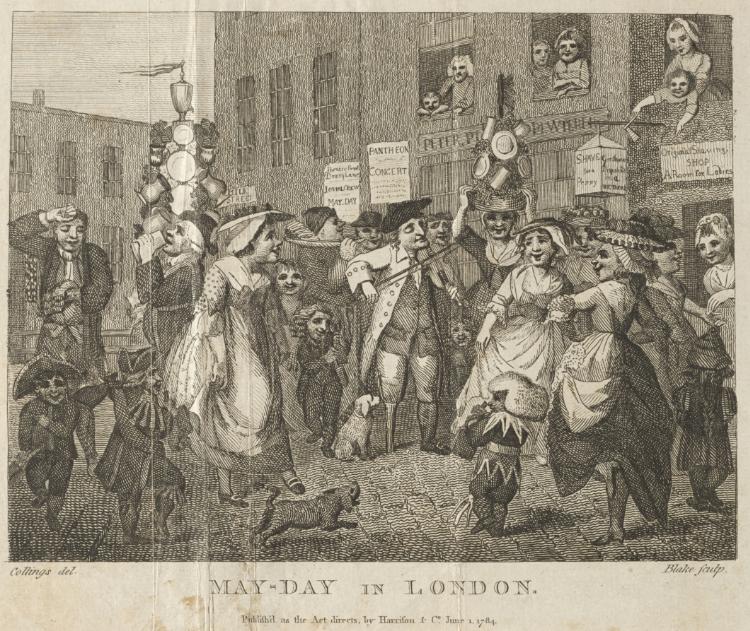
    • May-Day in London, William Blake after Samuel Collings, 1784
      May-Day in London1784
    • The Discomfited Duellists, William Blake after Samuel Collings, 1784
      The Discomfited Duellists1784
    • May-Day in London, William Blake, 1784
      May-Day in London1784
    • The New Jerusalem Descending, William Blake, c. 1785-1790
      The New Jerusalem Descendingc. 1785-1790

    Carriera

    His father dies; a print shop with James Parker

    In 1784, after his father's death, Blake and his former fellow apprentice James Parker opened a print shop.

    Incontro

    The circle of the radical publisher Joseph Johnson

    Blake and Parker began working with the radical publisher Joseph Johnson and became tangential members of his circle: Johnson's house was a meeting-place for Joseph Priestley, Richard Price, John Henry Fuseli, Mary Wollstonecraft and Thomas Paine.

    Opera

    The unfinished manuscript “An Island in the Moon”

    In 1784 Blake composed, but left unfinished, the manuscript “An Island in the Moon”; works not intended for publication, such as this and his notebook, were preserved by friends.

  • 1785

    Residenza · 1785–1791

    Poland Street

    • Canto I, William Sharp after Thomas Stothard, 1787-1788
      Canto I1787-1788
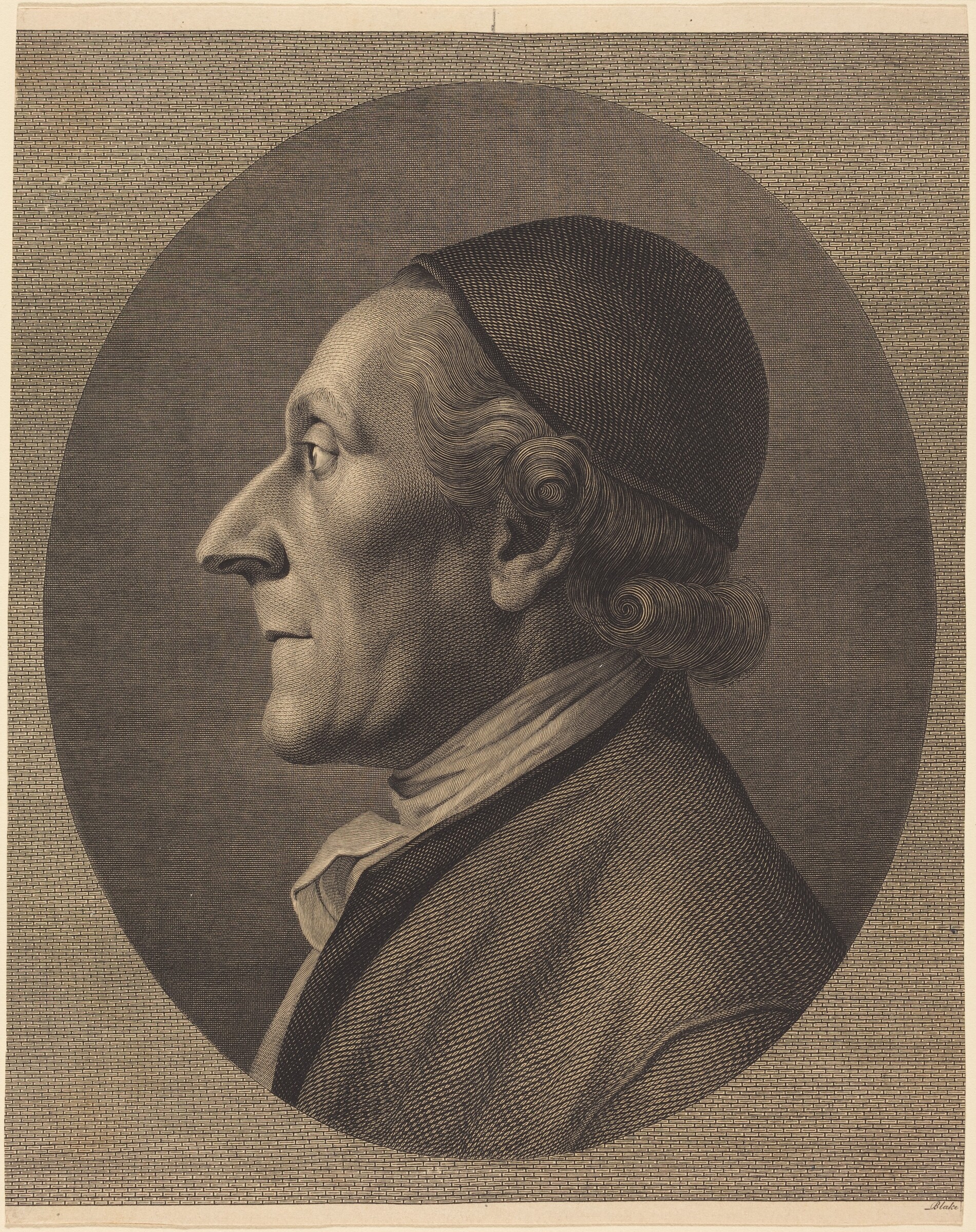
    • Portret van Johann Kaspar Lavater, William Blake, 1787 - 1800
      Portret van Johann Kaspar Lavater1787 - 1800
    • John Caspar Lavater, William Blake, 1787/1801
      John Caspar Lavater1787/1801
    • Beggar's Opera, Act III, William Blake after William Hogarth, 1788/1790
      Beggar's Opera, Act III1788/1790
  • 1788

    Evento

    Invents relief etching

    In 1788, aged 31, Blake invented relief etching, or “illuminated printing”: text and designs are drawn on a copper plate in acid-resistant ink and etched so that the protected areas stand in relief, and the printed pages are coloured by hand in watercolours. He used it for most of his well-known works, including “Songs of Innocence and of Experience”, “The Book of Thel”, “The Marriage of Heaven and Hell” and “Jerusalem”.

    • Sketch of a Swordsman Standing Over His Defeated Opponent [recto], William Blake, c. 1780/1785
      Sketch of a Swordsman Standing Over His Defeated Opponent [recto]c. 1780/1785
    • Illustration for Canto IV, William Sharp after Thomas Stothard, published 1788
      Illustration for Canto IVpublished 1788
    • Illustration for Canto V, James Neagle after Thomas Stothard, published 1788
      Illustration for Canto Vpublished 1788
    • Illustration for Canto II, Charles Heath after Thomas Stothard, 1788
      Illustration for Canto II1788
    • Tiriel and his Children; verso: Female Figure with the Head of a Horse, William Blake, c. 1789
      Tiriel and his Children; verso: Female Figure with the Head of a Horsec. 1789
    • drawing, william blake, ca. 1789
      drawingca. 1789
  • 1794

    Opera

    “The Ancient of Days”

    Opera

    “Europe: A Prophecy” and Catherine's colouring

    In 1794 Blake's book “Europe: A Prophecy” appeared; one of Catherine Blake's most noted works is the colouring of its cover. According to the Tate Gallery, Catherine mixed and applied her husband's paint colours.

  • 1796

    Opera

    An engraving for Stedman's book on Surinam

    For his friend John Gabriel Stedman's account of a five-year expedition against the rebels of Surinam (1796), Blake made the engraving “Europe Supported by Africa and America”: Black Africa and White Europe hold hands in a gesture of equality as the barren earth blooms beneath their feet.

  • 1797

    Opera

    Begins “Vala, or The Four Zoas”

    In 1797 Blake began one of his uncompleted prophetic books, “Vala, or The Four Zoas”: nine “nights” intended as a summation of his mythic universe.

    • The Infant Hercules Throttling the Serpents, William Blake, 1790-1793
      The Infant Hercules Throttling the Serpents1790-1793
    • An Armed Man Spurning a Woman [recto], William Blake, c. 1790/1795
      An Armed Man Spurning a Woman [recto]c. 1790/1795
    • Drawing, william blake, ca.1790-93
      Drawingca.1790-93
    • "Beggar's Opera", William Blake, 1790 (création)
      "Beggar's Opera"1790 (création)
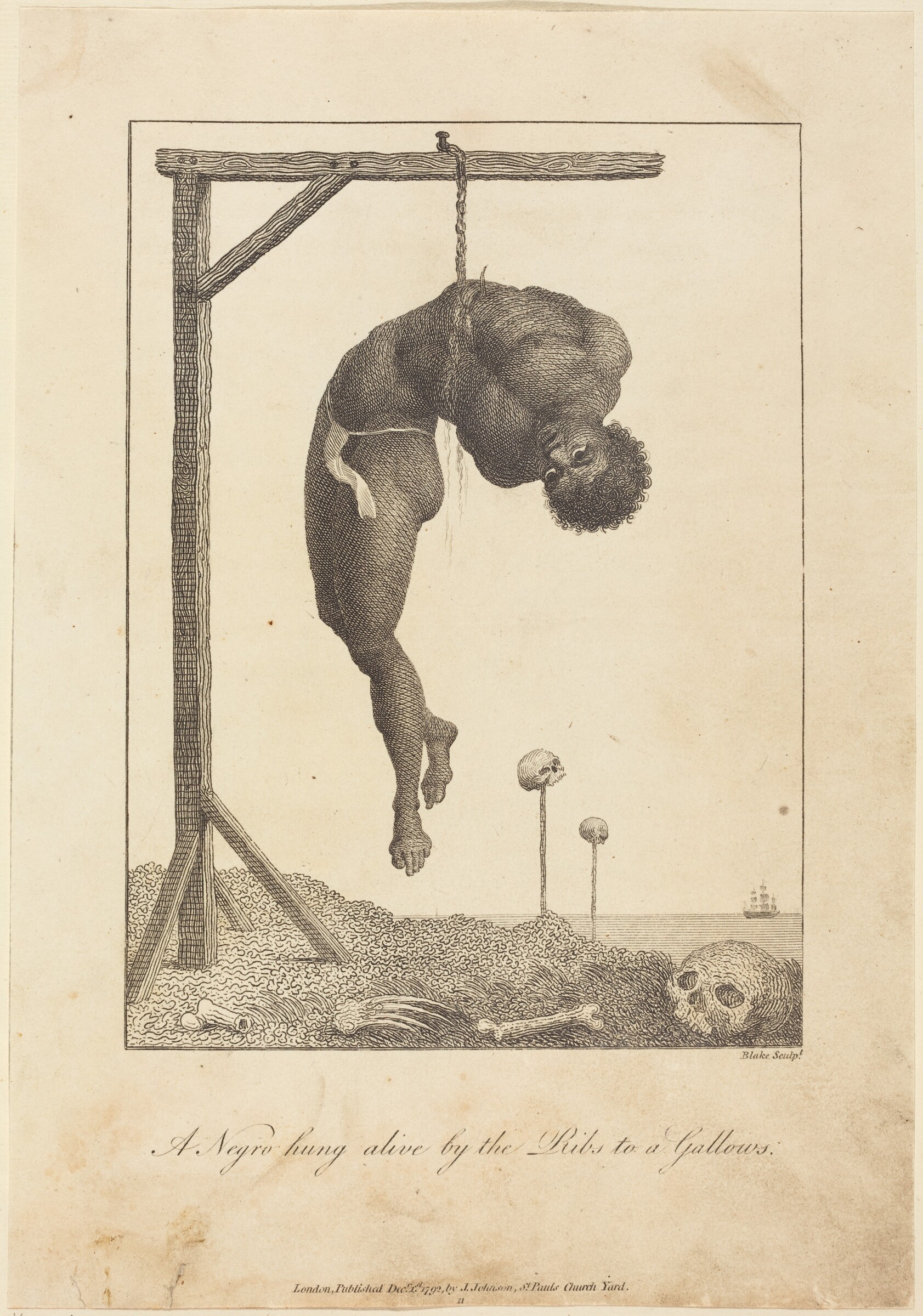
    • A Negro hung alive by the Ribs to a Gallows, William Blake after John Gabriel Stedman, 1792
      A Negro hung alive by the Ribs to a Gallows1792
    • The Execution of Breaking on the Rack, William Blake after John Gabriel Stedman, 1793
      The Execution of Breaking on the Rack1793
    c. 1800-1803
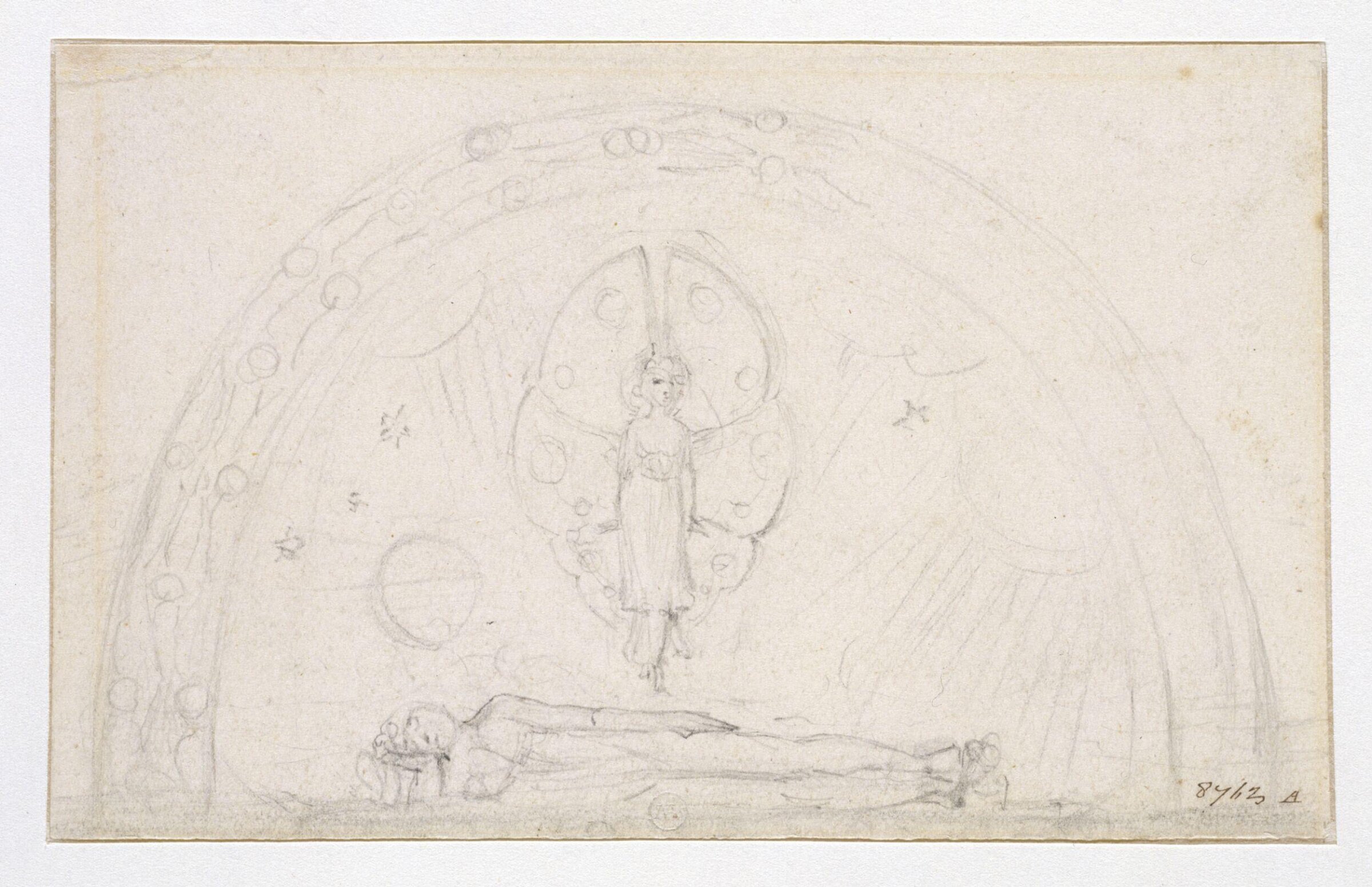
  • The Death Chamber, possible sketch for "Jerusalem", William Blake, c. 1800-1807
    The Death Chamber, possible sketch for "Jerusalem"c. 1800-1807
  • Canto IV, Verse 328, William Blake after Mary Ann Flaxman, 1803
    Canto IV, Verse 3281803
  • Evento · 21 September 1800

    A letter to Flaxman: more spirituality in Felpham

    In a letter to John Flaxman of 21 September 1800 Blake calls Felpham a fine place for study: there is more spirituality there than in London, and Heaven opens on all sides. He says that for his works he is honoured in Heaven more than he could have thought.

  • 1803

    Evento · August 1803 · Felpham

    A fight with the soldier Schofield and a trial at Chichester

    In August 1803 Blake was involved in a physical altercation with a soldier, John Schofield, and was charged not only with assault but with uttering seditious and treasonable expressions against the King; Schofield claimed that Blake had exclaimed “Damn the king. The soldiers are all slaves.” Blake was cleared at the Chichester assizes.

    Residenza · settembre 1803 – ottobre 1803

    Broadwick Street

    • Canto V, Verse 43, William Blake after Mary Ann Flaxman, 1803
      Canto V, Verse 431803
    • Canto III, Verse 201, William Blake after Mary Ann Flaxman, 1803
      Canto III, Verse 2011803
    • The Death of Saint Joseph, William Blake, 1803
      The Death of Saint Joseph1803
    • Canto III, Verse 201, William Blake after Mary Ann Flaxman, 1803
      Canto III, Verse 2011803

    Residenza · ottobre 1803 – 1820

    South Molton Street

    • Los and His Spectre [verso], William Blake, c. 1804/1807
      Los and His Spectre [verso]c. 1804/1807
    • Time's Triple Bow [recto], William Blake, c. 1804/1807
      Time's Triple Bow [recto]c. 1804/1807
    • Queen Katherine's Dream [recto], William Blake after Henry Fuseli, c. 1804
      Queen Katherine's Dream [recto]c. 1804
    • Slaap ontsnapt aan de wraak van Jupiter, William Blake, 1805
      Slaap ontsnapt aan de wraak van Jupiter1805
  • 1804

    Evento

    Returns to London and begins “Jerusalem”

    In 1804 Blake returned to London and began to write and illustrate “Jerusalem: The Emanation of the Giant Albion” (1804–20), his most ambitious work.

    Opera · 1804–1808 · Felpham

    “Milton”: the poem that gave the words to the hymn “Jerusalem”

    In the cottage at Felpham Blake began “Milton” (the title page is dated 1804, but he went on working on it until 1808). Its preface contains the poem beginning “And did those feet in ancient time”, which became the words of the anthem “Jerusalem”.

    Evento · after 1804

    Cromek cheats Blake; Stothard gets the commission

    Having conceived the idea of portraying the characters of Chaucer's “Canterbury Tales”, Blake approached the dealer Robert Cromek with a view to marketing an engraving; Cromek, thinking Blake too eccentric to produce a popular work, promptly commissioned Blake's friend Thomas Stothard instead. When Blake learned he had been cheated, he broke off contact with Stothard.

    Famiglia · after 1804

    A cooling of the friendship with Flaxman

    After Blake's return from Felpham his relationship with John Flaxman seems to have grown more distant: in letters to Hayley, Flaxman spoke ill of Blake's theories of art. In 1810, answering criticism of his print of Chaucer's “Canterbury Pilgrims”, Blake in turn criticised Flaxman's styles and theories.

  • 1808

    Evento · c. 1808

    Polemical annotations to Reynolds's “Discourses”

    Around 1808 Blake gave vigorous expression to his views on art in an extensive series of polemical annotations to Sir Joshua Reynolds's “Discourses”, denouncing the Royal Academy as a fraud and proclaiming that to generalise is to be an idiot.

  • 1809

    Mostra · London

    An exhibition in his brother's shop: nothing sold

    Blake set up an independent exhibition in his brother's haberdashery shop at 27 Broad Street in Soho to market his version of “The Canterbury Pilgrims” along with other works. It was very poorly attended, sold none of the temperas or watercolours, and its only review, in The Examiner, was hostile.

    Pubblicazione

    The “Descriptive Catalogue”: an analysis of Chaucer

    For the exhibition Blake wrote his “Descriptive Catalogue” (1809), which contains what Anthony Blunt called a “brilliant analysis” of Chaucer and is regularly anthologised as a classic of Chaucer criticism; it also contains detailed explanations of his other paintings.

    • Drawing, william blake, september 1800
      Drawingseptember 1800
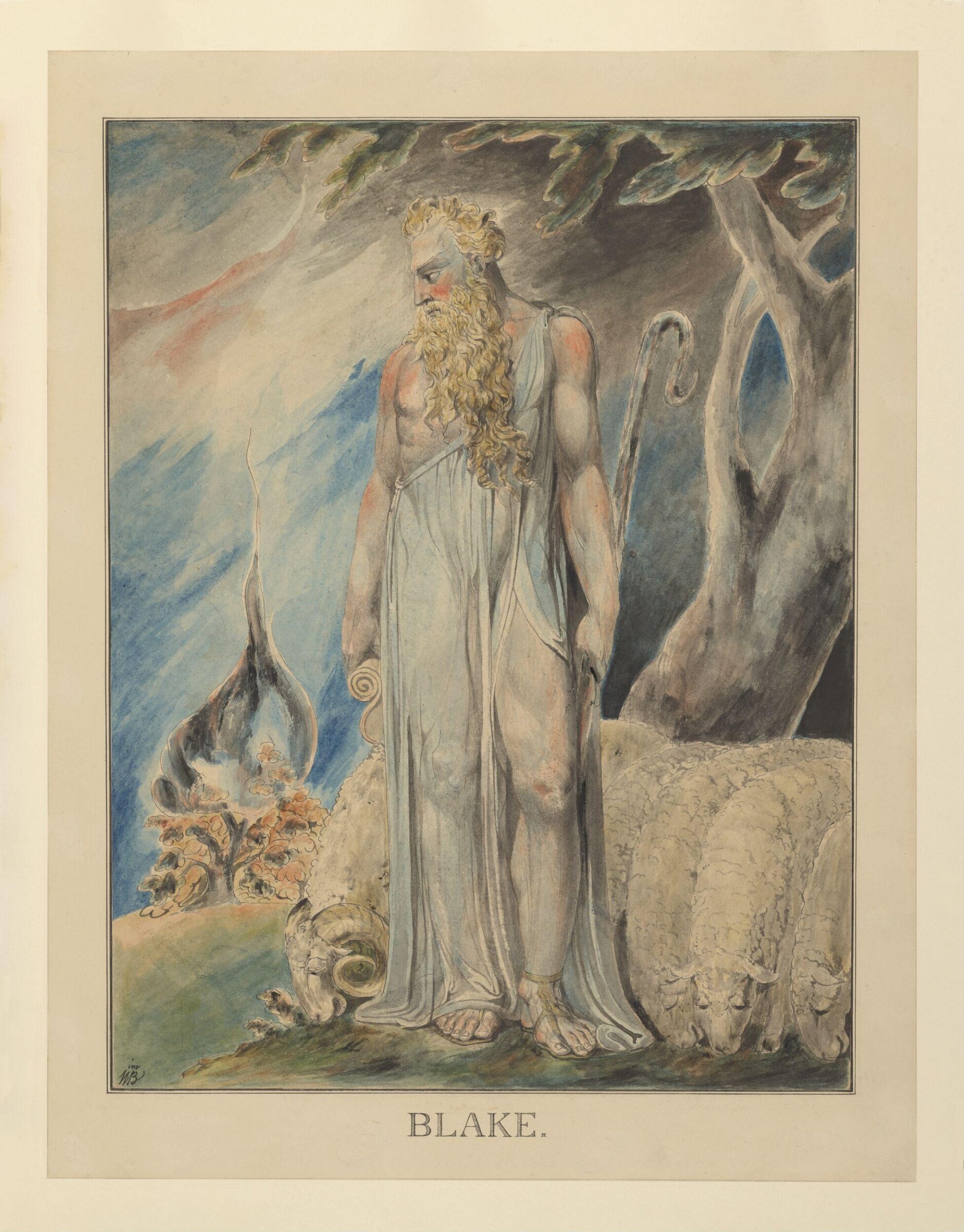
    • Moses and the Burning Bush, William Blake, ca. 1800-03
      Moses and the Burning Bushca. 1800-03
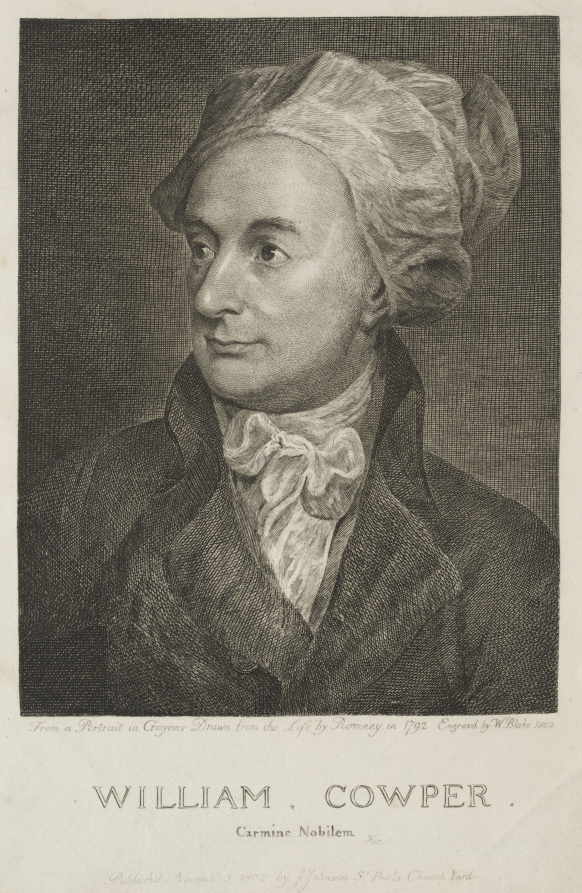
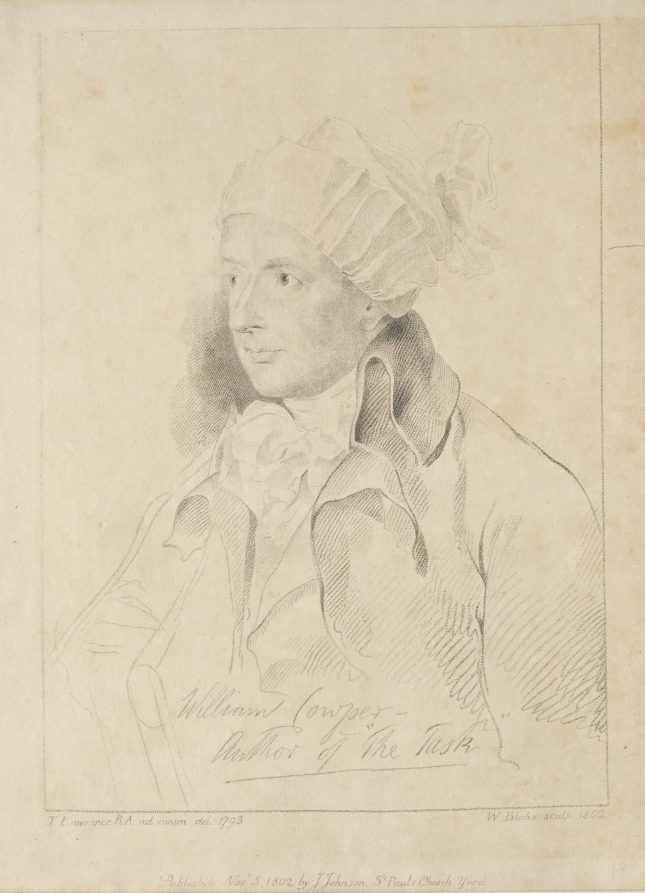
    • William Cowper, William Blake, 1802
      William Cowper1802
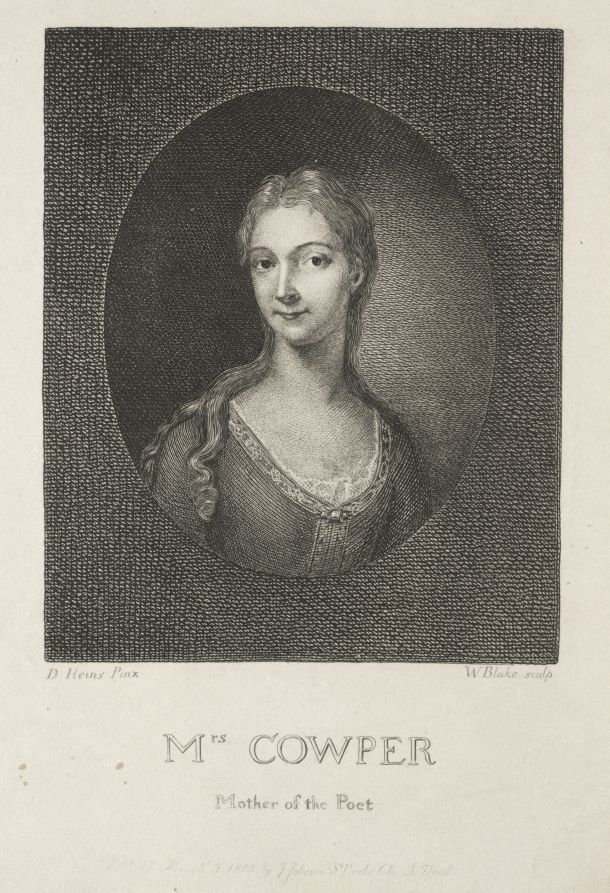
    • Mrs. Cowper, Mother of the Poet, William Blake, 1802
      Mrs. Cowper, Mother of the Poet1802
    • William Cowper, William Blake, 1802
      William Cowper1802
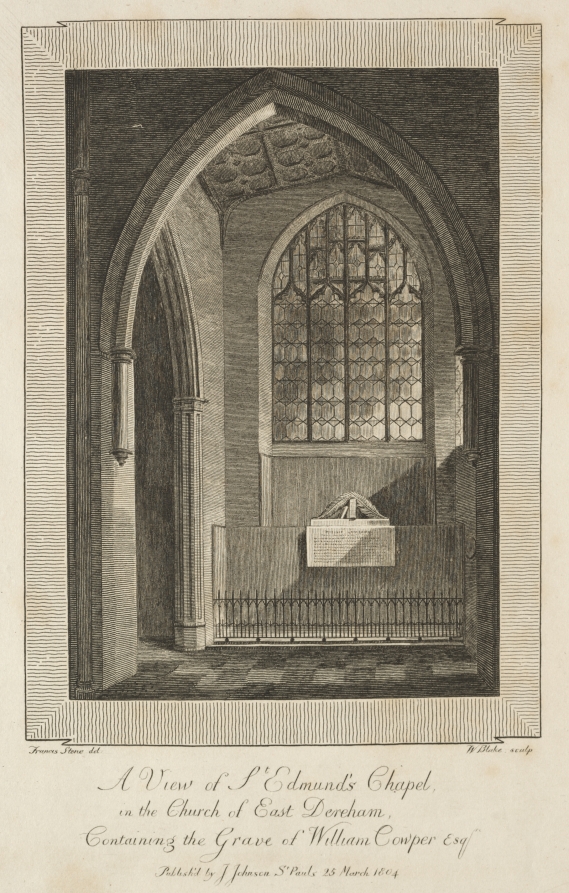
    • View of St. Edmund's Chapel in the Church of East Dereham, containing the Grave of William Cowper Esquire, William Blake, 1804
      View of St. Edmund's Chapel in the Church of East Dereham, containing the Grave of William Cowper Esquire1804
    The Canterbury Pilgrims
    1810
  • Chaucer's Canterbury Pilgrims, William Blake, 1810
    Chaucer's Canterbury Pilgrims1810
  • Drawing, william blake, ca.1810
    Drawingca.1810
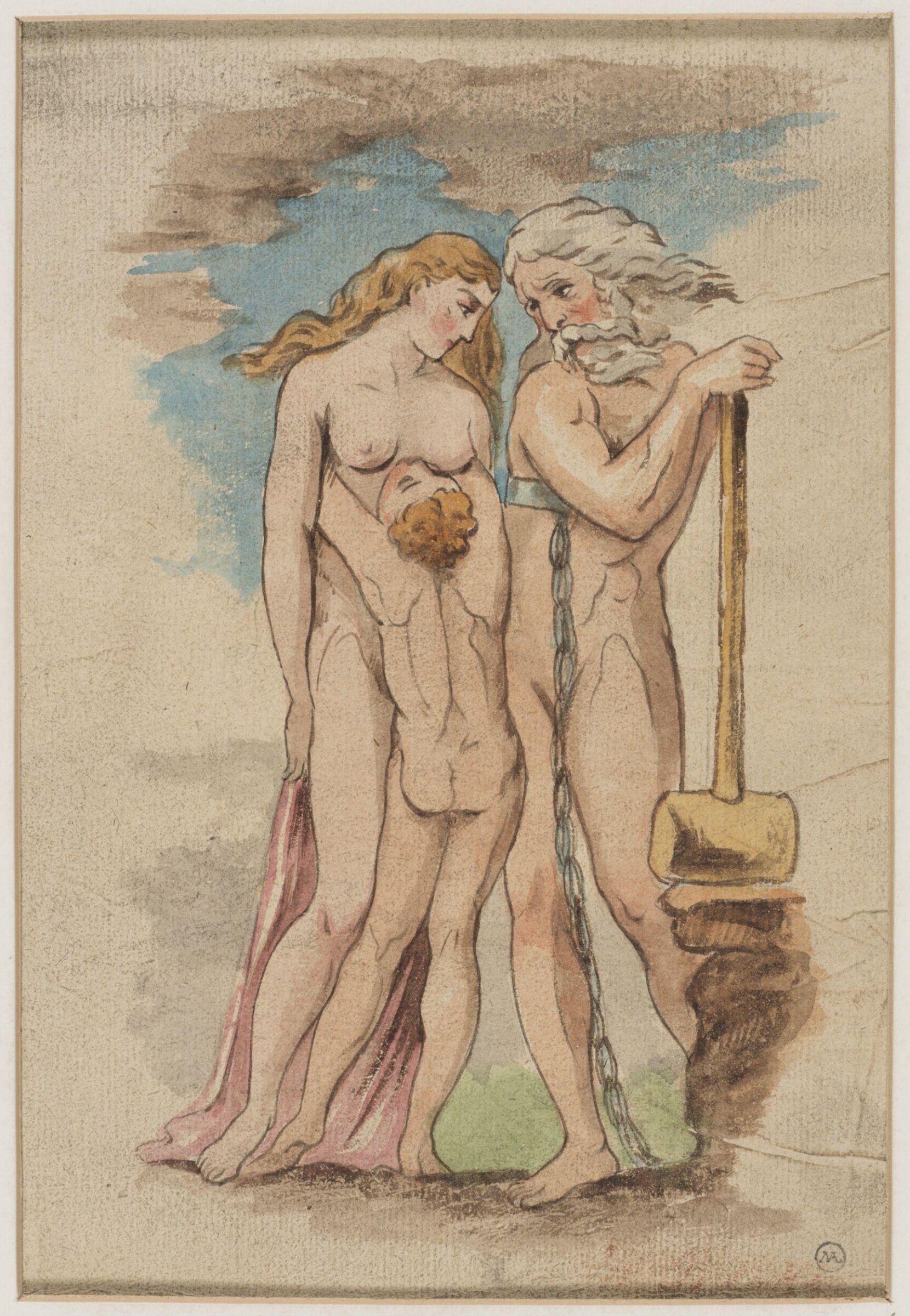
  • The Chaining of Orc, William Blake, 1812
    The Chaining of Orc1812
  • 1826

    Opera

    A commission for engravings to Dante's “Divine Comedy”

    In 1826, through Linnell, Blake received a commission for a series of engravings for Dante's “Divine Comedy”; his death in 1827 cut the enterprise short, with only a handful of watercolours completed and seven engravings in proof. Even near death he worked feverishly on the illustrations to the “Inferno”, and is said to have spent one of his last shillings on a pencil.

  • 1827

    Evento · by the time of death (1827)

    Fewer than thirty copies of the “Songs” sold

    At the time of his death Blake had sold fewer than 30 copies of “Songs of Innocence and of Experience”: he was largely unrecognised during his life.

    Evento · 12 August 1827 · London

    His last day: a portrait of Catherine and hymns

    On 12 August 1827 Blake worked relentlessly on his Dante series until the end; then, it is reported, he asked his weeping wife to stay as she was and drew her portrait (“you have ever been an angel to me”; the portrait is lost), began to sing hymns and verses, and at six that evening, after promising her that he would be with her always, died.

    Morte · 12 agosto 1827

    London

    Sepoltura

    Bunhill Fields

    • Colinet vertrekt droeviggestemd, William Blake, 1820 - 1821
      Colinet vertrekt droeviggestemd1820 - 1821
    • Colinet's Journey, William Blake, 1821
      Colinet's Journey1821
    • Colinet Departs in Sorrow, William Blake, 1821
      Colinet Departs in Sorrow1821
    • Thenot Remonstrates with Colinet, Lightfoot in Background, William Blake, 1821
      Thenot Remonstrates with Colinet, Lightfoot in Background1821
    • Shepherd Chases away Wolf, William Blake, 1821
      Shepherd Chases away Wolf1821
    • Thenot and Colinet Eat their Evening Meal, William Blake, 1821
      Thenot and Colinet Eat their Evening Meal1821