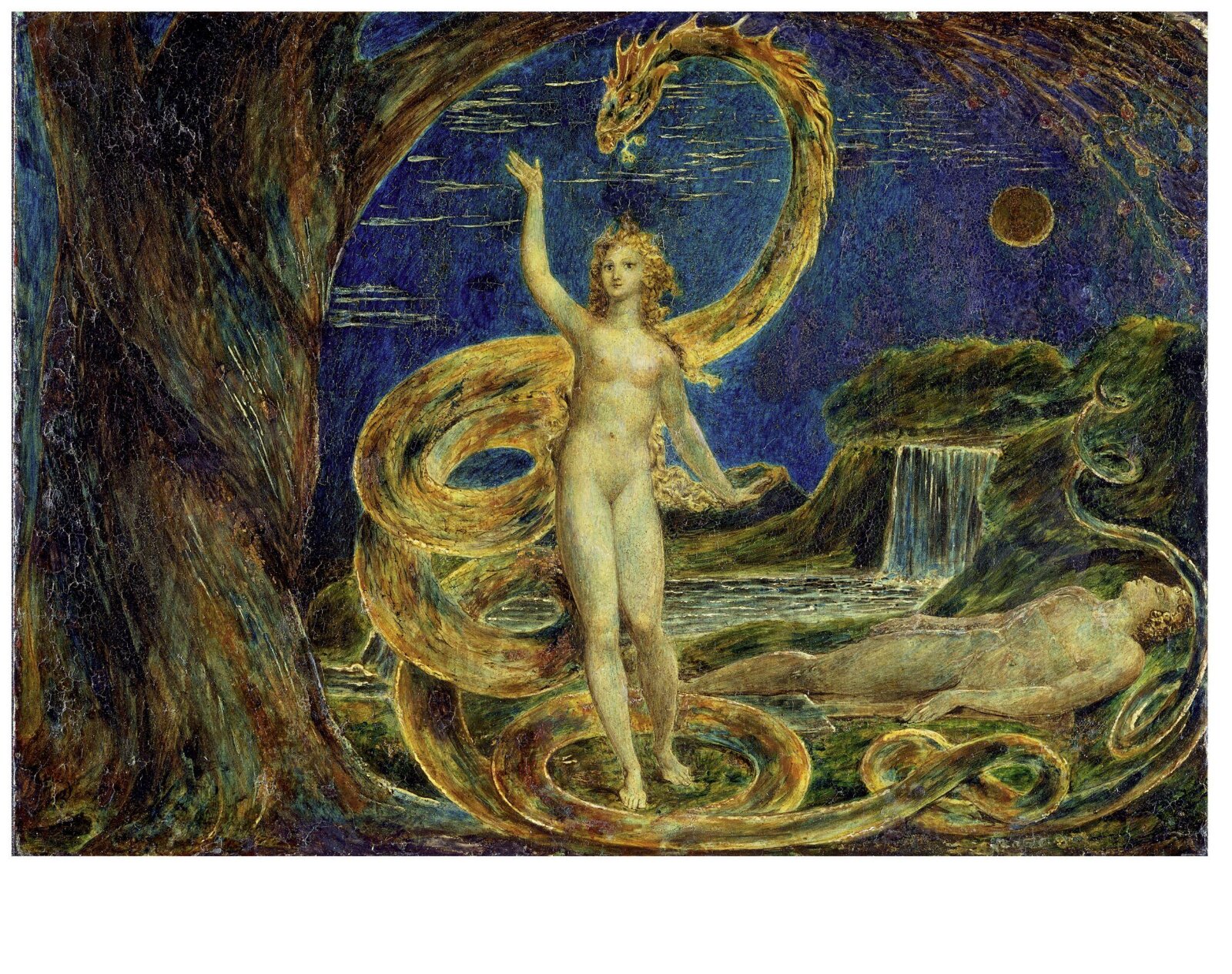
Eve Tempted by the Serpent
Sul dipinto
Blake drew his inspiration for this scene from the book of Genesis in the Old Testament and from John Milton's epic poem 'Paradise Lost' (1667). Blake often experimented with painting techniques, and here the surface has flaked badly because of the poor adhesion between a glue-based paint and the copper support he used.
Victoria and Albert Museum

Scheda
- Numero di inventario
- P.28-1953
Nel frattempo, nella vita di William Blake
Tutta la vita1780–1808
Exhibits six times at the Royal Academy
Despite his antagonism towards Reynolds, Blake submitted works to the Royal Academy on six occasions between 1780 and 1808.
1800
Moves to Felpham for his patron Hayley
In 1800 Blake moved to a cottage at Felpham, in Sussex, to take up a job illustrating the works of William Hayley, a minor poet.
21 September 1800
A letter to Flaxman: more spirituality in Felpham
In a letter to John Flaxman of 21 September 1800 Blake calls Felpham a fine place for study: there is more spirituality there than in London, and Heaven opens on all sides. He says that for his works he is honoured in Heaven more than he could have thought.
1800–1803
Disenchantment with his patron Hayley
Over time Blake came to resent his patron, believing that Hayley was uninterested in true artistry and preoccupied with “the meer drudgery of business”. This disenchantment has been speculated to have influenced “Milton”, where Blake wrote that “Corporeal Friends are Spiritual Enemies”.
settembre 1800 – settembre 1803 · Luogo di lavoro
Felpham




![Chalice of Saint John the Evangelist [reverse], Hans Memling, c. 1470/1475](https://api.nga.gov/iiif/1a761edd-c52e-47c0-b422-df074e14c803/full/!2400,2400/0/default.jpg)


