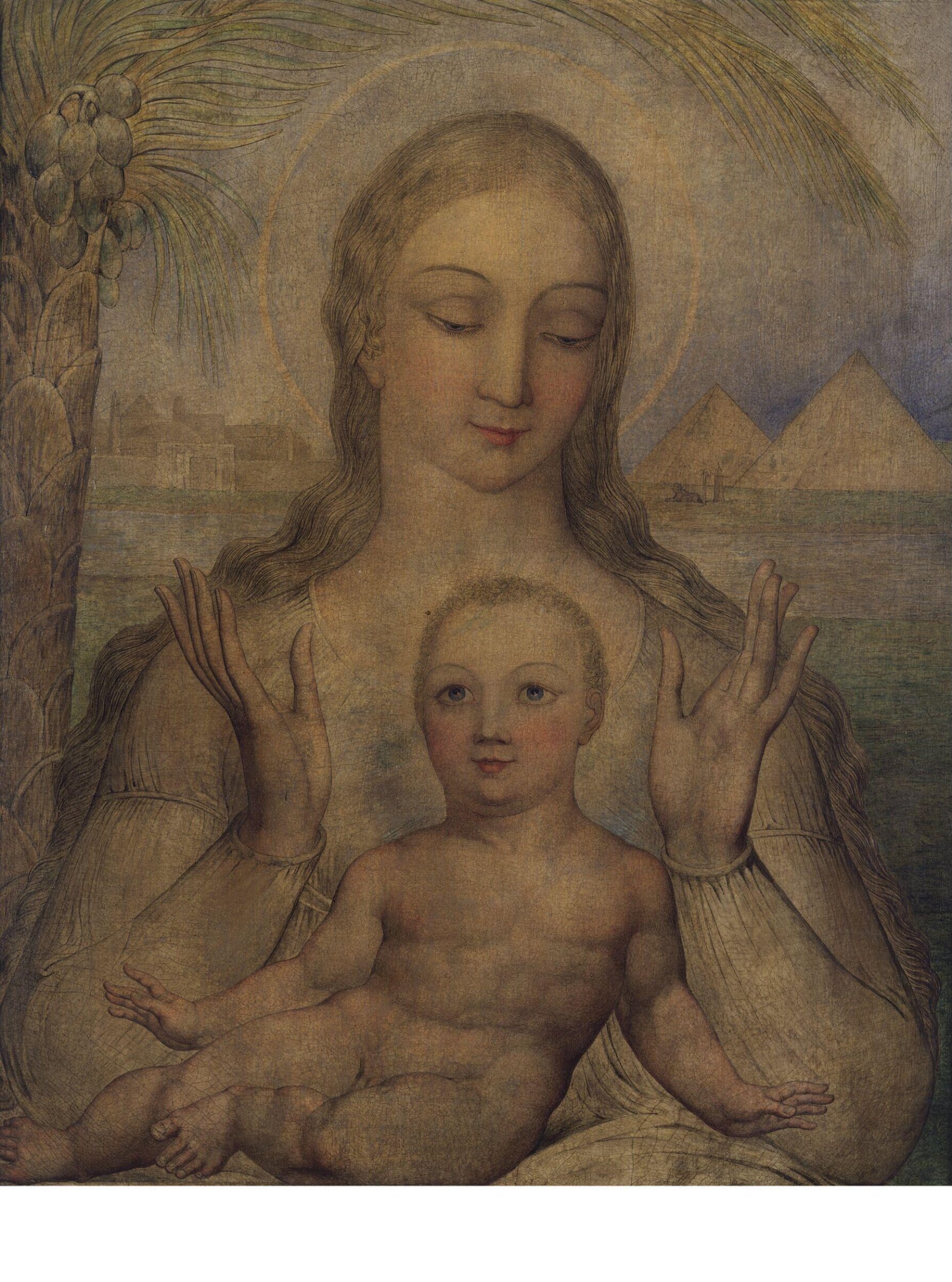
William BlakeRegno Unito, 1757–1827
Bathsheba at the Bath
Si può vedere?
Non si sa
Dove si trova «Bathsheba at the Bath» oggi? Collezione: Tate, Westminster. Non si sa se oggi sia esposta.
Westminster, Regno Unito
Il proprietario è noto; non si sa se oggi sia esposta.
- Ultimo cambio di stato
- Fonte
- Il museo
Sul dipinto
Betsabea al bagno di William Blake, dipinto degli anni 1790 nella collezione londinese della Tate, mostra Davide che osserva dall'alto a destra. Betsabea è la moglie di Uria, che il re osserva dal tetto del suo palazzo nell'episodio biblico. Blake aggiunse due bambini assenti da quel passo. La piccola tela a tempera fu commissionata da Thomas Butts e fu poi montata su tavola.
Scheda
- Numero di inventario
- N03007
In catalogo
Esposizioni
Non si sa se oggi sia esposta
Tate · 13 ott 2026 — oggi · Non confermato
Non si sa se fosse esposta
National Gallery · 29 set 2026 — 13 ott 2026 · Non confermato
Fonti
- Wikidata
- Immagine: Tate — William Blake · Public domain · Wikimedia Commons
Nella vita di William Blake
Tutta la vita1780–1808
Exhibits six times at the Royal Academy
Despite his antagonism towards Reynolds, Blake submitted works to the Royal Academy on six occasions between 1780 and 1808.
1785–1791 · Residenza
Poland Street
1788
Invents relief etching
In 1788, aged 31, Blake invented relief etching, or “illuminated printing”: text and designs are drawn on a copper plate in acid-resistant ink and etched so that the protected areas stand in relief, and the printed pages are coloured by hand in watercolours. He used it for most of his well-known works, including “Songs of Innocence and of Experience”, “The Book of Thel”, “The Marriage of Heaven and Hell” and “Jerusalem”.
1791 · Residenza
Hercules Buildings
1800
Moves to Felpham for his patron Hayley
In 1800 Blake moved to a cottage at Felpham, in Sussex, to take up a job illustrating the works of William Hayley, a minor poet.
settembre 1800 – settembre 1803 · Luogo di lavoro
Felpham