 Pierre PugetFrance, 1620–1694
Le Chef de saint Jean-Baptiste
Peut-on la voir ?
Pas exposée actuellement
Où est « Le Chef de saint Jean-Baptiste » aujourd’hui ? Collection: Musée du Louvre, Paris. Pas exposée actuellement. Vérifié 26 septembre 2026.

Paris, France
Elle appartient à la collection, mais n’est pas présentée en ce moment.
- Vérifié
- Dans cet état depuis
- Source
- Le musée
À propos du tableau
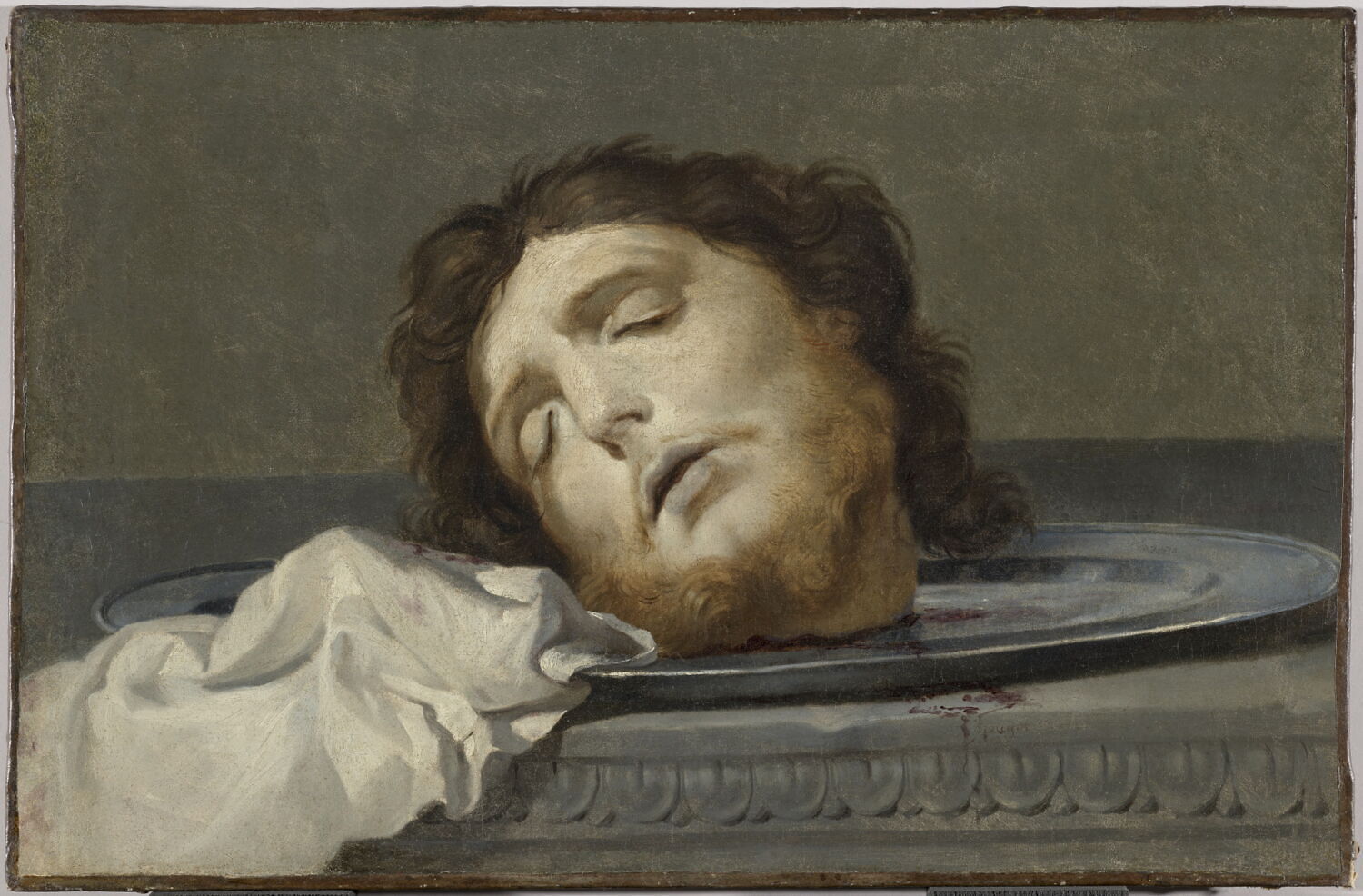
Le Chef de saint Jean-Baptiste est un tableau réalisé par l'artiste français Pierre Puget dans la deuxième moitié du XVIIe siècle. De format horizontal, cette huile sur toile est une peinture chrétienne qui représente la tête décapitée de Jean le Baptiste gisant dans un plat après sa décollation. La composition comprend des traces de sang qui maculent le bord de la surface en pierre sur laquelle est posé ce plat en formant la signature du peintre. Achetée en 2025 à la galerie De Bayser, à Paris, l'œuvre est conservée au musée du Louvre.
Notice
- Numéro d’inventaire
- RFML.PE.2025.3.1
Au catalogue
Sources
- Musée du Louvre
- Image : Musée du Louvre — © 2025 GrandPalaisRmn (musée du Louvre) / Mathieu Rabeau
Dans la vie de Pierre Puget
La vie entière1640s
Assistant to Pietro da Cortona in Rome
In Rome he presented himself to Pietro da Cortona, one of the early masters of the Baroque, and assisted him in painting the lavish ceilings of the Palazzo Barberini in Rome and the Palazzo Pitti in Florence. He stayed with Cortona for three years.
1655
First major commission: the entrance of Toulon’s town hall
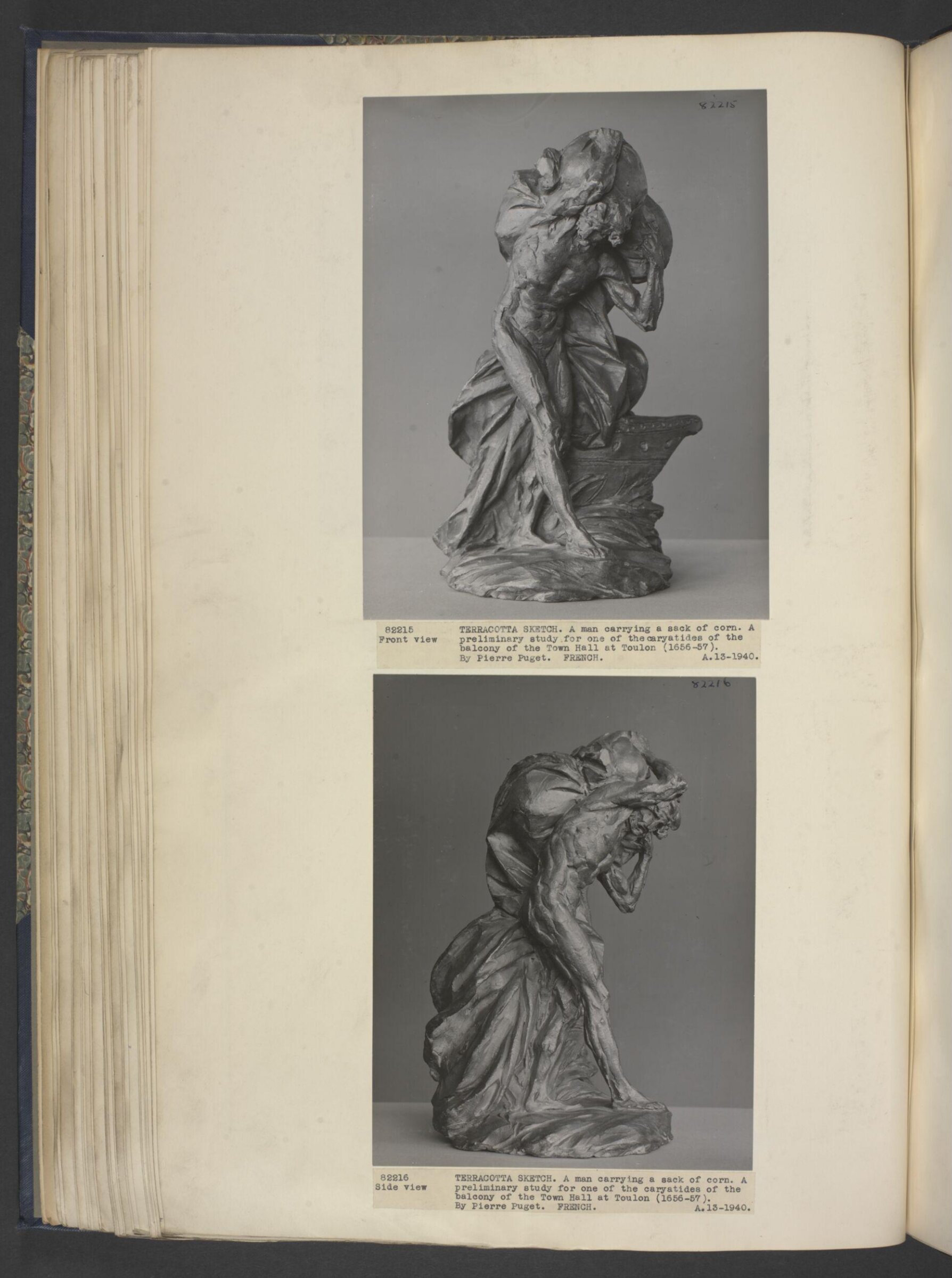
He received his first important commission, for the sculptural decoration of the entrance of the Hôtel de Ville in Toulon: a porch supported by muscular atlantes. His models were two of the muscular workers who unloaded ships on the quay in front of the building.
1660
Commission from Nicolas Fouquet and a trip to Genoa for marble
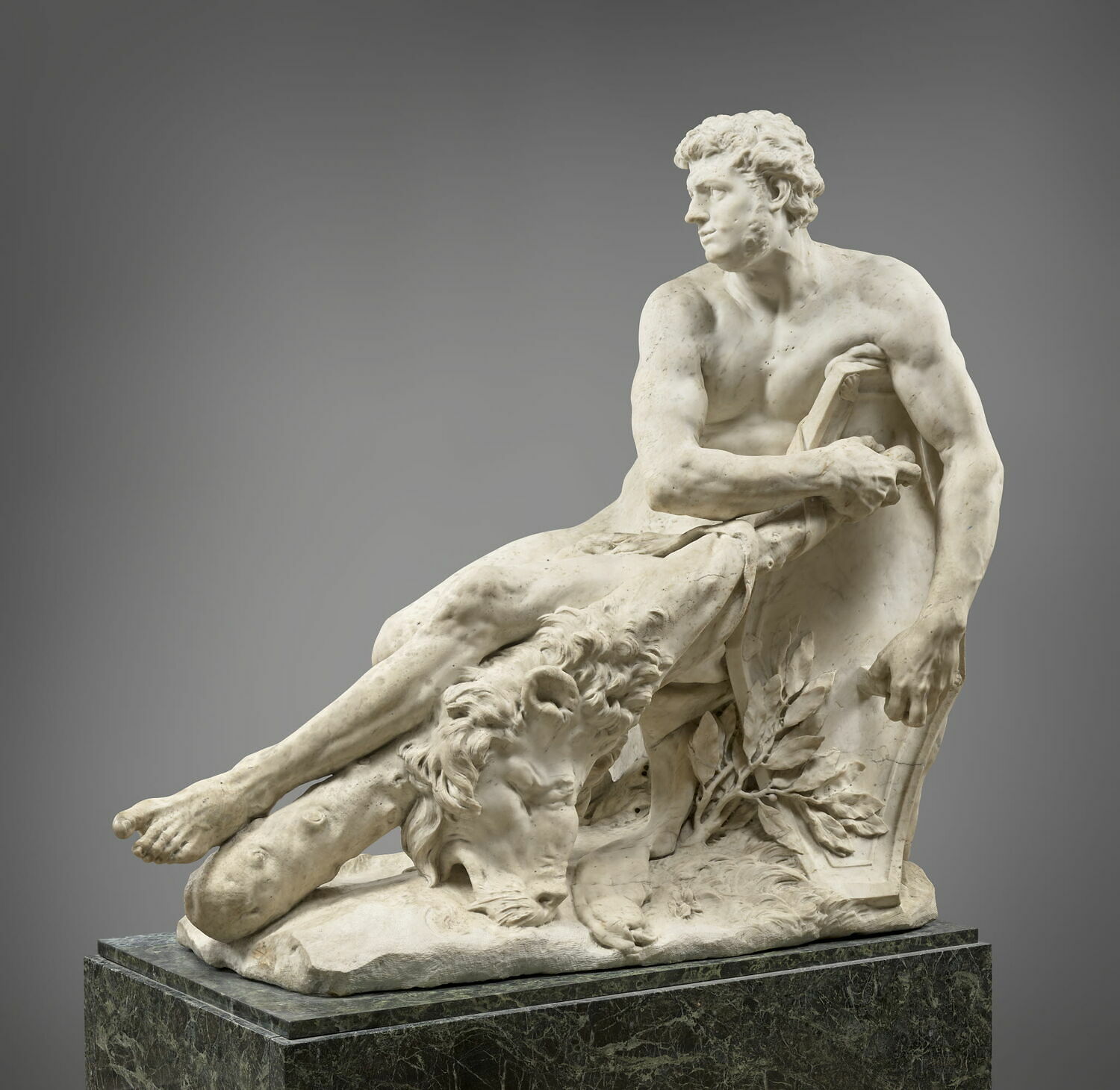
The King’s Minister of Finance, Nicolas Fouquet, commissioned sculptures for his new garden at Vaux-le-Vicomte, including a statue of Hercules, Fouquet’s personal symbol, and sent Puget to Genoa to select and bring back the best blocks of marble in person. There the statue known as the Hercules of Gaul was made, with a Genoese sailor as the model.
1660
Refuses Colbert out of obligation to Fouquet
While preparing his voyage he received several proposals for sculptural projects from Jean-Baptiste Colbert, secretary to Cardinal Mazarin, but refused them because of his obligations to Fouquet. Colbert did not forget the slight.
1665
Serious illness: he gives up painting
A serious illness and the advice of his doctors made him abandon painting entirely. Altogether he is recorded as having painted fifty-six paintings, of which nineteen were documented in 1868 as still existing.
2 décembre 1694
Died