 Pierre PugetFrance, 1620–1694
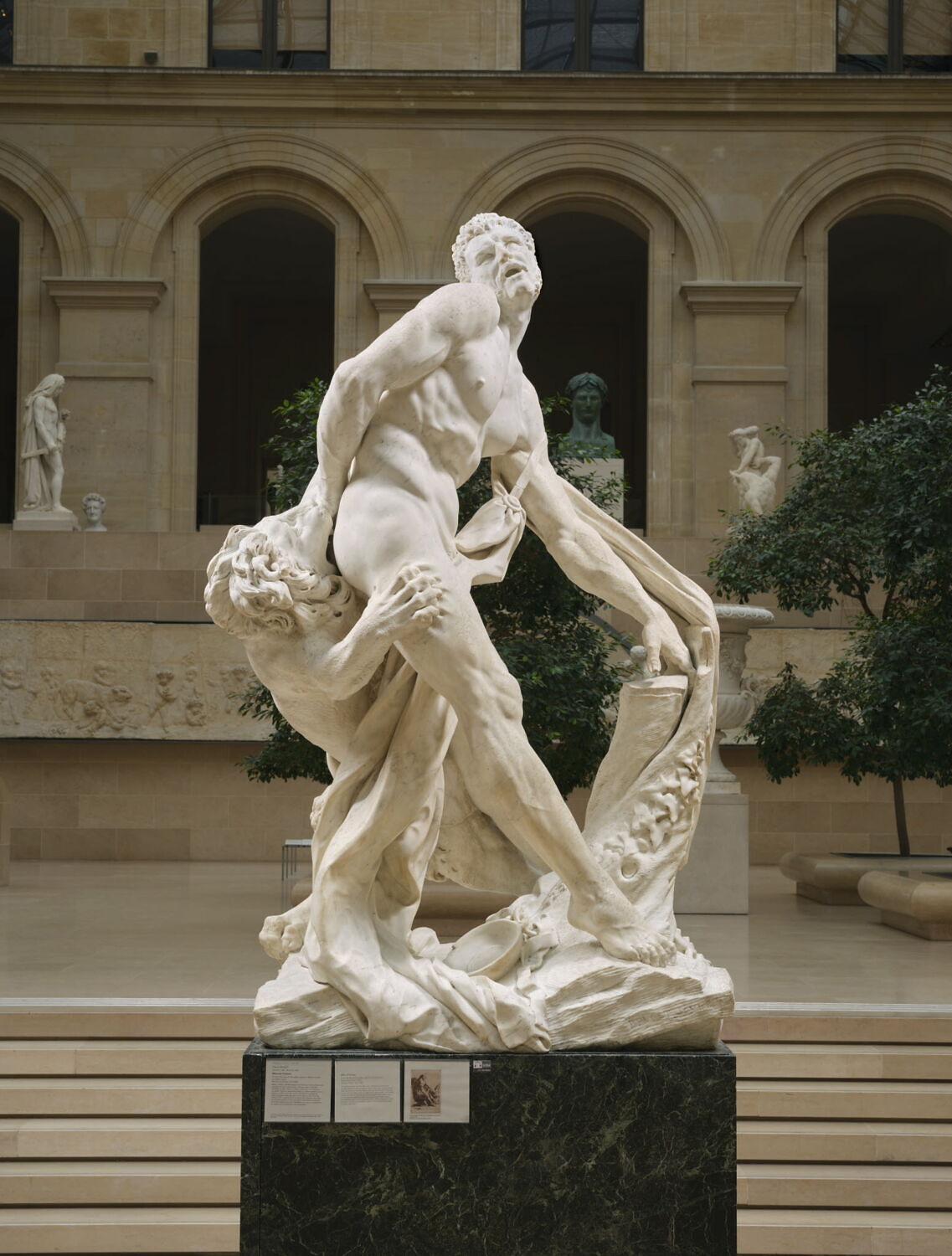
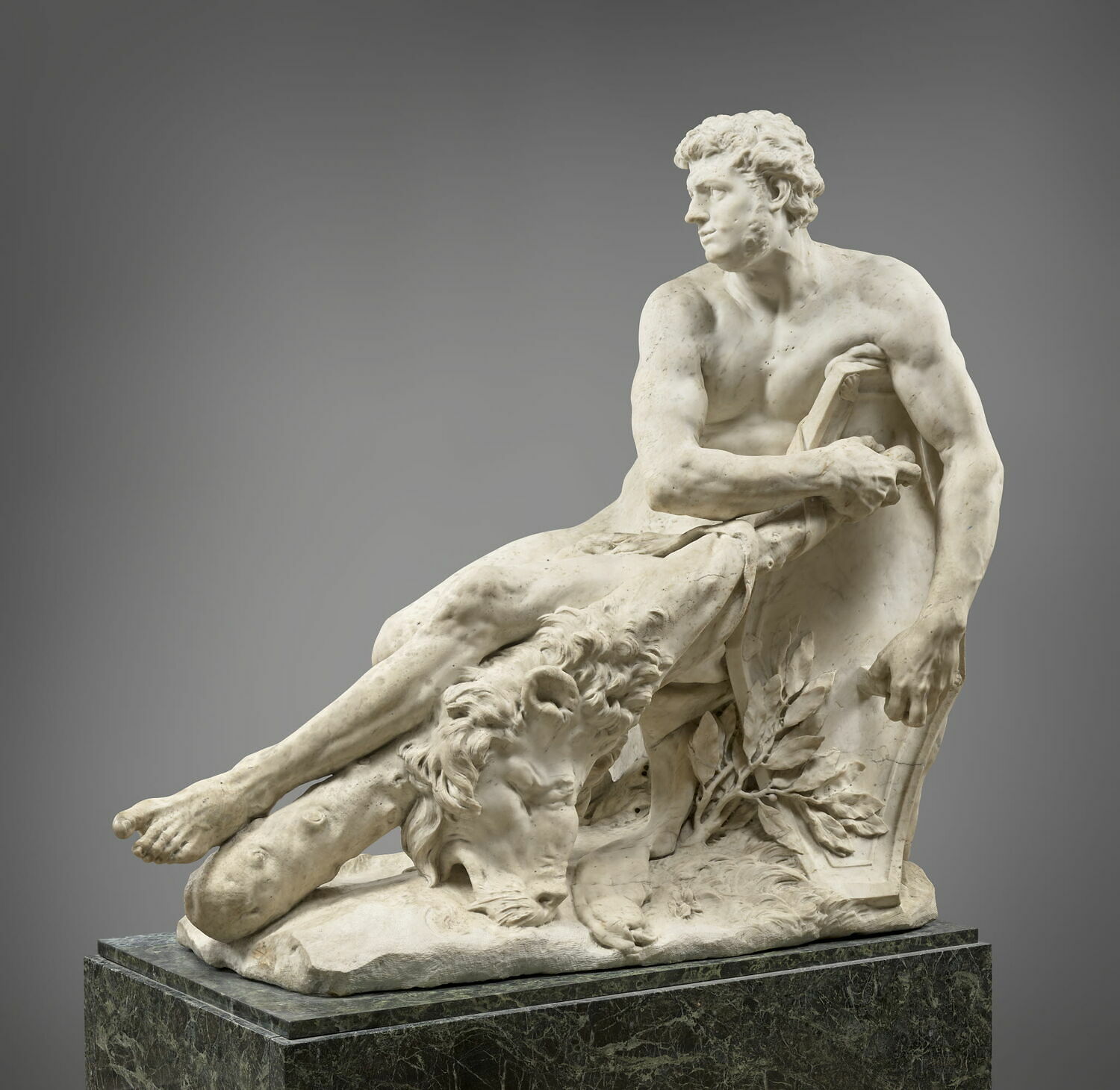
Hercule au repos
Peut-on la contempler ?
Oui, elle reçoit

Présentée au public.
- Vérifié
- Dans cet état depuis
- Source
- Le musée
À propos de la sculpture
L'Hercule gaulois est une statue en marbre réalisée par l'artiste Pierre Puget entre 1661 et 1662 et conservée au musée du Louvre.
Notice
- Numéro d’inventaire
- N 15345
Au catalogue
Sources
- Musée du Louvre
- Image : Musée du Louvre — © 2021 GrandPalaisRmn (musée du Louvre) / Mathieu Rabeau
Pendant ce temps, chez Pierre Puget
La vie entière1660
Commission from Nicolas Fouquet and a trip to Genoa for marble
The King’s Minister of Finance, Nicolas Fouquet, commissioned sculptures for his new garden at Vaux-le-Vicomte, including a statue of Hercules, Fouquet’s personal symbol, and sent Puget to Genoa to select and bring back the best blocks of marble in person. There the statue known as the Hercules of Gaul was made, with a Genoese sailor as the model.
1660
Refuses Colbert out of obligation to Fouquet
While preparing his voyage he received several proposals for sculptural projects from Jean-Baptiste Colbert, secretary to Cardinal Mazarin, but refused them because of his obligations to Fouquet. Colbert did not forget the slight.
5 September 1661
Fouquet is arrested on Colbert’s accusation
Nicolas Fouquet was arrested and imprisoned on Colbert’s accusation of using government funds for his own purposes. The statue commissioned for his garden was later sent instead to the Château de Sceaux, Colbert’s more modest residence; it is now in the Louvre.
1661–1669
Decides to stay in Italy for a time
He decided to stay in Italy for a time, making long visits to Rome and Genoa; his principal patron there was the nobleman Francesco Maria Sauli. For the French patron Emmanuel Brignole he made a notable statue, “The Immaculate Conception”, for the chapel of an Albergo in Genoa, and he declined the Genoese senate’s proposal to paint their council chamber in order to devote himself to sculpture.