 Pierre PugetFrance, 1620–1694
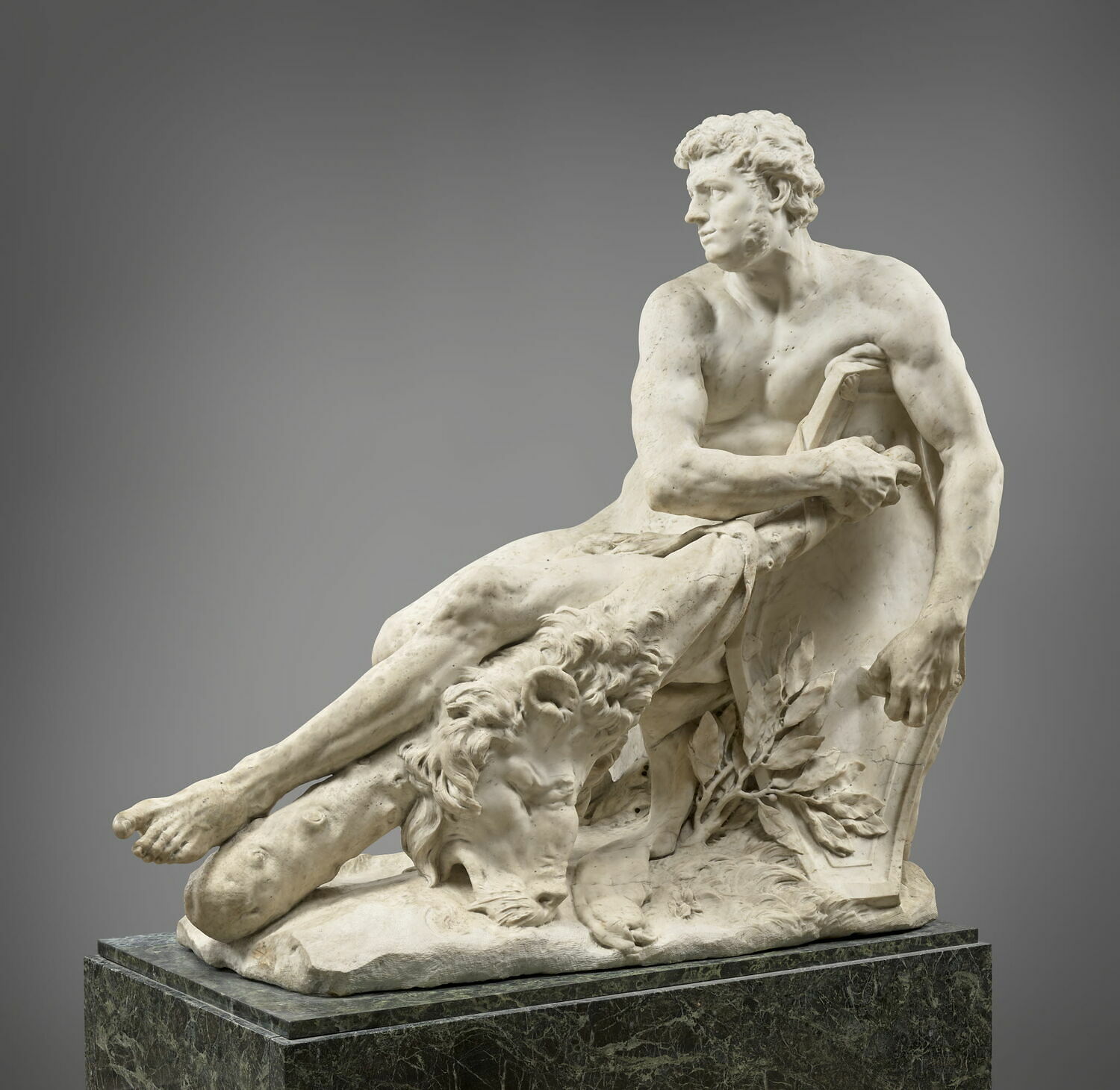
Milon de Crotone
Peut-on la contempler ?
Oui, elle reçoit

Présentée au public. Qui s’en porte garant est indiqué ci-dessous.
- Vérifié
- Dans cet état depuis
- Source
- Le musée
À propos de la sculpture
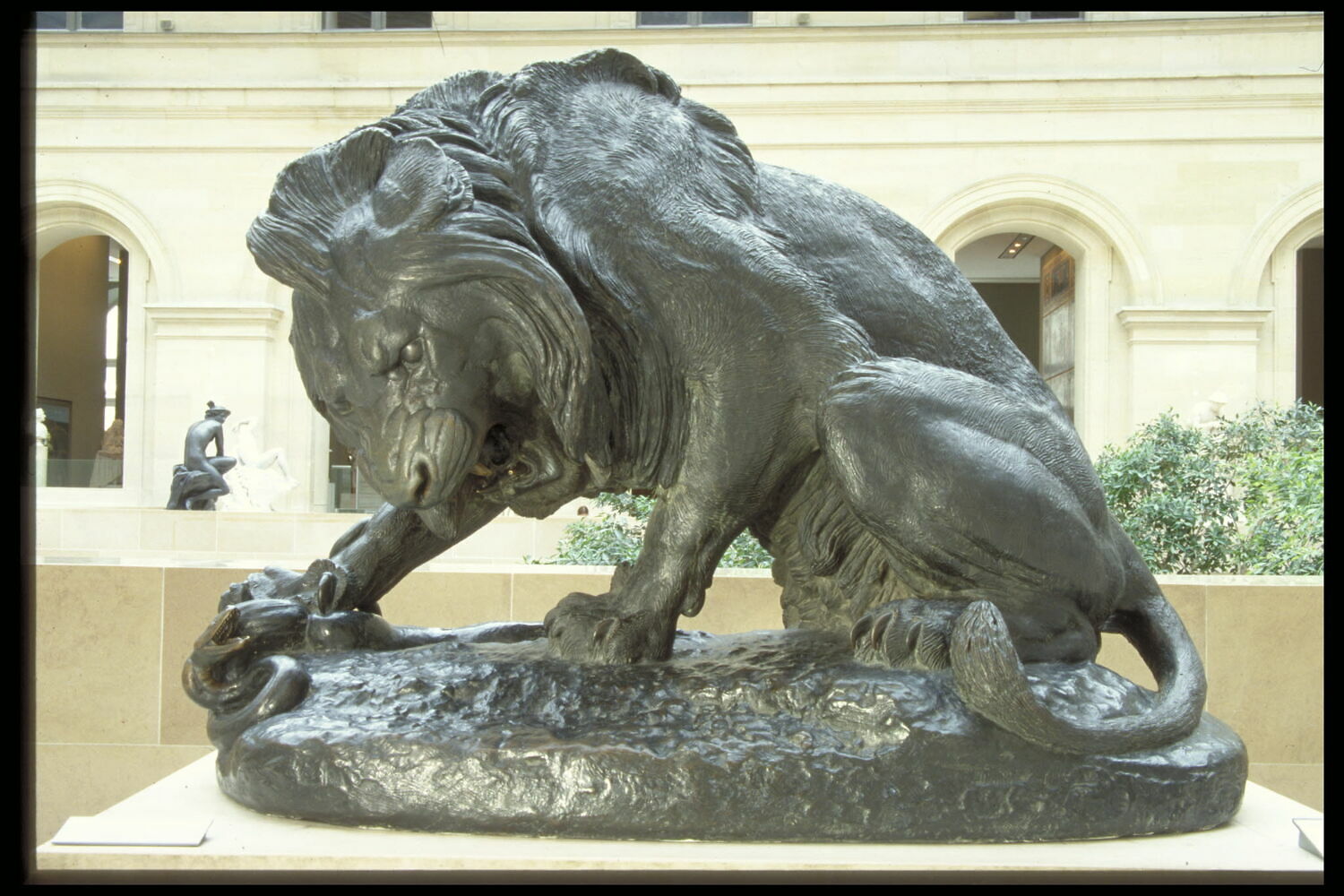
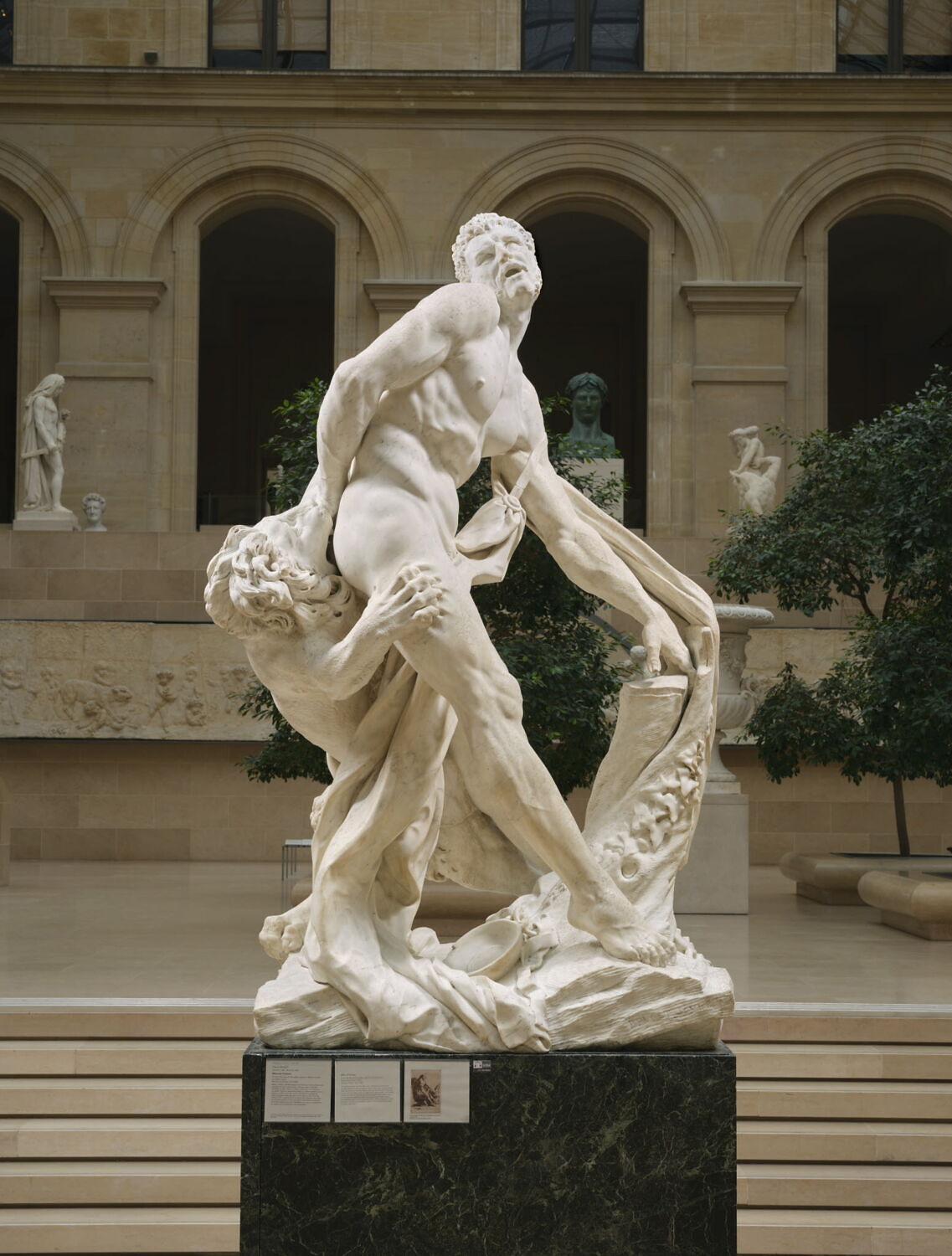
Le Milon de Crotone est un groupe en marbre réalisé entre 1671 et 1682 par le sculpteur Pierre Puget à Toulon sur commande de Jean-Baptiste Colbert et à destination du château de Versailles. L’œuvre est actuellement conservée à Paris au musée du Louvre.
Il s’agit d’une représentation de la mort de l’athlète Milon de Crotone au IVe siècle avant J.-C.. Il aurait été dévoré par des loups (ici un lion) alors que sa main était coincée dans la fente d’une souche d’arbre dont il aurait cherché à séparer les deux parties.
Notice
- Numéro d’inventaire
- MR 2075
Au catalogue
Sources
- Musée du Louvre
- Image : Musée du Louvre — © 2024 Musée du Louvre, Dist. GrandPalaisRmn / Thierry Ollivier
Pendant ce temps, chez Pierre Puget
La vie entièrelate 1669 – 1670
Leaves for Genoa: “The Virgin”
At the end of 1669 he took a leave of absence and left the dockyards for Genoa, his traditional sanctuary, where he made a series of works, including “The Virgin” (1670), now in the oratory of the Church of Saint Philip Neri.
1670
Sidelined from the decoration of the ships
When he returned to the dockyards he found a new officer in command and the decoration of ships he had begun given to others. On Colbert’s instructions any work he did had to be approved by Le Brun and the senior sculptors in Paris, and he was to design only what he was told to design; Colbert added that British ships had little or no sculptural decoration and usually won battles, so French ships should also be without it.
1672
Back in Marseille: Cours Saint-Louis and the fish market
With no further work at the Naval Arsenal, he returned to his birthplace, Marseille; his first project was a new square and street, the Cours Saint-Louis and rue Canebière, inspired by the urban planning of Genoa. He also made an ornate sculptural plaque with the King’s coat of arms for the façade of the Hôtel de Ville and designed a new fish market, completed in 1672.
13 May 1672
Colbert commissions “Milon of Croton”
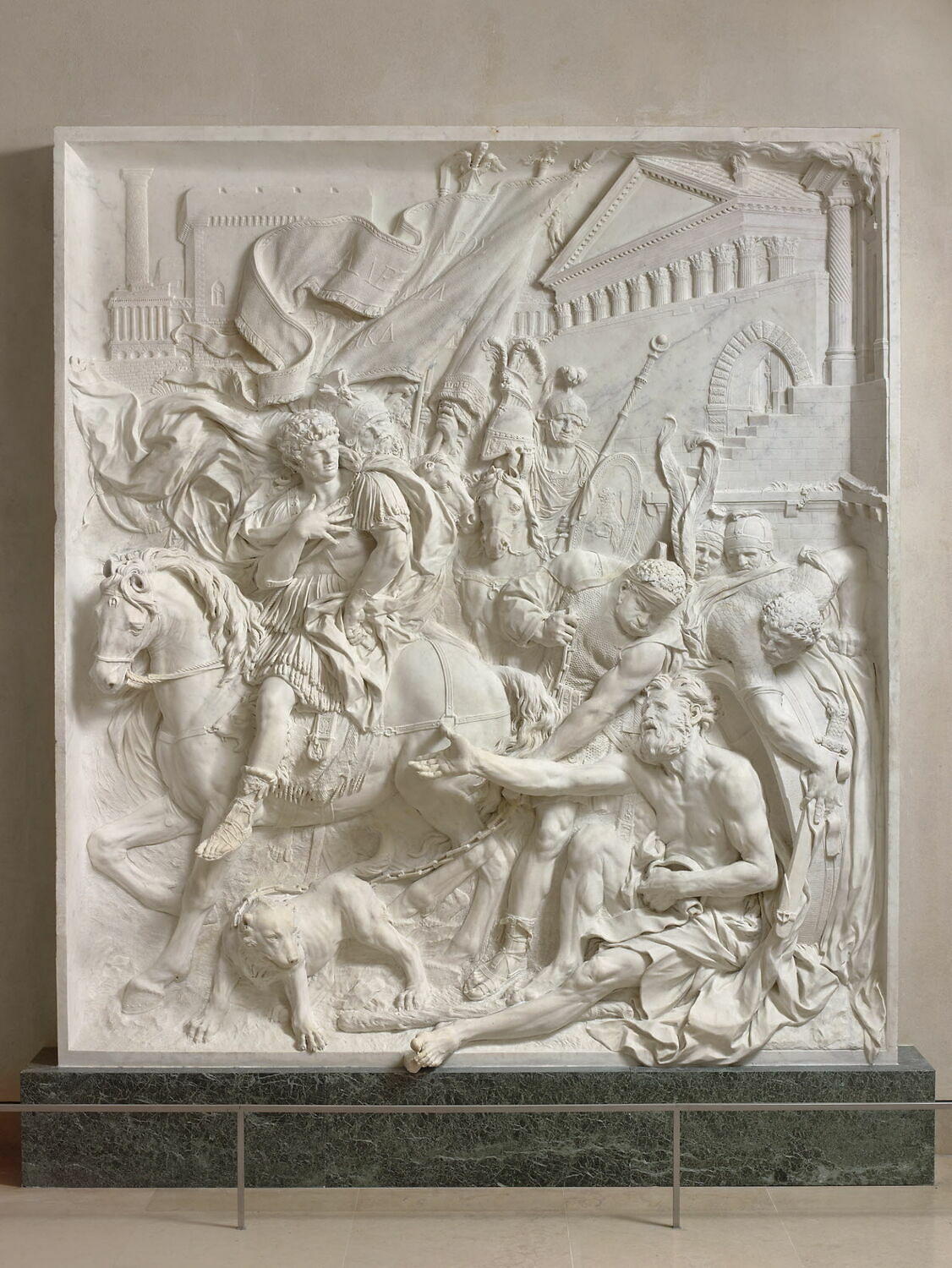
Colbert, who disliked Puget’s personality but admired his skill, offered him a commission for two large works for the gardens of Versailles, “Milon of Croton” and the bas-relief “Alexander and Diogenes”, whose designs Puget had sent in 1671. Occupied with his tasks for the city of Marseille, the sculptor did not begin work until 1672.
1679
Work begins on La Vieille Charité in Marseille
Construction began of La Vieille Charité to his design, originally a home for beggars and the indigent, now a cultural centre.
1683
Colbert dies; Louvois writes to Puget
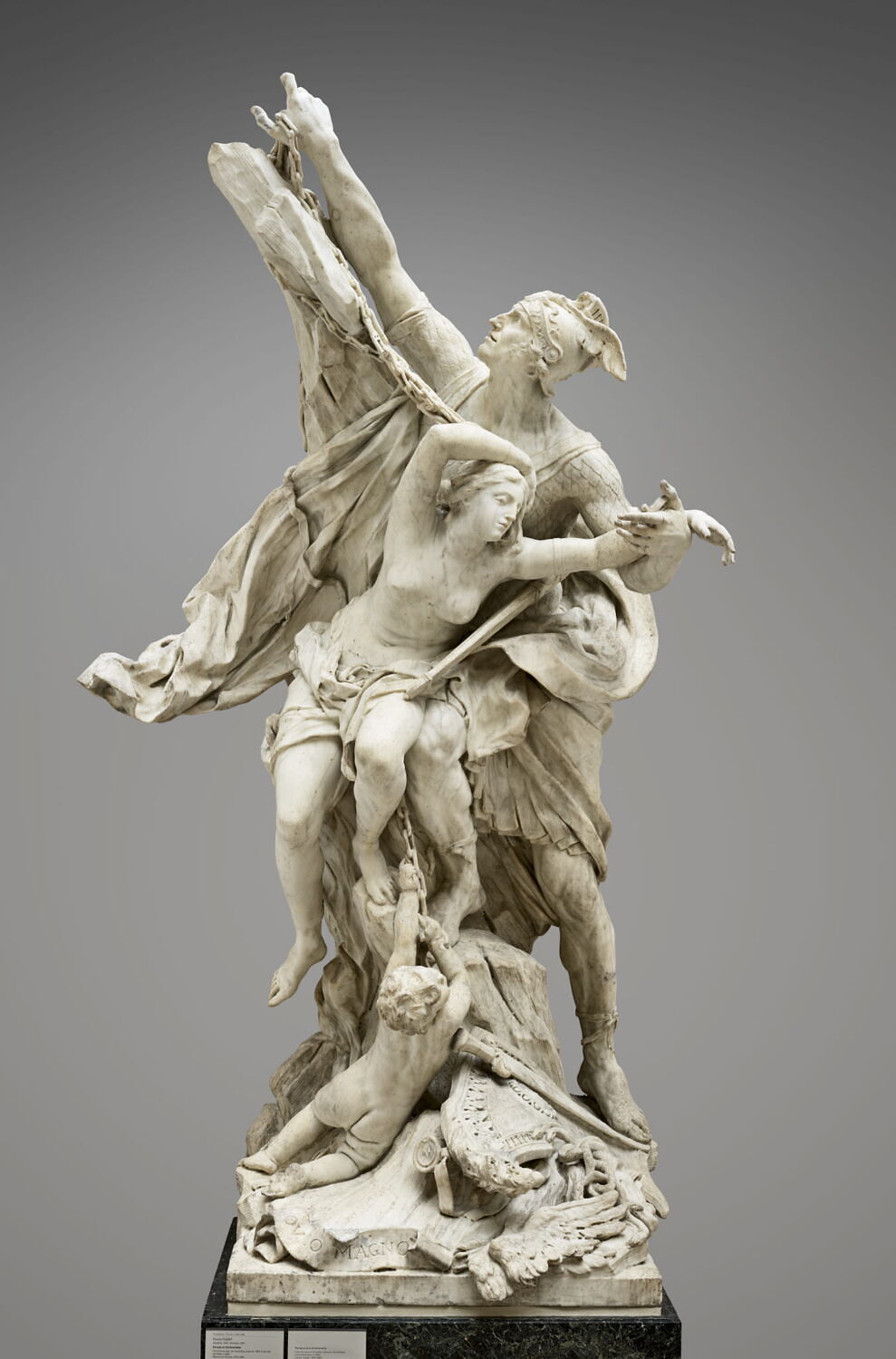
A month after Colbert’s death, his successor as superintendent of royal buildings, the Marquis de Louvois, wrote to Puget asking for a report on his works and how old he was. Puget replied that he was sixty and was working with great enthusiasm on “Perseus and Andromeda” and the bas-relief “Alexander and Diogenes”: the marble, he wrote, trembles before him, no matter how large it is.