 Pierre PugetFrance, 1620–1694
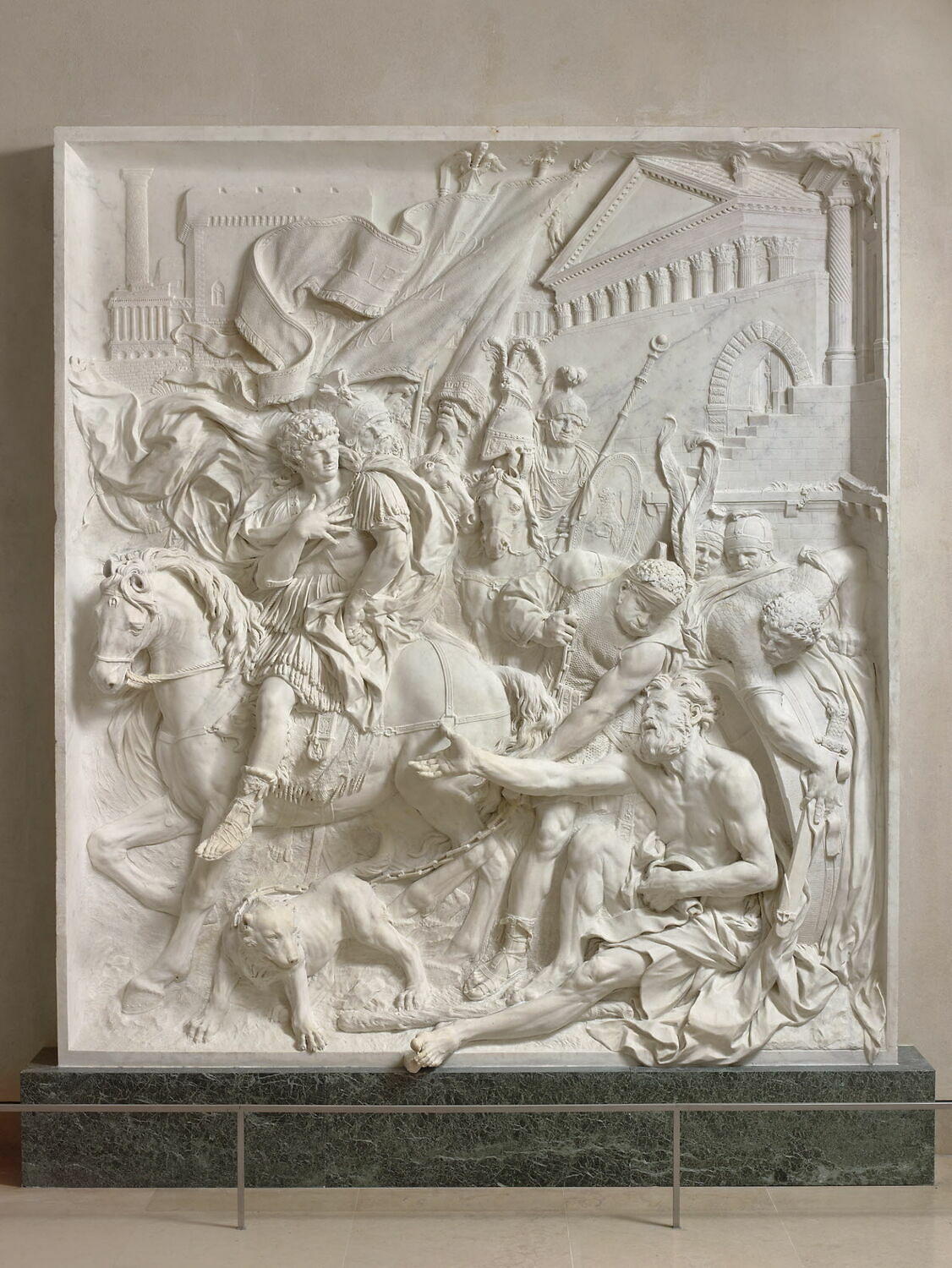
Rencontre d'Alexandre et de Diogène
Peut-on la voir ?
Oui, exposée actuellement
Où est « Rencontre d'Alexandre et de Diogène » aujourd’hui ? Musée du Louvre, Salle 104, Aile Richelieu, Niveau -1, Paris. Oui, exposée actuellement. Vérifié 26 septembre 2026.

Fermé· ouvre demain à 9:00
Présentée au public.
- Vérifié
- Dans cet état depuis
- Source
- Le musée
À propos de la sculpture
Alexandre et Diogène, dénommé également Rencontre d'Alexandre et de Diogène, est un relief sculpté en marbre réalisé entre 1671 et 1689 par le sculpteur Pierre Puget à Toulon sur commande de Jean-Baptiste Colbert pour le château de Versailles. L’œuvre est actuellement conservée au musée du Louvre.
Notice
- Numéro d’inventaire
- MR 2776
Au catalogue
Sources
- Musée du Louvre
- Image : Musée du Louvre — © 2022 Musée du Louvre, Dist. GrandPalaisRmn / Hervé Lewandowski
Dans la vie de Pierre Puget
La vie entière1661–1669
Decides to stay in Italy for a time
He decided to stay in Italy for a time, making long visits to Rome and Genoa; his principal patron there was the nobleman Francesco Maria Sauli. For the French patron Emmanuel Brignole he made a notable statue, “The Immaculate Conception”, for the chapel of an Albergo in Genoa, and he declined the Genoese senate’s proposal to paint their council chamber in order to devote himself to sculpture.
1669
Return to France and a dispute with Colbert over his post
He returned to France and divided his time between Toulon and Marseille; offered the post of chief of decoration for the warships, he demanded to be considered an officer, not a worker, and to have the final say over the royal artists Le Brun and Girardon. Colbert found this unacceptable and gave Girardon the commission to decorate the Royal Louis; Puget was instead charged with decorating ten new men-of-war and designing a new headquarters building for the fleet.
1670
Sidelined from the decoration of the ships
When he returned to the dockyards he found a new officer in command and the decoration of ships he had begun given to others. On Colbert’s instructions any work he did had to be approved by Le Brun and the senior sculptors in Paris, and he was to design only what he was told to design; Colbert added that British ships had little or no sculptural decoration and usually won battles, so French ships should also be without it.
1672
Back in Marseille: Cours Saint-Louis and the fish market
With no further work at the Naval Arsenal, he returned to his birthplace, Marseille; his first project was a new square and street, the Cours Saint-Louis and rue Canebière, inspired by the urban planning of Genoa. He also made an ornate sculptural plaque with the King’s coat of arms for the façade of the Hôtel de Ville and designed a new fish market, completed in 1672.
13 May 1672
Colbert commissions “Milon of Croton”
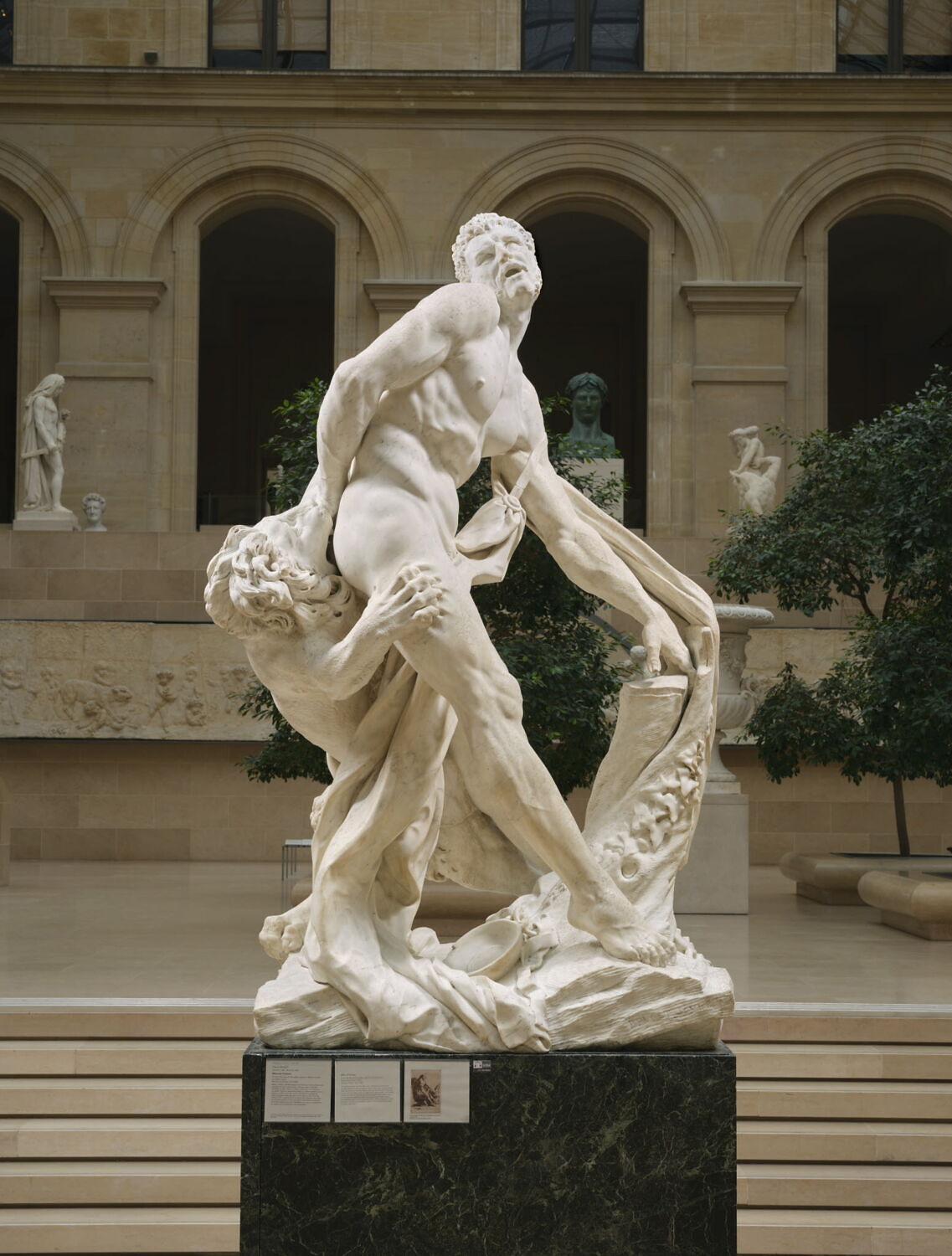
Colbert, who disliked Puget’s personality but admired his skill, offered him a commission for two large works for the gardens of Versailles, “Milon of Croton” and the bas-relief “Alexander and Diogenes”, whose designs Puget had sent in 1671. Occupied with his tasks for the city of Marseille, the sculptor did not begin work until 1672.
29 November 1687
Presents the Louis XIV square project to the King
He made one of his rare trips to Versailles to promote in person his project for a new oval square beside the port of Marseille with an equestrian statue of Louis XIV; the King and Madame de Maintenon expressed their admiration. But Jules Hardouin-Mansart pointed out that it would be more attractive and efficient to build a square rather than an oval, and a more modest project; the King accepted his view, to Puget’s distress and anger.