 Mark RothkoNo. 4
Browse
Mixed media
Mixed media combines different artistic materials or processes within one work. A drawing might join ink to pastel; a painting might acquire pasted paper or projecting metal parts. The combination need not announce itself. Black paper can look like thick paint, while an apparently powdery ballet scene can turn out to have a much less straightforward surface.
1,522 works from 172 museums25 on view nowClear all
Mark RothkoNo. 4 Frank StellaChyrow II
 Frank StellaJarama II
 Frank StellaKarpathenburg III
 Terry AllenCurtains...on the Corner of Echo and Normal
 Jiří KolářUntitled (Woman)
 Franco AngeliI Killers
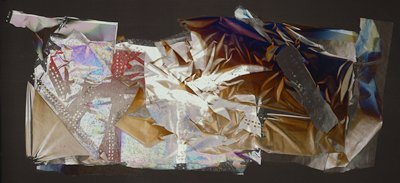 Larry BellAutumn Leaves (Mirage Painting)
 Giulio TurcatoPaesaggio 1961
 Sue CoeBreaking
 Andreas RitzosIcon: Descent into Limbo
 I. Rice PereiraTransfluent Lines
 Edgar DegasDancers Practicing at the Barre
 Jean DubuffetLa dame au pompon
 Hermann NitschVienna Secession
 Hermann NitschRelict
 Costantino NivolaScultura
 Umberto MastroianniComposizione
 Oyvind FahlströmStudy for "Sitting... the Wheel"
 Mario Tozzi,(Due amanti)
 Sue CoeWoman Walks into Bar - Is Raped by Four Men on the Pool Table - While 20 Watch
 Sandra BlowRed Circle
 Robert RauschenbergDoric Circus
 Mark RothkoNo. 7
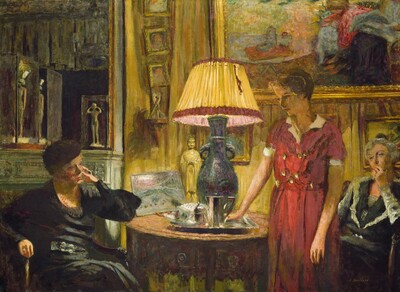 Edouard VuillardThe Visit
 Fortunato DeperoComposizione
 Jim DineRed Robe #2
 Mark BradfordLegendary
 Francesco Paolo MichettiUntitled
 Francesco Paolo MichettiUntitled
 Alexis SmithJack
 Alfonso OssorioReconciler
 Rebecca SalterK37
 Raymond SaundersJack Johnson
 Gastone NovelliLa Liberazione
 Domenico GhirlandaioL'Apparition du Christ à la Vierge
 Edward Burne-JonesFair Rosamund and Queen Eleanor
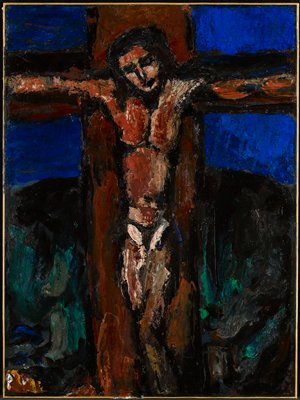 Georges RouaultThe Crucifixion
 Tom WesselmannLittle SL. #10
 Hermann NitschSheepscloth
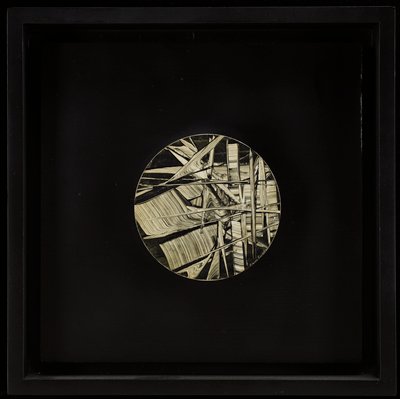 Jimmy ErnstUntitled
 Jiří KolářUntitled (Stamps)
 Ellen GallagherWhen You The Invisible Cowboy
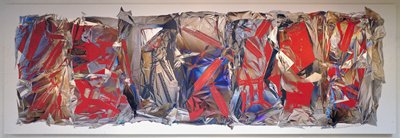 Larry BellMoses Xing the Delaware
 Michael AndrewsShadow (small version)
 Bice LazzariDue tagli
 Achille PerilliOpus Metricum
 Raymond SaundersSilence Ignoring Gesture
Mixed media
Edgar Degas owed Henri Rouart a replacement. He had tried to improve a work belonging to his friend and accidentally destroyed it. The compensation was Dancers Practicing at the Barre, shown in 1877. Even this picture did not entirely satisfy him. An older Metropolitan Museum catalogue recounts that he later wanted to remove its watering can; Rouart refused, and was even said to have chained the picture to his wall. It is an excellent story about knowing when to stop.
What does mixed media actually mean?
The term names a combination, rather than a particular recipe. Ink with pastel and paint with collage both qualify. It says little by itself about appearance, difficulty or date. Nor does it guarantee a heap of unfamiliar objects. Two materials can merge so thoroughly that the eye barely detects the change. Elsewhere, a cut edge or projecting component makes the join the subject of the work.
Mixed media also differs from multimedia, a term usually associated with combinations involving electronic forms such as moving images and sound. Here the crucial meeting happens between physical substances and techniques. Think of the distinction between drawing a line, attaching a strip of paper in its place, and building that line out from the wall. Each may describe the same curve, but each gives it a different physical existence.
Why does Degas look like pastel?
The current catalogue describes the dancers simply as mixed media on canvas. The older catalogue was more specific about one part of the process: oil colour diluted heavily with turpentine. It credited this thinning with the pastel-like effect and explained that the picture remained unvarnished, protected by glass. A dry-looking surface, then, does not by itself identify a dry drawing material. Appearance and recipe can pull in different directions.
The little can has another job besides balancing the composition. Ballet studios used water to keep dust from rising off the floor. Its bent shape answers the stretching dancer on the right. A practical tool becomes a visual joke, and the broad empty floor matters as much as the bodies. Taking the can away would change the conversation across that space. Rouart's refusal has a pictorial logic, whatever happened with the chain.


