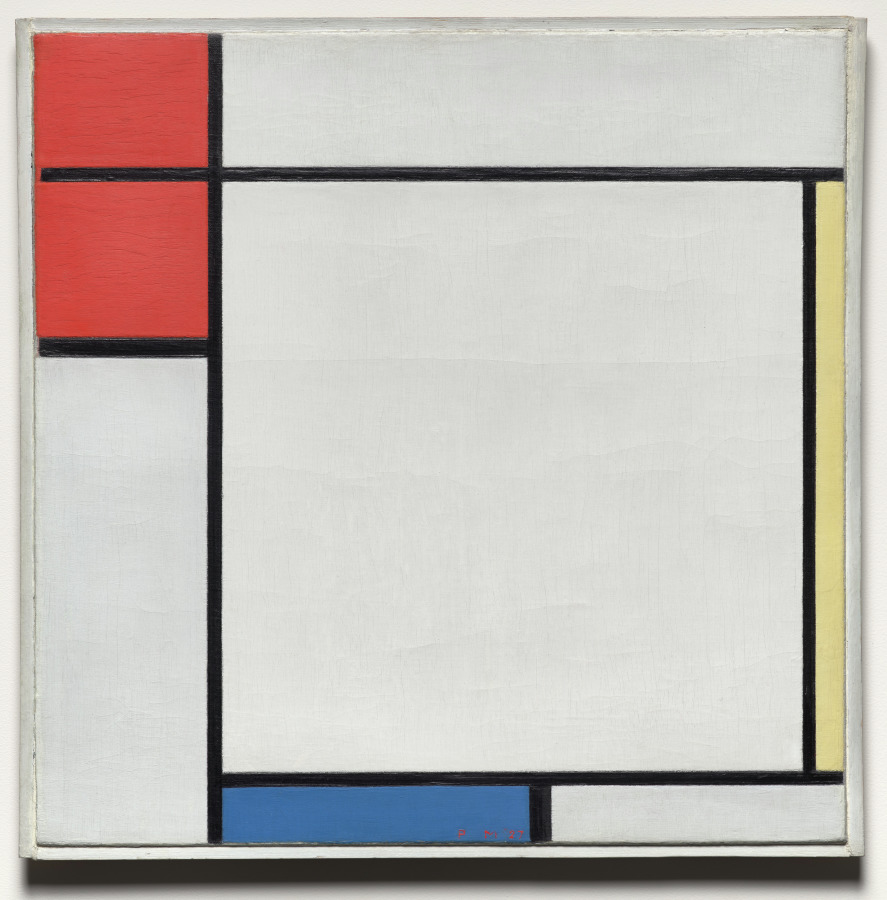
 Piet MondrianPaesi Bassi, 1872–1944
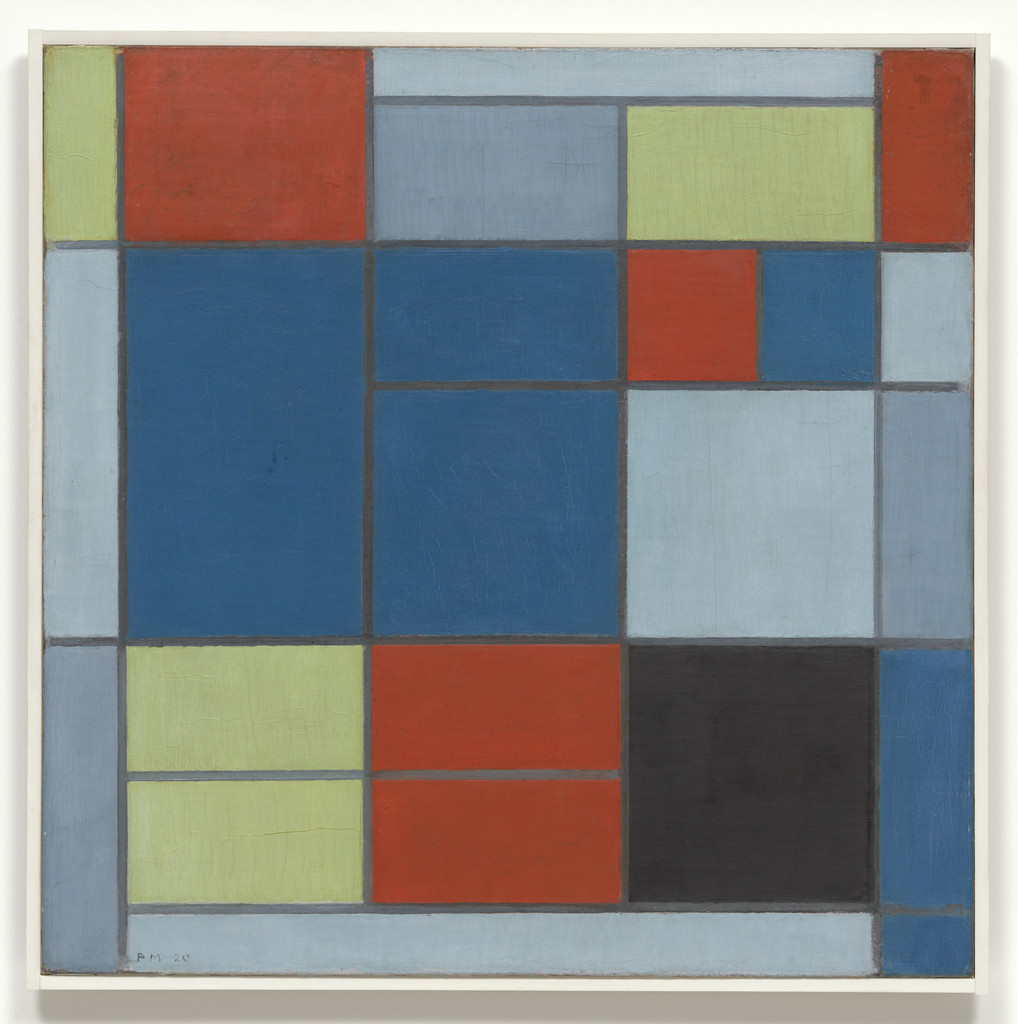
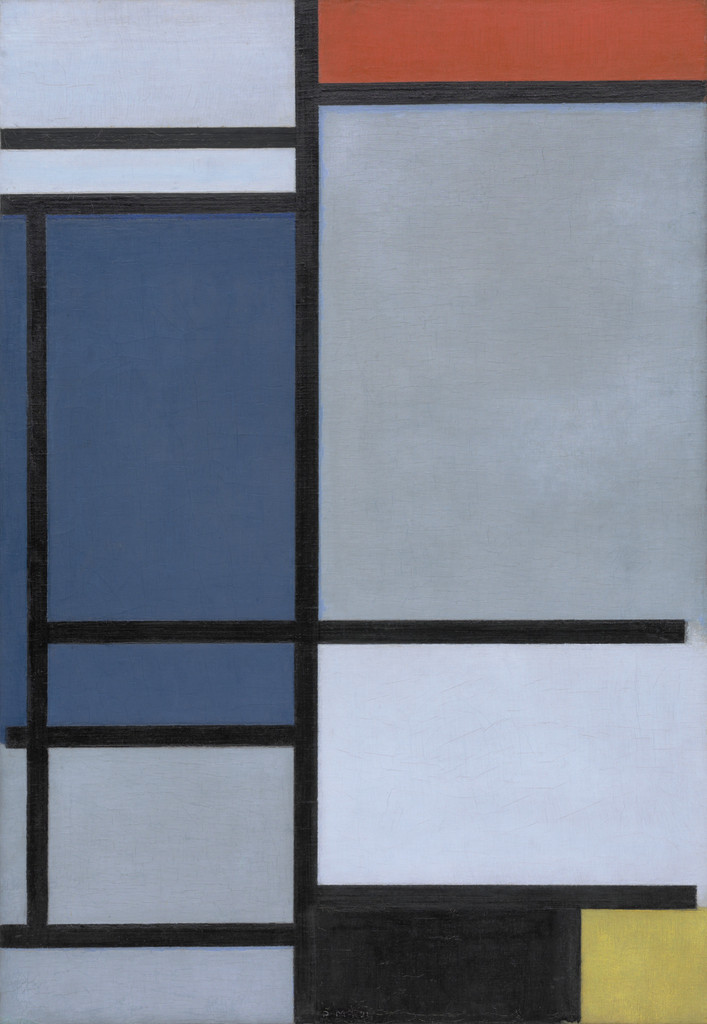
Composition with Red, Yellow, and Blue
Si può vedere?
Sì, esposta ora
Dove si trova «Composition with Red, Yellow, and Blue» oggi? Cleveland Museum of Art, 223 20th Century Avant-Garde, Cleveland. Sì, esposta ora. Verificato 29 settembre 2026.

Esposta al pubblico.
- Verificato
- Ultimo cambio di stato
- Fonte
- Il museo
Sul dipinto
During the 1910s, Piet Mondrian’s art progressed from Cubism to an increasingly abstract style based on the form of a grid. He completely abandoned the representation of natural appearances, limiting himself to horizontal and vertical rectangles and three primary colors (red, yellow, and blue) along with black and white. Intensely intellectual and deeply philosophical, Mondrian believed that following the devastation of World War I, such abstract compositions could contribute to a more harmonious society by communicating in a universal, visual language.
Cleveland Museum of Art
Scheda
- Numero di inventario
- 1967.215
In catalogo
Fonti
- Cleveland Museum of Art
- Immagine: Cleveland Museum of Art — Museum open access
Nella vita di Piet Mondrian
Tutta la vita1919–1938
Return to Paris
In 1919 Mondrian left the Netherlands for Paris for the second and last time and at once turned to his studio: to hide its flaws he tacked large single-colour placards to the walls, accented by compositions of smaller coloured paper rectangles. From then on, periods of painting alternated with experiments in regrouping the papers on the walls.
1926
Katherine Dreier buys “Painting I”
Katherine Dreier, co-founder of the Society of Independent Artists, visited Mondrian's Paris studio and acquired the diamond composition “Painting I”, shown afterwards at the Brooklyn Museum in the first major exhibition of modern art in America since the Armory Show; in the catalogue she called Mondrian the third great Dutch painter after Rembrandt and Van Gogh.
1926
André Kertész photographs Mondrian's Paris flat
Mondrian's Paris apartment, his pipe and his glasses were captured in minimalist photographs by André Kertész that became emblematic of modern photography.