Fernand LégerFrancia, 1881–1955
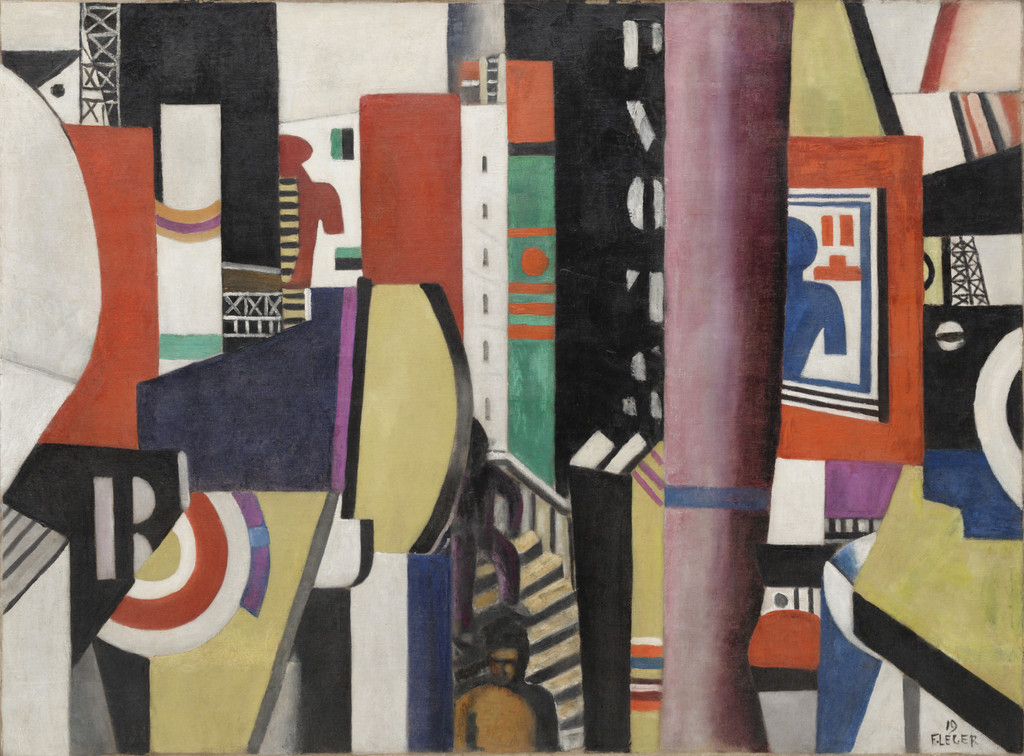
The Aviator
Si può ammirare?
Sì, riceve visite

Esposta al pubblico. Chi lo garantisce è indicato qui sotto.
- Verificato
- l’altro ieri
- Ultimo cambio di stato
- 19 ago 2026
- Fonte
- I dati di collezione del museo stesso
About the painting
During World War I, Fernand Léger served in the Corps of Engineers until he sustained injuries from a mustard gas attack at the Battle of Verdun in 1916. This painting celebrates the courage of aviators and the technology of flight; the spinning propeller is suggested by the arching curves fragmented into sections of purple, white, black, green, and yellow. The circular motif is repeated as a human head, the insignia of the French air force (that resembles a bullseye), and tubular mechanical elements throughout the composition.
Cleveland Museum of Art
Scheda
- Numero di inventario
- 1981.16
In catalogo
Fonti
- Cleveland Museum of Art: the museum's own open data · acquisita 6 giorni fa
- Immagine: Wikimedia Commons — Public domain
Nel frattempo, nella vita di Fernand Léger
Tutta la vitaDecember 1919
Marriage to Jeanne Lohy
In December 1919 Léger marries Jeanne-Augustine Lohy; she remains his wife until her death in 1950.
1920
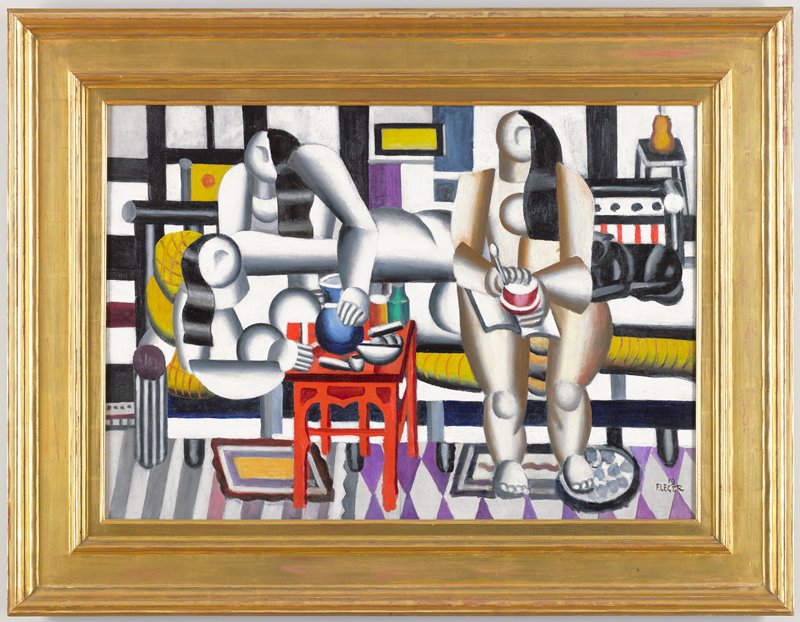
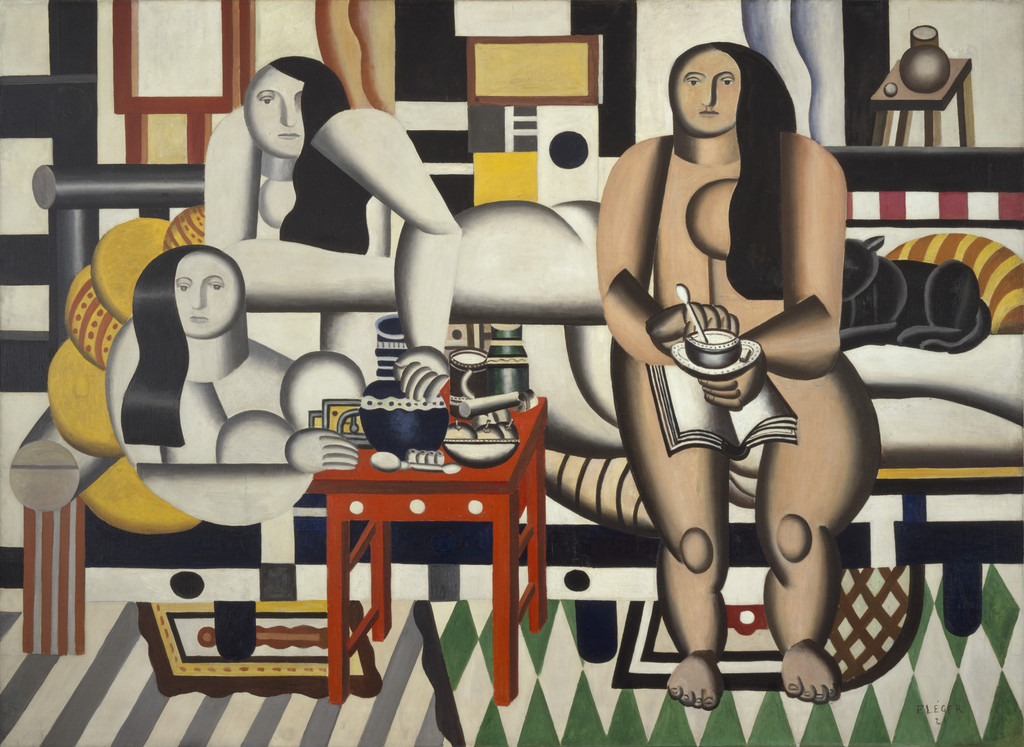
Friendship with Le Corbusier, “The Mechanic” and “The Great Lunch”
In 1920, at the founding of the journal “L'Esprit nouveau”, Léger befriends Le Corbusier, who remains a lifelong friend. In the same year he paints the canvases “The Mechanic” and “The Great Lunch”, and from this year he exhibits at the Indépendants for many years.
1921
Meeting van Doesburg and Mondrian
In 1921 Léger meets van Doesburg and Mondrian.
1921
Gance's “La Roue” and Malraux's “Lunes en papier”
In 1921, together with Blaise Cendrars, Léger works on Abel Gance's film “La Roue” and illustrates André Malraux's book “Lunes en papier”. He is so drawn to cinema that he considers for a time giving up painting for filmmaking.
1922
The death of his mother
In 1922 Léger's mother, Marie Adèle Dunon, dies; she had lived on her farm in Lisores until her death.
1922–1924
Stage and screen: the Swedish Ballet and “L'Inhumaine”
In 1922 Léger designs sets, costumes and the curtain for “Skating Rink” (music by Milhaud) for Rolf de Maré's Swedish Ballet, and in 1923 for the ballet “La Création du monde” (Milhaud, libretto by Cendrars). In 1923–24 he designs the laboratory set for Marcel L'Herbier's film “L'Inhumaine”.