 Édouard ManetFrance, 1832–1883
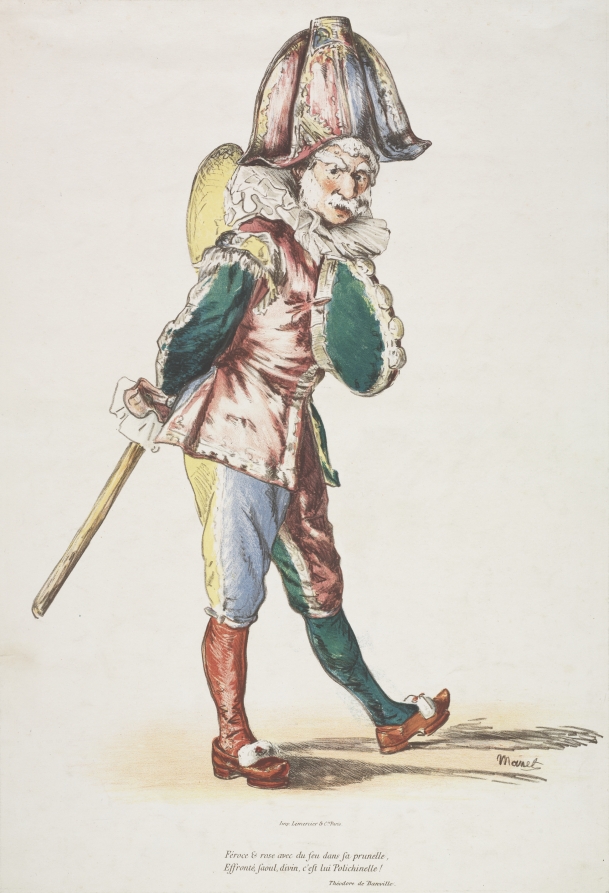
Polichinelle
Peut-on la contempler ?
Elle ne reçoit pas en ce moment

Cleveland, États-Unis
Elle appartient à la collection, mais n’est pas présentée en ce moment.
- Vérifié
- Dans cet état depuis
- Source
- Le musée
Notice
- Numéro d’inventaire
- 1951.61
Au catalogue
Sources
- Cleveland Museum of Art
- Image : Cleveland Museum of Art — Museum open access
Pendant ce temps, chez Édouard Manet
La vie entière1870s
Refuses to exhibit with the Impressionists
Although his own work influenced and anticipated the Impressionist style, Manet resisted involvement in Impressionist exhibitions: he did not wish to be seen as the representative of a group identity and held that modern artists should seek to exhibit at the Salon.
1874
“The Railway”: ridicule at the Salon of 1874
“The Railway”, painted in 1873, puzzled visitors and critics at the Salon of 1874: its subject seemed baffling, its composition incoherent and its execution sketchy; caricaturists ridiculed it, and only later was it recognised as a symbol of modernity. The model was Victorine Meurent, for the last time.
1874
Morisot marries Manet's brother
In 1874 Berthe Morisot married Manet's brother Eugène and became his sister-in-law; it has been speculated that there was a repressed love between Manet and Morisot, exemplified by the numerous portraits he made of her before her marriage.
1874–1876
The Salon jury rejects his paintings again
In 1874 the jury rejected “Masked Ball at the Opera”, and in 1876 both paintings Manet sent. Independent exhibitions in those years brought nothing but public censure and the mockery of critics.
1875
Lithographs for Poe's “The Raven” in Mallarmé's translation
In 1875 a book-length French edition of Edgar Allan Poe's “The Raven” appeared, with lithographs by Manet and a translation by his friend Stéphane Mallarmé.
1877
Manet's studio hosts a republican meeting
Of public figures Manet admired most the republican Léon Gambetta. In the heat of the seize mai coup in 1877 he opened up his atelier to a republican electoral meeting chaired by Gambetta's friend Eugène Spuller.