ART WIKI33.040 en sala
MapaColecciónArtistasMuseosExposicionesRevista
Acceder

ART WIKI

Dónde cuelga la obra maestra y cuándo le dejan pasar.

Colecciones: Galería Nacional de Arte, Galería Nacional de Dinamarca, Galería Nacional de Retratos, Galería Tretiakov, Harvard Art Museums, Instituto de Arte de Chicago, Instituto de Artes de Mineápolis, MoMA, Museo de Arte de Cleveland, Museo de Victoria y Alberto, Museo del Hermitage, Museo del Louvre, Museo Estatal Ruso, Museo Hirshhorn y Jardín de Esculturas, Museo J. Paul Getty, Museo Metropolitano de Arte, Museo Pushkin, Museo Smithsoniano de Arte Americano, Museo Whitney de Arte Estadounidense, National Museum of Asian Art, Rijksmuseum, Villa Getty, Catálogo Estatal del Fondo Museístico de Rusia (274 museos), Europeana (19 museos), Wikidata (6 museos), Paris Musées (12 museos) y Joconde, la base de museos del Ministerio de Cultura de Francia (495 museos). Las imágenes pertenecen a sus titulares de derechos.

Secciones

  • Mapa
  • Búsqueda
  • Colección
  • Obras maestras
  • Expuestas ahora
  • Artistas

Más

  • Museos y galerías
  • Exposiciones
  • Revista
  • De dónde salen los datos
  • Privacidad y cookies
InicioMapaCatálogo
  1. Colección/
  2. Instituto de Arte de Chicago/
  3. The Earth Is a Man
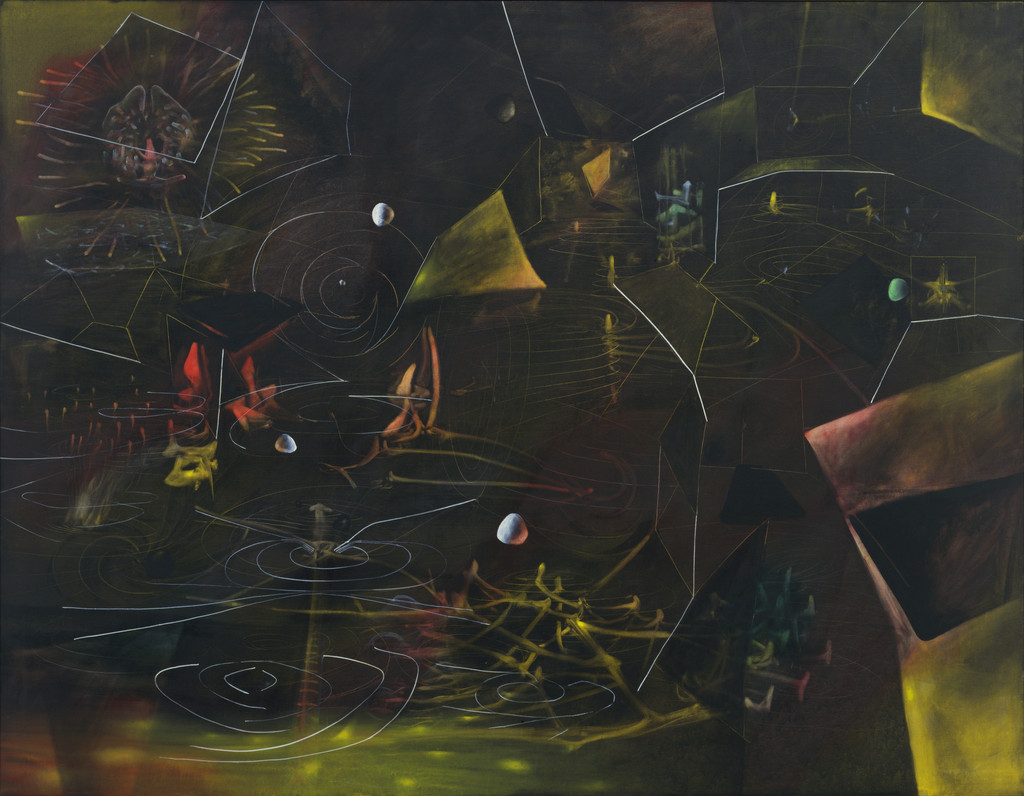
The Earth Is a Man, Matta, 1942
Matta, retratoMattaChile, 1911–2002

The Earth Is a Man

1942 · Painting

¿Se puede contemplar?

Sí, recibe visitas

Instituto de Arte de Chicago

Chicago, Estados Unidos

Sala398

Expuesta al público. Quién lo avala figura más abajo.

Comprobado
hace 9 días
En este estado desde
19 ago 2026
Fuente
El museo
En el mapaPágina del museo

Sobre el cuadro

Trained as an architect, the Chilean-born Roberto Matta moved to France in 1933, where he worked in the studio of Le Corbusier. The following year, he met the poet Federico García Lorca in Spain. After Lorca was assassinated by agents of Francisco Franco in 1936, Matta began a screenplay, The Earth Is a Man, which he wrote in tribute to the slain hero. The play’s apocalyptic imagery, rapidly shifting perspectives, and emotionally charged language became the principal source of Matta’s visual art over the next five years. The painting The Earth Is a Man represents the culmination of this project and draws on the artist’s earlier compositions, which he called “Inscapes” or “Psychological Morphologies.” In these, using a technique of psychic automatism developed by the Surrealists, Matta created turbulent forms that serve as visual analogues for states of consciousness.

Seguir leyendo

In this powerful, enigmatic work, forces of brilliant light seem to battle those of darkness. The artist spilled, brushed, and wiped on vaporous washes of paint to render the invisible waves of energy that shape and dissolve a molten, primordial terrain. The painting’s visual intensity evokes the tumultuous eruption of a volcano, such as one Matta had witnessed in Mexico in 1941. Exhibited shortly after its completion in New York City, where he had immigrated at the onset of World War II, the mural- size canvas, with its abstract and visionary qualities, enthralled and influenced a new generation of American artists, who would come to be known as the Abstract Expressionists.

Instituto de Arte de Chicago · CC BY 4.0

Ficha

1942 · a los 31 años
19112002
Número de inventario
1992.168

Lo que muestra

Blue (color)Federico Garcia LorcaYellow (color)Light

En el catálogo

PinturaÓleoPintura francesaModernismoSiglo XXSurrealismoFrancia

Fuentes

  • Instituto de Arte de Chicago
  • Imagen: Instituto de Arte de Chicago — © the artist or rights holder

Más obras de Matta

Todas las obras
Genesis, Matta, 1942

Genesis

1942 · Galería Nacional de Arte

The Vertigo of Eros, Roberto Matta, 1944

The Vertigo of Eros

1944 · MoMA

Untitled, Matta, n.d.

Untitled

n.d. · Instituto de Arte de Chicago

Untitled, Matta, 1938/39

Untitled

1938/39 · Instituto de Arte de Chicago

Untitled (Psychological Morphology), Matta, 1939

Untitled (Psychological Morphology)

1939 · Instituto de Arte de Chicago

Untitled (Flying People Eaters), Matta, 1942

Untitled (Flying People Eaters)

1942 · Instituto de Arte de Chicago

Drive in the Knife, Matta, May 1943

Drive in the Knife

1943 · Instituto de Arte de Chicago

Medraumonde, Matta, 1945/46

Medraumonde

1945/46 · Instituto de Arte de Chicago

En la misma sala · Gallery 398, Instituto de Arte de Chicago

Página del museo
The Policeman, Joan Miró, 1925

Joan Miró

The Policeman, 1925

Walking Man II, Alberto Giacometti, 1960

Alberto Giacometti

Walking Man II, 1960

Two Figures (Menhirs), Barbara Hepworth, c. 1954/55

Barbara Hepworth

Two Figures (Menhirs), c. 1954/55

Painting, Franz Kline, 1952

Franz Kline

Painting, 1952

Les Baux, Loren MacIver, 1952

Loren MacIver

Les Baux, 1952

PH-246, Clyfford Still, 1951/52

Clyfford Still

PH-246, 1951/52

Caos-Caos, Wifredo Lam, 1950

Wifredo Lam

Caos-Caos, 1950

Wake, Lee Mullican, 1949

Lee Mullican

Wake, 1949

Sobre el mismo tema · Blue (color)

Todas las obras sobre el tema
The Old Guitarist, Pablo Picasso, late 1903–early 1904

Pablo Picasso

El viejo guitarrista ciego, late 1903–early 1904

No expuesta · Instituto de Arte de Chicago

Two Sisters (On the Terrace), Pierre-Auguste Renoir, 1881

Pierre-Auguste Renoir

En la terraza, 1881

Instituto de Arte de Chicago

Merahi metua no Tehamana (Tehamana Has Many Parents or The Ancestors of Tehamana), Paul Gauguin, 1893

Paul Gauguin

Merahi metua no Tehamana (Tehamana Has Many Parents or The Ancestors of Tehamana), 1893

Instituto de Arte de Chicago

American Collectors (Fred and Marcia Weisman), David Hockney, 1968

David Hockney

American Collectors (Fred and Marcia Weisman), 1968

Instituto de Arte de Chicago

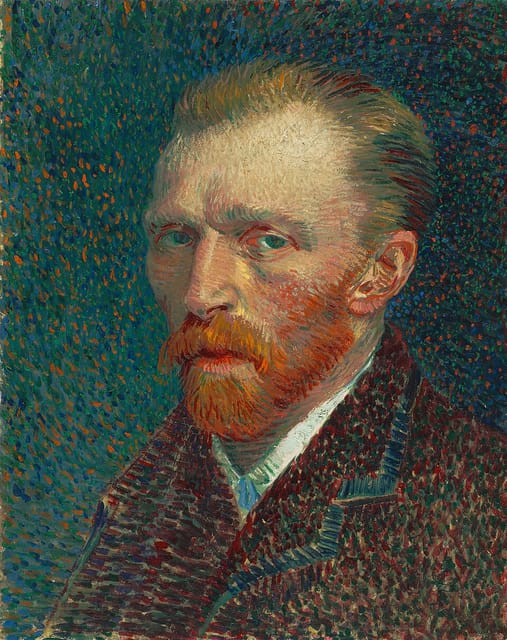
Self-Portrait, Vincent van Gogh, 1887

Vincent van Gogh

Self-Portrait, 1887

Instituto de Arte de Chicago

Bathers by a River, Henri Matisse, 1909–10, 1913, and 1916–1917

Henri Matisse

Bathers by a River, 1909–10, 1913, and 1916–1917

Instituto de Arte de Chicago

The Bedroom, Vincent van Gogh, 1889

Vincent van Gogh

The Bedroom, 1889

Instituto de Arte de Chicago

Bordighera, Claude Monet, 1884

Claude Monet

Bordighera, 1884

Instituto de Arte de Chicago