Gustav KlimtAustria, 1862–1918
Baby (Cradle)
¿Puedo verla?
Sí, expuesta ahora
¿Dónde está «Baby (Cradle)» hoy? Galería Nacional de Arte, Sala 415A · Edificio Este, nivel superior, Washington D. C. Sí, expuesta ahora. Comprobado 29 de septiembre de 2026.

Abierto· hasta las 17:00
Expuesta al público.
- Comprobado
- En este estado desde
- Fuente
- El museo
Sobre el cuadro
La cuna es una pintura de Gustav Klimt, un óleo sobre lienzo de 110 × 110 cm, realizado entre 1917 y 1918 pero que quedó inconcluso en su estudio debido a su muerte, y exhibido en la Galería Nacional de Arte de Washington.
El bebé presentado, del cual son solamente visibles la cabeza y una mano, aparece bajo una imponente manta o pila de telas de motivos multicolores y ondulados que parece esparcirse hacia el espectador.
La cabeza del bebé, situada en la parte superior de la composición, actúa como vértice de un triángulo en el que se inscribe la estructura de la obra. El fuerte colorido de la Cuna muestra influencias del fauvismo y del arte popular eslavo, que el pintor conoció tras un viaje a Moravia en 1917.
Ficha
- Número de inventario
- 1978.41.1
Lo que muestra
En el catálogo
Fuentes
- Galería Nacional de Arte
- Imagen: Galería Nacional de Arte — Museum open access
En la vida de Gustav Klimt
La vida entera1897–1917
Society portraits of Viennese ladies
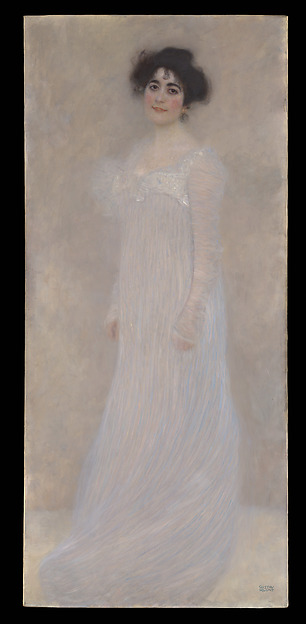
Over twenty years Klimt painted nearly twenty society portraits of women, which gave him financial independence; Carl Moll introduced him to many of the sitters, most of them from the Jewish upper bourgeoisie. In the portraits the ladies are hidden in sumptuous clothing, their heads and hands seeming to float detached from reality.
1914–1918
The war: colourful ladies and a good income
As if pushing the war out of his world, Klimt again painted the “beautiful Viennese women” — “Lady with a Fan”, “The Bride”, both “Dancers”; “Death and Life” is his only picture on a topical subject. His notebook shows that he earned well in the war years, collectors readily buying his portraits of elegant strangers.
1915
Death of his mother
His mother, Anna Klimt, died; Gustav continued to live on Westbahnstrasse with his two unmarried sisters.
1917
Honorary member of the academies of Vienna and Munich
Klimt was elected an honorary member of the academies of fine arts of Vienna and Munich.
11 January 1918
A stroke, the hospital, pneumonia
A stroke paralysed Klimt's right side; in hospital, where he was put on a water bed for bedsores, he caught influenza and pneumonia. For three weeks the press printed bulletins, and on his deathbed he demanded that his sisters send for Emilie Flöge.
6 de febrero de 1918
Died