Gustav KlimtAustria, 1862–1918
Pear Tree
¿Puedo verla?
Sí, expuesta ahora
¿Dónde está «Pear Tree» hoy? Harvard Art Museums, Gallery 1440, floor 1, Modern and Contemporary Art, Cambridge. Sí, expuesta ahora. Comprobado 23 de noviembre de 2026.

Cerrado· abre a las 10:00
Expuesta al público.
- Comprobado
- En este estado desde
- Fuente
- El museo
Sobre el cuadro
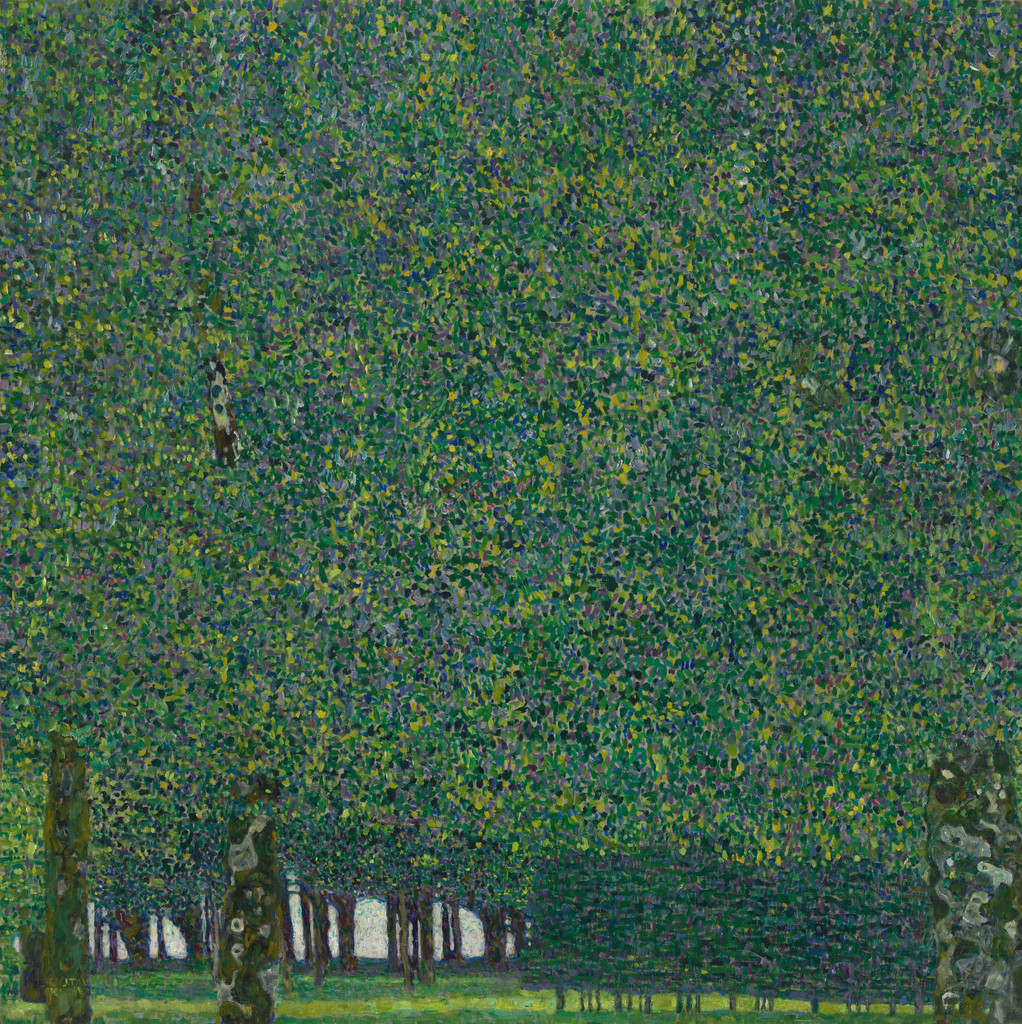
A pear tree in full bloom dominates this early landscape by Klimt, the leading proponent of modernist painting in Vienna at the turn of the last century, when the city’s artists and designers rejected the conservative attitudes of the academy and endeavored to create a new art free from historical influence. While a horizontal format is traditionally used for landscapes, Klimt chose a square canvas — a pure geometric shape that was also the Vienna Secession’s dominant decorative motif. In the flowering branches, each dab of paint indicates a single leaf, blossom, or piece of fruit. The flat, flickering field of color evokes both postimpressionist painting and Byzantine mosaics. The left side of the work has a noticeably denser application of paint than the center or the right side. Klimt continued to add to the painting, filling in these bare spots, even after giving it to Emilie Flöge, his muse and mistress, in 1903.
Harvard Art Museums
Ficha
- Número de inventario
- BR66.4
En el catálogo
Fuentes
- Harvard Art Museums
- Imagen: Harvard Art Museums — © President and Fellows of Harvard College
En la vida de Gustav Klimt
La vida entera1900–1907
He returns the advance and keeps the paintings
The state commission refused to accept the three “Faculty Paintings”; Klimt told the minister he would return the 60,000-krone advance, refused to work for the Austrian state again and kept the pictures. The ministry demanded them, but Klimt did not open the door to the removal men — and the affair ended in his victory.
1901
“Medicine”: accused of a “triumph of death”
The Secession's tenth exhibition showed “Medicine” with the goddess Hygieia; a feuilleton in the Neue Freie Presse accused Klimt of depicting a “triumph of death” instead of medicine's victories. In an interview about these scandals he declared that what mattered to him was not how many people liked a picture but who they were.
1903
His first solo show at the Secession
The Secession's first solo exhibition was devoted to Klimt and proved exceptionally successful: the artist earned 36,000 kronen.
1905
Klimt and his group leave the Secession
Klimt and his “stylist” followers, who held that art should enter every sphere of life, fell out with the “naturalists”; the decision against Klimt's group was carried by a single vote. For the next three years the group had no joint exhibitions.
1 June – 16 November 1908
The first Vienna Art Show
For the sixtieth anniversary of Franz Joseph's reign pavilions with 54 rooms were built on a temporary site and over 900 works shown. Room 22, which Peter Altenberg called “the church of modern art named after Gustav Klimt”, held “The Kiss”, “Adele Bloch-Bauer I”, “Danaë” and “The Three Ages of Woman”.
6 de febrero de 1918
Died