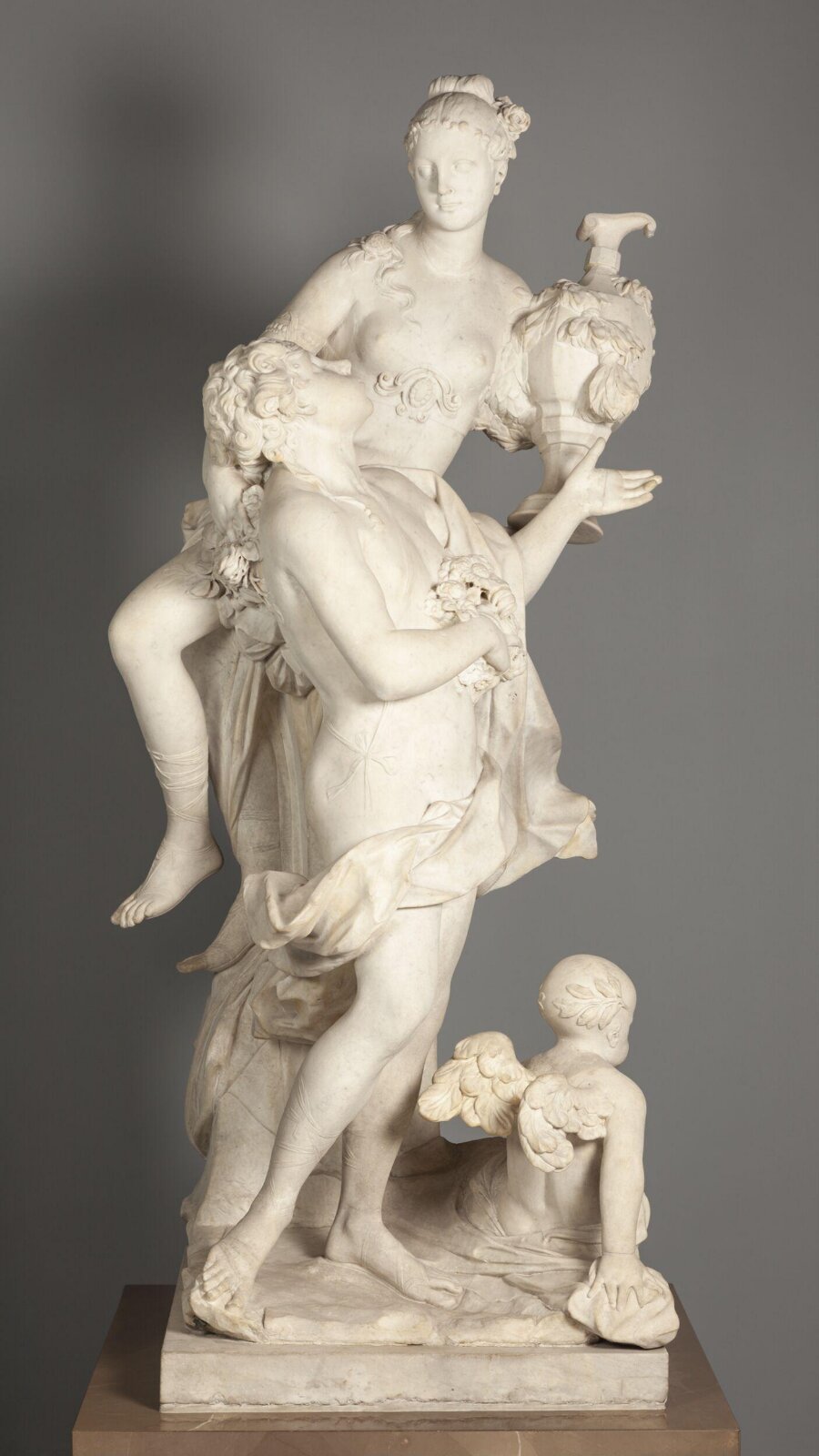
Zephyr and Flora
May one see it?
Yes, receiving visitors

London, United Kingdom
RoomSculpture, Room 23, The Dorothy and Michael Hintze Galleries
On public display.
- Checked
- In this state since
- Source
- The museum
About the sculpture
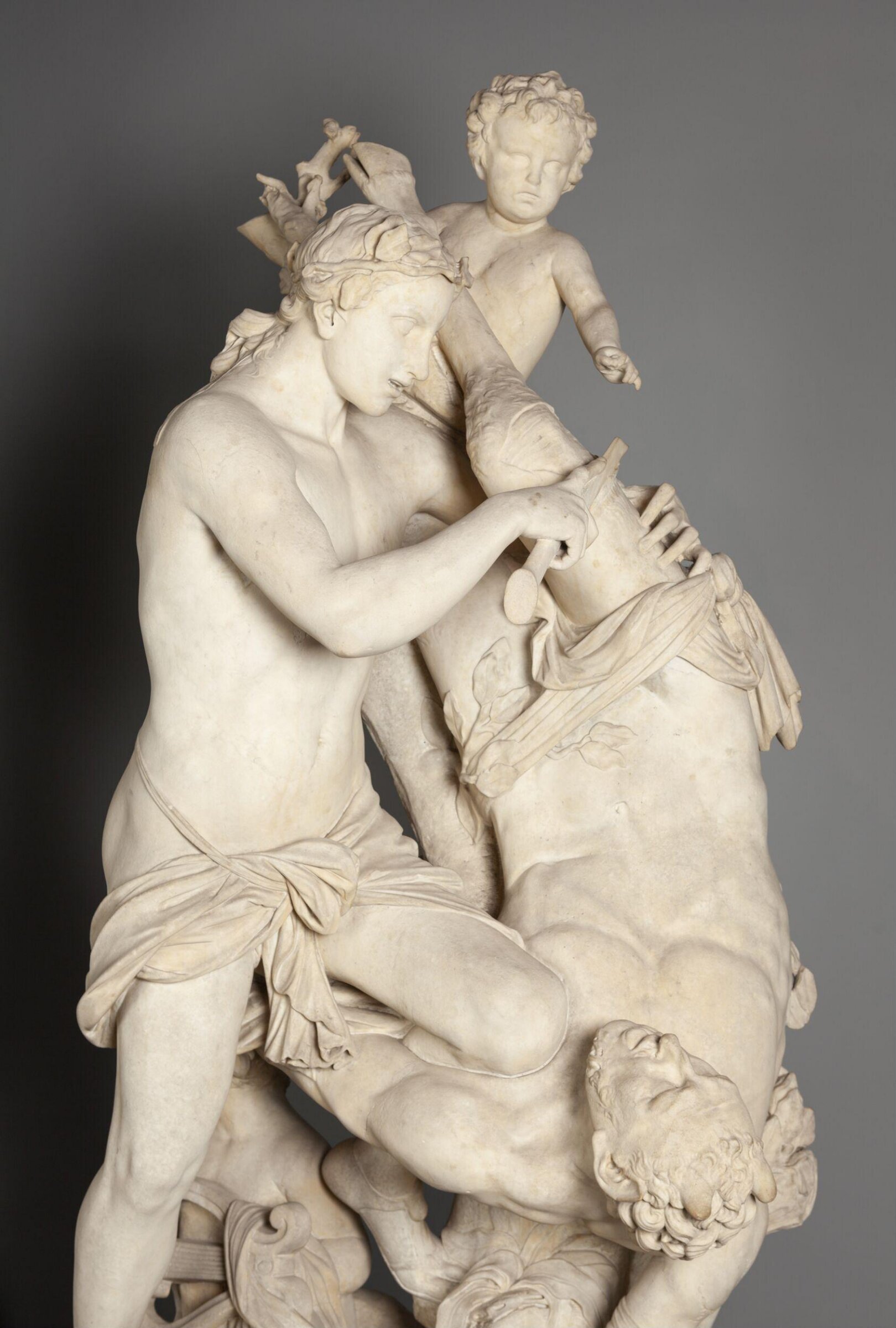
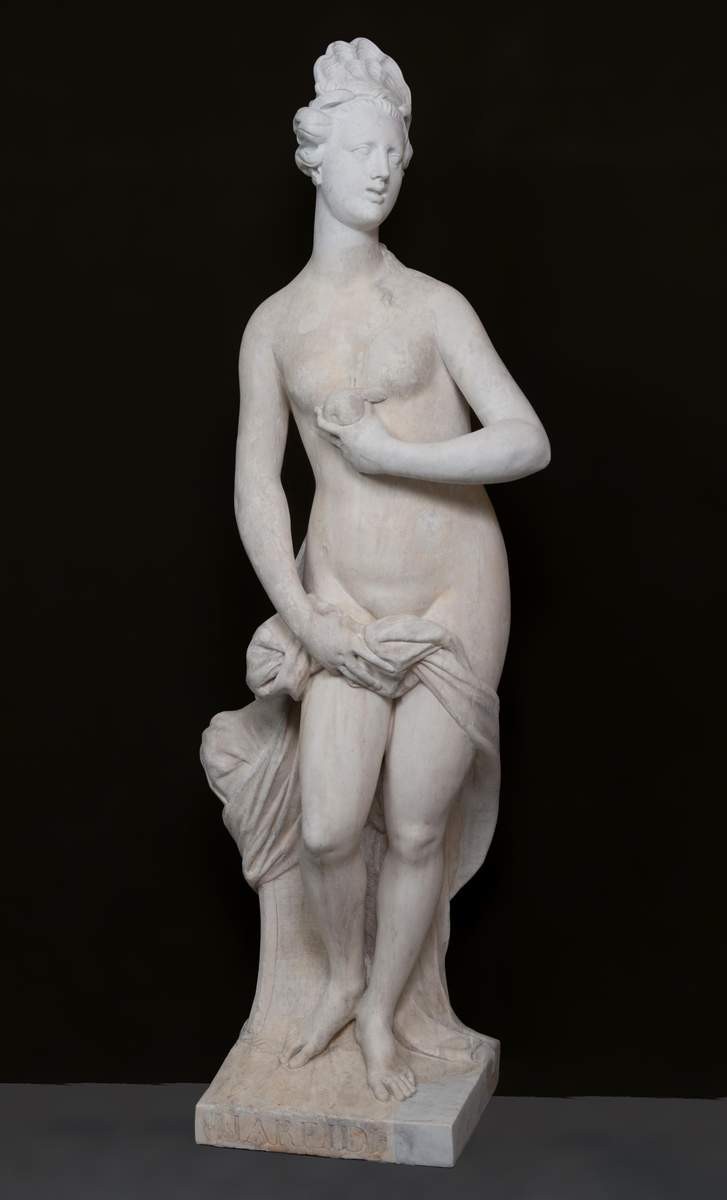
Flora was the Roman goddess of flowers, and the wife of Zephyr, the west wind of Springtime. Zephyr is shown blowing the Spring wind, and the flowers they hold represent the rebirth of nature which comes with the new season. This group and its companion, Apollo Flaying Marsyas (Museum no. A.6-1967), belonged to a series of garden sculptures supplied by Corradini to Augustus the Strong, King of Poland and Elector of Saxony, for his gardens in Dresden. Another group by Corradini fro the series, 'Truth and Sculpture', is now in the Château de Ferrières en Brie (near Paris).
Read on
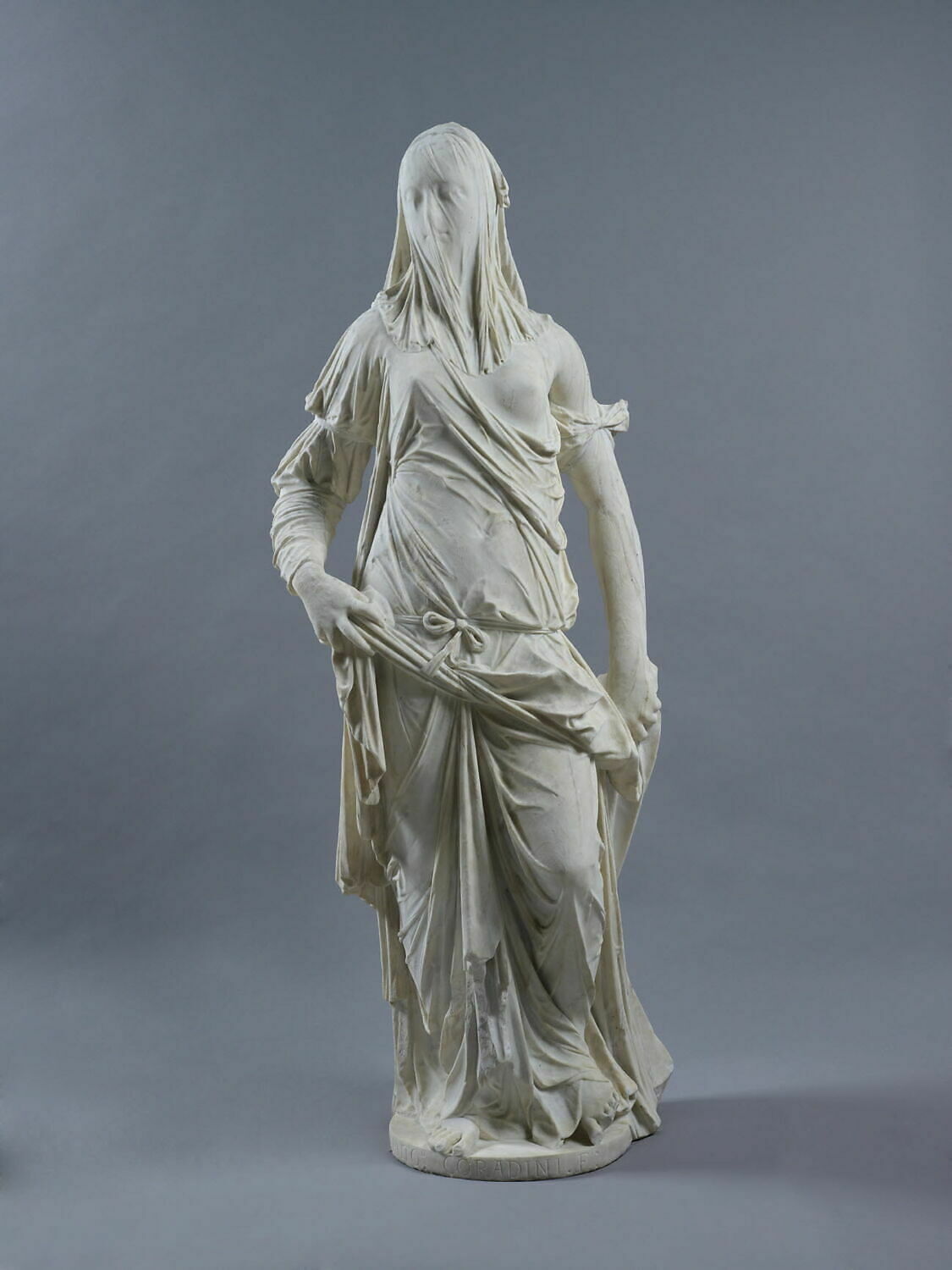
Corradini was a virtuoso sculptor of marble, and although he was mainly active in the Veneto, also worked in Vienna and Rome. He was particularly renowned for his statues of veiled or partially veiled figures, such as his Modesty of about 1750. This figure and Apollo Flaying Marsyas exemplify his elegant style, rooted in a classical language, but also incorporating a rococo lightness and movement. Such a style was well suited to garden sculpture in the 18th century.
Victoria and Albert Museum
Particulars
- Accession number
- A.5-1967
What it shows
In the catalog
Sources
- Victoria and Albert Museum
- Image: Victoria and Albert Museum — © Victoria and Albert Museum, London