 Jacques-Louis DavidFrench, 1748–1825
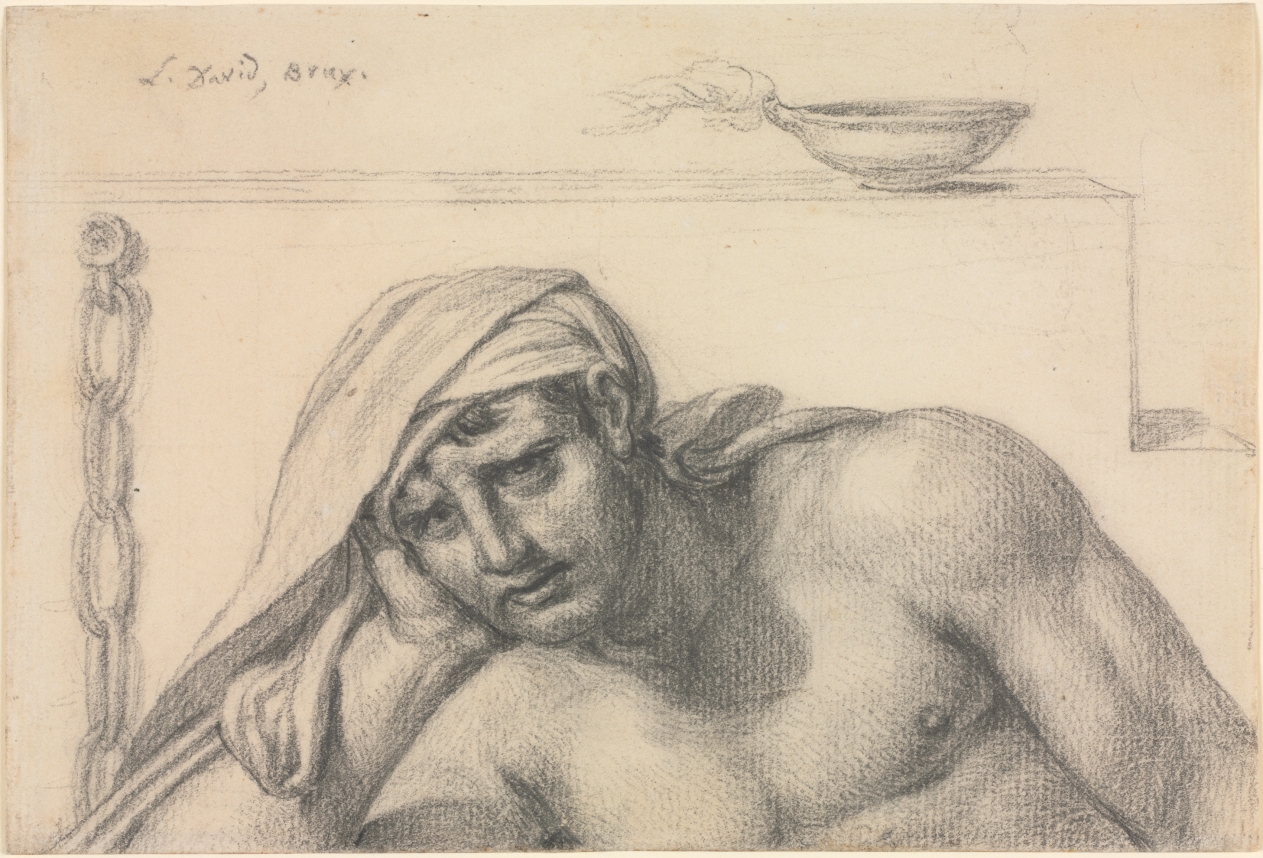
The Prisoner
May one see it?
Not receiving at present

The Cleveland Museum of Art
Cleveland, United States
It belongs to the collection, but is not on display at present.
- Checked
- In this state since
- Source
- The museum's own collection data
About the work
This drawing belongs to a series of enigmatic sheets that the French artist Jacques-Louis David created while living as an exile in Brussels from 1816 until his death in 1825. Many of these untitled works present close-up views of expressive heads and were given by the artist to his friends. This image of a turbaned man next to a hanging chain and oil lamp loosely references David's painting The Intercession of Saint Roch (1780) from much earlier in his career.
The Cleveland Museum of Art
Particulars
- Accession number
- 1973.36
In the catalog
Sources
- The Cleveland Museum of Art: the museum's own open data · fetched 7 days ago
- Image: The Cleveland Museum of Art — Museum open access
Meanwhile, in the life of Jacques-Louis David
The whole life1815
Flees to Switzerland after Waterloo
After Bonaparte’s defeat at Waterloo and the Bourbon restoration he was forced to flee to Switzerland; in August of the same year he returned to France.
1815
Napoleon visits David during the Hundred Days
During the Hundred Days Napoleon visited the painter and awarded him the commander’s cross of the Legion of Honour.
1816
Exile: moves to Brussels
Exiled from France for his part in the king’s execution, despite the intercession of the police minister Élie Decazes, he settled in Brussels, where he lived for the rest of his life.
1816–1825
The Brussels years: pupils and smaller works
He trained and influenced Brussels artists such as François-Joseph Navez and Ignace Brice, painted “Cupid and Psyche,” smaller mythological scenes, portraits of Brussels citizens and Napoleonic émigrés, and, towards the end of his life, a portrait of his old friend Abbé Sieyès.