ART WIKI32,963 on view
MapCollectionArtistsMuseumsExhibitionsJournal
Sign in

ART WIKI

Where the masterpiece hangs, and when they let you in.

Collections: Art Institute of Chicago, Getty Villa, Harvard Art Museums, Hirshhorn Museum and Sculpture Garden, J. Paul Getty Museum, Minneapolis Institute of Art, Musée du Louvre, National Gallery of Art, National Museum of Asian Art, National Portrait Gallery (Smithsonian), Pushkin State Museum of Fine Arts, Rijksmuseum, Smithsonian American Art Museum, SMK — National Gallery of Denmark, State Hermitage Museum, State Russian Museum, The Cleveland Museum of Art, The Metropolitan Museum of Art, The Museum of Modern Art, Tretyakov Gallery, Victoria and Albert Museum, Whitney Museum of American Art, State Catalogue of the Museum Fund of Russia (274 museums), Europeana (19 museums), Wikidata (6 museums), Paris Musées (12 museums), and Joconde, the French Ministry of Culture's museum database (495 museums). Images belong to their rights holders.

Sections

  • Map
  • Search
  • Collection
  • Masterpieces
  • On view now
  • Artists

More

  • Museums & galleries
  • Exhibitions
  • Journal
  • Where the data comes from
  • Privacy & cookies
HomeMapBrowse
  1. Collection/
  2. The Cleveland Museum of Art/
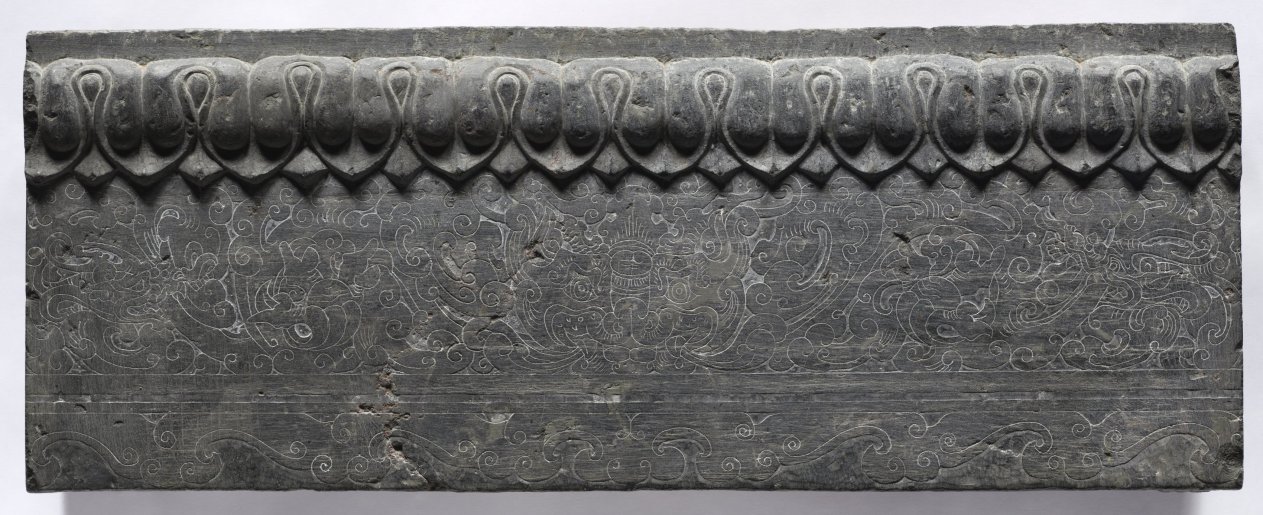
  3. Section of a Coffin Platform: Horizontal Panel
Section of a Coffin Platform: Horizontal Panel, 550–77

Section of a Coffin Platform: Horizontal Panel

550–77 · Sculpture

May one see it?

Not receiving at present

The Cleveland Museum of Art

Cleveland, United States

It belongs to the collection, but is not on display at present.

Checked
2 days ago
In this state since
Aug 19, 2026
Source
The museum's own collection data
On the mapMuseum page

About the sculpture

This richly ornamented stone construction is the long, front side of a coffin platform ultimately derived from raised wooden beds that are still popular in China today. Now in five pieces (presumably cut to facilitate transportation after it was excavated in the 1900s), the three legs and horizontal spans may have originally been created as a single massive slab. Sockets cut in the top of the stone (some of which overlap the modern divisions) show how this slab would have been linked to the back with crosspieces also capable of supporting a top surface of flat stone planks.

Read on

Like the few examples discovered intact in northern Chinese aristocratic tombs, the most elaborate decoration occurs on the front surface of the coffin platform. The design is dominated by the three large vertical panels, corresponding to the legs, that contain animated high-relief depictions of three directional guardians: the White Tiger of the West, the Red Bird of the South, and the Green Dragon of the East. These three, along with the Snake-Entwined Tortoise of the North and the Yellow Dragon of the Center, were mainstays of Chinese cosmology linked, in a system devised as early as the Han dynasty, to elements (wood, fire, earth, metal, and water), functions, planets, and musical tones, among others.

Not only illustrating the persistent appeal of these traditional apotropaic symbols, this scheme suggests that the platform was placed against the back, northern wall of a tomb that would have been entered from the south. The layered carving technique of these principal motifs as well as the shallow relief dragons, masks, and tendrils engraved in the horizontal spans recall forms found in both imperially sponsored tombs and cave chapels of the late sixth century.

The Cleveland Museum of Art

Particulars

Accession number
1982.260.d

In the catalog

SculptureStoneChina, Northern Qi dynasty (550–577)

Sources

  • The Cleveland Museum of Art: the museum's own open data · fetched 8 days ago
  • Image: The Cleveland Museum of Art — Museum open access
Neighbors at The Cleveland Museum of Art

Museum page
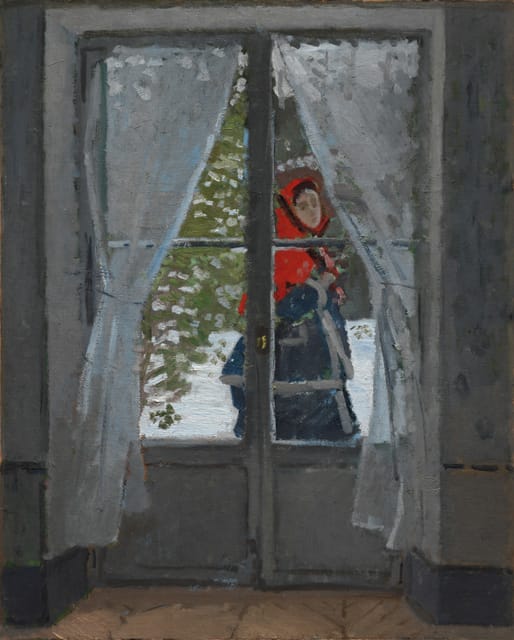
The Red Kerchief, Claude Monet, c. 1868–73

Claude Monet

The Red Kerchief, c. 1868–73

Melencolia I, Albrecht Dürer, 1514

Albrecht Dürer

Melencolia I, 1514

The Virgin and Child with the Pear, Albrecht Dürer, 1511

Albrecht Dürer

The Virgin and Child with the Pear, 1511

The Nativity, Albrecht Dürer, probably c. 1509/1510

Albrecht Dürer

The Nativity, probably c. 1509/1510

The Virgin and Child on a Crescent with a Starry Crown, Albrecht Dürer, 1508

Albrecht Dürer

The Virgin and Child on a Crescent with a Starry Crown, 1508

The Lamentation, Albrecht Dürer, 1507

Albrecht Dürer

The Lamentation, 1507

Large Horse, Albrecht Dürer, 1505

Albrecht Dürer

Large Horse, 1505

Nemesis (The Great Fortune), Albrecht Dürer, c. 1501/1502

Albrecht Dürer

Nemesis (The Great Fortune), c. 1501/1502