 Alexander CalderAmerican, 1898–1976
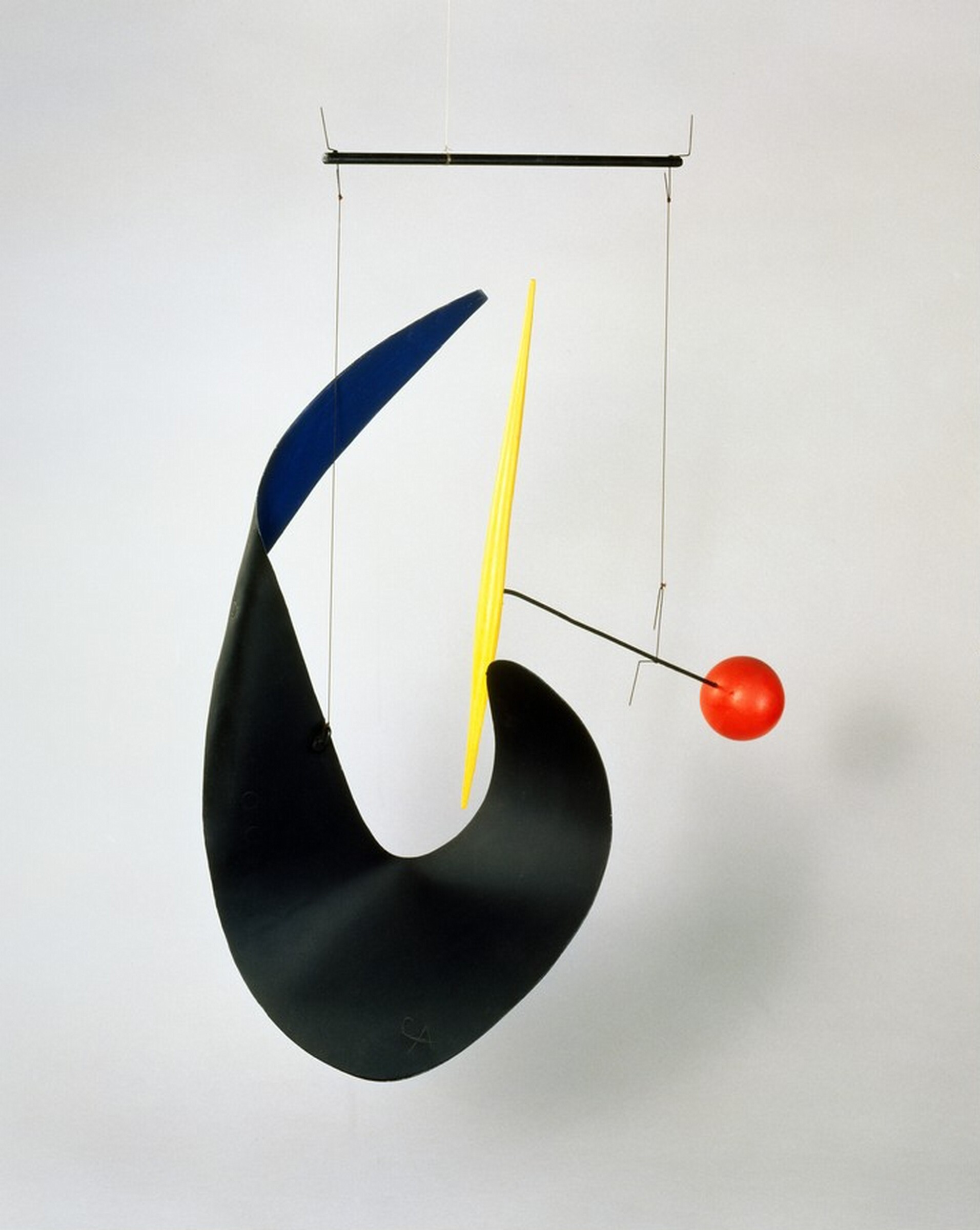
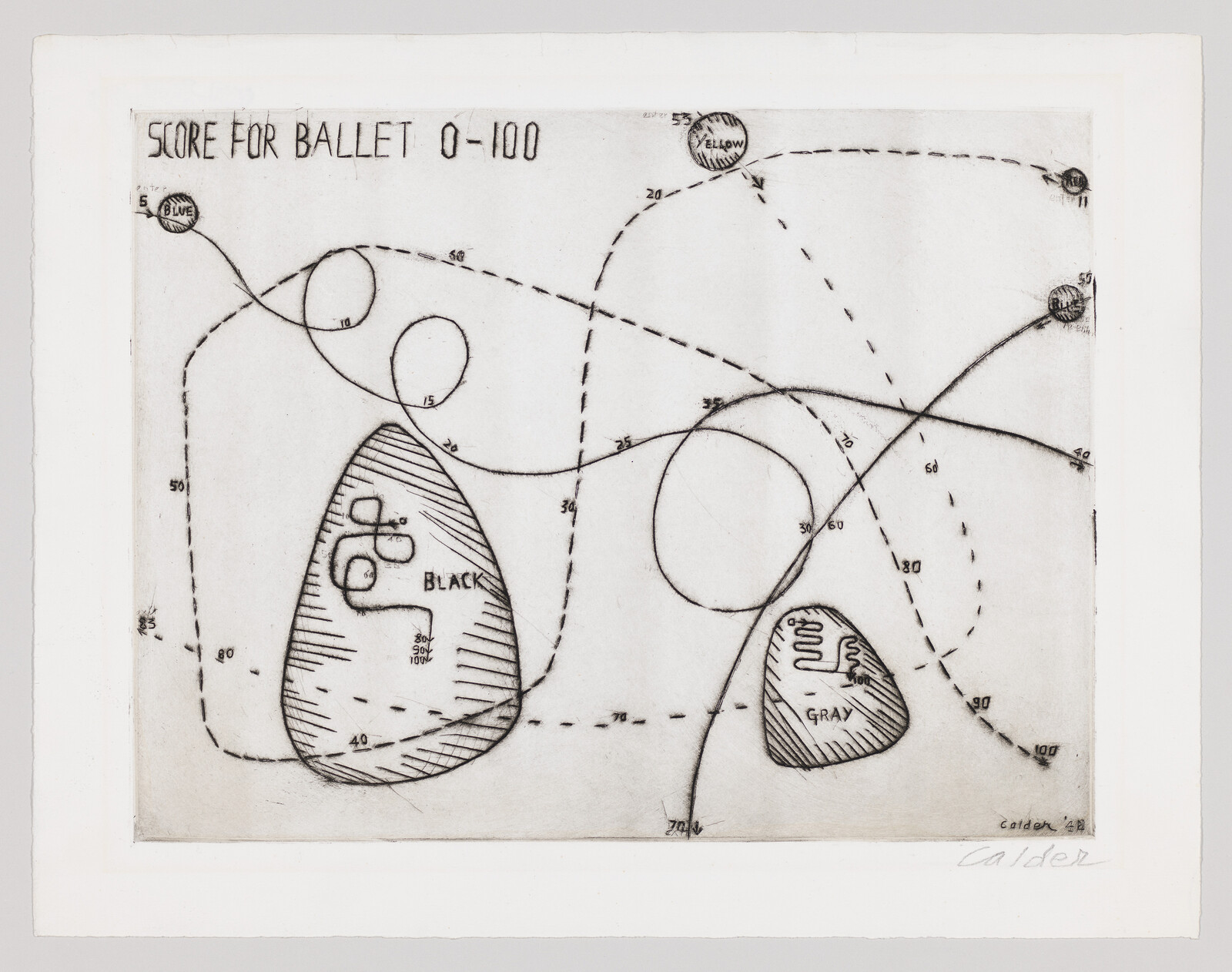
Score for Ballet 0-100
Can I see it?
Not on view at present
Where is “Score for Ballet 0-100” now? Collection: Whitney Museum of American Art, New York. Not on view at present. Checked September 25, 2026.

New York, United States
It belongs to the collection, but is not on display at present.
- Checked
- Source
- The museum
Details
- Accession number
- 2017.29
In the catalog
Sources
- Whitney Museum of American Art
- Image: Whitney Museum of American Art — © the artist or rights holder
In the life of Alexander Calder
The whole life1939–1945
The war years: “constellations” instead of aluminium
During the Second World War Calder tries to join the Marines as a camoufleur but is rejected. Adapting to a scarcity of aluminium, he returns to carved wood in a new open form of sculpture called “constellations”.
1940
His first jewellery exhibition at the Willard Gallery
In 1940 the first exhibition of Calder’s jewellery is held, with success, at the Willard Gallery. His pieces are worn by Peggy Guggenheim, Simone de Beauvoir and other celebrities.
1941
A show at Pierre Matisse’s: few buyers
At Calder’s 1941 show with Pierre Matisse, a copy of the gallery’s sales ledger shows, only a few pieces found buyers; Solomon R. Guggenheim paid just $233.34 for one work. In the late 1930s and early 1940s Calder’s works were not highly sought after and, when they sold, it was often for relatively little money.
1942
Calder earrings at the opening of “Art of This Century”
To the opening of her New York gallery, The Art of This Century, Peggy Guggenheim wears one Calder earring and one by Yves Tanguy, to show her equal loyalty to Surrealist and abstract art, which she displays in separate galleries. Calder had given her enormous silver mobile earrings, and she later commissioned from him a hammered-silver headboard that shimmered with dangling fish.
1943
The retrospective at the Museum of Modern Art
In 1943 the Museum of Modern Art hosts a Calder retrospective curated by James Johnson Sweeney and Marcel Duchamp; the show has to be extended because of the number of visitors. It is sometimes called the artist’s first retrospective.