ART WIKI32,963 on view
MapCollectionArtistsMuseumsExhibitionsJournal
Sign in

ART WIKI

Where the masterpiece hangs, and when they let you in.

Collections: Art Institute of Chicago, Getty Villa, Harvard Art Museums, Hirshhorn Museum and Sculpture Garden, J. Paul Getty Museum, Minneapolis Institute of Art, Musée du Louvre, National Gallery of Art, National Museum of Asian Art, National Portrait Gallery (Smithsonian), Pushkin State Museum of Fine Arts, Rijksmuseum, Smithsonian American Art Museum, SMK — National Gallery of Denmark, State Hermitage Museum, State Russian Museum, The Cleveland Museum of Art, The Metropolitan Museum of Art, The Museum of Modern Art, Tretyakov Gallery, Victoria and Albert Museum, Whitney Museum of American Art, State Catalogue of the Museum Fund of Russia (274 museums), Europeana (19 museums), Wikidata (6 museums), Paris Musées (12 museums), and Joconde, the French Ministry of Culture's museum database (495 museums). Images belong to their rights holders.

Sections

  • Map
  • Search
  • Collection
  • Masterpieces
  • On view now
  • Artists

More

  • Museums & galleries
  • Exhibitions
  • Journal
  • Where the data comes from
  • Privacy & cookies
HomeMapBrowse
  1. Collection/
  2. The Cleveland Museum of Art/
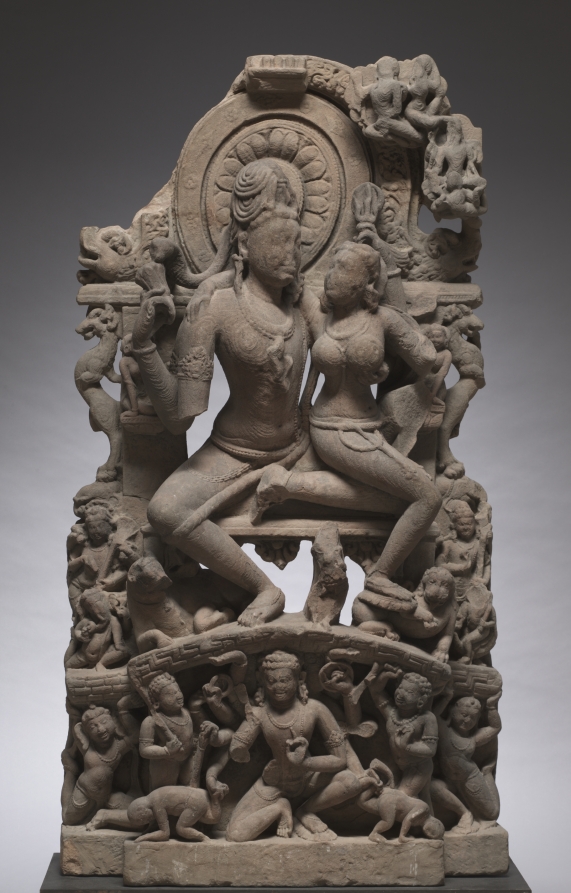
  3. Ravana Shaking Mount Kailasa
Ravana Shaking Mount Kailasa, 700s

Ravana Shaking Mount Kailasa

700s · Sculpture

May one see it?

Not receiving at present

The Cleveland Museum of Art

Cleveland, United States

It belongs to the collection, but is not on display at present.

Checked
3 days ago
In this state since
Aug 19, 2026
Source
The museum
On the mapMuseum page

About the sculpture

According to followers of the branch of Hinduism that considers Shiva to be the ultimate, original creator of the universe, he takes on a mythological form and resides in his created world. His home is in the Himalaya Mountains, on Mount Kailasa, where he lives with his wife Parvati. In one episode of Shiva's mythology, he presses down his big toe to quell the ten-armed demon Ravana, who tried to steal Mount Kailasa and take it away to his island. As Ravana was trying to shake the mountain loose, Parvati turned and clung to Shiva in fear— the moment depicted in this magnificent sculpture, which once formed part of a temple exterior. It is thought that Shiva created the world for the sake of his own enjoyment, his lila or divine play, and emanated himself into all the beings of creation: gods and demons, humans and animals. He shrouded their awareness of the reality that they were in essence the god Shiva himself, so that they would perform the actions of his cosmic drama.

The Cleveland Museum of Art

Particulars

Accession number
1971.173

In the catalog

SculptureStoneCentral India, Madhya Pradesh, Chandela Dynasty, 8th century

Sources

  • The Cleveland Museum of Art
  • Image: The Cleveland Museum of Art — Museum open access
Neighbors at The Cleveland Museum of Art

Museum page
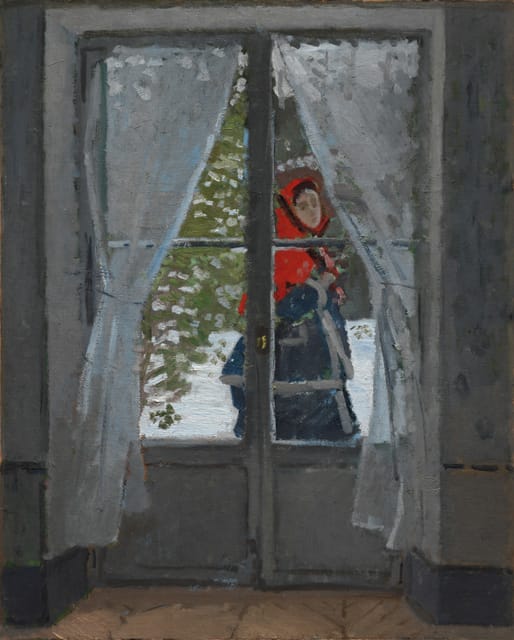
The Red Kerchief, Claude Monet, c. 1868–73

Claude Monet

The Red Kerchief, c. 1868–73

Melencolia I, Albrecht Dürer, 1514

Albrecht Dürer

Melencolia I, 1514

The Virgin and Child with the Pear, Albrecht Dürer, 1511

Albrecht Dürer

The Virgin and Child with the Pear, 1511

The Nativity, Albrecht Dürer, probably c. 1509/1510

Albrecht Dürer

The Nativity, probably c. 1509/1510

The Virgin and Child on a Crescent with a Starry Crown, Albrecht Dürer, 1508

Albrecht Dürer

The Virgin and Child on a Crescent with a Starry Crown, 1508

The Lamentation, Albrecht Dürer, 1507

Albrecht Dürer

The Lamentation, 1507

Large Horse, Albrecht Dürer, 1505

Albrecht Dürer

Large Horse, 1505

Nemesis (The Great Fortune), Albrecht Dürer, c. 1501/1502

Albrecht Dürer

Nemesis (The Great Fortune), c. 1501/1502