Andy WarholAmerican, 1928–1987
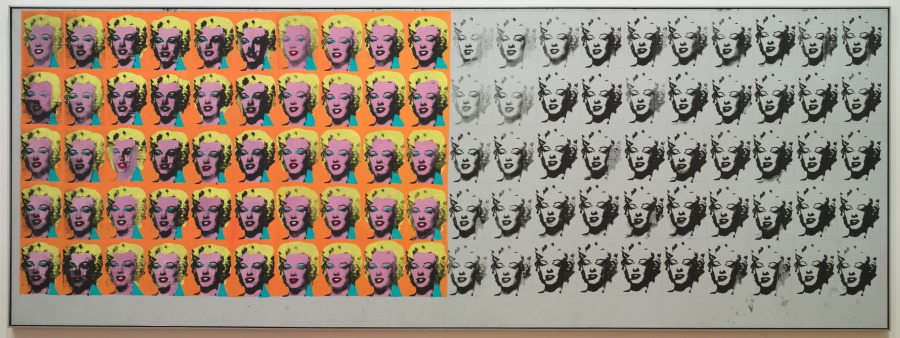
Marilyn Monroe (Marilyn)
May one see it?
Not receiving at present

Chicago, United States
It belongs to the collection, but is not on display at present.
- Checked
- In this state since
- Source
- The museum
About the work
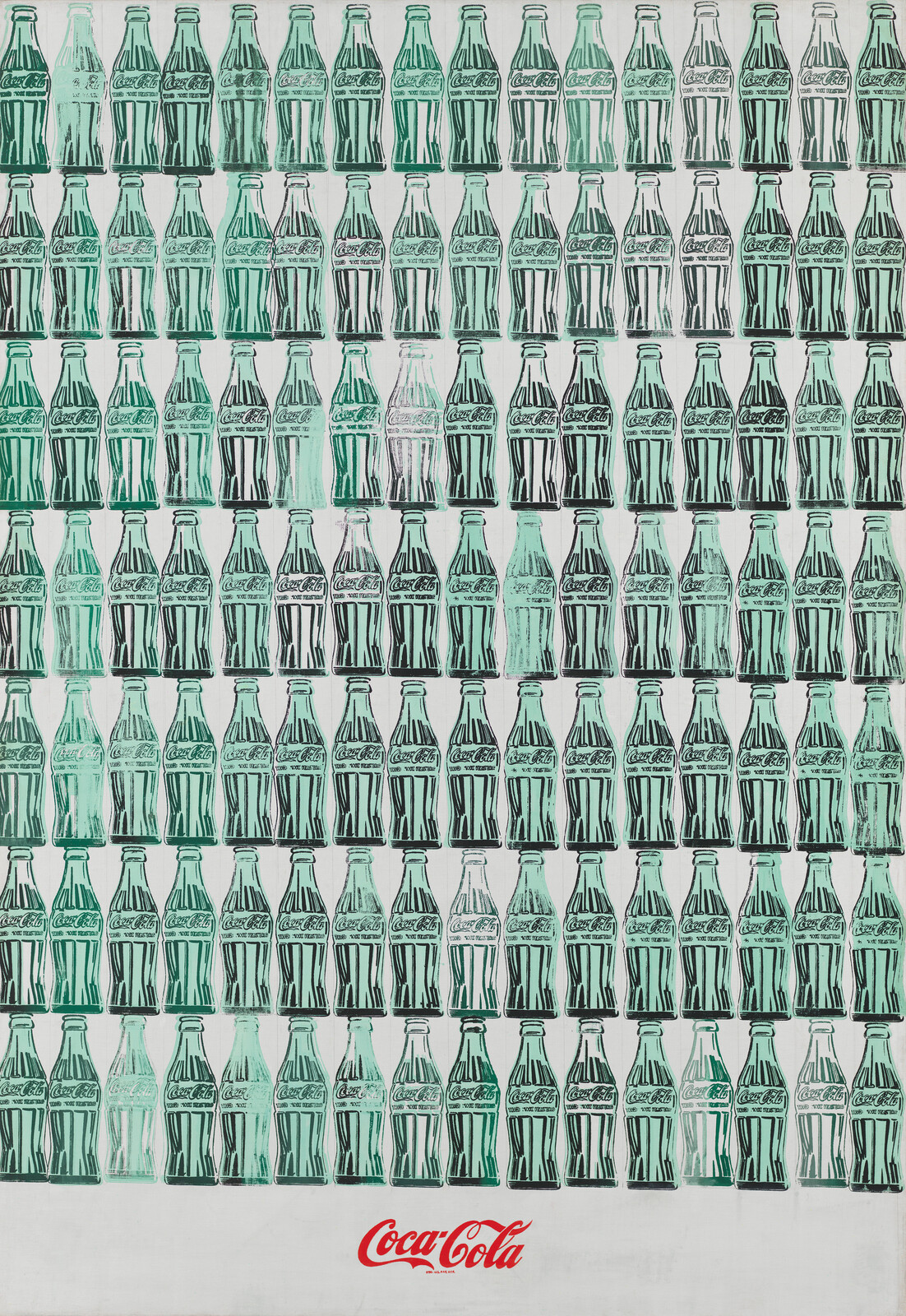
Due in part to his experience as a highly successful commercial illustrator in the 1950s, Andy Warhol was as much businessman as artist and understood the value of mass production and distribution. By the early 1960s, screenprinting had become the favored medium for commercial printing jobs, such as labels and signage. It was used to quickly reproduce photographic images on almost any flat surface. By 1962 Warhol had begun using it to put repeated images on his canvases—images that he had previously painted painstakingly by hand. Because Warhol had not finessed the process, his printing “mistakes” became a signature. In 1967 he began publishing limited-edition print portfolios in his studio under the aegis of Factory Editions.
Read on
Marilyn was the first such portfolio, consisting of ten images made from the same 1953 publicity photograph of Marilyn Monroe in the film Niagara, which Warhol transformed with intentionally off-register printing and garish combinations of psychedelic colors. Daylight fluorescent colors, better known as Day-Glo colors, were invented in the 1930s, and by the 1960s had become integral to the graphic vocabulary of Pop art. While a conventional bright color reflects 80 to 90 percent of its color, a Day-Glo color appears to reflect more than 300 percent of its color. It is no wonder then that art historian Robert Rosenblum observed that Marilyn’s face “seems perpetually illuminated by the afterimage of a flashbulb.” With this method and presentation, Warhol and his work became synonymous with Pop Art.
Art Institute of ChicagoCC BY 4.0
Particulars
- Accession number
- 1998.442.10
What it shows
In the catalog
Sources
- Art Institute of Chicago
- Image: Art Institute of Chicago — © the artist or rights holder
Meanwhile, in the life of Andy Warhol
The whole life1963–1968
Warhol the filmmaker: hundreds of reels
From 1963 to 1968 Warhol shot several hundred reels: 472 four-minute portrait Screen Tests, dozens of short films and more than 150 narrative films, only 60 of which were ever released.
May 1965
Paris: announcing his retirement from painting
The second Flowers series was shown at Galerie Ileana Sonnabend in Paris; during the trip Warhol announced that he was retiring from painting to focus on film, saying he no longer believed in painting.
October 1965
First solo museum exhibition
Warhol's first solo museum exhibition was held in October 1965 at the Institute of Contemporary Art in Philadelphia.
1966
Manager of The Velvet Underground
In 1966 Warhol began managing the experimental rock band The Velvet Underground and let them rehearse at the Factory; he also financed their debut album, The Velvet Underground & Nico (1967).
1968
Moderna Museet exhibition and the “Electric Chairs”
By then Warhol had largely stopped painting, but he soon resumed and produced the Big Electric Chair paintings for his 1968 exhibition at the Moderna Museet in Stockholm.
3 June 1968
The shooting at the Factory
The writer Valerie Solanas, author of the SCUM Manifesto, who had appeared in his film I, a Man, shot Warhol and the art critic Mario Amaya; Amaya was lightly injured, while Warhol was seriously wounded and spent nearly two months in hospital. Solanas turned herself in to the police a few hours later, saying that Warhol had too much control over her life.

![Liz #3 [Early Colored Liz], Andy Warhol, 1963](/api/img?u=https%3A%2F%2Fwww.artic.edu%2Fiiif%2F2%2F362c0c2a-4576-2207-4ba9-2b87e6d0bad0%2Ffull%2F1686%2C%2F0%2Fdefault.jpg)