ART WIKI32,979 on view
MapCollectionArtistsMuseumsExhibitionsJournal
Sign in

ART WIKI

Where the masterpiece hangs, and when they let you in.

Collections: Art Institute of Chicago, Getty Villa, Harvard Art Museums, Hirshhorn Museum and Sculpture Garden, J. Paul Getty Museum, Minneapolis Institute of Art, Musée du Louvre, National Gallery of Art, National Museum of Asian Art, National Portrait Gallery (Smithsonian), Pushkin State Museum of Fine Arts, Rijksmuseum, Smithsonian American Art Museum, SMK — National Gallery of Denmark, State Hermitage Museum, State Russian Museum, The Cleveland Museum of Art, The Metropolitan Museum of Art, The Museum of Modern Art, Tretyakov Gallery, Victoria and Albert Museum, Whitney Museum of American Art, State Catalogue of the Museum Fund of Russia (274 museums), Europeana (19 museums), Wikidata (6 museums), Paris Musées (12 museums), and Joconde, the French Ministry of Culture's museum database (495 museums). Images belong to their rights holders.

Sections

  • Map
  • Search
  • Collection
  • Masterpieces
  • On view now
  • Artists

More

  • Museums & galleries
  • Exhibitions
  • Journal
  • Where the data comes from
  • Privacy & cookies
HomeMapBrowse
  1. Collection/
  2. The Cleveland Museum of Art/
  3. Leaping Trout
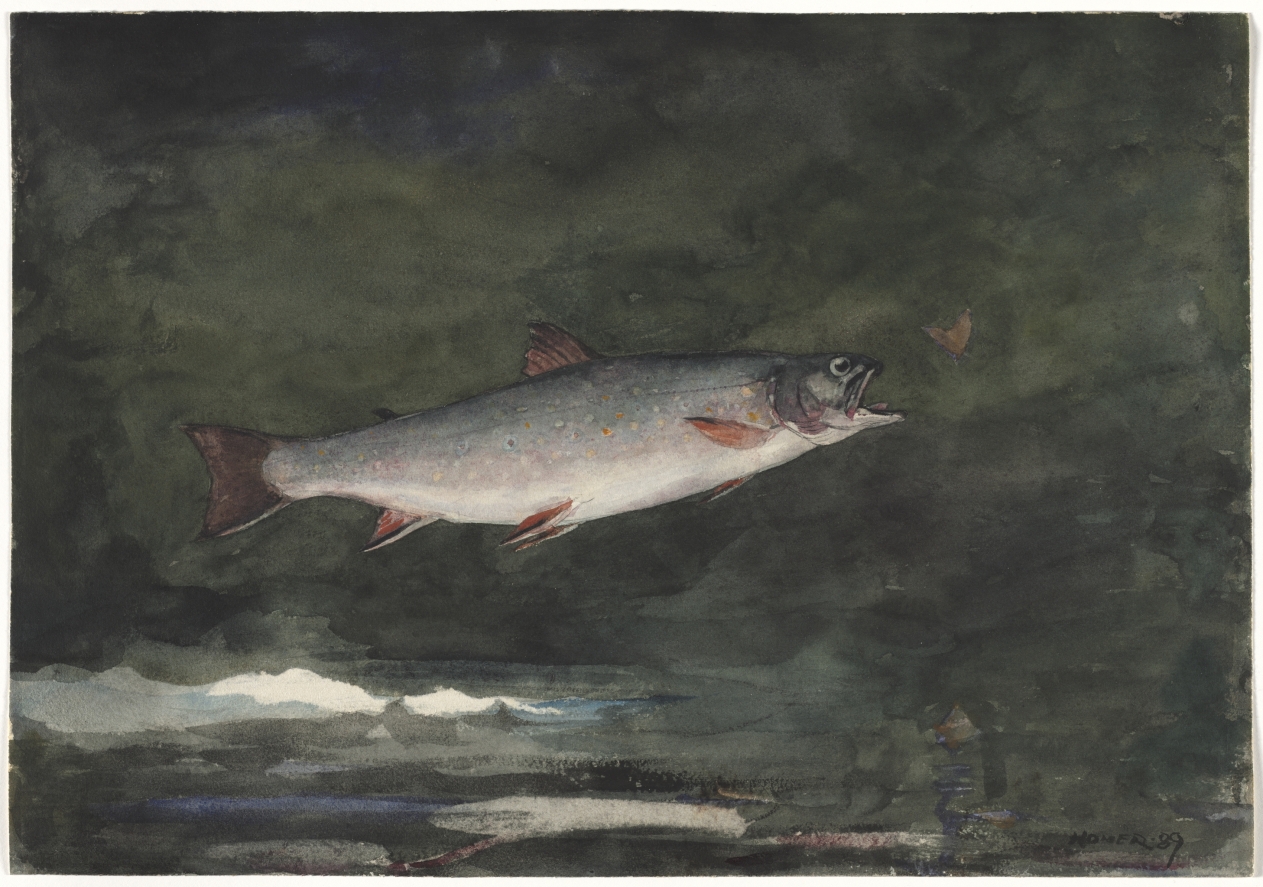
Leaping Trout, Winslow Homer, 1889
Winslow Homer, portraitWinslow HomerAmerican, 1836–1910

Leaping Trout

1889 · Drawing

May one see it?

Not receiving at present

The Cleveland Museum of Art

Cleveland, United States

It belongs to the collection, but is not on display at present.

Checked
3 days ago
In this state since
Aug 19, 2026
Source
The museum
On the mapMuseum page

About the work

In 1886, Winslow Homer began to produce oil paintings and watercolors of subjects in the Adirondack Mountains, where he and his brother Charles had fished and hunted since the 1870s. In Leaping Trout, a silvery trout propels itself from the water in pursuit of a hapless insect or a fisherman’s fly. Homer’s choice to adopt the fish’s perspective, rather than a fisherman’s, is quite unconventional and heightens the drama and immediacy of the scene. His technique, influenced by the free brushwork of French Impressionism, similarly animates his still-life subject. Luminous washes of transparent blue and grey watercolor suggest the fish’s iridescent skin, while opaque pricks of bright red on its body lend a decorative effect reminiscent of Japanese prints.

Read on

On the water’s surface, Homer uses scraping to create two brilliant white highlights, and dry brushing to produce the impression of a reflective surface. Although the overall effect is mysterious and dreamlike, the color and movement of the fish is carefully studied, suggesting Homer’s desire to appeal to the sportsmen who might buy his works.

The Cleveland Museum of Art

Particulars

1889 · aged 53
18361910
Accession number
1973.142

In the catalog

Drawings & watercolorsWatercolourImpressionism19th centuryAmerica

Sources

  • The Cleveland Museum of Art
  • Image: The Cleveland Museum of Art — Museum open access
More by Winslow Homer

All works
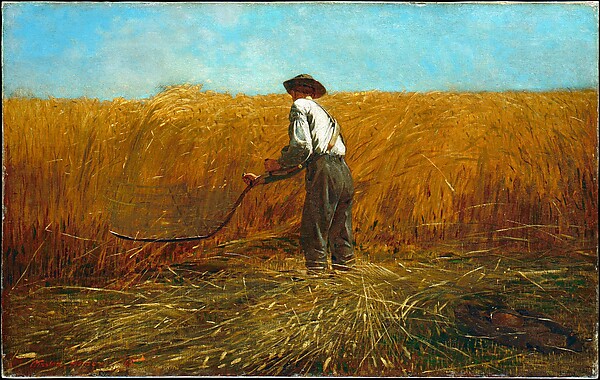
The Veteran in a New Field, Winslow Homer, 1865

The Veteran in a New Field

1865 · The Metropolitan Museum of Art

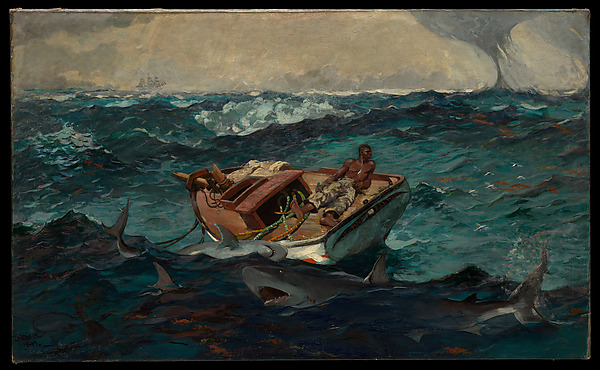
The Gulf Stream, Winslow Homer, 1899; reworked by 1906

The Gulf Stream

1899; reworked by 1906 · The Metropolitan Museum of Art

Home, Sweet Home, Winslow Homer, c. 1863

Home, Sweet Home

c. 1863 · National Gallery of Art

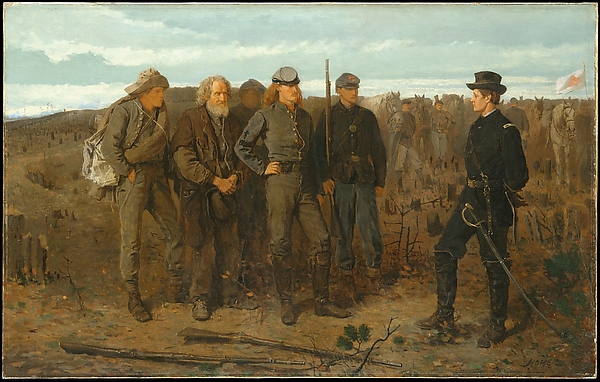
Prisoners from the Front, Winslow Homer, 1866

Prisoners from the Front

1866 · The Metropolitan Museum of Art

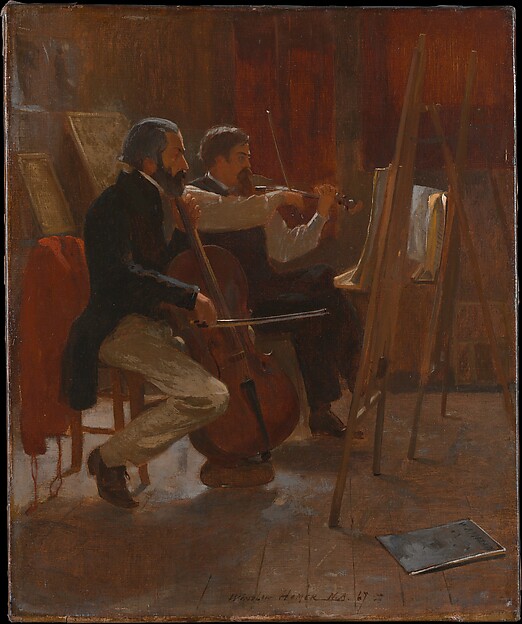
The Studio, Winslow Homer, 1867

The Studio

1867 · The Metropolitan Museum of Art

Coming through the Rye, Winslow Homer, 1867

Coming through the Rye

1867 · The Metropolitan Museum of Art

The Dinner Horn (Blowing the Horn at Seaside), Winslow Homer, 1870

The Dinner Horn (Blowing the Horn at Seaside)

1870 · National Gallery of Art

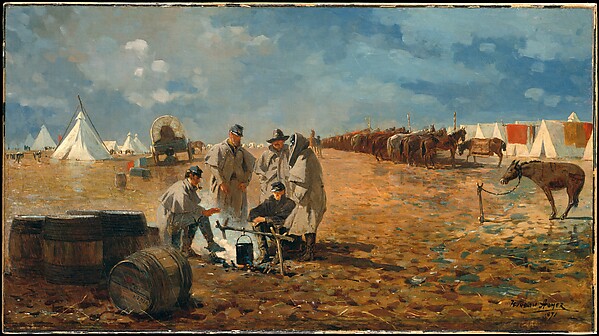
Rainy Day in Camp, Winslow Homer, 1871

Rainy Day in Camp

1871 · The Metropolitan Museum of Art

Neighbors at The Cleveland Museum of Art

Museum page
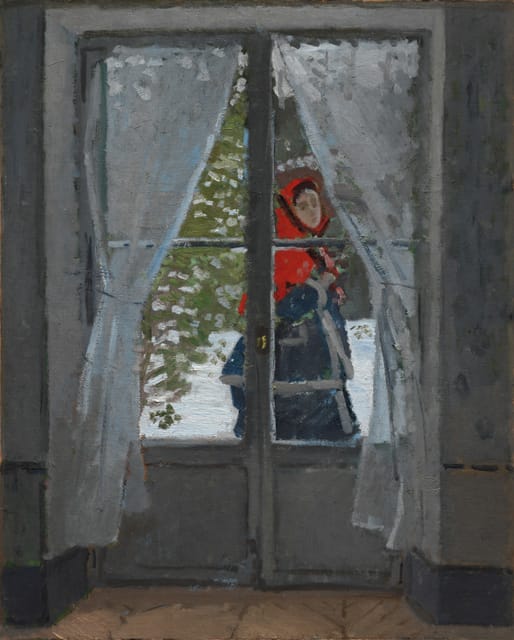
The Red Kerchief, Claude Monet, c. 1868–73

Claude Monet

The Red Kerchief, c. 1868–73

Melencolia I, Albrecht Dürer, 1514

Albrecht Dürer

Melencolia I, 1514

The Virgin and Child with the Pear, Albrecht Dürer, 1511

Albrecht Dürer

The Virgin and Child with the Pear, 1511

The Nativity, Albrecht Dürer, probably c. 1509/1510

Albrecht Dürer

The Nativity, probably c. 1509/1510

The Virgin and Child on a Crescent with a Starry Crown, Albrecht Dürer, 1508

Albrecht Dürer

The Virgin and Child on a Crescent with a Starry Crown, 1508

The Lamentation, Albrecht Dürer, 1507

Albrecht Dürer

The Lamentation, 1507

Large Horse, Albrecht Dürer, 1505

Albrecht Dürer

Large Horse, 1505

Nemesis (The Great Fortune), Albrecht Dürer, c. 1501/1502

Albrecht Dürer

Nemesis (The Great Fortune), c. 1501/1502