ART WIKI32,979 on view
MapCollectionArtistsMuseumsExhibitionsJournal
Sign in

ART WIKI

Where the masterpiece hangs, and when they let you in.

Collections: Art Institute of Chicago, Getty Villa, Harvard Art Museums, Hirshhorn Museum and Sculpture Garden, J. Paul Getty Museum, Minneapolis Institute of Art, Musée du Louvre, National Gallery of Art, National Museum of Asian Art, National Portrait Gallery (Smithsonian), Pushkin State Museum of Fine Arts, Rijksmuseum, Smithsonian American Art Museum, SMK — National Gallery of Denmark, State Hermitage Museum, State Russian Museum, The Cleveland Museum of Art, The Metropolitan Museum of Art, The Museum of Modern Art, Tretyakov Gallery, Victoria and Albert Museum, Whitney Museum of American Art, State Catalogue of the Museum Fund of Russia (274 museums), Europeana (19 museums), Wikidata (6 museums), Paris Musées (12 museums), and Joconde, the French Ministry of Culture's museum database (495 museums). Images belong to their rights holders.

Sections

  • Map
  • Search
  • Collection
  • Masterpieces
  • On view now
  • Artists

More

  • Museums & galleries
  • Exhibitions
  • Journal
  • Where the data comes from
  • Privacy & cookies
HomeMapBrowse
  1. Collection/
  2. The Cleveland Museum of Art/
  3. Leaf from an Antiphonary: Initial H with the Nativity (recto)
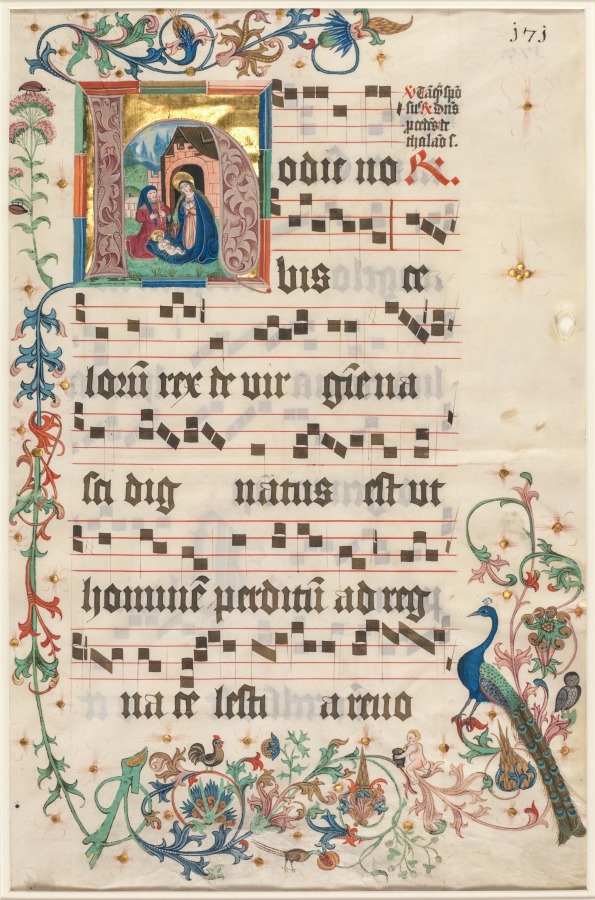
Leaf from an Antiphonary: Initial H with the Nativity (recto), c. 1480

Leaf from an Antiphonary: Initial H with the Nativity (recto)

c. 1480 · Manuscript

May one see it?

Not receiving at present

The Cleveland Museum of Art

Cleveland, United States

It belongs to the collection, but is not on display at present.

Checked
3 days ago
In this state since
Aug 19, 2026
Source
The museum
On the mapMuseum page

About the painting

The peacock in the lower right margin is used here as a symbol of immortality. In the ancient world the peacock's flesh was thought to be incorruptible—to never decay—and was thus an appropriate symbol for the Virgin Mary who was taken bodily into heaven. The peacock is often used as an accessory illustration for representations of the Nativity. The text for this leaf is the first matins response for Christmas Day and begins Hodie nobis celorum rex (On this day the King of Heaven). The leaf survives with two known sister leaves with text and illustrations that refer to Saint Clare, who was widely venerated during the Middle Ages. She is closely associated with Saint Francis, who installed her with a group of Benedictine nuns in a community at Assisi. Francis prescribed an austere way of life for the nuns who thereafter were known as the Poor Clares.

Read on

The saint died in 1253 and was canonized in 1255. The prominent references to Clare in the parent manuscript to which this leaf belongs indicate that it was made for a religious community belonging to that order, perhaps in Augsburg or elsewhere in South Germany.

The Cleveland Museum of Art

Particulars

Accession number
2014.25.a

In the catalog

PaintingsInkRenaissance15th centuryGermany, possibly Augsburg

Sources

  • The Cleveland Museum of Art
  • Image: The Cleveland Museum of Art — Museum open access
Neighbors at The Cleveland Museum of Art

Museum page
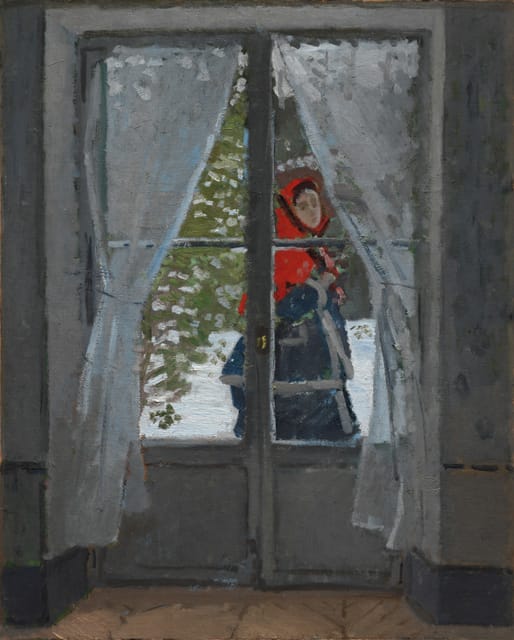
The Red Kerchief, Claude Monet, c. 1868–73

Claude Monet

The Red Kerchief, c. 1868–73

Melencolia I, Albrecht Dürer, 1514

Albrecht Dürer

Melencolia I, 1514

The Virgin and Child with the Pear, Albrecht Dürer, 1511

Albrecht Dürer

The Virgin and Child with the Pear, 1511

The Nativity, Albrecht Dürer, probably c. 1509/1510

Albrecht Dürer

The Nativity, probably c. 1509/1510

The Virgin and Child on a Crescent with a Starry Crown, Albrecht Dürer, 1508

Albrecht Dürer

The Virgin and Child on a Crescent with a Starry Crown, 1508

The Lamentation, Albrecht Dürer, 1507

Albrecht Dürer

The Lamentation, 1507

Large Horse, Albrecht Dürer, 1505

Albrecht Dürer

Large Horse, 1505

Nemesis (The Great Fortune), Albrecht Dürer, c. 1501/1502

Albrecht Dürer

Nemesis (The Great Fortune), c. 1501/1502