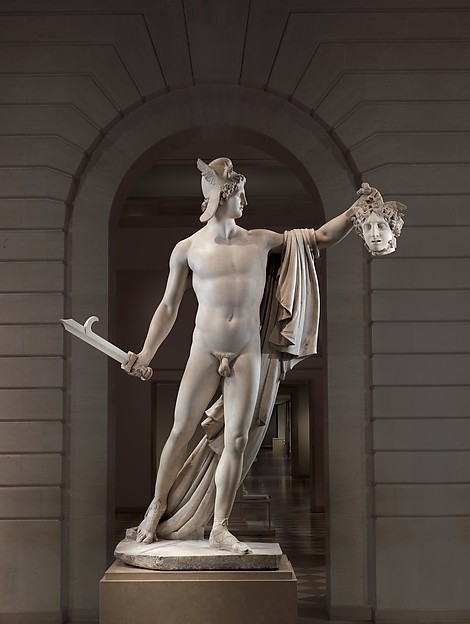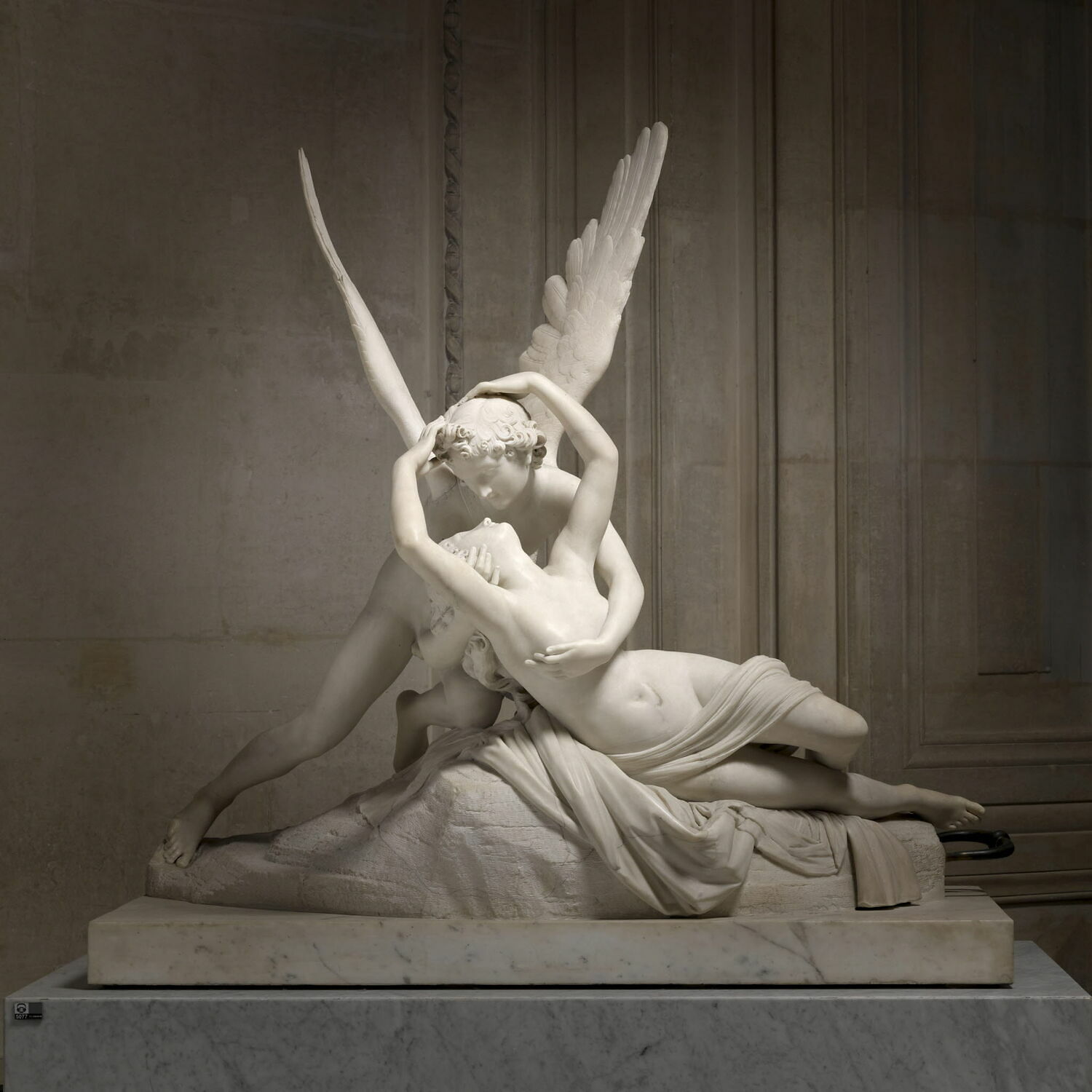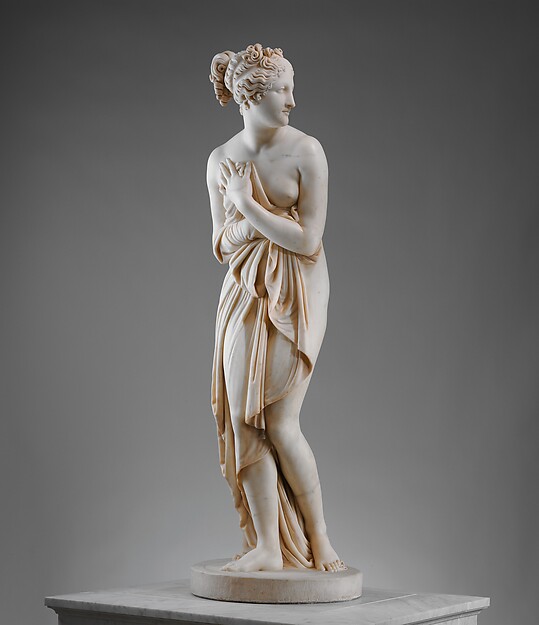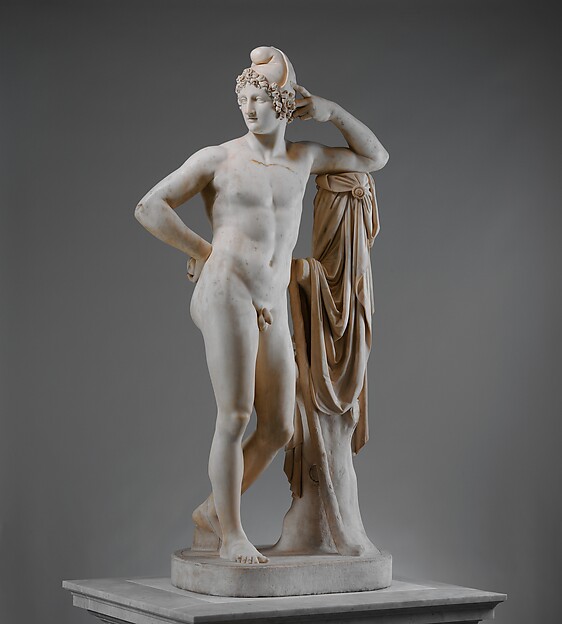
 Antonio CanovaItalian, 1757–1822
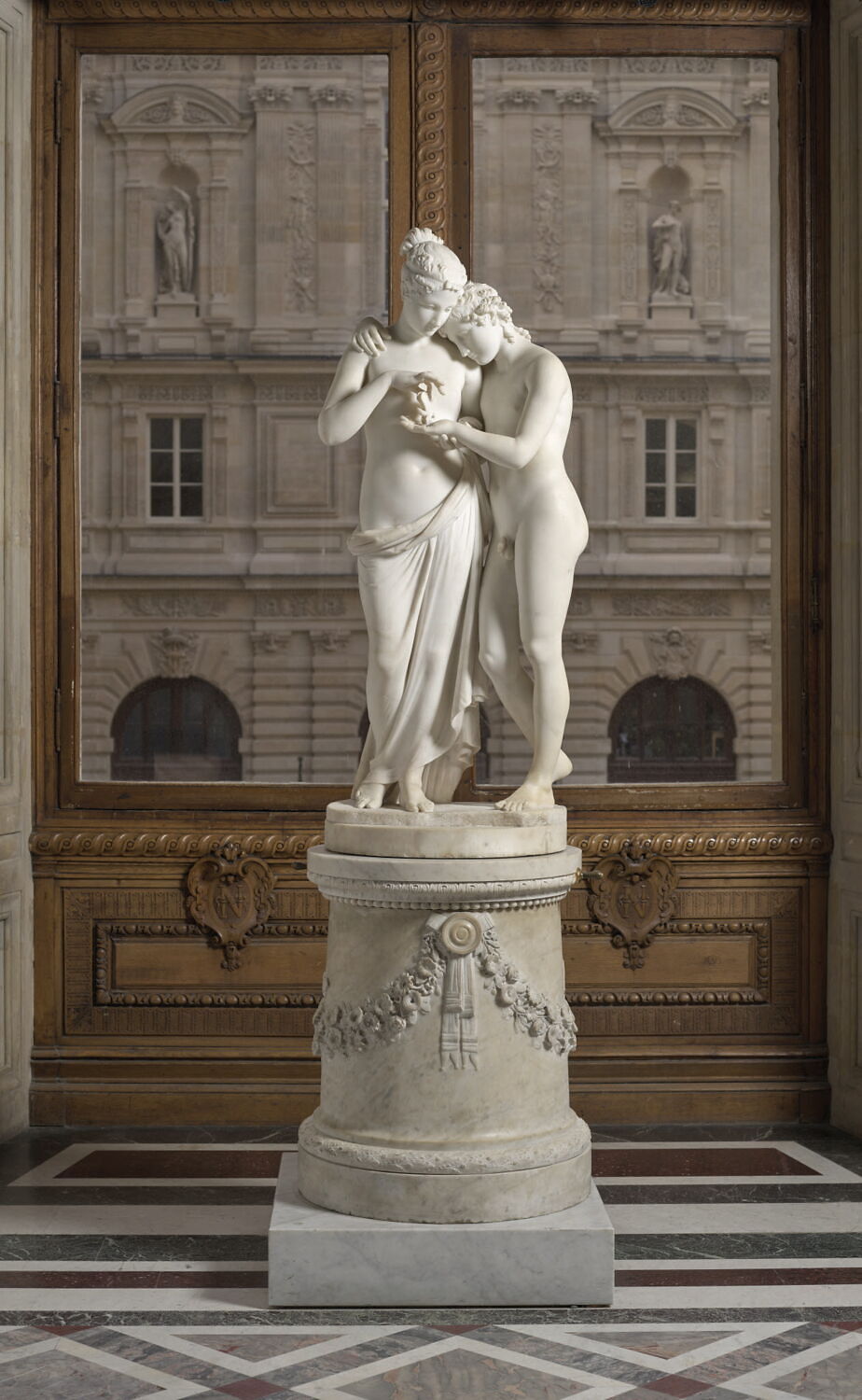
L'Amour et Psyché debout
Can I see it?
Unknown
Where is “L'Amour et Psyché debout” now? Collection: Musée du Louvre, Paris. Unknown.

Paris, France
The owner is known; whether it is on view today is not.
- In this state since
- Source
- The museum
Details
- Accession number
- MR 1776
In the catalog
Sources
- Musée du Louvre
- Image: Musée du Louvre — © 2024 GrandPalaisRmn (musée du Louvre) / Gabriel de Carvalho
In the life of Antonio Canova
The whole life1775–1800
Shows his statues by candlelight
In the last quarter of the eighteenth century it became fashionable to view galleries at night by torchlight, and Canova seized on the fad: he displayed his works in his studio by candlelight and finished the statues by candlelight with special tools, softening the transitions between the parts of the nude. He then rubbed the marble with pumice, sometimes for weeks or months, and if need be with tripoli and lead.
1790–1795
The monument to Titian is never built
In 1790 he began work on a pyramid-shaped tomb for Titian in the church of the Frari, but by 1795 the project was abandoned for lack of funds. Canova reused the idea for the tomb of Archduchess Maria Christina in the Augustinian church in Vienna.
1790s
Declines Catherine the Great’s invitation
News of Canova’s work reached Russia, and Empress Catherine II tried to summon the sculptor to her court; he politely declined the honourable invitation and, in thanks, made a second version of “Cupid and Psyche”, now in the Hermitage in St Petersburg.
1791–1818
Honorary member of many academies in Europe and America
Canova was elected an honorary member of many academies: Florence (1791), Stockholm (1796), Verona (1803), Venice (1804), Siena (1805), Lucca (1806), St Petersburg (1804), Geneva (1804), Denmark (1805), Graz (1812), Marseille (1813), Monaco (1814), New York (1817), Antwerp and Vilnius (1818), and also Philadelphia.
1796
So many commissions that he lacks hands
In these years Canova was literally swamped with commissions: in 1796 he confessed to Selva that if he had several hands, all of them would be busy.
1797–1799
Leaves Rome: Vienna, then Possagno
With the dawn of the Napoleonic era Canova’s position grew difficult: he lost many powerful patrons. In 1797 he went to Vienna (by other accounts, also to Prague, Dresden, Berlin and Munich), a year later returned to Possagno for a year, and then went back to Rome, which he came to regard as the only city suited to his artistic ambitions.