 Winslow HomerAmerican, 1836–1910
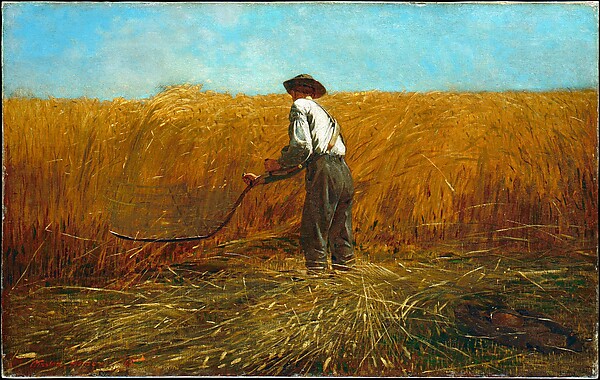
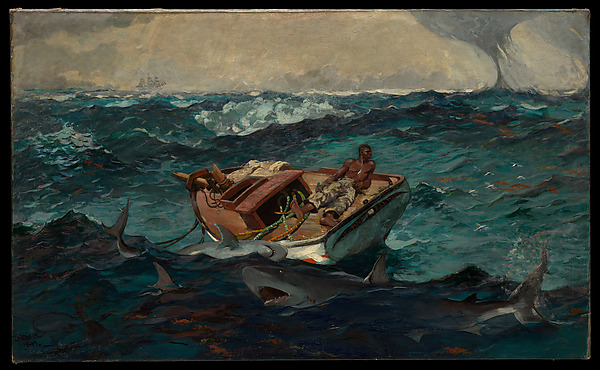
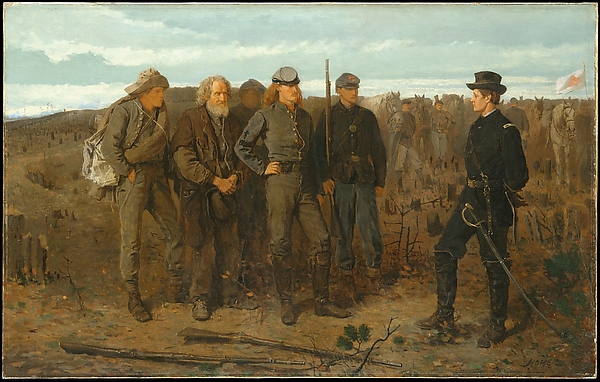
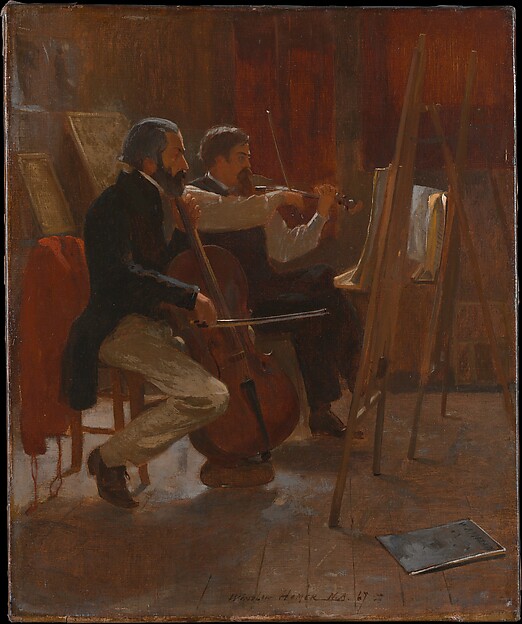
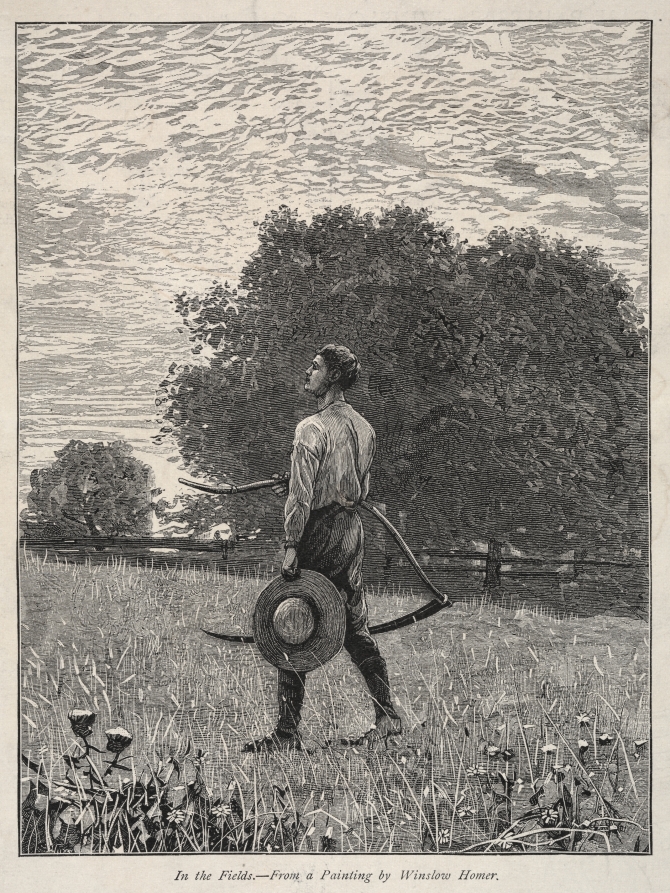
In the Fields
May one see it?
Not receiving at present

The Cleveland Museum of Art
Cleveland, United States
It belongs to the collection, but is not on display at present.
- Checked
- In this state since
- Source
- The museum
Particulars
- Accession number
- 1942.1479
In the catalog
Sources
- The Cleveland Museum of Art
- Image: The Cleveland Museum of Art — Museum open access
Meanwhile, in the life of Winslow Homer
The whole life1877
First show at the Boston Art Club
In 1877 Homer exhibited at the Boston Art Club for the first time, with the oil painting “An Afternoon Sun”; from then until 1909 he showed there often.
late 1870s
A recluse in Gloucester
In the late 1870s, whether from disappointments with women or some other emotional turmoil, Homer became reclusive, abandoned urban social life and lived instead in Gloucester, for a while even in the secluded Eastern Point Lighthouse with the keeper's family. Watching the fishermen, the sea and the marine weather, he rediscovered his love of the sea and found a rich source of themes in it.
1878
A productive year at Valentine's farm
Homer spent 1878 as the guest of the industrialist Lawson Valentine at Houghton Farm, his property in the Adirondack Mountains, and it proved a particularly productive year. Valentine, whose paint company employed the artist's brother Charles as a chemist, was an early and important collector of Homer's work and later gave him a studio at the farm.
1878
Fireplaces and the Tile Club
In 1878 Homer made an enamel fireplace surround. For a short time he designed fireplace tiles as a member of the Tile Club, a group of artists and writers who nicknamed him “The Obtuse Bard” and included William Merritt Chase and the sculptor Augustus Saint-Gaudens.
spring 1881 – November 1882
England: the village of Cullercoats
In 1881 Homer set off on his second and last trip abroad, to England, and from the spring of 1881 to November 1882 lived in the village of Cullercoats on the North Sea, depicting the courage of fishermen and above all of women: gutting fish, mending nets, waiting for the men at the water's edge. The period profoundly changed his later work: his palette grew sober and his pictures larger. Of the local women he wrote: “The women are the working bees.”