ART WIKI32,963 on view
MapCollectionArtistsMuseumsExhibitionsJournal
Sign in

ART WIKI

Where the masterpiece hangs, and when they let you in.

Collections: Art Institute of Chicago, Getty Villa, Harvard Art Museums, Hirshhorn Museum and Sculpture Garden, J. Paul Getty Museum, Minneapolis Institute of Art, Musée du Louvre, National Gallery of Art, National Museum of Asian Art, National Portrait Gallery (Smithsonian), Pushkin State Museum of Fine Arts, Rijksmuseum, Smithsonian American Art Museum, SMK — National Gallery of Denmark, State Hermitage Museum, State Russian Museum, The Cleveland Museum of Art, The Metropolitan Museum of Art, The Museum of Modern Art, Tretyakov Gallery, Victoria and Albert Museum, Whitney Museum of American Art, State Catalogue of the Museum Fund of Russia (274 museums), Europeana (19 museums), Wikidata (6 museums), Paris Musées (12 museums), and Joconde, the French Ministry of Culture's museum database (495 museums). Images belong to their rights holders.

Sections

  • Map
  • Search
  • Collection
  • Masterpieces
  • On view now
  • Artists

More

  • Museums & galleries
  • Exhibitions
  • Journal
  • Where the data comes from
  • Privacy & cookies
HomeMapBrowse
  1. Collection/
  2. The Museum of Modern Art/
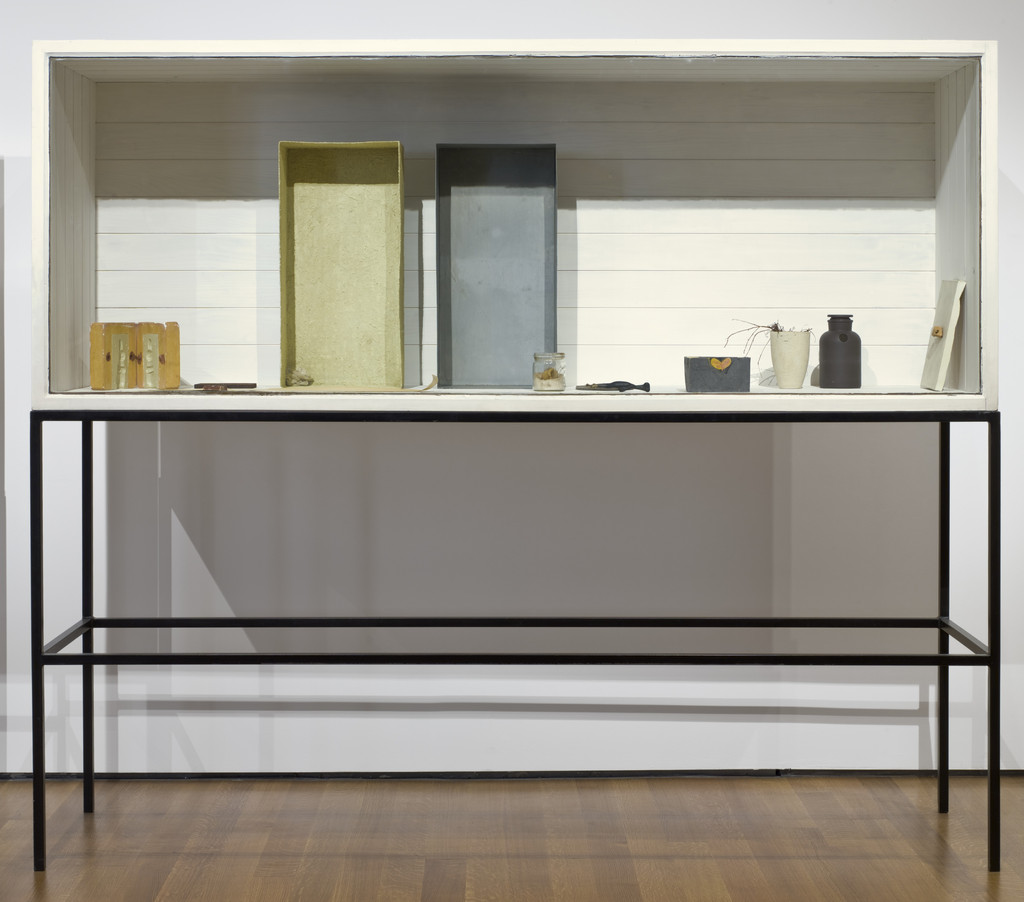
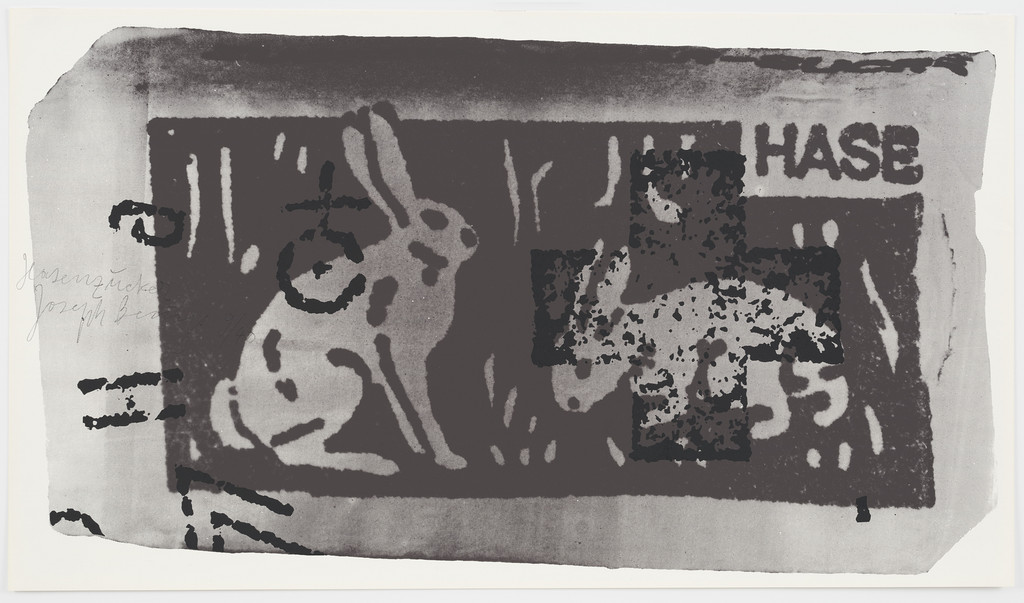
  3. Hare Sugar (Hasenzucker)
Hare Sugar (Hasenzucker), Joseph Beuys, 1972
Joseph Beuys, portraitJoseph BeuysGerman, 1921–1986

Hare Sugar (Hasenzucker)

1972 · Multiple

May one see it?

Not receiving at present

The Museum of Modern Art

New York, United States

It belongs to the collection, but is not on display at present.

Checked
8 days ago
Source
The museum
On the mapMuseum page

Particulars

1972 · aged 51
19211986
Accession number
1445.2001.a-c

In the catalog

PrintsScreenprintPost-war art20th century

Sources

  • The Museum of Modern Art
  • Image: The Museum of Modern Art — © the artist or rights holder

Meanwhile, in the life of Joseph Beuys

The whole life
  1. May 1970

    In Scotland with Demarco: the idea of “7000 Oaks”

    Invited by Richard Demarco, Beuys came to Scotland; at Loch Awe and Rannoch Moor he first conceived the necessity of “7000 Oaks”.

  2. August 1970

    The 1970 Edinburgh Festival: “Arena” and “The Pack”

    In August 1970, at the Edinburgh International Festival, Beuys, with Günther Uecker, Blinky Palermo, Robert Filliou and other Düsseldorf artists, showed the retrospective “Arena” and the installation “The Pack” and performed “Celtic Kinloch Rannoch”, using a blackboard for the first time; a year later he developed the action in Basel as “Celtic+”.

  3. 1972

    Bolognano: a second home and Baroness De Domizio Durini

    After spending time in Naples (where in 1972 he staged “Vitex Agnus Castus”) and Foggia, Beuys came to Bolognano (Pescara) at the invitation of Lucrezia De Domizio and Buby Durini and returned many times, making it his second home. Baroness Lucrezia De Domizio Durini became one of his main supporters, the publisher of twenty-seven of his works and one of his major collectors.

  4. October 1972

    Dismissed from the Düsseldorf Academy

    Beuys abolished entry requirements to his class, and this policy caused friction; in 1972 he found 142 rejected applicants whom he wished to take on and, with 16 students, occupied the academy's offices. The relationship became irreconcilable and in October he was dismissed; he refused to accept the dismissal, which provoked a wave of protests from students, artists and critics.

  5. 1972–1985

    The project “In Defence of Nature” in Bolognano

    From 1972 to 1985 Beuys carried out in Bolognano the project “Operation In Defence of Nature”, the Italian project with the greatest international impact: artistic, political, ecological and humanitarian actions, among them the “Paradise Plantation” of 7,000 plants (1982) and “Olivestone” (1984).

  6. 1974

    Founds the Free International University

    Together with Heinrich Böll, Beuys opened an international-level university where anyone could study — with no age limits and no entrance competition.
More by Joseph Beuys

All works
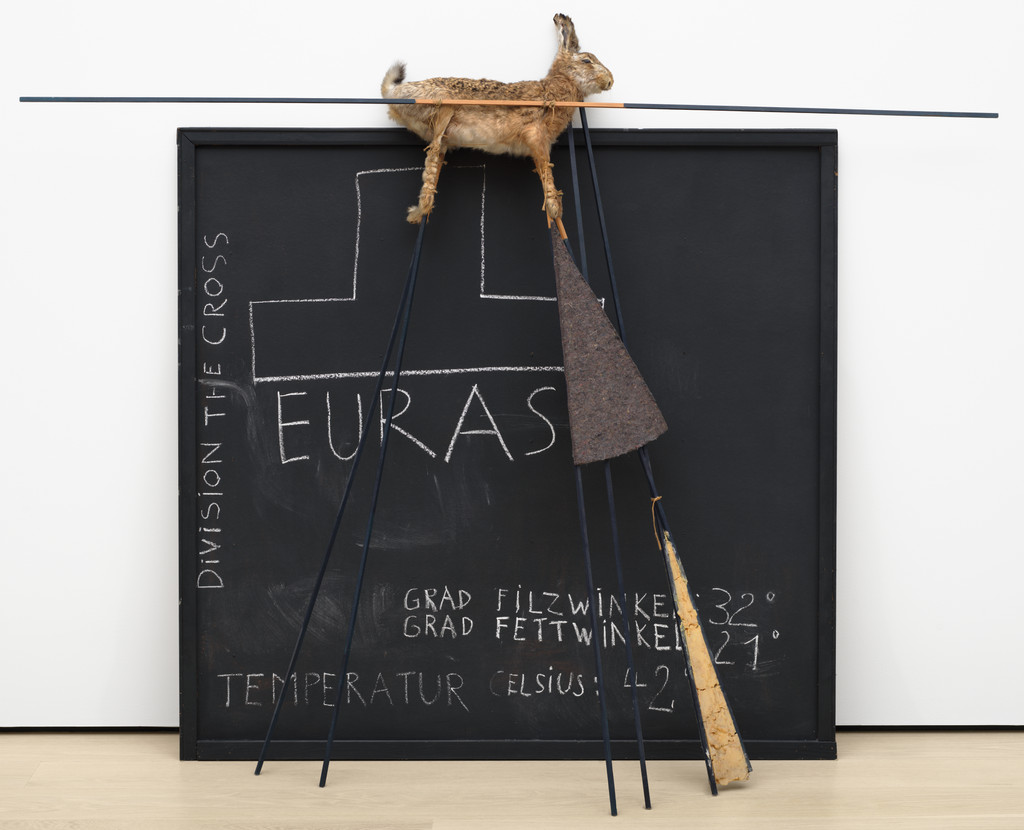
Eurasia Siberian Symphony 1963, Joseph Beuys, 1966

Eurasia Siberian Symphony 1963

1966 · The Museum of Modern Art

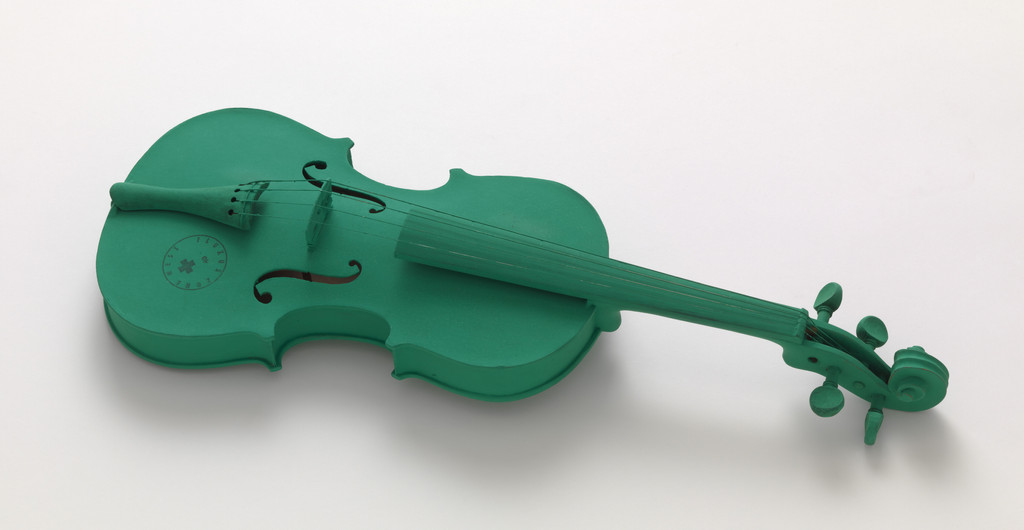
Green Violin (Grüne Geige), Joseph Beuys, Henning Christiansen, 1974

Green Violin (Grüne Geige)

1974 · The Museum of Modern Art

Untitled, Joseph Beuys, n.d.

Untitled

n.d. · Not on view · The Museum of Modern Art

Untitled, Joseph Beuys, 1947 and 1970s

Untitled

1947 and 1970s · Not on view · The Museum of Modern Art

Untitled III, Joseph Beuys, 1948-81

Untitled III

1948-81 · Not on view · The Museum of Modern Art

Hind (Hirschkuh), Joseph Beuys, 1948, printed 1973-74

Hind (Hirschkuh)

1948, printed 1973-74 · Not on view · The Museum of Modern Art

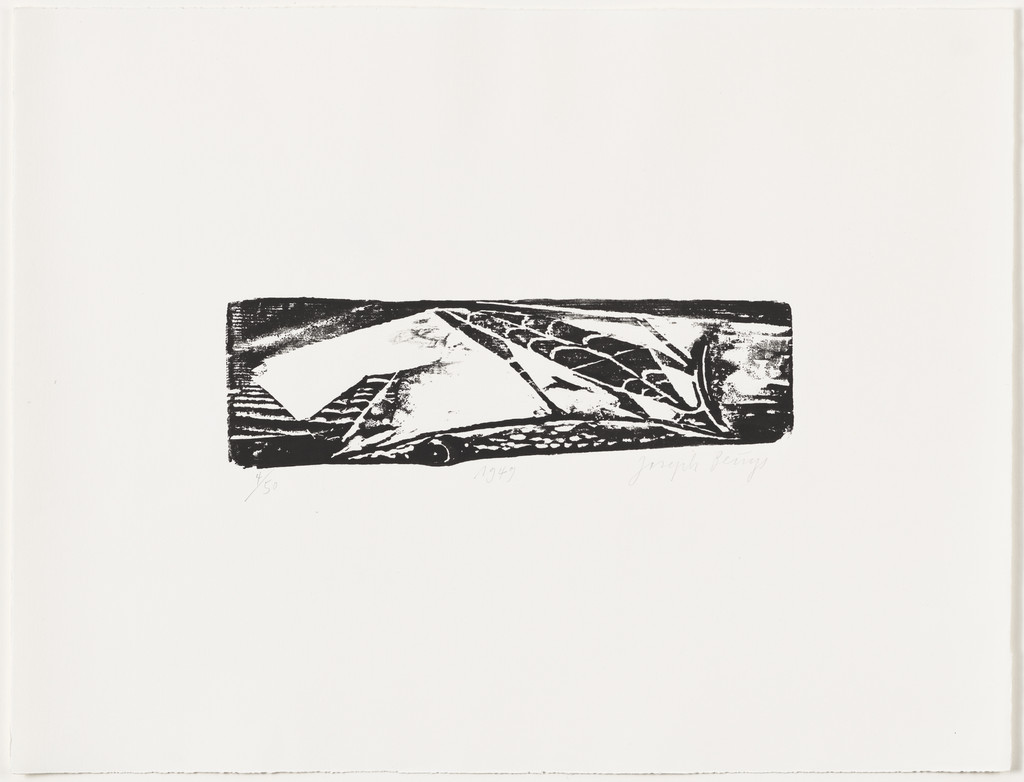
Shallows (Wattenmeer), Joseph Beuys, 1949,  printed 1973-74

Shallows (Wattenmeer)

1949, printed 1973-74 · Not on view · The Museum of Modern Art

Untitled V, Joseph Beuys, 1949-82

Untitled V

1949-82 · Not on view · The Museum of Modern Art

Neighbors at The Museum of Modern Art

Museum page
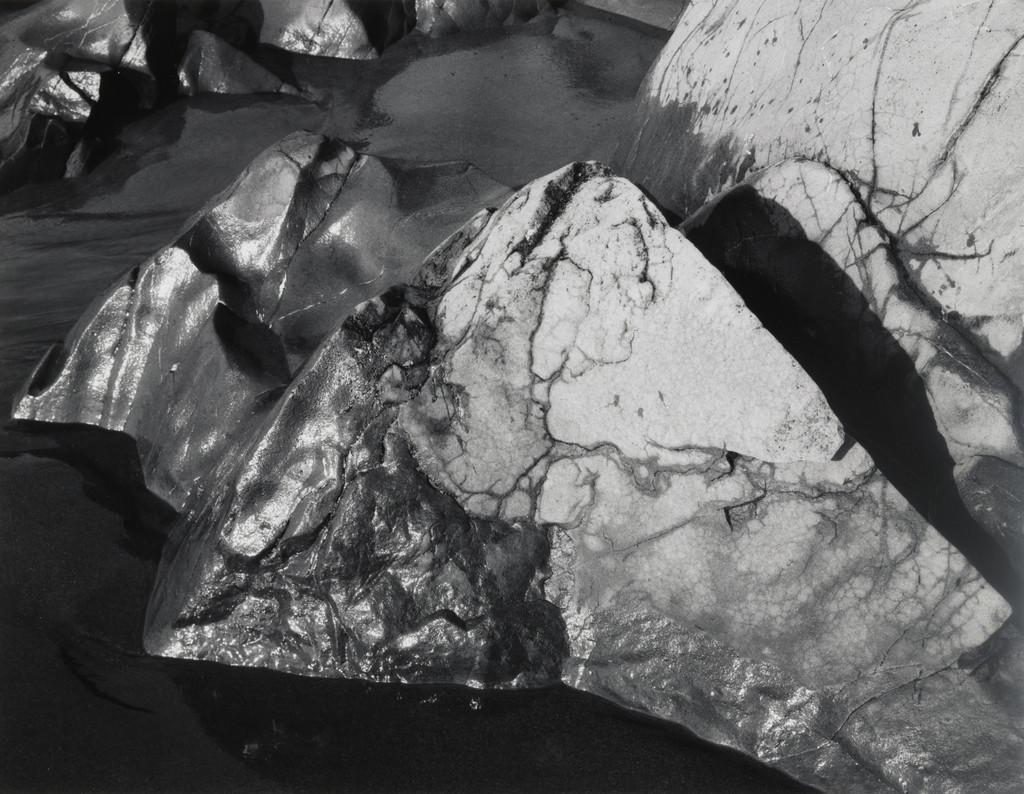
Rock, Bakers Beach, San Francisco, California, Ansel Adams, c. 1931

Ansel Adams

Rock, Bakers Beach, San Francisco, California, c. 1931

The Olive Trees, Vincent van Gogh, Saint Rémy, June-July 1889

Vincent van Gogh

The Olive Trees, Saint Rémy, June-July 1889

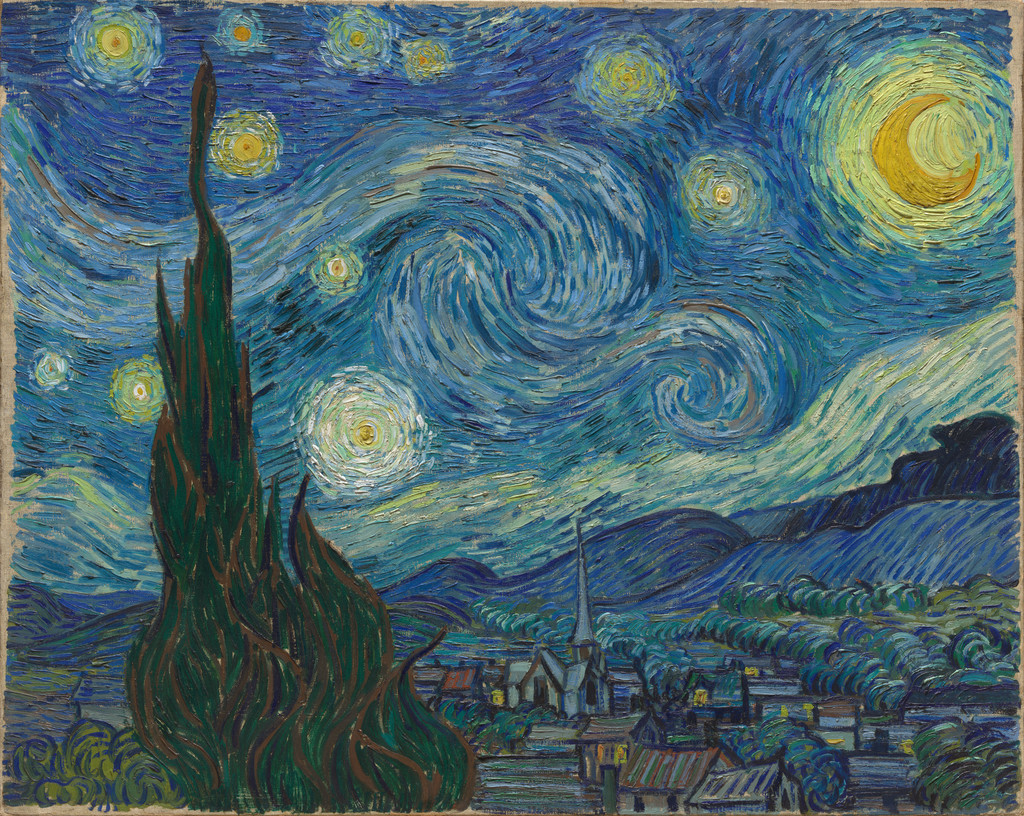
The Starry Night, Vincent van Gogh, Saint Rémy, June 1889

Vincent van Gogh

The Starry Night, Saint Rémy, June 1889

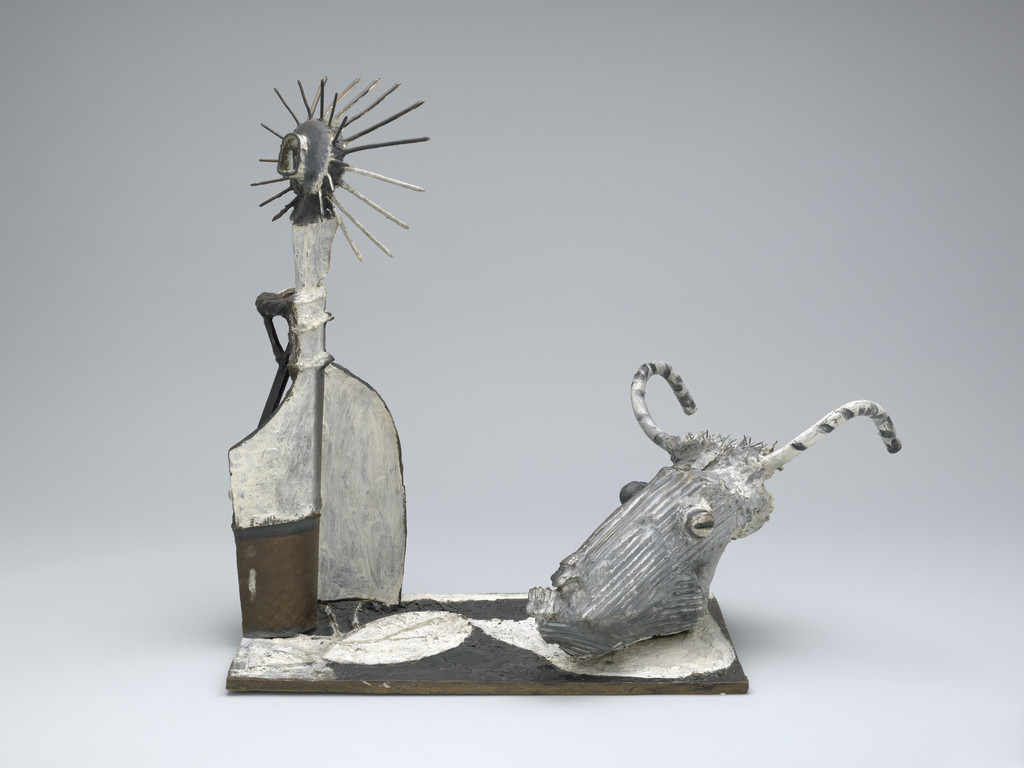
Goat Skull and Bottle, Pablo Picasso, Vallauris, 1951 (cast 1954)

Pablo Picasso

Goat Skull and Bottle, Vallauris, 1951 (cast 1954)

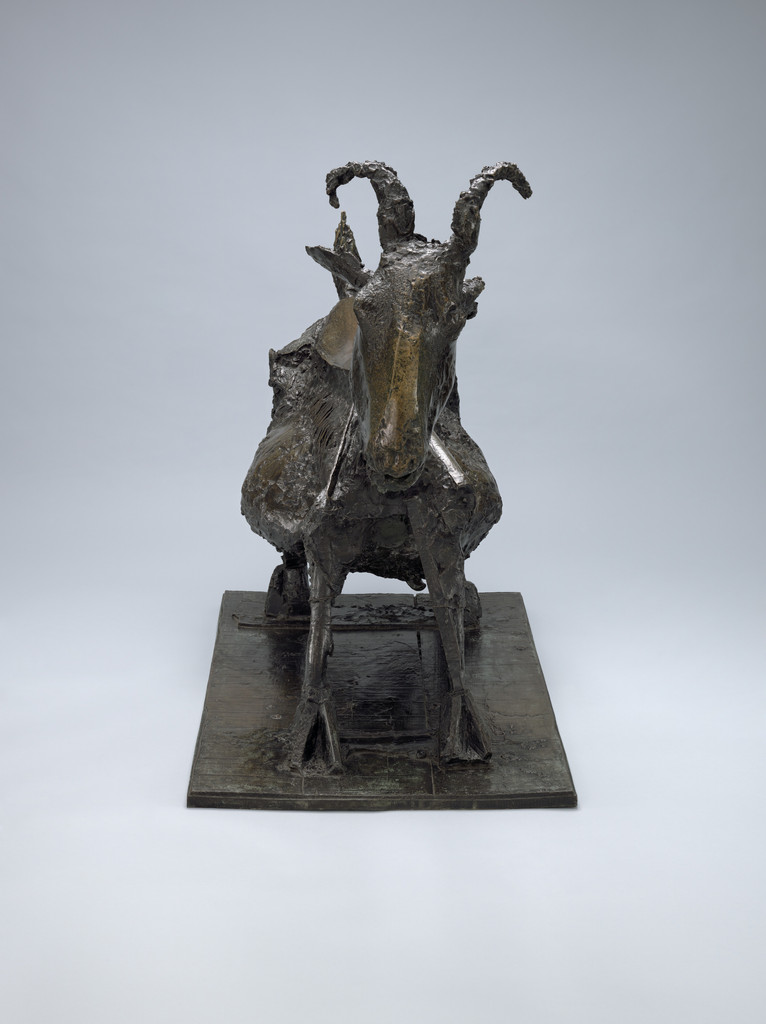
She-Goat, Pablo Picasso, Vallauris, 1950 (cast 1952)

Pablo Picasso

She-Goat, Vallauris, 1950 (cast 1952)

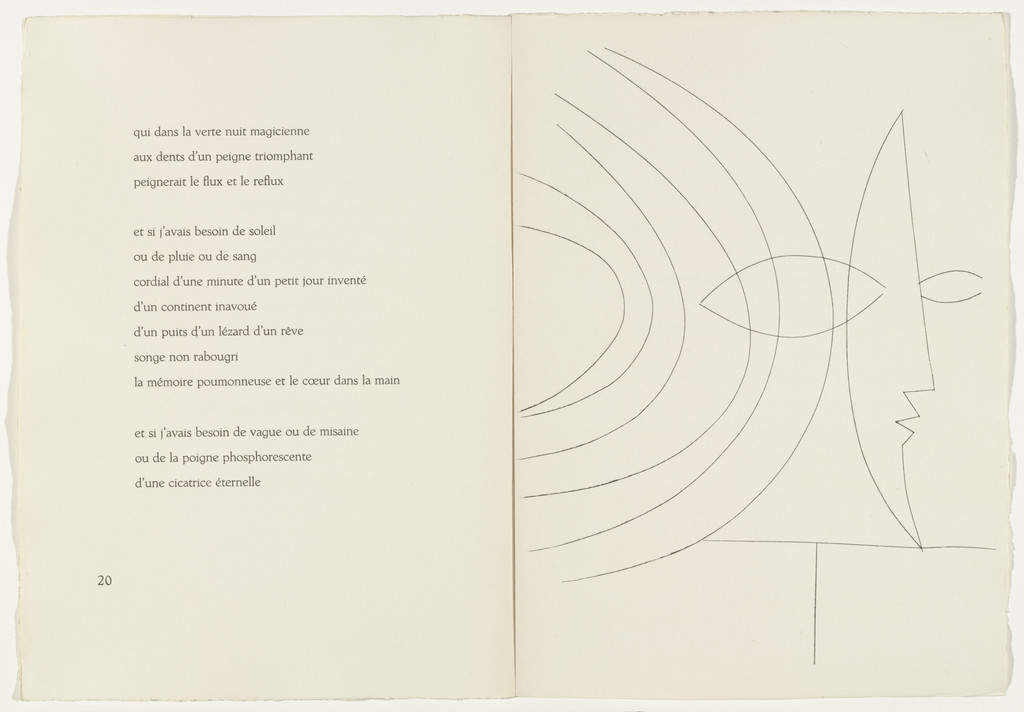
Face in Profile (plate, page 21) from Corps perdu, Pablo Picasso, 1949, published 1950

Pablo Picasso

Face in Profile (plate, page 21) from Corps perdu, 1949, published 1950

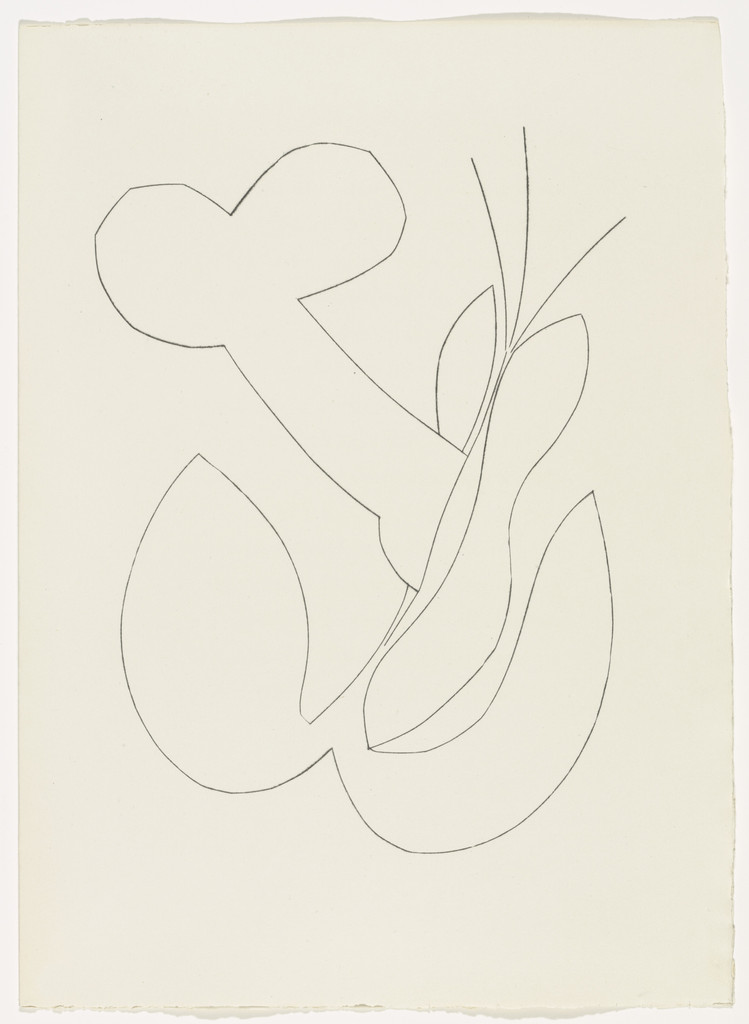
Coupling (plate, page 17) from Corps perdu, Pablo Picasso, 1949, published 1950

Pablo Picasso

Coupling (plate, page 17) from Corps perdu, 1949, published 1950

"Présence" (chapter title, page 13) from Corps perdu, Pablo Picasso, 1949, published 1950

Pablo Picasso

"Présence" (chapter title, page 13) from Corps perdu, 1949, published 1950