
 Thomas Hart BentonAmerican, 1889–1975
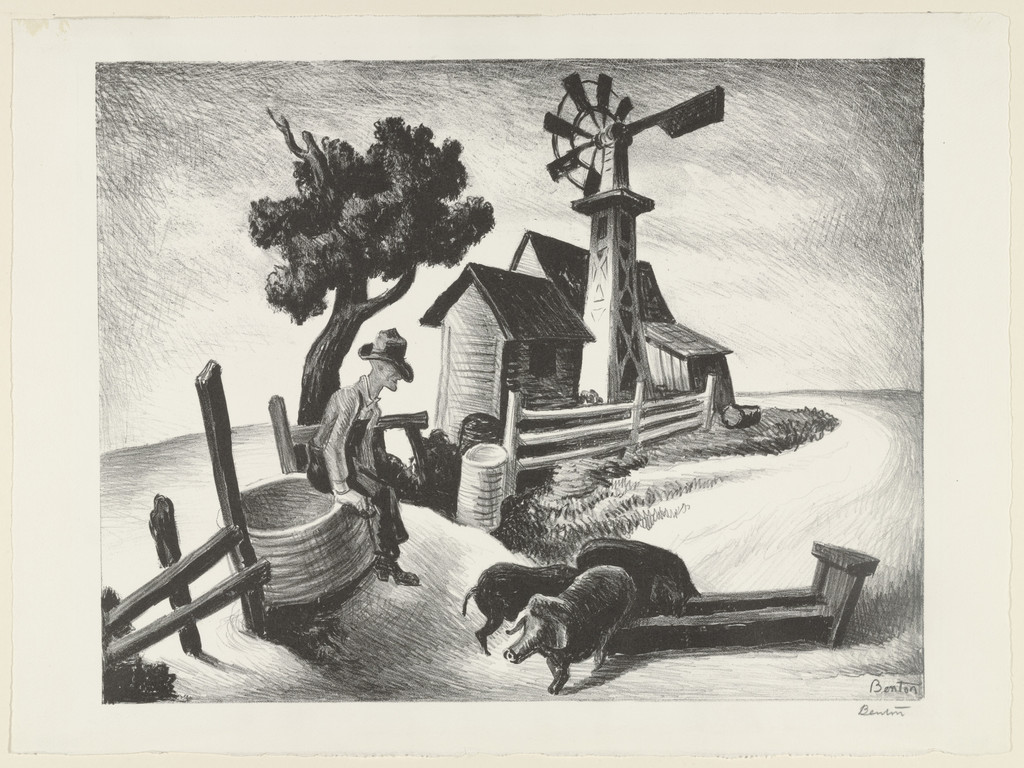
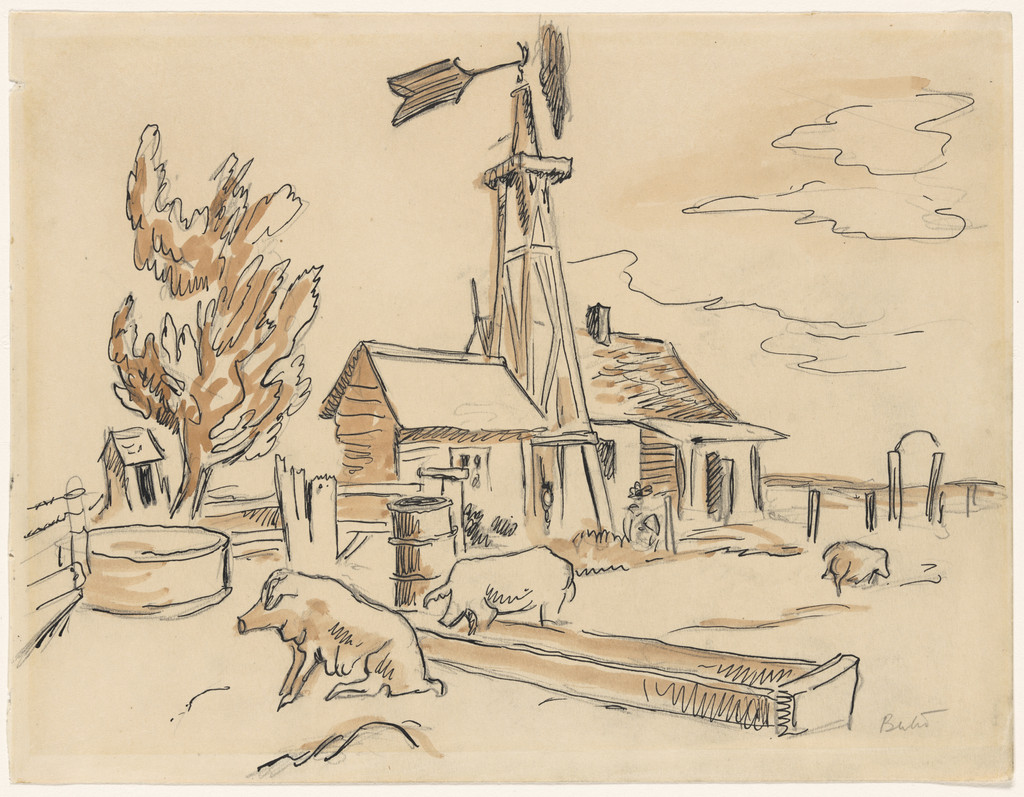
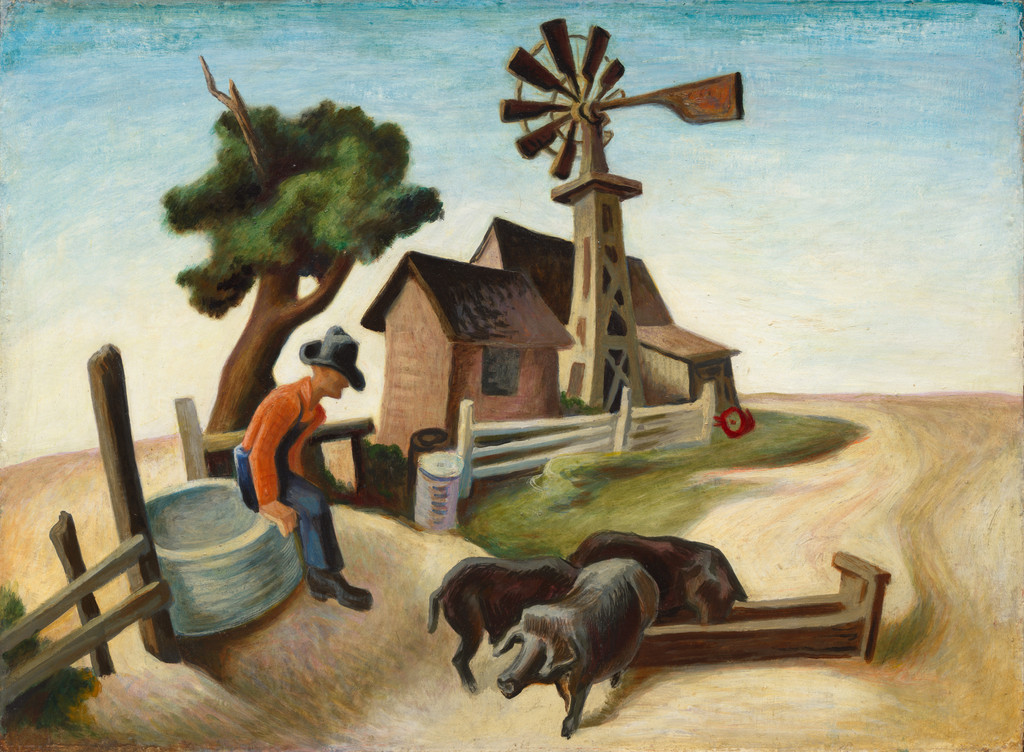
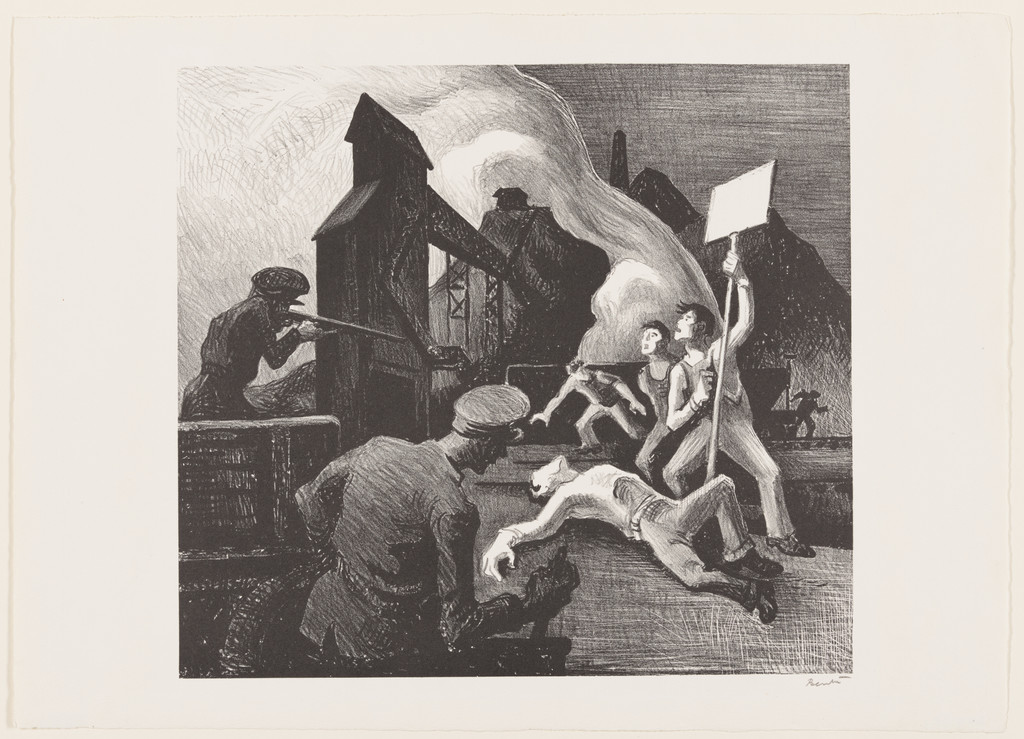
Going West
May one see it?
Not receiving at present

Washington, D.C., United States
It belongs to the collection, but is not on display at present.
- Checked
- In this state since
- Source
- The museum
Particulars
- Accession number
- 2000.98.1
What it shows
In the catalog
Sources
- National Gallery of Art
- Image: National Gallery of Art — © the artist or rights holder
Meanwhile, in the life of Thomas Hart Benton
The whole life1926–1935
Employed by: Art Students League of New York
late 1920s – early 1930s
Jackson Pollock among his students
Among Benton's students at the Art Students League of New York is Jackson Pollock, the future founder of Abstract Expressionism. Pollock often said that Benton's traditional teaching gave him something to rebel against.
1932
A breakthrough: the commission for the Indiana murals
He breaks through to the mainstream: a relative unknown, he wins the commission to paint murals of Indiana life that the state has planned for the 1933 Century of Progress Exhibition in Chicago. The success brings him fame in the following years.
1933
A scandal over the Indiana murals
The Indiana murals stir controversy: Benton painted everyday people and events from the state's history that some did not want publicized, and critics attack the work for showing members of the Indiana Ku Klux Klan in full regalia. At the Klan's height (membership peaked in 1925) an estimated 30% of adult men in Indiana belonged to it; the panels are now at Indiana University in Bloomington.
24 December 1934
On the cover of Time magazine
Appears on one of the earliest color covers of Time magazine: in the feature “The U.S. Scene” he, together with fellow Midwesterners Grant Wood and John Steuart Curry, is presented as a new hero of American art, and Regionalism is described as a significant art movement.
1935
Leaving New York for Missouri
Having alienated both the left-leaning community of artists with his disregard for politics and the larger New York–Paris art world with what was considered his folksy style, Benton leaves the artistic debates of New York for his native Missouri. Settling in Kansas City and taking a teaching job at the Kansas City Art Institute, he gains greater access to a rapidly changing rural America; a Populist by upbringing, he sympathizes with the working class and the small farmer.



![Ginevra de' Benci [obverse], Leonardo da Vinci, c. 1474/1478](https://api.nga.gov/iiif/8f29e3c9-a289-4d53-abf0-31a66e9e98fa/full/!2400,2400/0/default.jpg)
![Wreath of Laurel, Palm, and Juniper with a Scroll inscribed Virtutem Forma Decorat [reverse], Leonardo da Vinci, c. 1474/1478](https://api.nga.gov/iiif/ff62e8d0-45c4-498f-ad36-6358de827e04/full/!2400,2400/0/default.jpg)


!["Neige" (Snow); Itinerary [recto], Paul Gauguin, 1884-1888](https://api.nga.gov/iiif/f4cb6cd2-7c7c-4008-b682-70227cb16061/full/!2400,2400/0/default.jpg)


