Thomas Hart BentonAmerican, 1889–1975
Cotton Pickers
May one see it?
Yes, receiving visitors

Chicago, United States
On public display.
- Checked
- In this state since
- Source
- The museum
About the painting
Thomas Hart Benton first saw laborers cultivating cotton on a trip to Georgia in the late 1920s, and he returned to the subject in this painting in 1945. In Cotton Pickers, the artist rendered the figures with a sinuous, curvilinear style to articulate the exertion of their movement along the landscape. Cotton sharecropping, a system of tenant farming that developed after the Civil War, allowed landowners to rent land to poor farmers in return for a portion of the crops. Because the practice kept agricultural workers impoverished, it became a symbol of a racially and economically unjust system. Benton’s vision of modernism was firmly rooted in figuration. He often explored themes of US history, centering African Americans in those shared narratives.
Art Institute of ChicagoCC BY 4.0
Particulars
- Accession number
- 2013.4
What it shows
In the catalog
Sources
- Art Institute of Chicago
- Image: Art Institute of Chicago — © the artist or rights holder
Meanwhile, in the life of Thomas Hart Benton
The whole life1929–1974
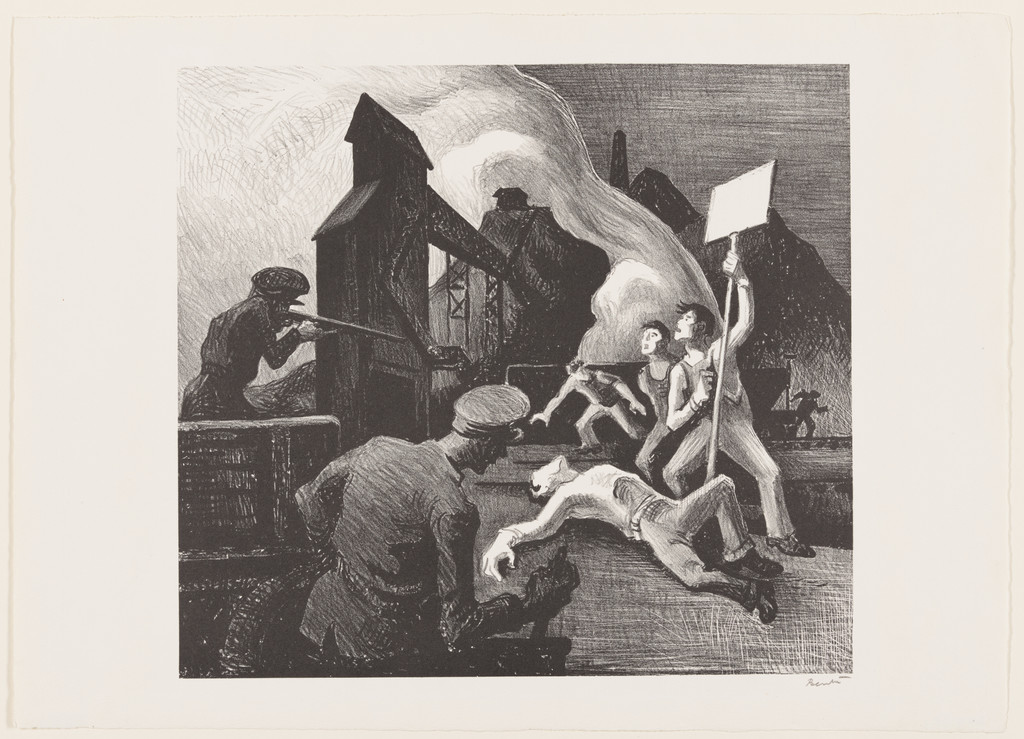
92 lithographs, 1929–1974
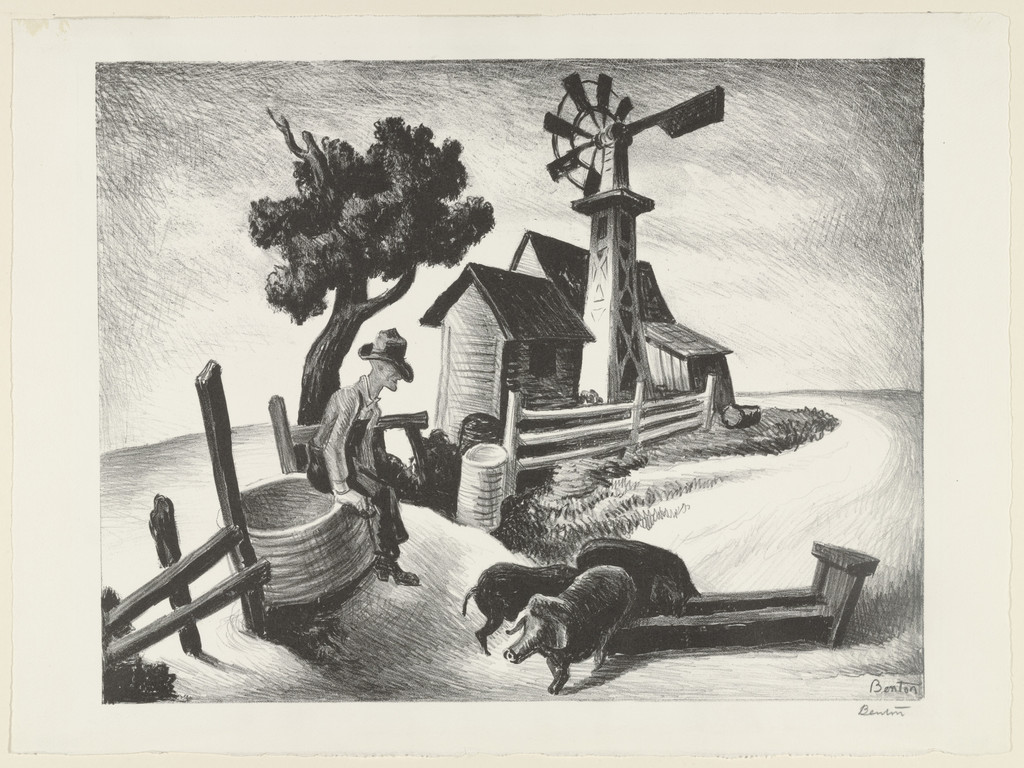
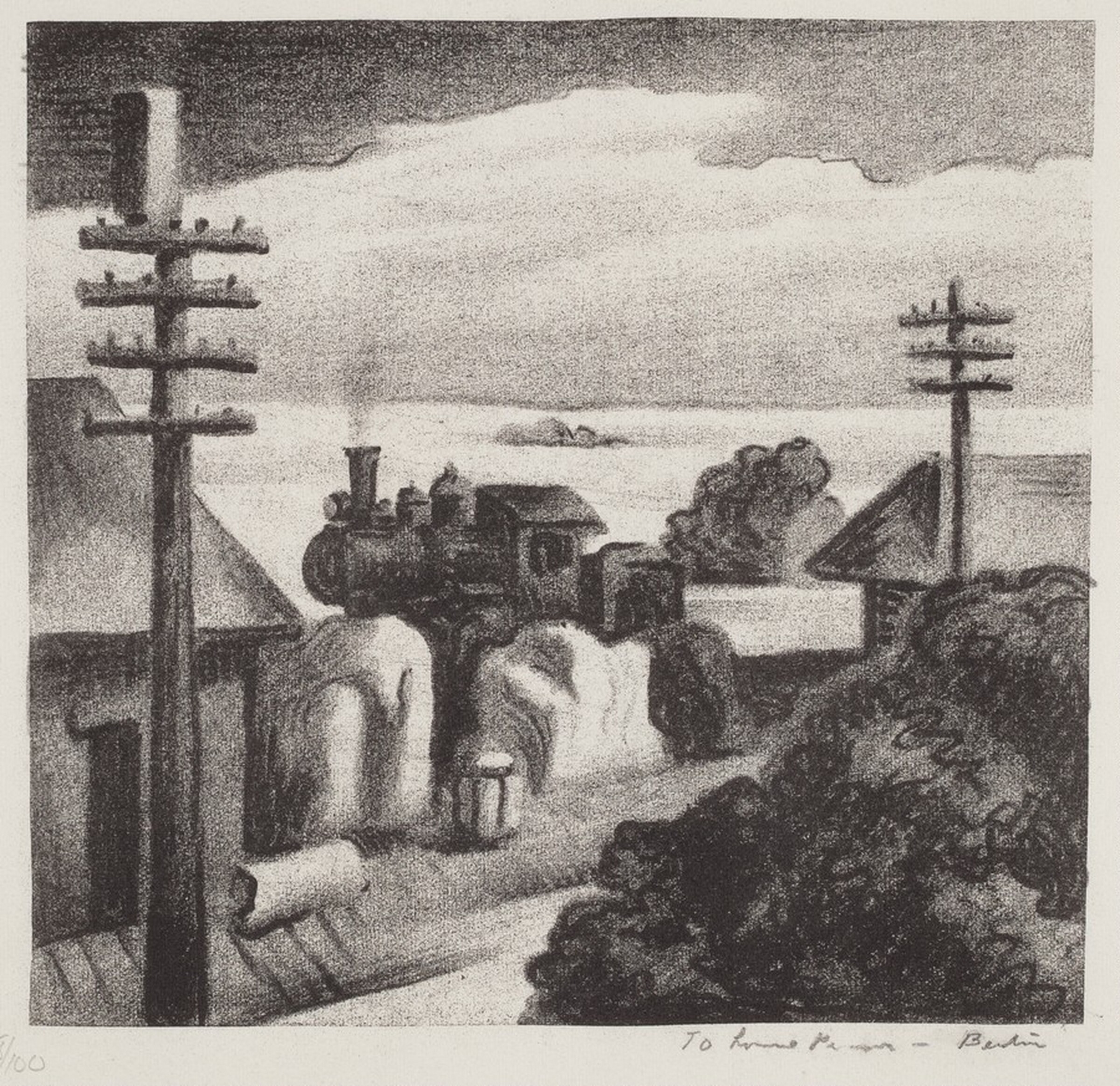
From 1929 to 1974 Benton produces 92 lithographs in editions ranging from 2 to 500; the signed, limited-edition lithographs are sold at five dollars each through the Associated American Artists Galleries in New York.
1939–1944
Illustrates Twain and Steinbeck
Creates illustrations for Mark Twain's “Tom Sawyer” (1939), John Steinbeck's “The Grapes of Wrath” (1940), Twain's “Huckleberry Finn” (1941) and “Life on the Mississippi” (1944).
1944
In the film series “Passing Parade”
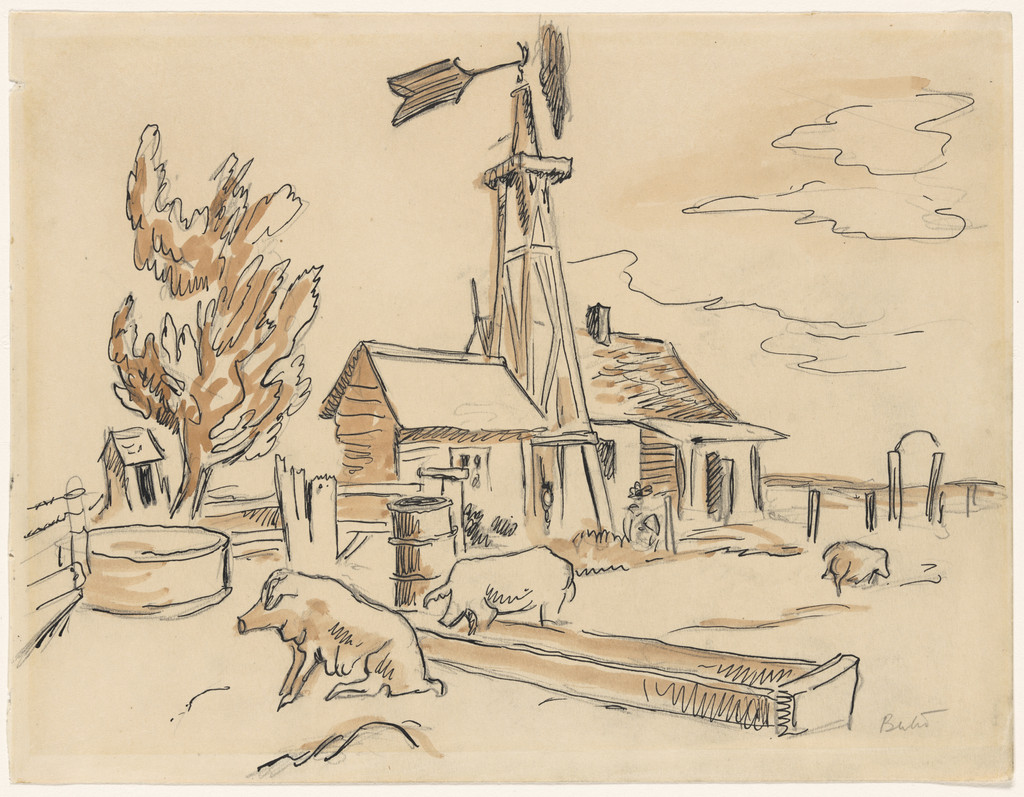
Appears in an episode of John Nesbit's Passing Parade titled “Grandpa Called It Art”, which shows several contemporary artists at work; Benton demonstrates his process for the camera, from obtaining a farmer's permission to sketch his farm through making a three-dimensional model of the scene to the final painting.
after 1945
Regionalism falls from favor
After the war Regionalism falls from favor, eclipsed by the rise of Abstract Expressionism; Benton remains active for another 30 years, but his work contains less contemporary social commentary and portrays pre-industrial farmlands.