 Andy WarholAmerican, 1928–1987
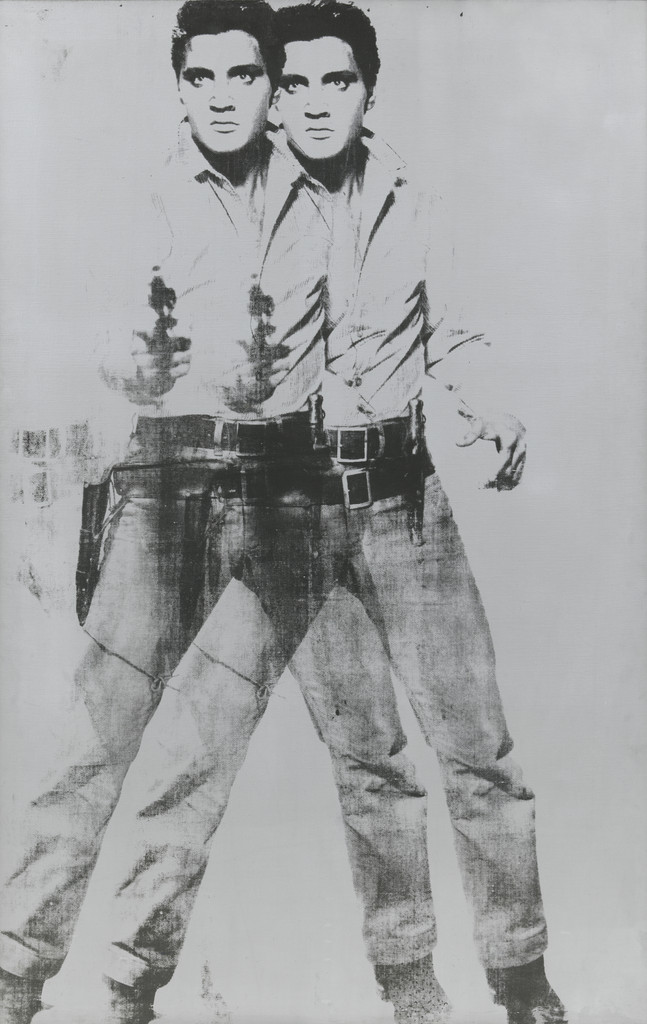
Double Elvis
Can I see it?
Not on view at present
Where is “Double Elvis” now? Collection: The Museum of Modern Art, New York. Not on view at present. Checked November 17, 2026.

New York, United States
It belongs to the collection, but is not on display at present.
- Checked
- Source
- The museum
About the painting
Double Elvis is a 1963 painting by Andy Warhol in New York's Museum of Modern Art, probably based on a still from Flaming Star (1960). It was among twenty-three Elvis canvases shown in 1963 by the Ferus Gallery, Los Angeles. Warhol sent the gallery a roll bearing repeated images, leaving the staff to cut the canvas into sections. The work uses silkscreen ink over acrylic and is currently off display.
Double Elvis is a 1963 silkscreen painting by American artist Andy Warhol. The painting depicts two overlapping images of singer and actor Elvis Presley in a gunslinger pose, derived from a publicity still for the 1960 film Flaming Star.
Details
- Accession number
- 2480.2001
In the catalog
Sources
- The Museum of Modern Art
- Image: The Museum of Modern Art — © the artist or rights holder
In the life of Andy Warhol
The whole lifeDecember 1961
The decision to paint money
After seeing Claes Oldenburg's installation The Store in December 1961, Warhol went home frustrated, feeling his comic-strip paintings were no longer original enough. He accepted Muriel Flatow's tongue-in-cheek advice, given for $50, to paint what he liked most — money — and began painting dollar bills.
1961–1962
Mastering silkscreen
Seeking technical advice, Warhol turned to Floriano Vecchi of Tiber Press, who showed him the basics of silkscreen printing: transferring designs to acetate, preparing screens and pulling ink with a squeegee. The experiments became a turning point and soon led to some of his earliest silkscreen works.
9 July 1962
Soup cans at the Ferus Gallery
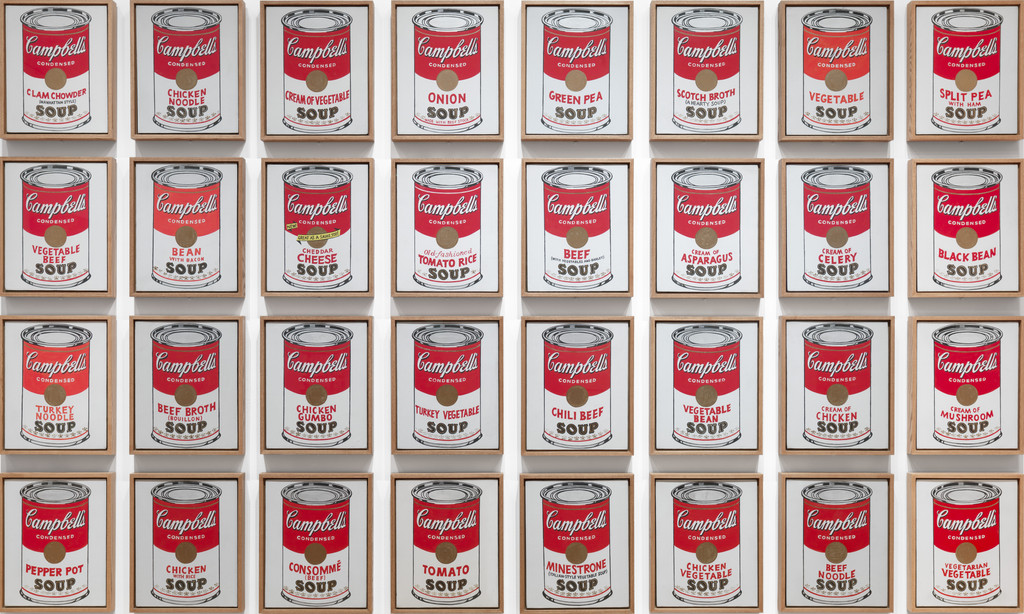
The Los Angeles dealer Irving Blum, surprised that Warhol had no gallery, offered him a solo show at the Ferus Gallery. Warhol sent 32 canvases, one for each variety of Campbell's soup; the exhibition opened on 9 July 1962 and marked his West Coast debut.
October 1962
“The New Realists” at the Sidney Janis Gallery
Invited by the dealer Sidney Janis, Warhol took part in the exhibition The New Realists, showing 200 Soup Cans, Big Campbell's Soup Can 19c (Beef Noodle) and Do It Yourself (Flowers). The show was widely seen as a turning point for the acceptance of Pop art: The New Yorker likened its effect on the New York art world to an “earthquake”.
1964
The Factory on 47th Street
By 1964 Warhol had moved his studio to 231 East 47th Street, which became known as the Factory; Billy Name covered it in aluminium foil and silver paint. The poet Gerard Malanga helped him with silkscreens and films, and working with assistants became a lasting feature of his method.
May 1965
Paris: announcing his retirement from painting
The second Flowers series was shown at Galerie Ileana Sonnabend in Paris; during the trip Warhol announced that he was retiring from painting to focus on film, saying he no longer believed in painting.