José Clemente OrozcoMexican, 1883–1949
Zapata
May one see it?
Yes, receiving visitors

Chicago, United States
On public display.
- Checked
- In this state since
- Source
- The museum
About the painting
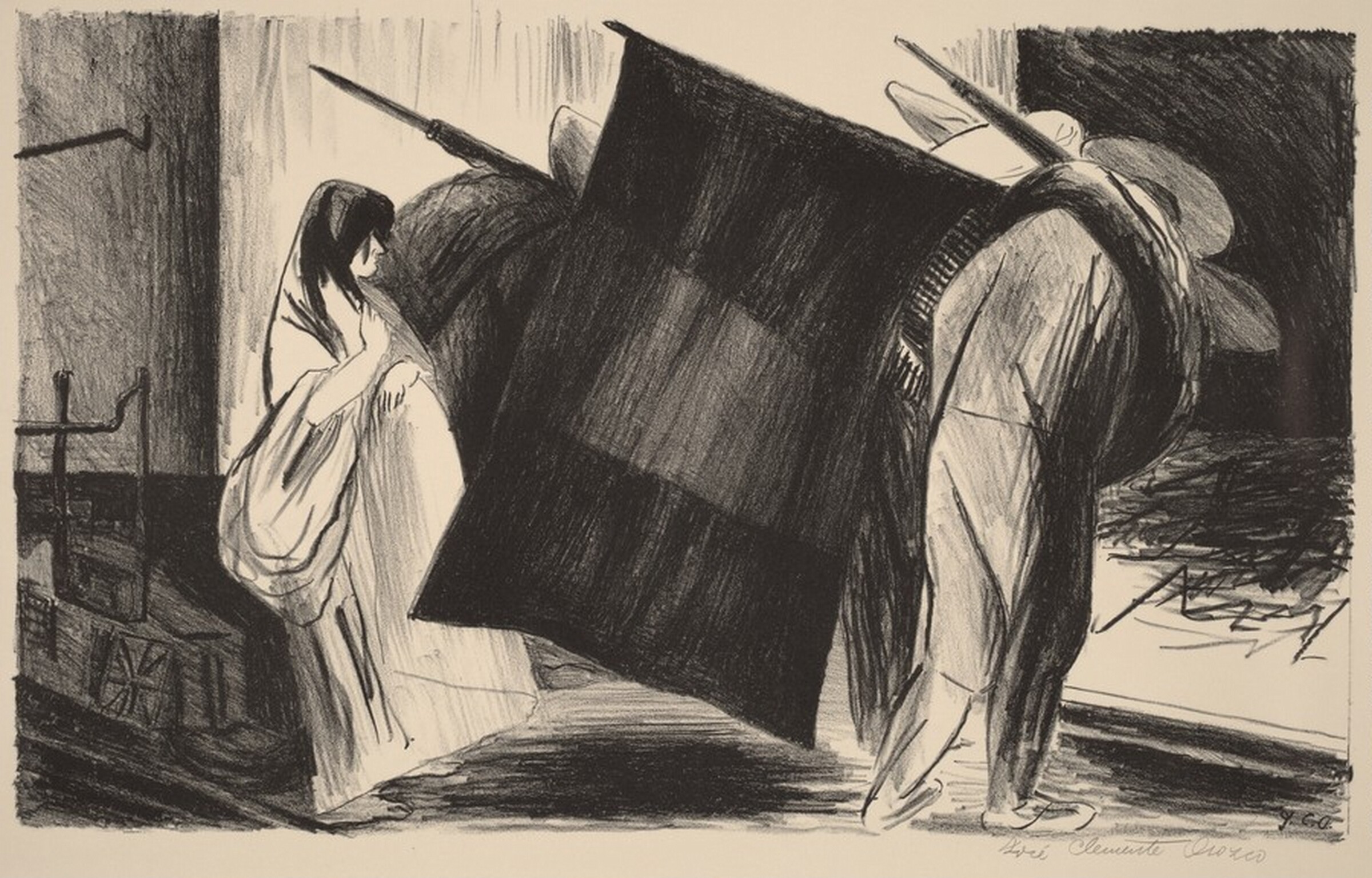
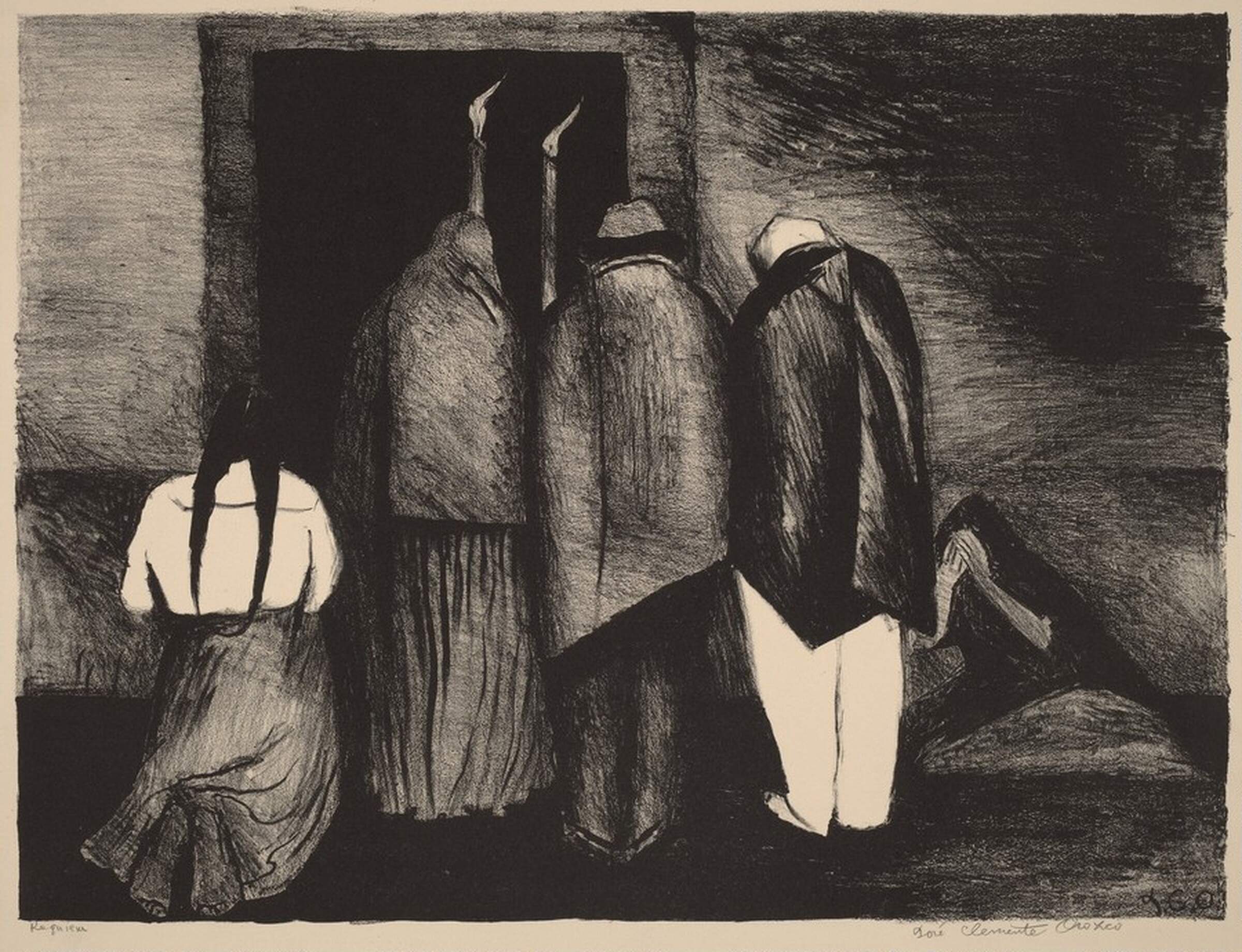
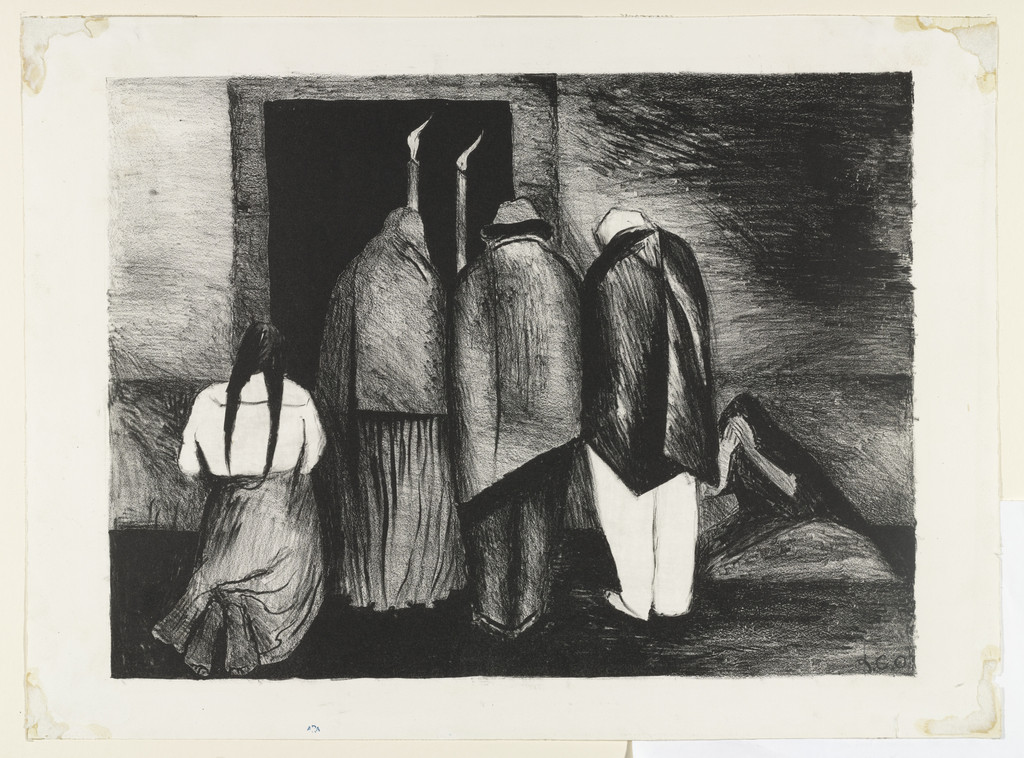
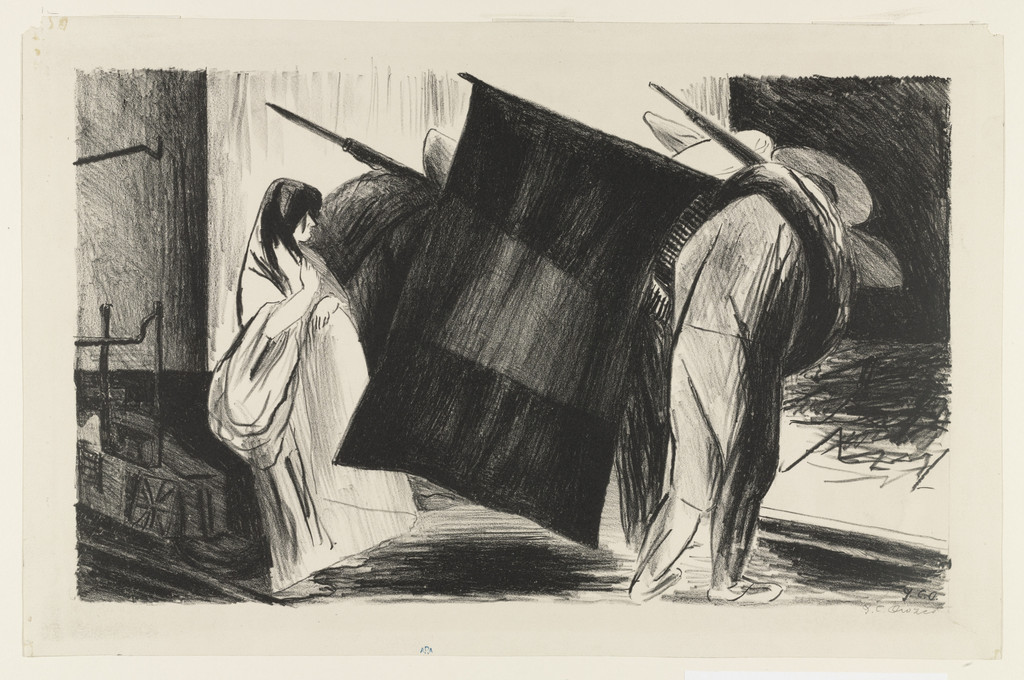
A sense of danger pervades this painting of Emiliano Zapata, the leader of an army of Mexican laborers that fought for liberty and land redistribution for the poor during the early 20th century: bullets are strung across a man’s shoulder, a sword is pointed at another’s eye, and figures kneel in enervated poses. José Clemente Orozco portrayed Zapata silhouetted against a doorway, standing before two other revolutionaries and two grieving figures. For Orozco and other leftist Mexicans, Zapata—assassinated in 1919—became a symbol of the revolution that took place from 1910 to 1920. With its emphasis on violence and suffering, this depiction is ambiguous rather than laudatory. A leader of the Mexican mural movement, Orozco worked in his home country as well as in the United States, painting Zapata in California.
Art Institute of ChicagoCC BY 4.0
Particulars
- Accession number
- 1941.35
What it shows
In the catalog
Sources
- Art Institute of Chicago
- Image: Art Institute of Chicago — © the artist or rights holder
Meanwhile, in the life of José Clemente Orozco
The whole life1927–1934
The United States: “artist in residence” at colleges
In 1927–1934 Orozco again lives in the United States, working at colleges as an “artist in residence”: the master lives on the school’s campus while painting a mural and involves students in his work.
1930
Edward Weston photographs Orozco
In 1930 Edward Weston makes a portrait of Orozco, which was the artist’s own favourite; Weston considered it one of his finest portraits.
30 July 1932 – 14 August 1932
Took part in: 1932 Summer Olympics