
ART WIKI32,963 on view
MapCollectionArtistsMuseumsExhibitionsJournal
Sign in

ART WIKI

Where the masterpiece hangs, and when they let you in.

Collections: Art Institute of Chicago, Getty Villa, Harvard Art Museums, Hirshhorn Museum and Sculpture Garden, J. Paul Getty Museum, Minneapolis Institute of Art, Musée du Louvre, National Gallery of Art, National Museum of Asian Art, National Portrait Gallery (Smithsonian), Pushkin State Museum of Fine Arts, Rijksmuseum, Smithsonian American Art Museum, SMK — National Gallery of Denmark, State Hermitage Museum, State Russian Museum, The Cleveland Museum of Art, The Metropolitan Museum of Art, The Museum of Modern Art, Tretyakov Gallery, Victoria and Albert Museum, Whitney Museum of American Art, State Catalogue of the Museum Fund of Russia (274 museums), Europeana (19 museums), Wikidata (6 museums), Paris Musées (12 museums), and Joconde, the French Ministry of Culture's museum database (495 museums). Images belong to their rights holders.

Sections

  • Map
  • Search
  • Collection
  • Masterpieces
  • On view now
  • Artists

More

  • Museums & galleries
  • Exhibitions
  • Journal
  • Where the data comes from
  • Privacy & cookies
HomeMapBrowse
  1. Collection/
  2. The Cleveland Museum of Art/
  3. Chrysanthemums and Cabbage
Chrysanthemums and Cabbage, Tao Cheng, c. 1486 or before
TTao ChengChinese, 1471

Chrysanthemums and Cabbage

c. 1486 or before · Painting

May one see it?

Not receiving at present

The Cleveland Museum of Art

Cleveland, United States

It belongs to the collection, but is not on display at present.

Checked
3 days ago
In this state since
Aug 19, 2026
Source
The museum
On the mapMuseum page

About the painting

On an autumn day in Beijing, Tao Cheng had a gathering with a group of scholar-officials and created two paintings in a spontaneous, casual style. The first depicts chrysanthemums, slender bamboo stalks, and a rock in monochrome ink. Tao applied light colors for the second painting that depicts cabbage. Tao deliberately placed the images on the first sections of the paper so that his honorable guests could add their poetic inscriptions inspired by his imagery.

Read on

In the first section to the right, all seven poetic inscriptions refer to the beloved poet and recluse Tao Qian (also called Tao Yuanming, AD 365–427) who was particularly known for his profound love for chrysanthemum flowers. Most of the inscriptions in the second section express sympathy for the poor, since cabbage is the main ingredient in their humble food. Taken together, the poems and paintings allude to the life and responsibilities of the scholar-official: the importance of both an upright character and a concern for the poor citizens in order to achieve good government.

The Cleveland Museum of Art

Particulars

Accession number
1960.40

In the catalog

PaintingsInkChinese paintingRenaissance15th centuryChina, Ming dynasty (1368–1644)

Sources

  • The Cleveland Museum of Art
  • Image: The Cleveland Museum of Art — Museum open access
Neighbors at The Cleveland Museum of Art

Museum page
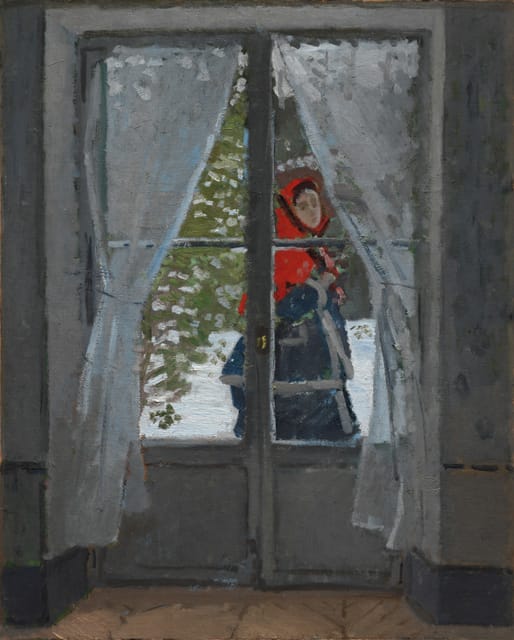
The Red Kerchief, Claude Monet, c. 1868–73

Claude Monet

The Red Kerchief, c. 1868–73

Melencolia I, Albrecht Dürer, 1514

Albrecht Dürer

Melencolia I, 1514

The Virgin and Child with the Pear, Albrecht Dürer, 1511

Albrecht Dürer

The Virgin and Child with the Pear, 1511

The Nativity, Albrecht Dürer, probably c. 1509/1510

Albrecht Dürer

The Nativity, probably c. 1509/1510

The Virgin and Child on a Crescent with a Starry Crown, Albrecht Dürer, 1508

Albrecht Dürer

The Virgin and Child on a Crescent with a Starry Crown, 1508

The Lamentation, Albrecht Dürer, 1507

Albrecht Dürer

The Lamentation, 1507

Large Horse, Albrecht Dürer, 1505

Albrecht Dürer

Large Horse, 1505

Nemesis (The Great Fortune), Albrecht Dürer, c. 1501/1502

Albrecht Dürer

Nemesis (The Great Fortune), c. 1501/1502