ART WIKI32.963 ausgestellt
KarteSammlungKünstlerMuseenAusstellungenJournal
Anmelden

ART WIKI

Wo das Meisterwerk hängt und wann man vorgelassen wird.

Sammlungen: Art Institute of Chicago, Cleveland Museum of Art, Eremitage, Getty Villa, Harvard Art Museums, Hirshhorn Museum and Sculpture Garden, J. Paul Getty Museum, Louvre, Metropolitan Museum of Art, Minneapolis Institute of Art, Museum of Modern Art, National Gallery of Art, National Museum of Asian Art, National Portrait Gallery, Puschkin-Museum, Rijksmuseum Amsterdam, Russisches Museum, Smithsonian American Art Museum, Statens Museum for Kunst, Tretjakow-Galerie, Victoria and Albert Museum, Whitney Museum of American Art, Staatskatalog des Museumsfonds Russlands (274 Museen), Europeana (19 Museen), Wikidata (6 Museen), Paris Musées (12 Museen) und Joconde, die Museumsdatenbank des französischen Kulturministeriums (495 Museen). Die Bilder gehören ihren Rechteinhabern.

Rubriken

  • Karte
  • Suche
  • Sammlung
  • Meisterwerke
  • Jetzt ausgestellt
  • Künstler

Mehr

  • Museen & Galerien
  • Ausstellungen
  • Journal
  • Woher die Daten stammen
  • Datenschutz & Cookies
StartseiteKarteKatalog
  1. Sammlung/
  2. Cleveland Museum of Art/
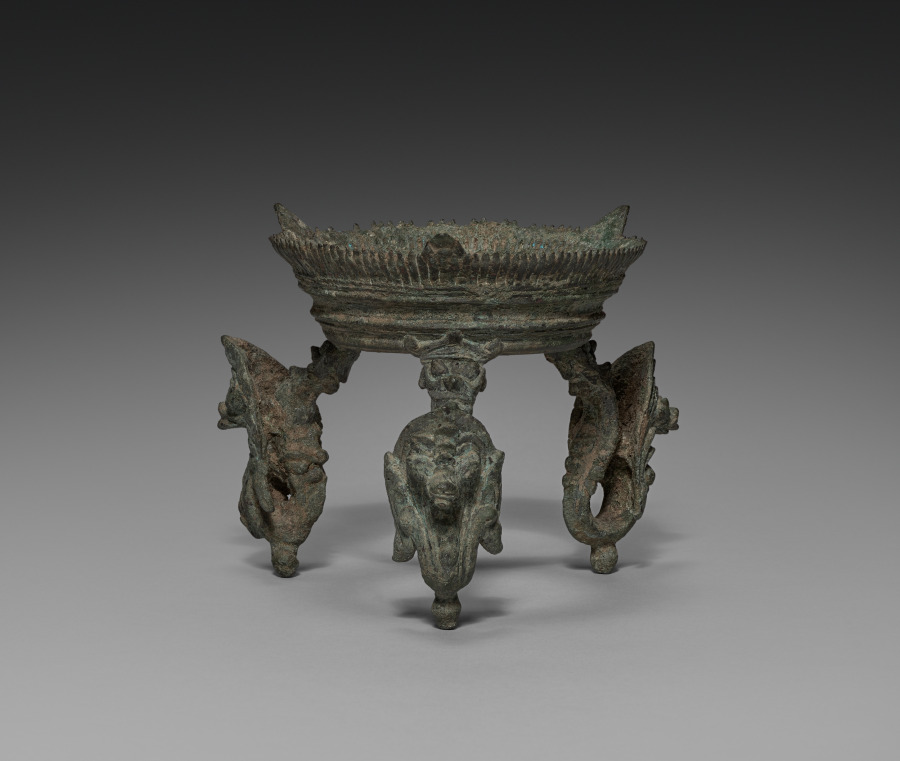
  3. Tripod stand with nagas for a ritual conch shell
Tripod stand with nagas for a ritual conch shell, 1100s

Tripod stand with nagas for a ritual conch shell

1100s · Sculpture

Darf man es sehen?

Empfängt derzeit nicht

Cleveland Museum of Art

Cleveland, Vereinigte Staaten

Es gehört zur Sammlung, ist derzeit aber nicht ausgestellt.

Geprüft
vor 3 Tagen
Unverändert seit
19. Aug. 2026
Quelle
Das Museum
Auf der KarteMuseumsseite

Über die Skulptur

A royal temple like Banteay Chhmar was built for performing rituals and to honor images of gods, Buddhas, and other sacred or enlightened beings for the sake of the kingdom’s protection and ongoing prosperity. Conch shells were blown at the start of rituals to make the sound corresponding to the syllable om.

The dancing figure of Hevajra, a Buddhist being of enlightenment with eight heads, sixteen arms, and four legs, has been worked into the bronze embellishment of the shell. Hevajra was elevated to a prominent position in Khmer Buddhism of the Angkorian period as the standard figure denoting the practice of rituals prescribed in a text called the Hevajra-tantra. The tripod stand with three serpents is probably not original to the shell.

Cleveland Museum of Art

Angaben

Inventarnummer
1977.176.a

Im Katalog

SkulpturBronzeCambodia, Khmer, Angkor Period, 12th-13th Century

Quellen

  • Cleveland Museum of Art
  • Bild: Cleveland Museum of Art — Museum open access
Nachbarn im Haus: Cleveland Museum of Art

Museumsseite
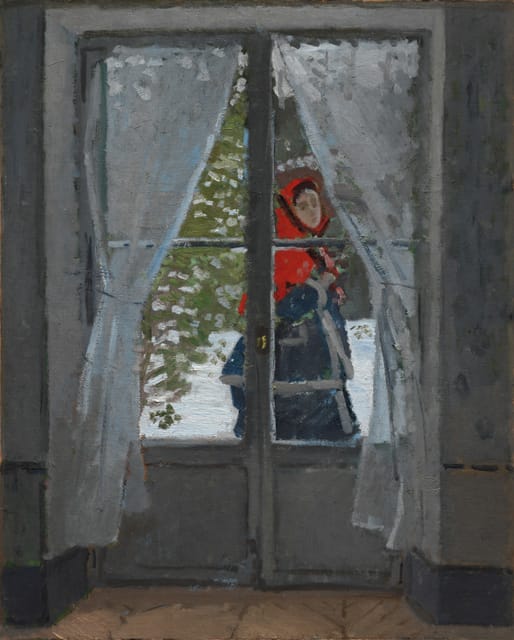
The Red Kerchief, Claude Monet, c. 1868–73

Claude Monet

The Red Kerchief, c. 1868–73

Melencolia I, Albrecht Dürer, 1514

Albrecht Dürer

Melencolia I, 1514

The Virgin and Child with the Pear, Albrecht Dürer, 1511

Albrecht Dürer

The Virgin and Child with the Pear, 1511

The Nativity, Albrecht Dürer, probably c. 1509/1510

Albrecht Dürer

The Nativity, probably c. 1509/1510

The Virgin and Child on a Crescent with a Starry Crown, Albrecht Dürer, 1508

Albrecht Dürer

The Virgin and Child on a Crescent with a Starry Crown, 1508

The Lamentation, Albrecht Dürer, 1507

Albrecht Dürer

The Lamentation, 1507

Large Horse, Albrecht Dürer, 1505

Albrecht Dürer

Large Horse, 1505

Nemesis (The Great Fortune), Albrecht Dürer, c. 1501/1502

Albrecht Dürer

Nemesis (The Great Fortune), c. 1501/1502