Albrecht DürerDeutschland, 1471–1528
The Last Supper
Darf man es sehen?
Empfängt derzeit nicht

Cleveland Museum of Art
Cleveland, Vereinigte Staaten
Es gehört zur Sammlung, ist derzeit aber nicht ausgestellt.

Sammlung: National Gallery of Art, Washington, D.C.
- Geprüft
- Unverändert seit
- Quelle
- Das Museum
Über das Werk
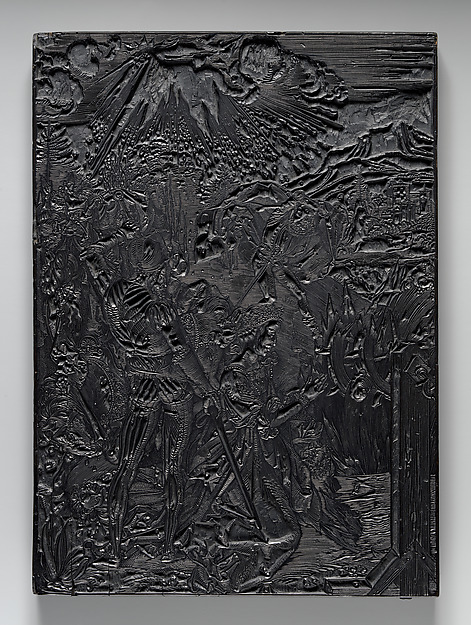
The Christian sacrament of the Eucharist is traced to the Last Supper, when Christ said of the wine, “This is my blood.” For artists, the scene was full of both symbolic and narrative potential. Albrecht Dürer created a compact, vertical composition that focuses on the closeness of the disciples and the moment, wine flowing, when Christ reveals his fate. Dürer’s ingenious woodcut technique includes the creation of a halo made from parallel lines around Christ’s head that continue outward to define the shadow of the vaulted room.
National Gallery of Art
Angaben
- Inventarnummer
- 1980.45.456.v
Was es zeigt
Im Katalog
Kommen und Gehen
Derzeit nicht ausgestellt
Cleveland Museum of Art · 2. Okt. 2026 — jetzt · Geprüft
Derzeit nicht ausgestellt
National Gallery of Art · 29. Sept. 2026 — 2. Okt. 2026 · Geprüft
Derzeit nicht ausgestellt
Cleveland Museum of Art · 29. Sept. 2026 — 29. Sept. 2026 · Geprüft
Derzeit nicht ausgestellt
National Gallery of Art · 29. Sept. 2026 — 29. Sept. 2026 · Geprüft
Derzeit nicht ausgestellt
Cleveland Museum of Art · 28. Sept. 2026 — 29. Sept. 2026 · Geprüft
Derzeit nicht ausgestellt
National Gallery of Art · 28. Sept. 2026 — 28. Sept. 2026 · Geprüft
Derzeit nicht ausgestellt
Cleveland Museum of Art · 27. Sept. 2026 — 28. Sept. 2026 · Geprüft
Derzeit nicht ausgestellt
National Gallery of Art · 26. Sept. 2026 — 27. Sept. 2026 · Geprüft
Derzeit nicht ausgestellt
Cleveland Museum of Art · 19. Aug. 2026 — 26. Sept. 2026 · Geprüft
Quellen
- Cleveland Museum of Art
- Bild: National Gallery of Art — Museum open access
Derweil im Leben von Albrecht Dürer
Das ganze Leben1507–1528 · Wirkungsort
Nuremberg
1509
Elected to Nuremberg's Greater Council
Dürer was elected a nominated member of Nuremberg's Greater Council; in that role he may have taken part in the city's artistic projects.
1509
Buys a large house in Nuremberg
Dürer bought a large house from the heirs of the astronomer Bernhard Walther; it housed his workshop, and his widow lived there after his death until 1539.
1511
Publishes the Great Passion and the Life of the Virgin
Dürer published two woodcut series as books, the Great Passion and the Life of the Virgin, with a second edition of the Apocalypse and the 37 woodcuts of the Little Passion. His post-Venetian woodcuts developed chiaroscuro modelling.
1512
Emperor Maximilian I becomes his chief patron
From 1512 Emperor Maximilian I was Dürer's chief patron. For him Dürer and his workshop produced the Triumphal Arch, a giant woodcut 295 × 357 cm printed from 192 blocks and modelled on the triumphal arches of ancient Rome.
3 January 1512
Nuremberg's privilege against forgeries
Nuremberg's city council granted Dürer a privilege for the sale of his prints, with penalties for anyone who forged them.
![Madonna and Child [obverse], Albrecht Dürer, c. 1496/1499](https://api.nga.gov/iiif/878db7e6-10ae-4cae-ba5d-6d6f5c413ae8/full/!2400,2400/0/default.jpg)
![Lot and His Daughters [reverse], Albrecht Dürer, c. 1496/1499](https://api.nga.gov/iiif/7565a449-f82a-414b-9bda-c93f55a51b4d/full/!2400,2400/0/default.jpg)