 Paul CézanneFrankreich, 1839–1906
Mount Sainte-Victoire
Darf man es sehen?
Ja, es empfängt Besucher

Öffentlich ausgestellt. Wer dafür bürgt, steht unten.
- Geprüft
- Unverändert seit
- Quelle
- Sammlungsdaten des Museums selbst
About the painting
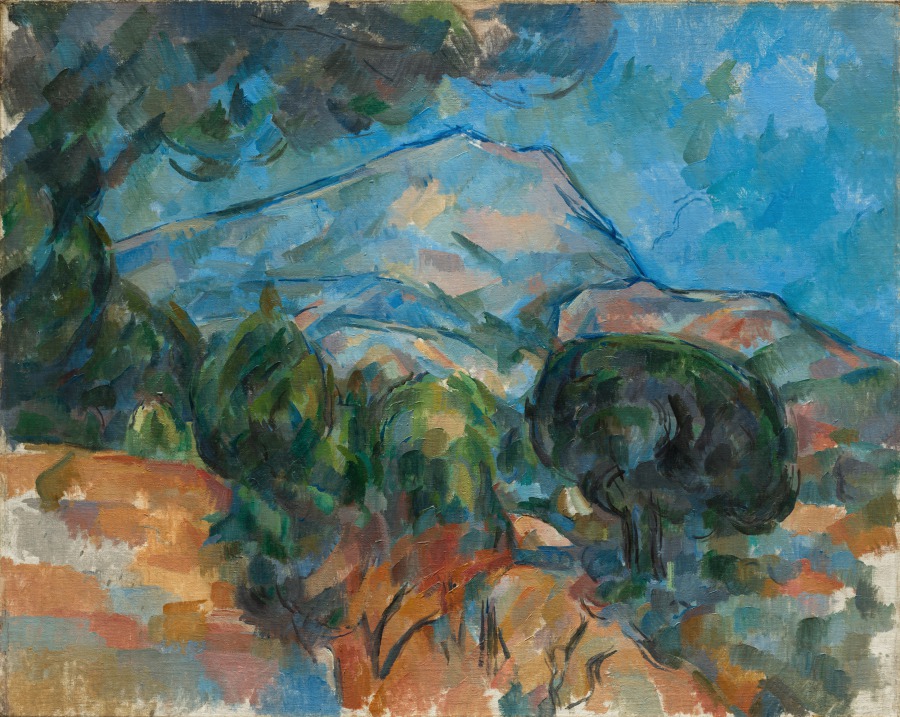
During the last 20 years of his life, Cezanne repeatedly painted Mount Sainte-Victoire near his home in Aix-en-Provence in southern France. Cezanne painted this view from life at one of his favorite sites, a small road that led from Aix eastward toward Mount Sainte-Victoire. He set up his easel at the edge of the road where he could see two umbrella pines and the mountain towering over the scene. A branch of one of the pines extends from the left of the canvas across the sky, echoing the slope of the mountain, linking the near and the far.
Cleveland Museum of Art
Angaben
- Inventarnummer
- 1958.21
Im Katalog
Kommen und Gehen
Ausgestellt · 222 Impressionism & Post-Impressionism
Cleveland Museum of Art · 2. Okt. 2026 — jetzt · Geprüft
Derzeit nicht ausgestellt
Cleveland Museum of Art · 28. Sept. 2026 — 2. Okt. 2026 · Geprüft
Quellen
- Cleveland Museum of Art: the museum's own open data · abgerufen vor 7 Tagen
- Bild: Cleveland Museum of Art — Museum open access
Derweil im Leben von Paul Cézanne
Das ganze Leben1901–1903
The Studio on the Chemin des Lauves
In 1901 he bought a plot of land north of Aix, in 1902 built a studio there to his own specifications (now the Atelier de Cézanne), and moved in in 1903; a long narrow slot was cut into the wall to admit natural light for the large "Bathers."
29 September 1902
Death of Émile Zola
Zola's death plunged Cézanne into mourning, despite their long estrangement.
1903
Debut at the Salon d'Automne
He exhibited for the first time at the newly founded Salon d'Automne in Paris.
15 October – 15 November 1904
A Cézanne Room at the Salon d'Automne: First Triumph
An entire room of the Salon d'Automne in Paris was devoted to Cézanne's works; this retrospective became the artist's first real success — indeed, a triumph.
15 October 1906
Caught in a Storm and Fatal Pneumonia
While painting in the fields he was caught in a thunderstorm and lost consciousness on the way home; the exposure led to severe pneumonia. The next day he still worked in the garden on the "Portrait of the Gardener Vallier," then took to his bed and never rose again.
22. Oktober 1906
Died