 José Clemente OrozcoMexiko, 1883–1949
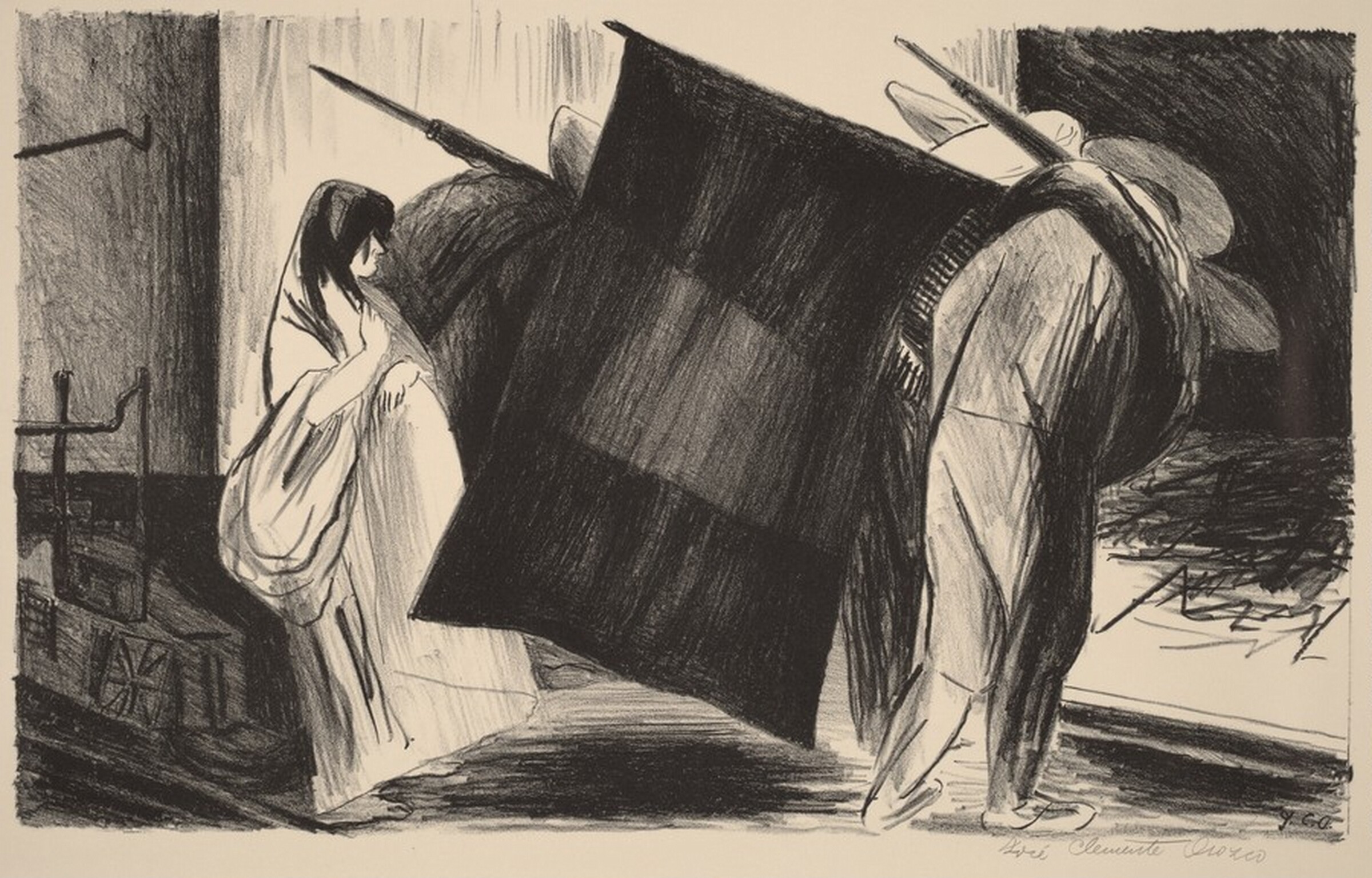
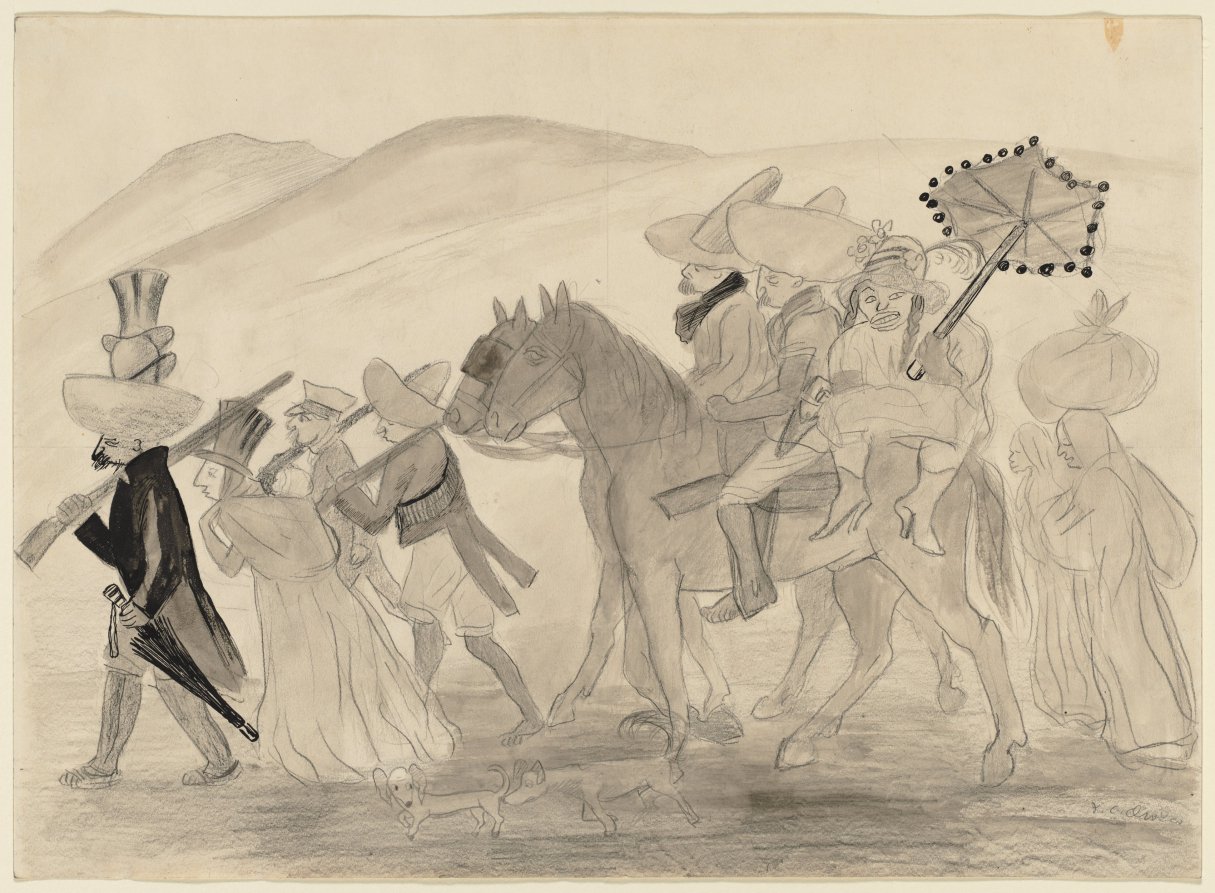
Loot
Darf man es sehen?
Empfängt derzeit nicht

Cleveland Museum of Art
Cleveland, Vereinigte Staaten
Es gehört zur Sammlung, ist derzeit aber nicht ausgestellt.
- Geprüft
- Unverändert seit
- Quelle
- Das Museum
Über das Werk
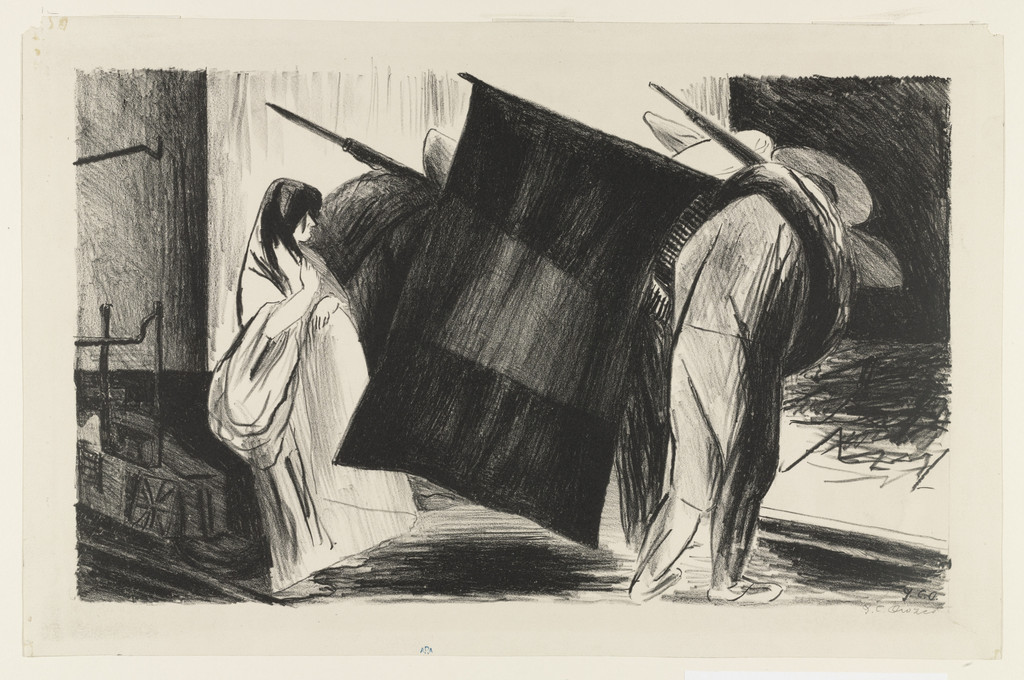
This drawing belongs to Horrors of the Revolution, a series in which José Clemente Orozco depicted violence during Mexico’s ongoing political conflict. Taking a disillusioned view toward the uprising—by then in its fifth year—the artist wrote that he did not “trust revolutions or glorify them” after witnessing events such as the one portrayed in this work. A caravan of figures, drawn in a caricatural style with exaggerated features, carry bundles of goods presumably taken from someone less fortunate.
Cleveland Museum of Art
Angaben
- Inventarnummer
- 1943.538
Im Katalog
Quellen
- Cleveland Museum of Art
- Bild: Cleveland Museum of Art — © José Clemente Orozco / Artists Rights Society (ARS), New York / SOMAAP, Mexico
Derweil im Leben von José Clemente Orozco
Das ganze Leben1908–1914 · Ausbildung
Academy of San Carlos
1910s
An illustrator for newspapers and Carranza’s army
Orozco works as an illustrator for Mexico City newspapers and directly as an illustrator for one of the Constitutionalist armies overseen by “First Chief” Venustiano Carranza.
1914
To Orizaba, following Dr. Atl
One of the greatest influences on the adult Orozco was Dr. Atl’s view of Symbolism. In 1914, when the competing armies were about to enter Orizaba, Orozco followed Dr. Atl to the city.
1914
The revolution splits: Orozco sides with Carranza and Obregón
When the revolutionary factions split in 1914 after Victoriano Huerta was ousted, Orozco supported Carranza and General Álvaro Obregón against Pancho Villa and Emiliano Zapata. The violence he witnessed profoundly affected his life and art; in his words, the world was torn apart around him.
1916
The exhibition “Studies of Women” with caricatures of Carranza
In 1916 Orozco’s solo exhibition “Studies of Women” opens: it shows not only his works about women but also political cartoons, including ones of President Carranza.
1917–1919
The United States: no sales, so painting dolls’ faces
In 1917–1919 Orozco lives in the United States; for a time, having sold none of his works, he works in a toy factory painting the faces of dolls. Other accounts date the trip differently: he leaves in 1916, disappointed by the reviews of his art in Mexico, and returns four years later.