 Gustave DoréFrankreich, 1832–1883
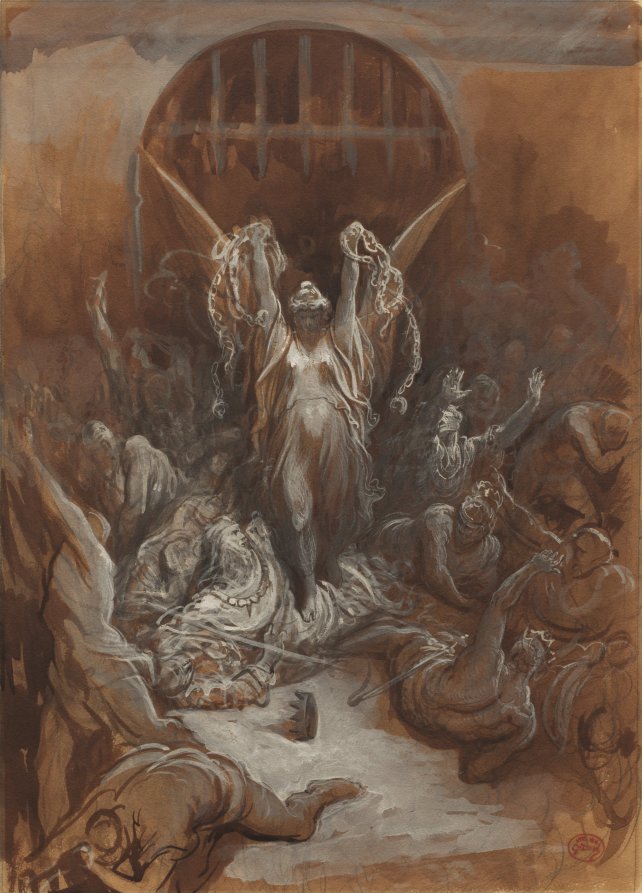
Liberty
Darf man es sehen?
Empfängt derzeit nicht

Cleveland Museum of Art
Cleveland, Vereinigte Staaten
Es gehört zur Sammlung, ist derzeit aber nicht ausgestellt.
- Geprüft
- vor 5 Stunden
- Unverändert seit
- 19. Aug. 2026
- Quelle
- Sammlungsdaten des Museums selbst
Über das Werk
Gustave Doré is best known for his skill as a draftsman (often seen in book illustrations), as well as for his sense of the fantastic and visionary. In the present drawing, his fluid washes and flowing lines of white add to the dramatic scene of a liberating angel breaking chains. The drawing relates to Doré's Defense of Paris (Memories of 1870), which treated an event from the recent Franco-Prussian War with a figure representing Liberty. A major difference between the painting and the drawing is that Doré represented soldiers in contemporary uniforms in the painting, but in the drawing of Liberty, he conceived a broader theme in which crowns and medieval costumes evoke an earlier time.
Cleveland Museum of Art
Angaben
- Inventarnummer
- 2008.383
Im Katalog
Quellen
- Cleveland Museum of Art: the museum's own open data · abgerufen vor 6 Tagen
- Bild: Cleveland Museum of Art — Museum open access
Derweil im Leben von Gustave Doré
Das ganze Leben1860s
“Don Quixote” illustrated by Doré
In the 1860s Doré illustrates a French edition of Cervantes's “Don Quixote”; his depictions of the knight and his squire, Sancho Panza, become so famous that they influence subsequent readers', artists' and stage and film directors' ideas of the physical “look” of the two characters.
1860s
Dante, Perrault and Baron Munchausen
The 1860s bring Doré's illustrations to Dante's “Inferno” and “Paradiso”, to Charles Perrault's fairy tales and to the adventures of Baron Munchausen.
1866
The illustrated Bible is a great success
Doré's illustrations for the Bible (1866) are a great success.
1866 · Auszeichnung
Knight Commander of the Order of Carlos III
1867
A major exhibition in London and the Doré Gallery
In 1867 a major exhibition of Doré's work is held in London; it leads to the foundation of the Doré Gallery in Bond Street.