ART WIKI32.979 ausgestellt
KarteSammlungKünstlerMuseenAusstellungenJournal
Anmelden

ART WIKI

Wo das Meisterwerk hängt und wann man vorgelassen wird.

Sammlungen: Art Institute of Chicago, Cleveland Museum of Art, Eremitage, Getty Villa, Harvard Art Museums, Hirshhorn Museum and Sculpture Garden, J. Paul Getty Museum, Louvre, Metropolitan Museum of Art, Minneapolis Institute of Art, Museum of Modern Art, National Gallery of Art, National Museum of Asian Art, National Portrait Gallery, Puschkin-Museum, Rijksmuseum Amsterdam, Russisches Museum, Smithsonian American Art Museum, Statens Museum for Kunst, Tretjakow-Galerie, Victoria and Albert Museum, Whitney Museum of American Art, Staatskatalog des Museumsfonds Russlands (274 Museen), Europeana (19 Museen), Wikidata (6 Museen), Paris Musées (12 Museen) und Joconde, die Museumsdatenbank des französischen Kulturministeriums (495 Museen). Die Bilder gehören ihren Rechteinhabern.

Rubriken

  • Karte
  • Suche
  • Sammlung
  • Meisterwerke
  • Jetzt ausgestellt
  • Künstler

Mehr

  • Museen & Galerien
  • Ausstellungen
  • Journal
  • Woher die Daten stammen
  • Datenschutz & Cookies
StartseiteKarteKatalog
  1. Sammlung/
  2. Cleveland Museum of Art/
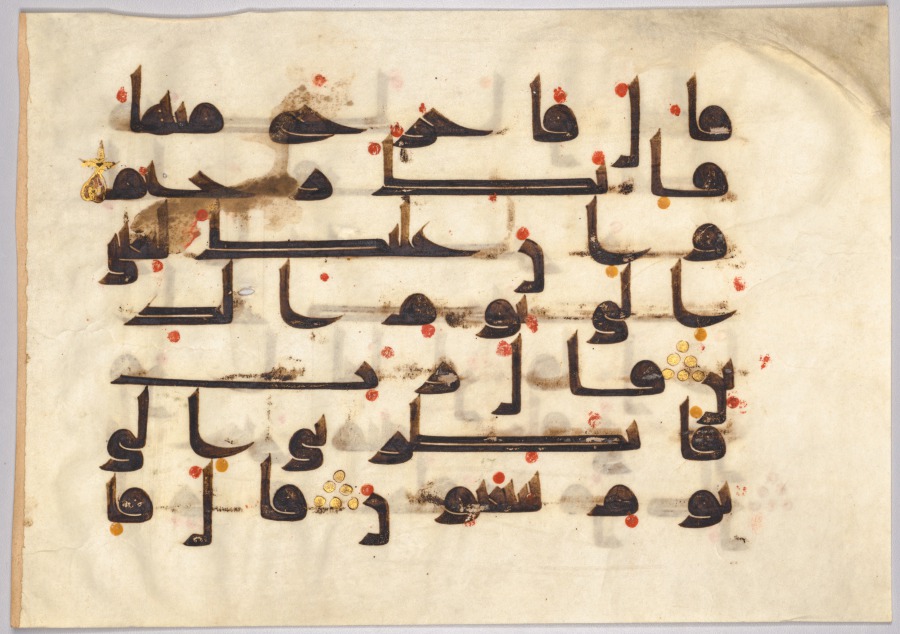
  3. Folio from a Qur'an (verso)
Folio from a Qur'an (verso), 800s

Folio from a Qur'an (verso)

800s · Drawing

Darf man es sehen?

Empfängt derzeit nicht

Cleveland Museum of Art

Cleveland, Vereinigte Staaten

Es gehört zur Sammlung, ist derzeit aber nicht ausgestellt.

Geprüft
vor 3 Tagen
Unverändert seit
19. Aug. 2026
Quelle
Das Museum
Auf der KarteMuseumsseite

Über das Werk

The sacred book of Islam, the Qur'an is believed by Muslims to be a literal transcription of the word of God, spoken in Arabic to the Prophet Muhammad (died 632). In order to convey the importance of the divine word, Arabic calligraphy—sometimes highly elaborate and embellished with gold—was used to create copies of the Qur'an.

This folio was written in the oldest style of Arabic calligraphy, called Kufic script, used in earliest surviving copies of the Qur'an. The wide format of the page is well suited to this style of Kufic that has elongated, horizontal strokes. Vowels are indicated by red dots, and the triangles of gold dots mark the end of each verse.

Weiterlesen

The text on the recto recounts an argument between God and Lucifer. Proud Lucifer declares himself superior to humans because he was formed from fire, while humans were molded from clay. In the verses on the verso, God casts Lucifer out of heaven as punishment for his pride.

Cleveland Museum of Art

Angaben

Inventarnummer
1933.493.b

Im Katalog

Zeichnungen & AquarelleGouacheProbably Egypt, Abbasid period (750–1258)

Quellen

  • Cleveland Museum of Art
  • Bild: Cleveland Museum of Art — Museum open access
Nachbarn im Haus: Cleveland Museum of Art

Museumsseite
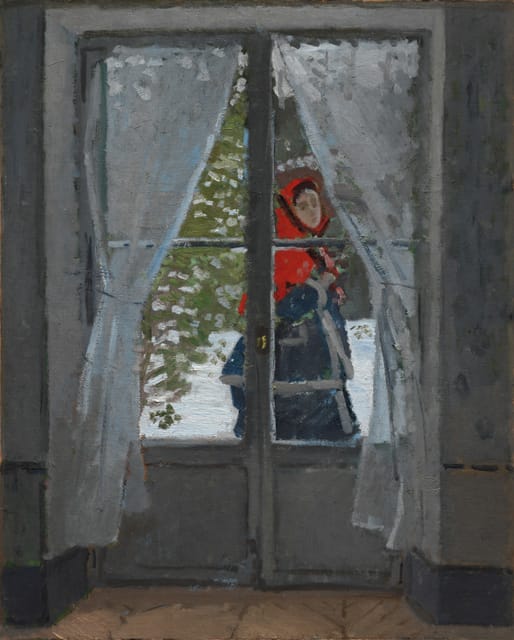
The Red Kerchief, Claude Monet, c. 1868–73

Claude Monet

The Red Kerchief, c. 1868–73

Melencolia I, Albrecht Dürer, 1514

Albrecht Dürer

Melencolia I, 1514

The Virgin and Child with the Pear, Albrecht Dürer, 1511

Albrecht Dürer

The Virgin and Child with the Pear, 1511

The Nativity, Albrecht Dürer, probably c. 1509/1510

Albrecht Dürer

The Nativity, probably c. 1509/1510

The Virgin and Child on a Crescent with a Starry Crown, Albrecht Dürer, 1508

Albrecht Dürer

The Virgin and Child on a Crescent with a Starry Crown, 1508

The Lamentation, Albrecht Dürer, 1507

Albrecht Dürer

The Lamentation, 1507

Large Horse, Albrecht Dürer, 1505

Albrecht Dürer

Large Horse, 1505

Nemesis (The Great Fortune), Albrecht Dürer, c. 1501/1502

Albrecht Dürer

Nemesis (The Great Fortune), c. 1501/1502