 Fernand LégerFrankrig, 1881–1955
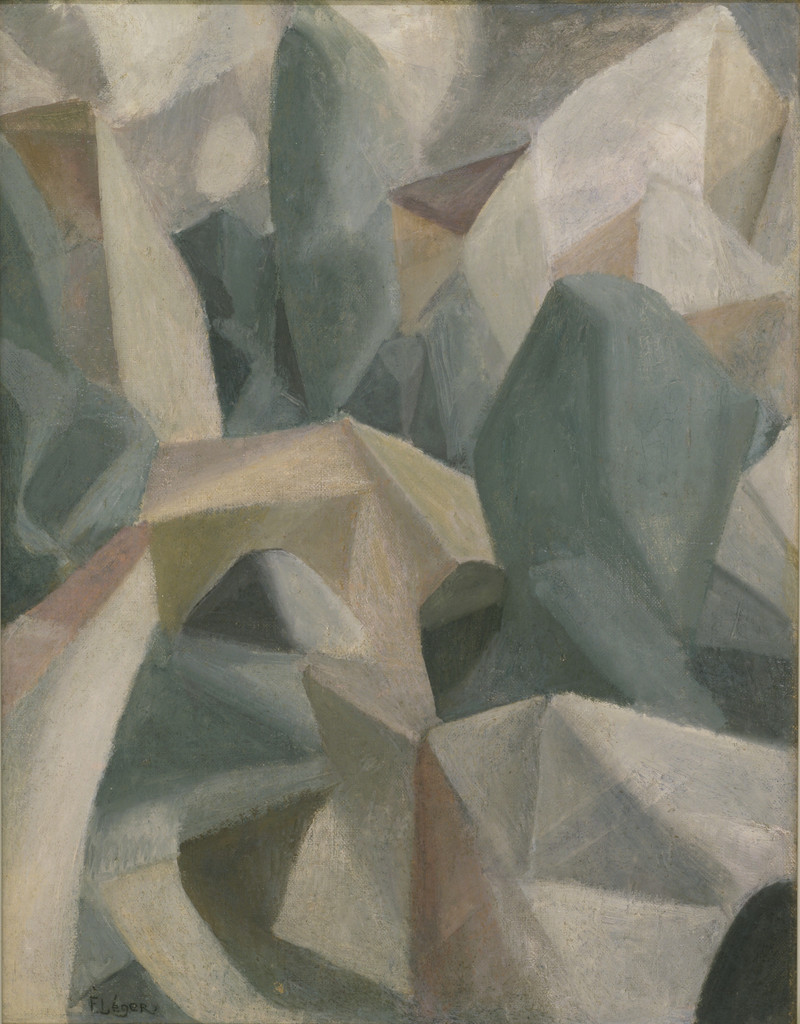
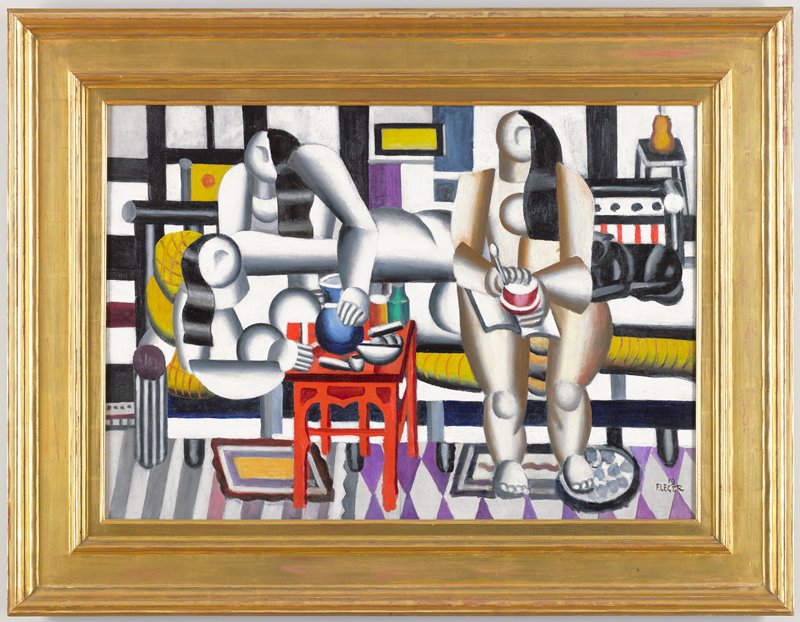
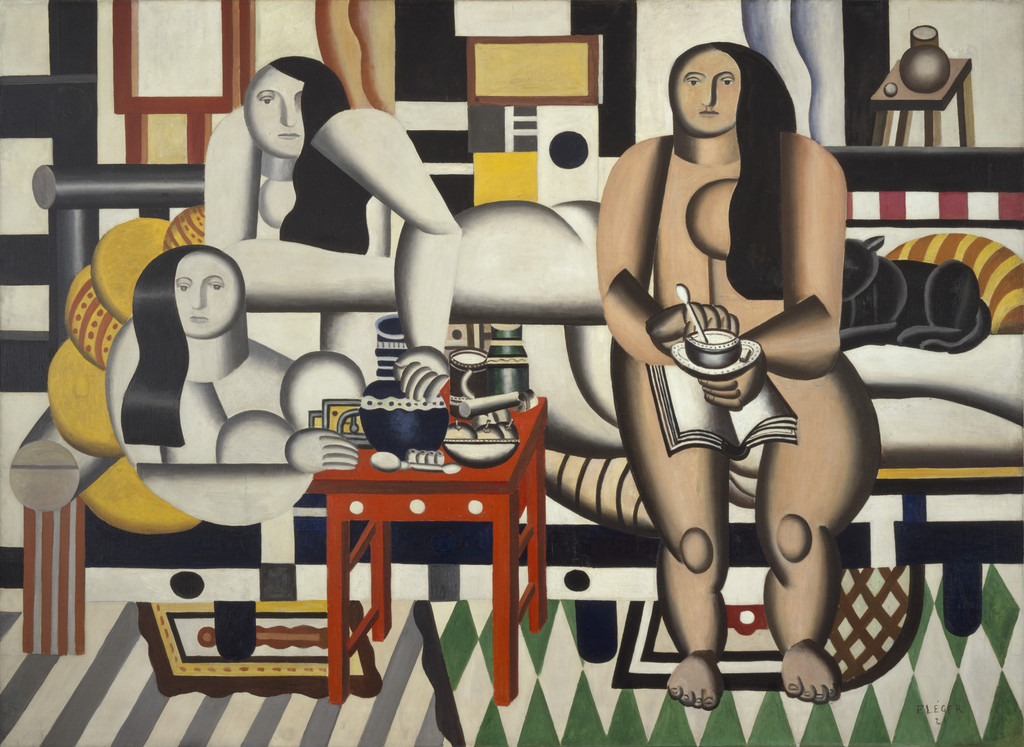
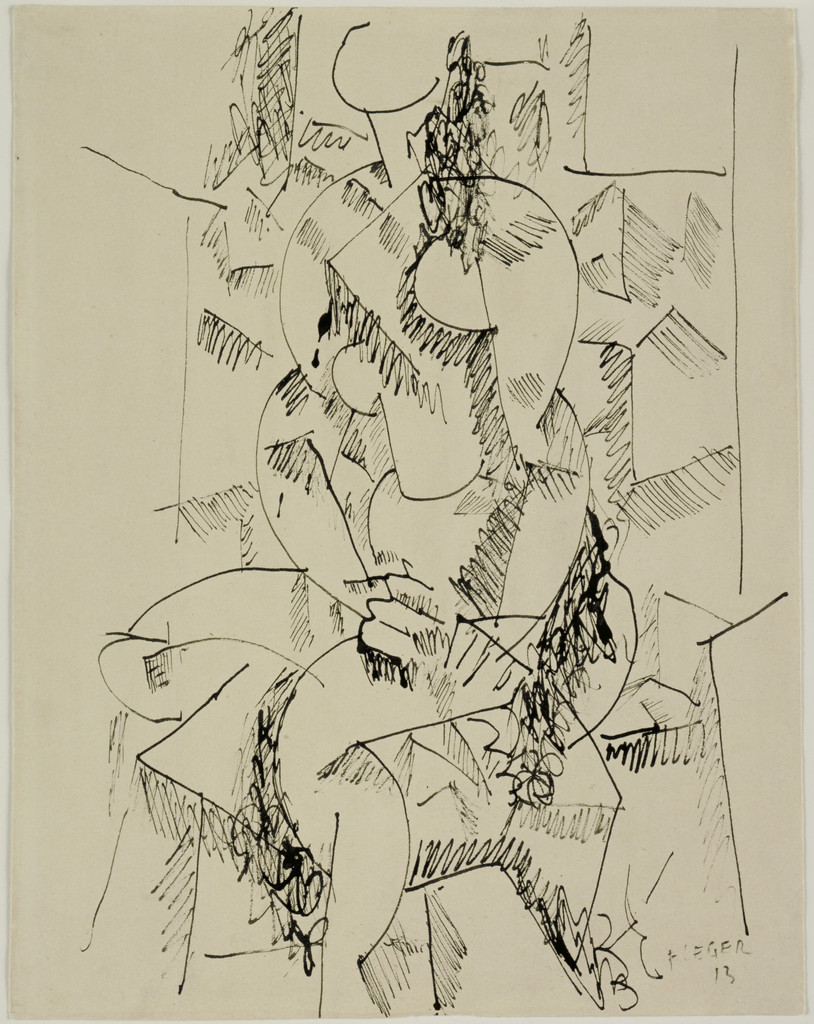
Seated Nude
Må man se det?
Tager ikke imod for tiden

Museum of Modern Art
New York City, USA
Det hører til samlingen, men er ikke udstillet for tiden.
- Kontrolleret
- for 6 dage siden
- Kilde
- Museets egne samlingsdata
Oplysninger
- Inventarnummer
- 121.1978
Kilder
- Museum of Modern Art: the museum's own open data · hentet for 13 dage siden
- Billede: Museum of Modern Art — © the artist or rights holder
Imens i livet hos Fernand Léger
Hele livet1911
The “Cubists' room” at the Salon des Indépendants
In 1911 the hanging committee of the Salon des Indépendants places the painters identified as Cubists together — Metzinger, Gleizes, Le Fauconnier, Delaunay and Léger; in room 41, nicknamed the “Cubists' room”, Léger shows “Nudes in the Forest”. It is the first time Cubism is revealed to the general public as an organized group; with the same group Léger also exhibits in Brussels.
1912
First exhibition at Kahnweiler's gallery
In 1912 Léger's first exhibition takes place at Kahnweiler's gallery. In the same year he shows “The Smokers” at the Indépendants and “Woman in Blue” at the Salon d'Automne and takes part in the exhibitions of the Section d'Or group.
1912
The Section d'Or group at Puteaux
In 1912 Léger joins Le Fauconnier, Metzinger, Gleizes, Picabia and the Duchamp brothers (Jacques Villon, Raymond Duchamp-Villon and Marcel Duchamp) to form the Puteaux Group, also called the Section d'Or; he had met Jacques Villon, and through him the group, at Puteaux as early as 1911.
1913
The Indépendants, the Armory Show and the Berlin Autumn Salon
In 1913 Léger takes part in the exhibition of the Indépendants, in the Armory Show and in the first exhibition of the Salon d'Automne in Berlin. In May he gives a lecture at the Vassilieff Academy, “The Origins of Painting and Its Representational Value”, whose text is published in Paris, Berlin and Bergen; in May 1914 a second lecture follows there, “New Discoveries in Modern Painting”.
October 1913
A contract with Kahnweiler and the studio on rue Notre-Dame-des-Champs
In October 1913 Léger signs a contract with Kahnweiler to sell him his works. Soon afterwards he rents a studio at 86 rue Notre-Dame-des-Champs, which he keeps for the rest of his life.
1914–1916
Mobilized: two years at the front
On 2 August 1914, soon after the outbreak of the First World War, Léger is mobilized and sent to the sappers; for two years he is at the front near the Argonne and Verdun, drawing artillery pieces, airplanes and fellow soldiers in the trenches and billets. He paints “Soldier with a Pipe” (1916) while on furlough.